

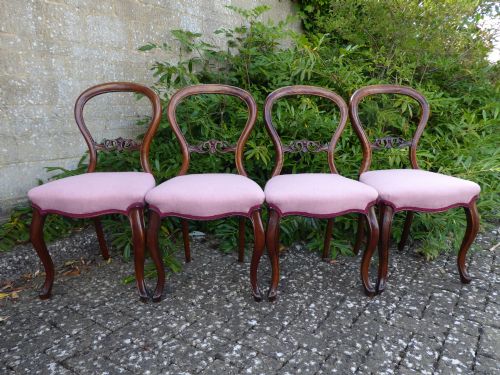
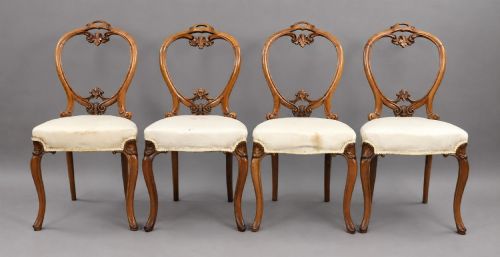
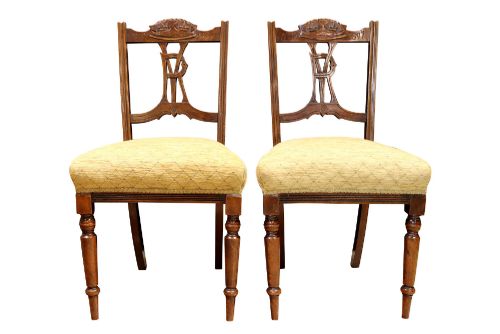
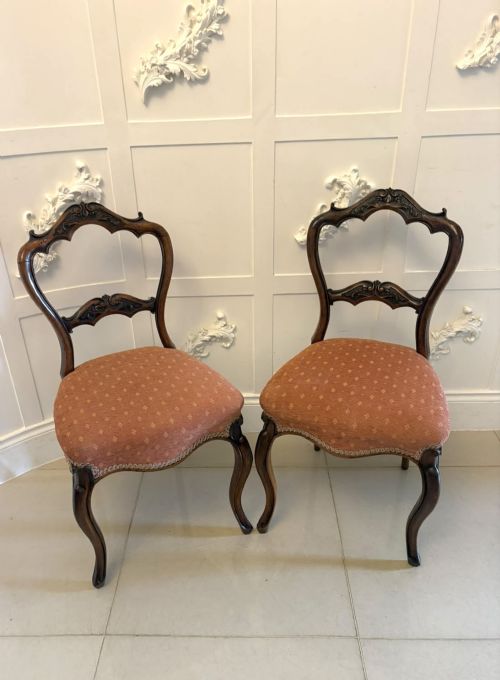
Carved Walnut Dining Chairs
Carved walnut dining chairs bring deep grain and sculptural timber to the table, spanning periods from the eighteenth century to the Edwardian era.
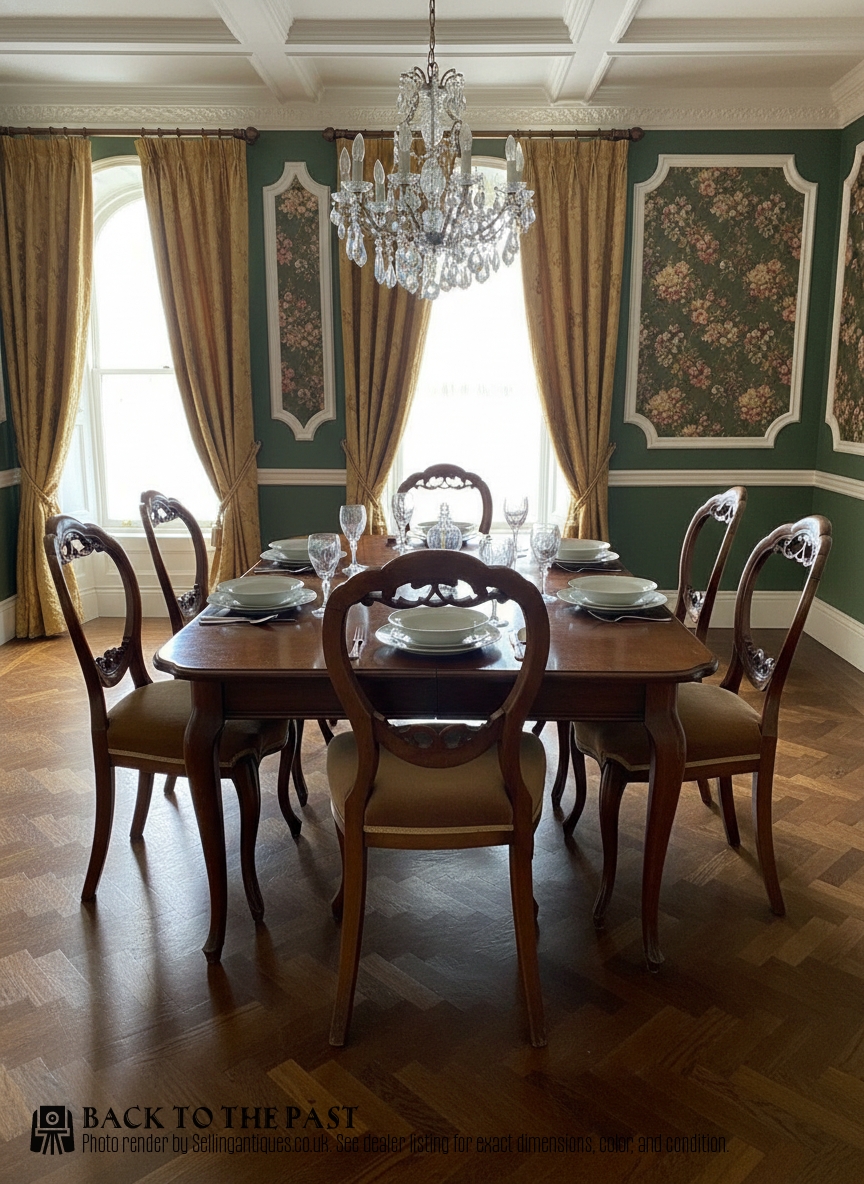
Carved Walnut Dining Chairs
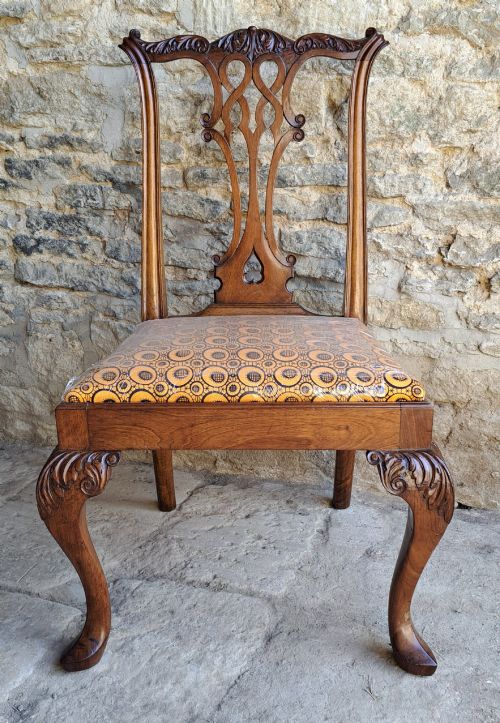
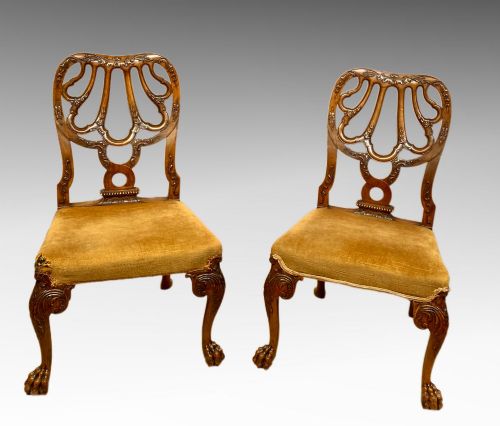
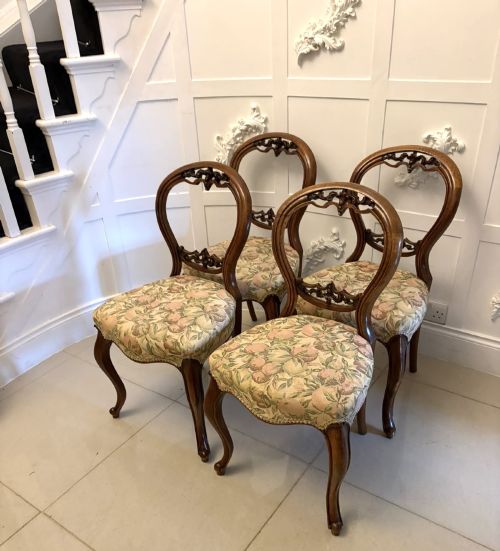
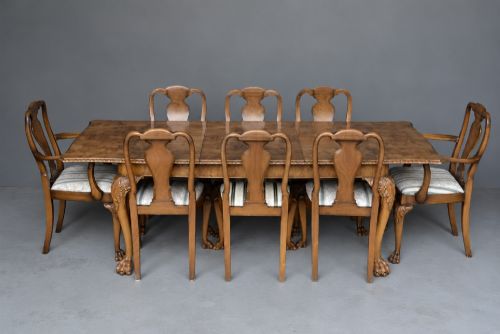
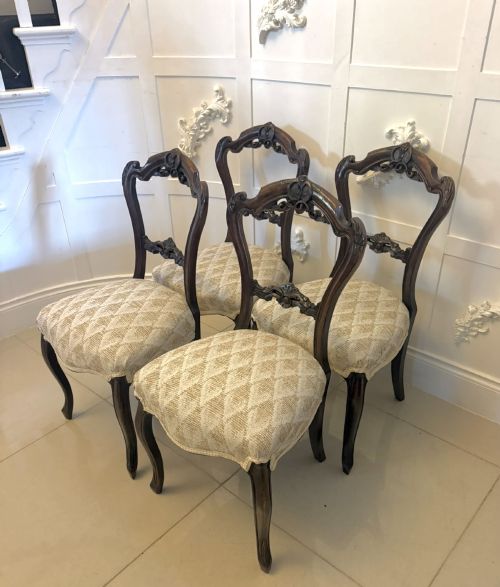
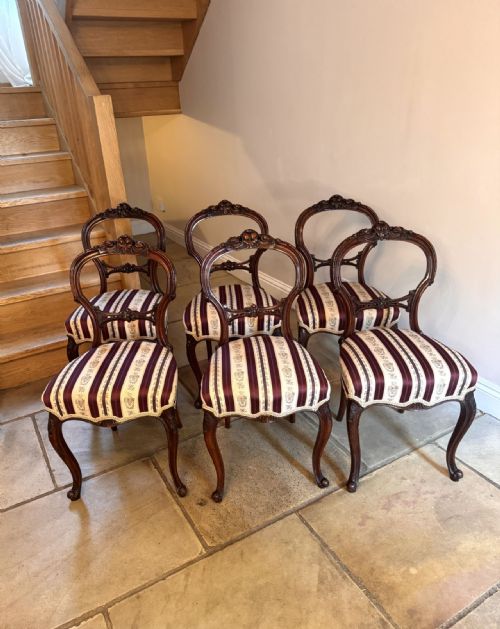
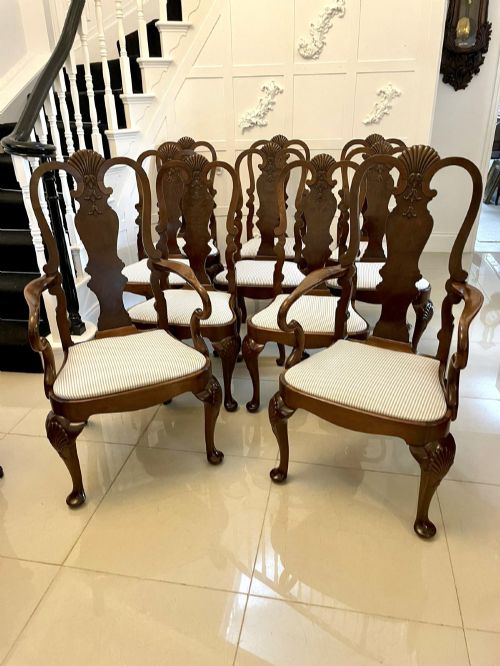
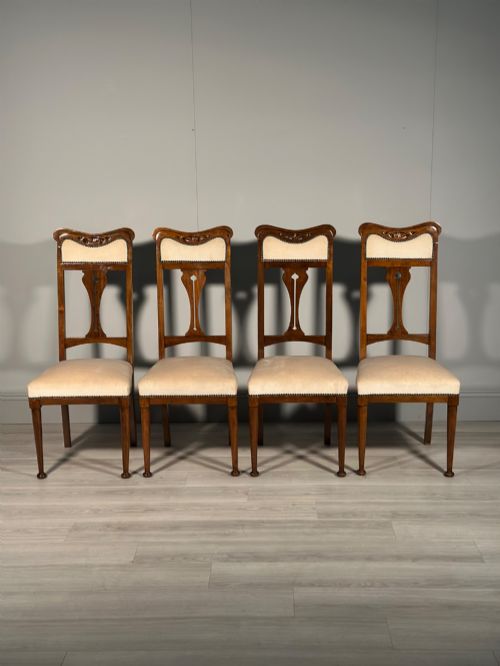
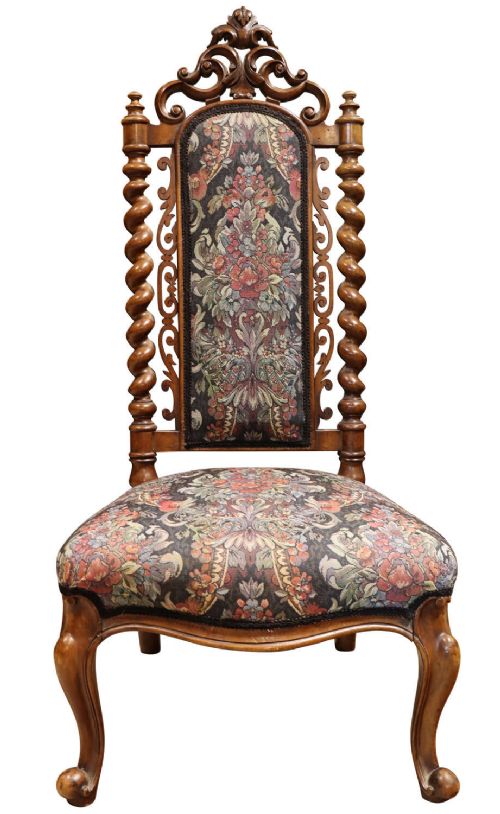
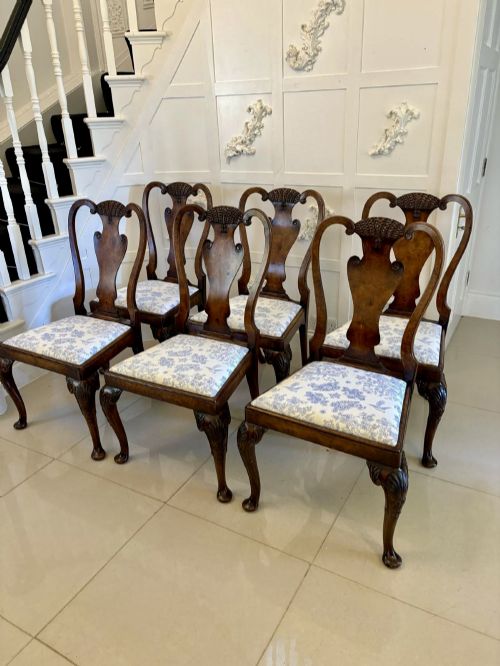
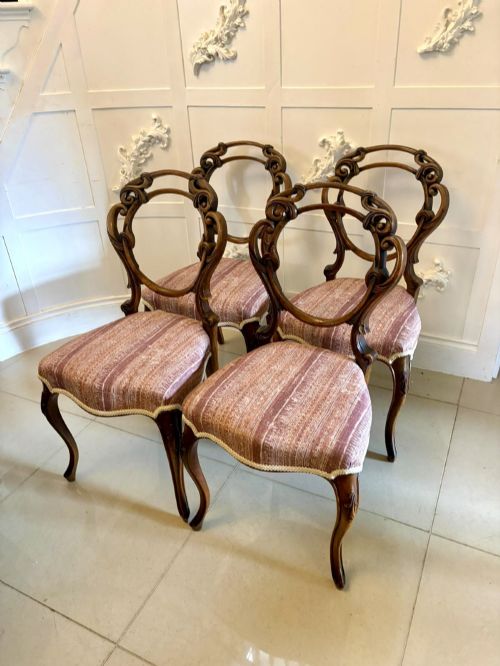
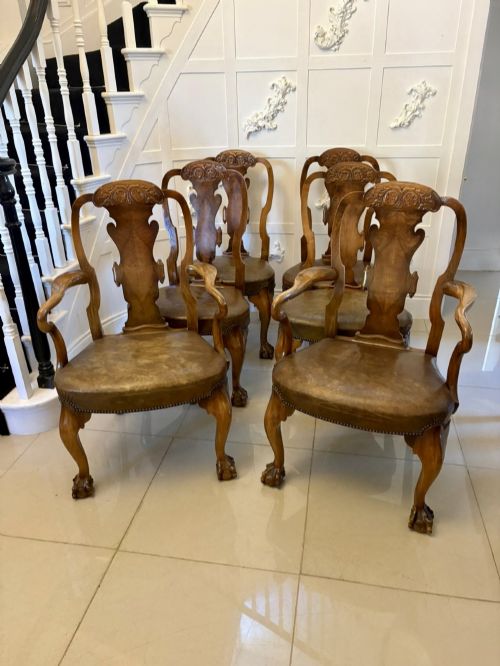
When searching for carved walnut dining chairs, you encounter seating forms ranging from eighteenth-century George II side chairs with pierced splats to nineteenth-century Victorian balloon back sets and Edwardian dining suites.
The Victorian era dominates the selection, frequently presenting sets of six or four walnut chairs alongside salon chairs, armchairs, and occasional seating.
Early iterations appear in Georgian and eighteenth-century formats featuring cabriole legs, while later revivals draw upon Queen Anne, Carolean, and Louis XIV styles.
Materials and construction methods
Makers utilised solid walnut and burr walnut timbers, often selected for rich grain patterns and deep colouration.
Upholstered elements incorporate traditional fabrics, velvet, leather, tapestry, and embossed leather secured alongside cane panels and brass details.
Carving defines the ornamentation, appearing on balloon backs, crest rails, and cabriole legs.
Carved Walnut Dining Chairs Retail Price Guide 2026
Typical asking prices for carved walnut dining chairs among the pieces listed under this phrase on Sellingantiques today, from the lower quarter to the upper quarter. They describe what is for sale here now, not the wider market.
Listings feature walnut dining chairs spanning the seventeenth, eighteenth, nineteenth, and twentieth centuries, alongside revival styles.
Distinctions in craftsmanship
The depth and crispness of the timber carving separate standard production pieces from exhibition-grade examples.
The integrity of the walnut frame, the selection of figured burr veneers, and the matching of wood grain across a set determine the overall standing of the chairs.
Charles Tozer
The Carved Walnut Dining Chairs Glossary
- Cabriole leg
- A furniture leg that curves out at the knee and tapers inward to the foot, typical of eighteenth-century and revival designs.
- Balloon back
- An oval-shaped chair back resembling a balloon, popular during the Victorian period.
- Pierced splat
- The central vertical strip of wood in a chair back that is cut through to create a decorative pattern.
- Burr walnut
- Timber taken from a tree growth that yields highly figured, swirling grain patterns used for decorative veneer.
Carved Walnut Dining Chairs: Frequently Asked Questions
How do I date a walnut dining chair?
Dating relies on stylistic markers such as cabriole legs from the eighteenth century or balloon backs from the Victorian period. Construction methods and secondary timbers also provide clues to the era of manufacture.
Comparing the specific carving style and upholstery techniques against documented examples helps narrow down the decade.
Are walnut chairs suitable for daily use?
Solid walnut provides a durable and resilient structure capable of handling regular seating when joints remain stable. Historic frames benefit from mindful placement away from direct heat sources.
Routine checks on the upholstery and frame fixings ensure these antique chairs withstand everyday dining.
What is the difference between a side chair and an armchair?
Side chairs are built without armrests, designed primarily to sit compactly around the sides of a dining table. Armchairs include supportive arms and typically occupy the head positions at the table.
Sets often combine multiple side chairs with a matching pair of armchairs.
How do I care for antique walnut wood?
Maintaining walnut furniture involves dusting with a soft, dry cloth and avoiding modern silicone polishes that build up over time. Natural wax feeds the timber and preserves the rich grain.
Keeping pieces out of direct sunlight prevents the walnut from fading or drying out.