

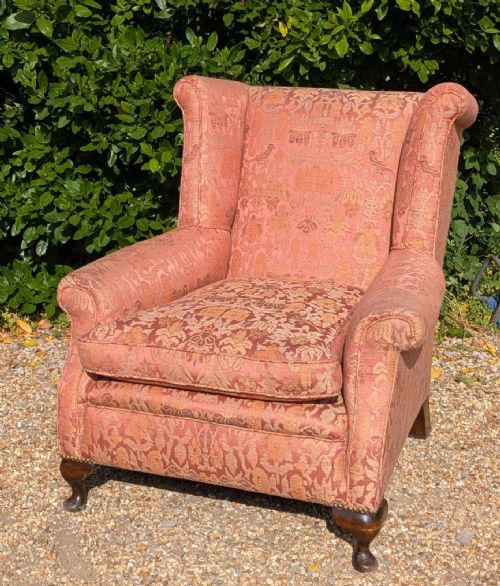
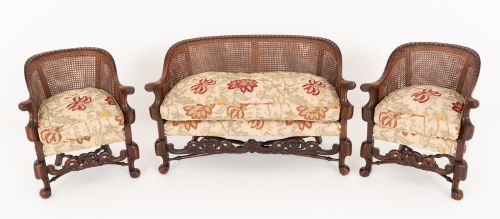
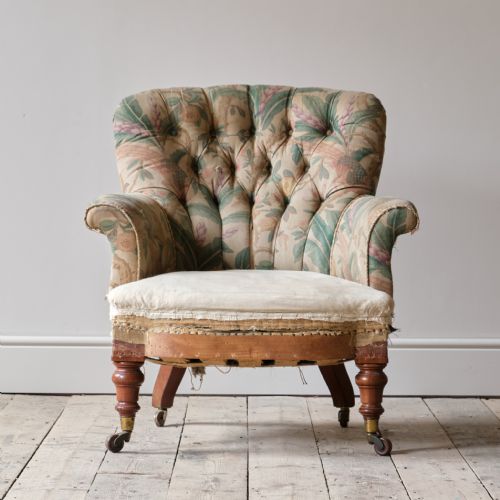
Floral Upholstered Chair
A floral upholstered chair brings pattern and warmth into a room, offering both character and comfort across centuries of design.
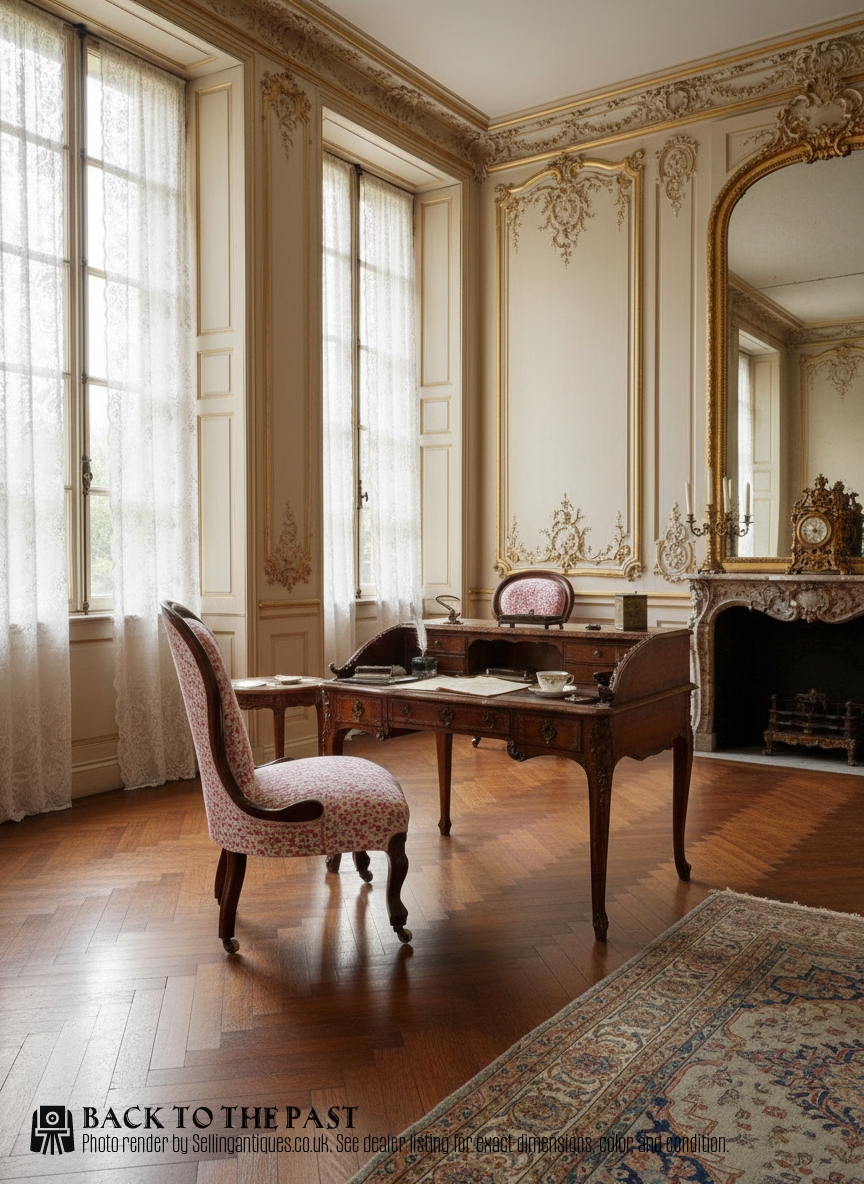
What a floral upholstered chair is
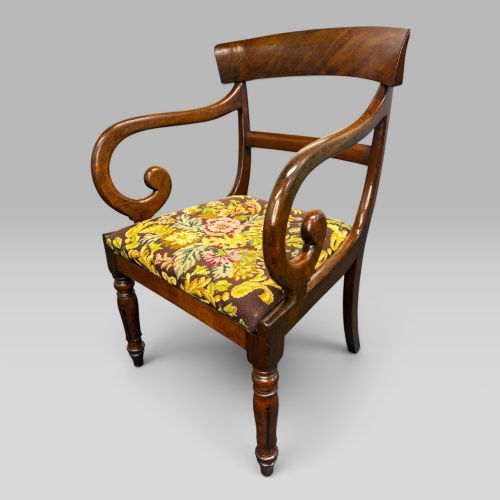
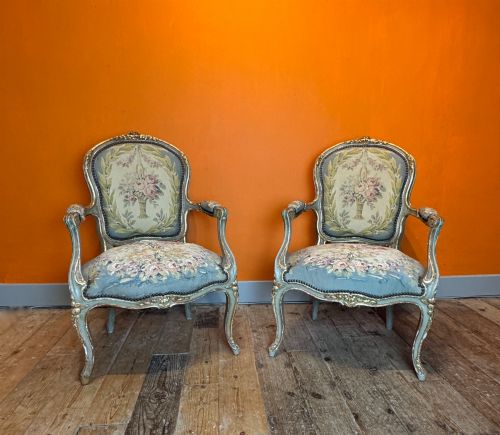
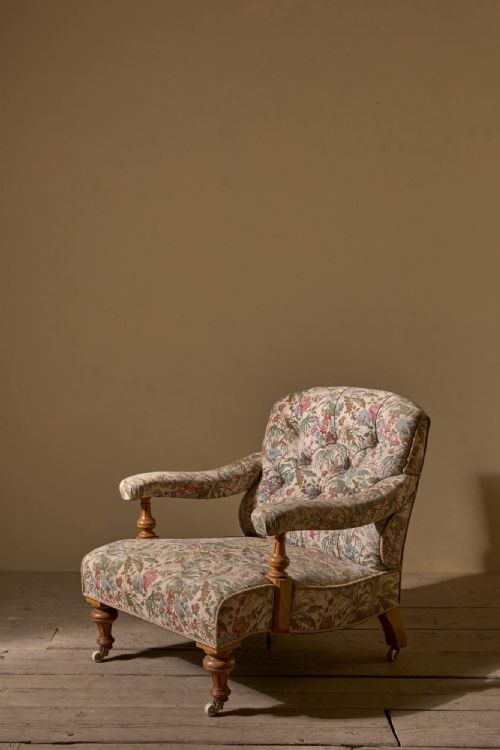
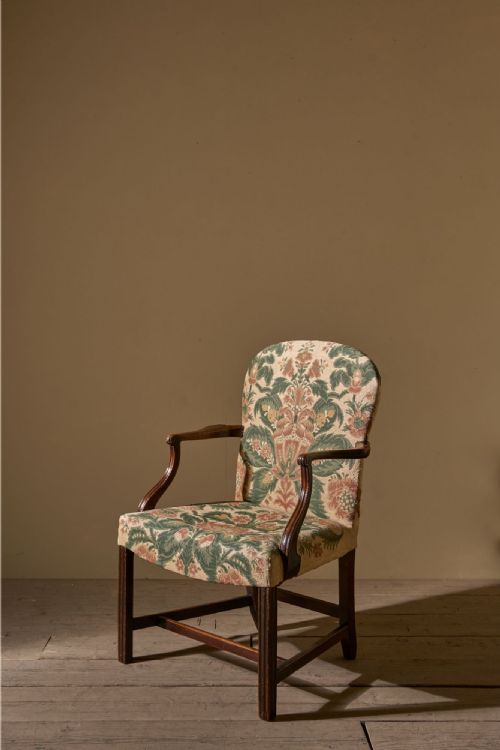
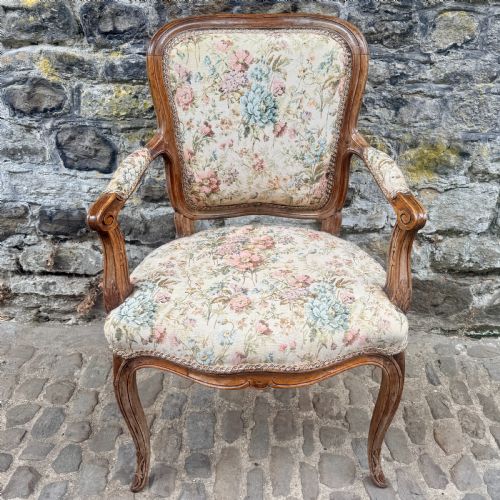
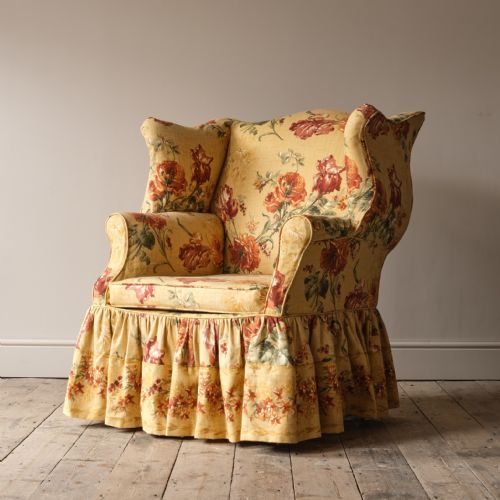
A floral upholstered chair brings together sturdy timber frames and patterned textile covers, appearing in forms ranging from compact side chairs to expansive armchairs. These pieces serve as functional seating while introducing botanical motifs directly into domestic interiors.
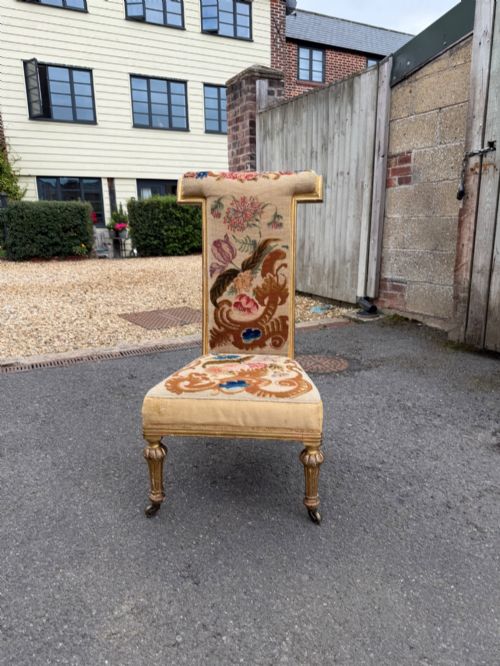
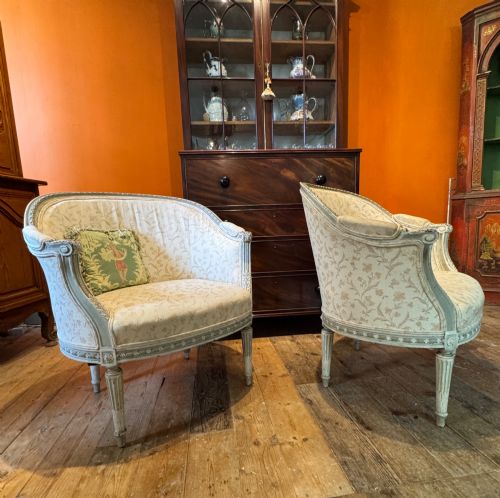
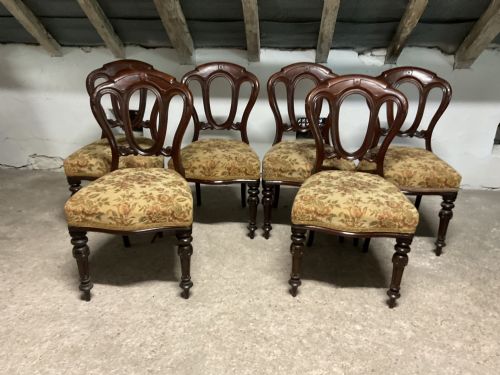
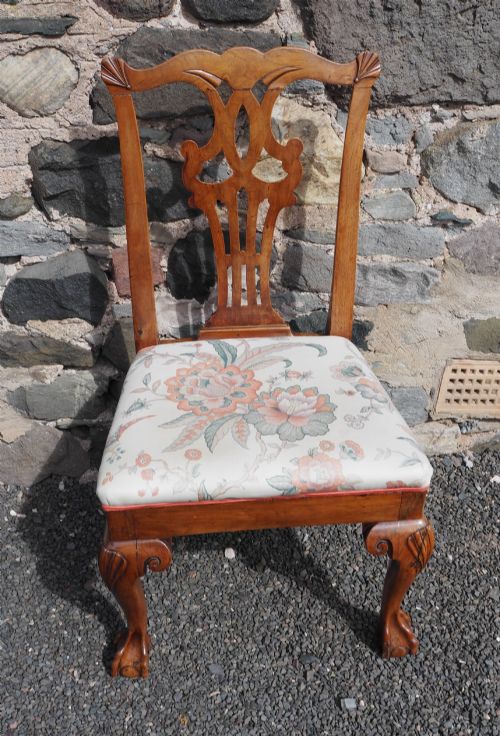
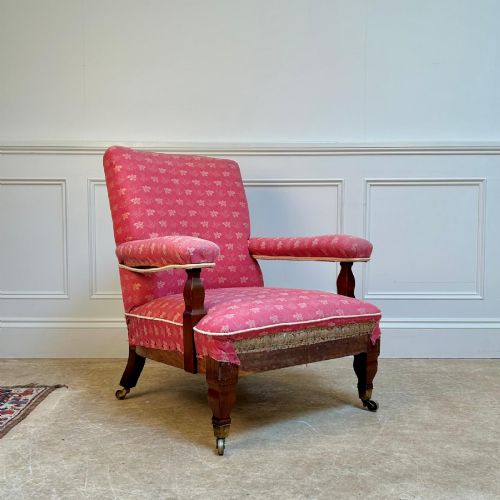
The selection on this page draws from multiple eras, spanning Georgian, Victorian, Edwardian, and later twentieth century periods. Visitors frequently encounter walnut and mahogany side chairs alongside specialised seating such as nursing chairs, slipper chairs, and prie dieu chairs.
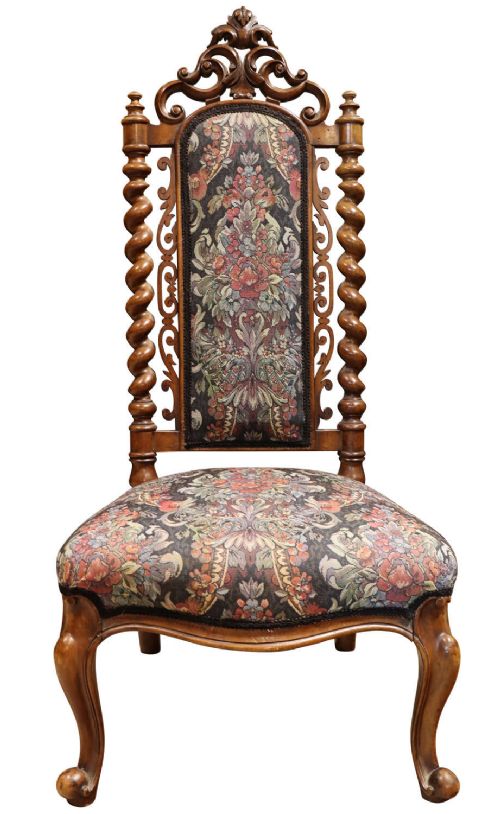
Makers across these different periods employed distinct structural silhouettes, from carved cabriole legs to barley twist supports. Each floral upholstered chair reflects the prevailing aesthetic of its decade, whether the refined proportions of the eighteenth century or the curved lines of Art Nouveau.
How a floral upholstered chair was made
Craftsmen built the underlying frames using dense hardwoods like mahogany and walnut, shaping timber through cutting, joining, and hand carving. Structural details often incorporate turned components, brass elements, and carved leaf motifs.
Upholstery techniques combined traditional stuffing methods with decorative outer textiles, utilising tapestry, needlepoint, and patterned fabrics. These coverings were secured to the wooden frameworks using tacks, creating durable surfaces designed for daily use.
Retail Price Guide 2026
Typical UK retail prices for floral upholstered chair, calculated from the Sellingantiques database of over a million retail prices indexed since 2003. This retail price guide relies exclusively on Sellingantiques data; no external sources or auction records are used, so the figures do not describe the wider market.
The listings span from 1750 through the Victorian era up to 1920, utilising materials that include mahogany, walnut, brass, and tapestry.
What varies in quality
The standard of a floral upholstered chair depends largely on the precision of the timber frame and the skill involved in its hand carving. Superior pieces display crisp details in walnut or mahogany woodwork and robust joinery that withstands centuries of use.
The choice of textile covering and the execution of the upholstery work further distinguish the range. Finer examples feature intricate needlepoint or tapestry work integrated harmoniously into the historical design of the chair.
The Floral Upholstered Chair Glossary
- Cabriole leg
- A furniture leg that curves out and then in, resembling the leg of an animal. This form appears frequently on eighteenth century seating.
- Nursing chair
- A low seat traditionally used by women in the nursery or bedroom. These chairs often feature upholstered backs designed for comfort.
- Prie dieu chair
- A devotional chair featuring a low seat and a tall, narrow back designed for kneeling and prayer. They frequently showcase detailed upholstery and turned wooden supports.
- Needlepoint
- A type of canvas work embroidery used for decorative furniture coverings. This technique creates dense floral patterns across historical chair seats and backs.
- Barley twist
- A type of wooden turning shaped like a helix, resembling a twisted rope. This decorative feature appears on the legs and uprights of nineteenth century frames.
Frequently Asked Questions
What is a floral upholstered chair?
A floral upholstered chair is a seat constructed from wood such as mahogany or walnut and finished with patterned textile coverings.
These pieces encompass various historical forms, from Georgian side chairs to Victorian nursing chairs, incorporating botanical motifs into domestic furniture.
How do I date a floral upholstered chair?
Dating involves examining the wood species, structural joinery, leg styles, and the character of the carved details.
Changes in silhouette across the Georgian, Victorian, and Edwardian periods provide clear indicators of when a particular chair was built.
Where were these chairs used?
These chairs were placed in reception rooms, bedrooms, and parlours depending on their specific form and height.
Specialised seating types like slipper chairs and nursing chairs served specific domestic functions within the nineteenth century home.
What woods are used?
Makers constructed the frames primarily using durable hardwoods, with mahogany and walnut appearing frequently throughout the listings.
Secondary woods and structural elements occasionally incorporate oak or other locally available timbers beneath the upholstery.