

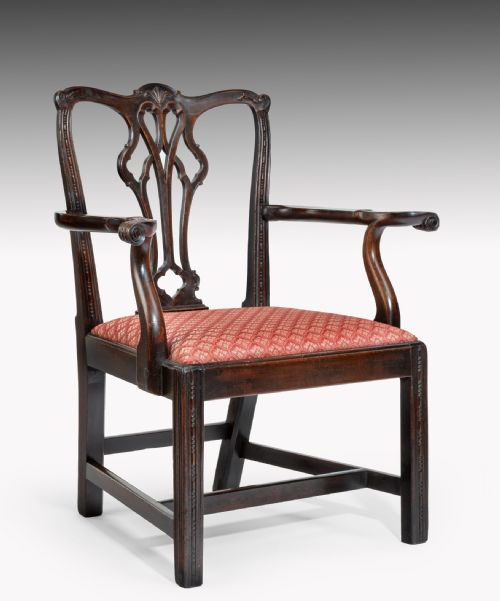
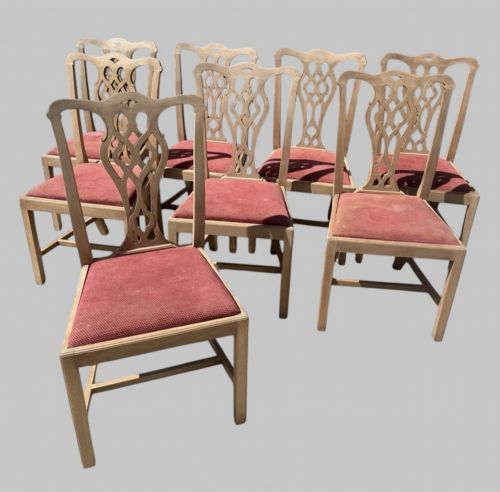

Red Upholstered Dining Chairs
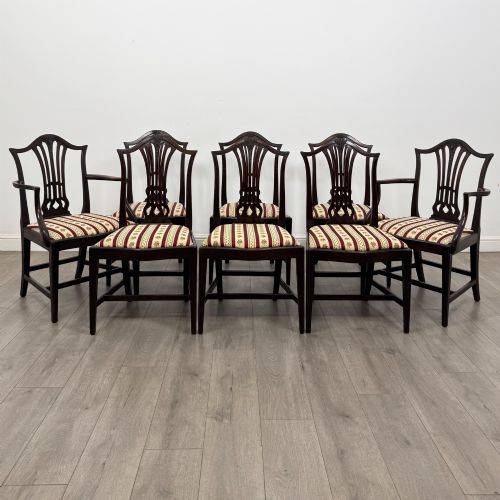
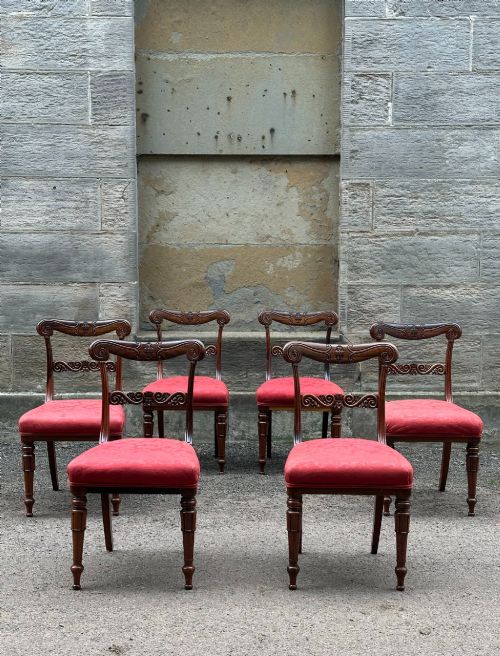
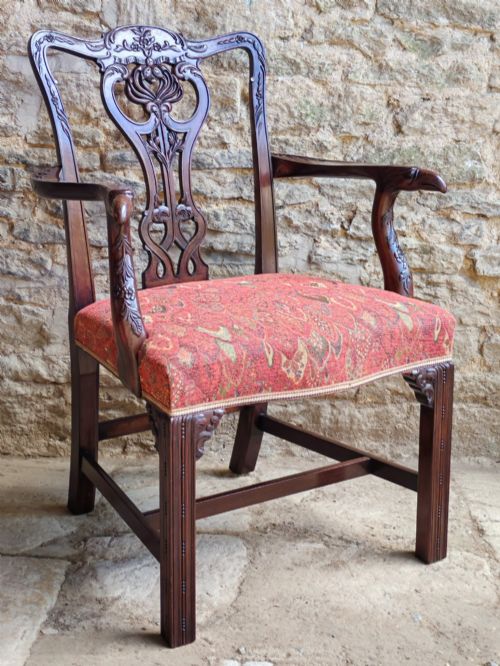
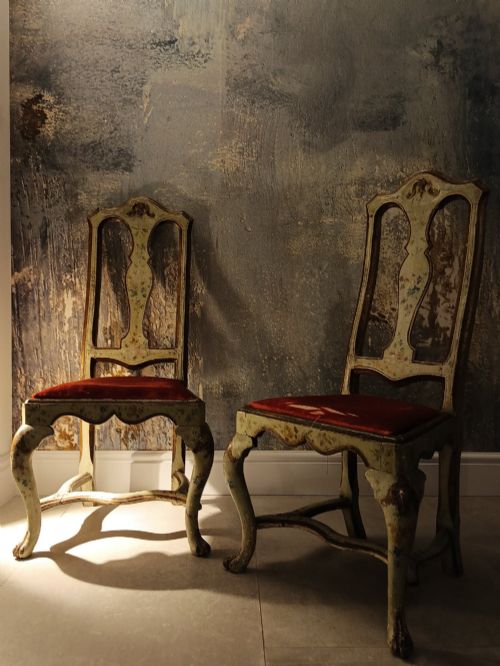
Red upholstered dining chairs bring rich textiles and warm timber frames together around the table, spanning multiple centuries of cabinet-making.

Red Upholstered Dining Chairs
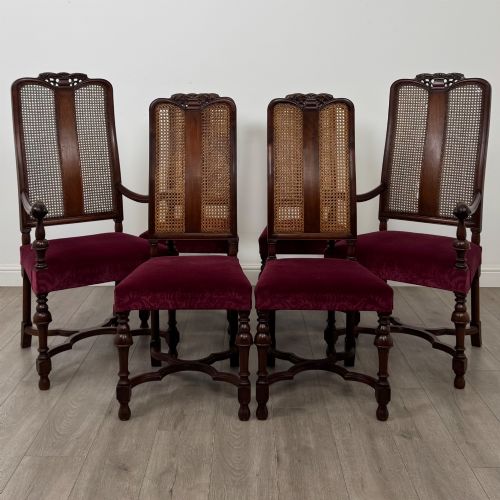
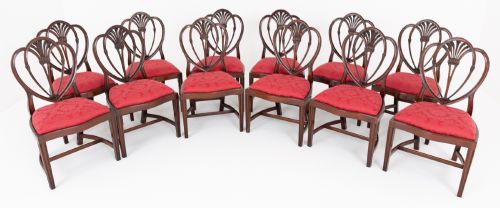
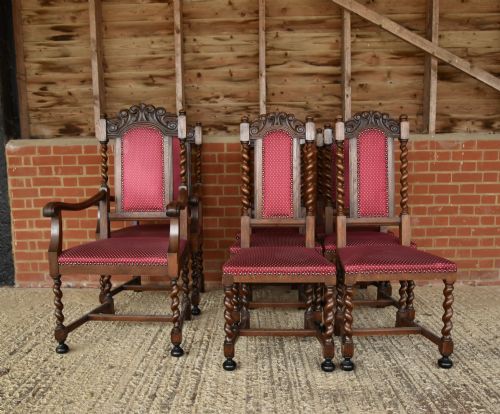
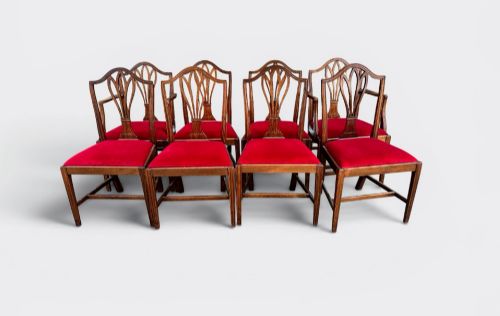
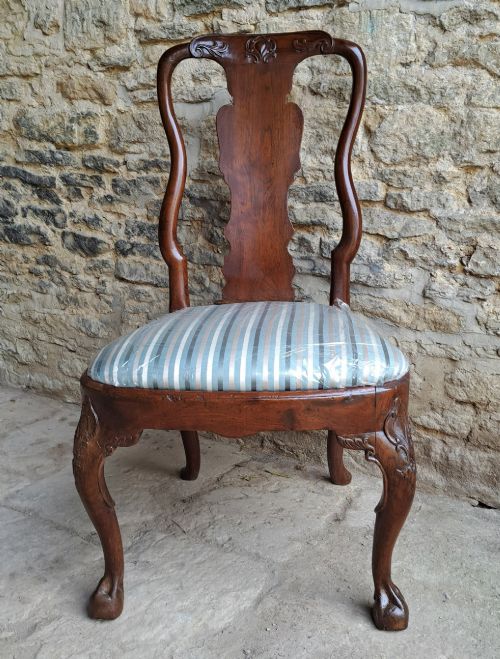
When searching for red upholstered dining chairs, buyers encounter a diverse range of formal seating forms shaped by centuries of changing tastes. The selection spans from early eighteenth-century walnut side chairs to substantial Victorian mahogany sets and later Edwardian designs.
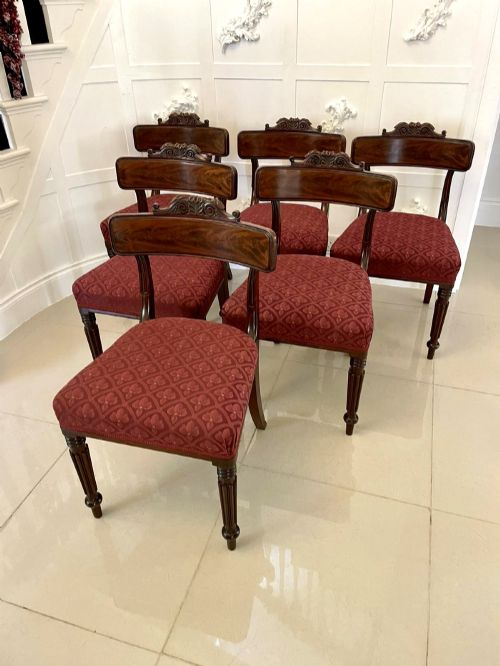
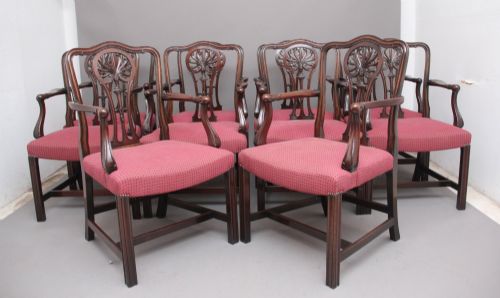
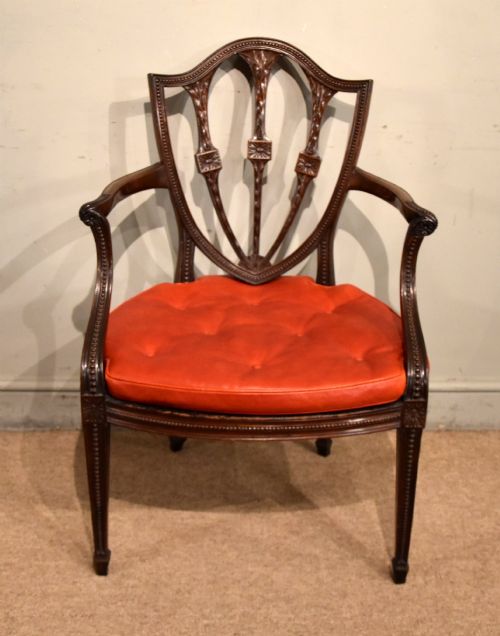
The most common forms on this page include mahogany dining chairs from the nineteenth century, often featuring balloon backs, shield backs, or reeded legs. Alongside these, earlier Georgian examples and later revival styles appear frequently in sets of six, eight, or twelve.
Makers utilised various regional woods, pairing robust oak and walnut with dense mahogany and rosewood. These frames provide the structural support for seats upholstered in fabrics, velvet, leather, damask, or silk.
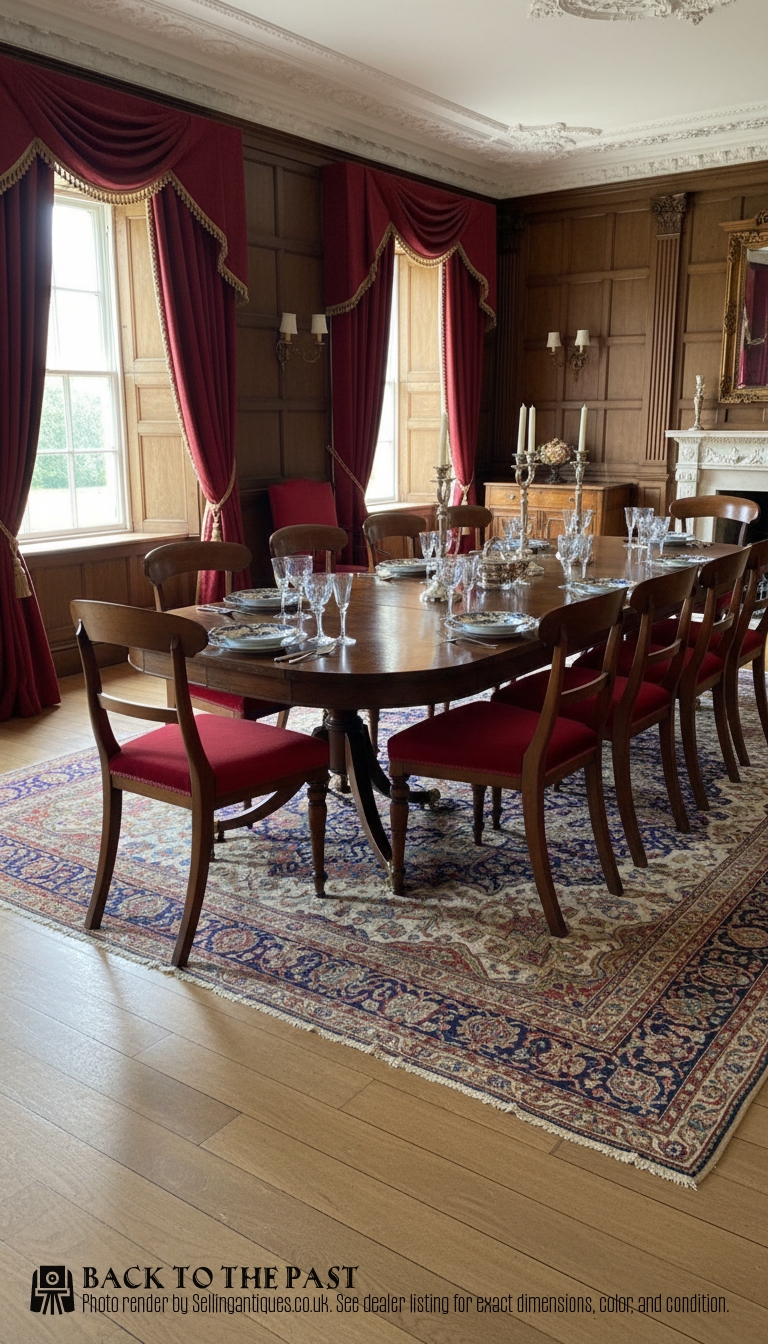
Timber and Textile Construction
The frames of these chairs rely on traditional cabinet-making joints such as mortise and tenon, carved from hardwoods like mahogany, oak, walnut, and rosewood. Turning, hand-carving, and brass inlay define the ornamental detailing on the structural woodwork.
Upholstery techniques involve securing textiles, leather, or velvet over layered stuffing and webbing fixed directly to the wooden frame. Decorative elements such as brass studs, button tufting, and gimed borders finish the edges of the fabric.
Red Upholstered Dining Chairs Retail Price Guide 2026
Typical asking prices for red upholstered dining chairs among the pieces listed under this phrase on Sellingantiques today, from the lower quarter to the upper quarter. They describe what is for sale here now, not the wider market.
Listings feature mahogany, oak, walnut, and rosewood frames paired with fabric, velvet, leather, and silk upholstery across multiple centuries.
Craftsmanship and Proportion
Quality rests upon the crispness of the timber carving and the integrity of the joinery within the frame. Superior examples display balanced proportions, select grain figures in the mahogany or walnut, and tight, durable joinery that withstands daily use.
The standard of the upholstery work and the selection of covering material also differentiate the pieces. Original or sympathetic period textile choices retain historical context, while robust internal webbing ensures lasting structural support.
Gillows·Howard and Sons·Alfred Allen of Birmingham·Liberty and Co·Holland And Sons·Epstein
The Red Upholstered Dining Chairs Glossary
- Shield back
- A chair back shaped in the outline of a heraldic shield, popular in eighteenth-century designs. This form often incorporates carved splats and open woodwork.
- Balloon back
- A rounded, oval-shaped chair back introduced during the Victorian period. It provides ergonomic comfort through a continuous curved wooden frame.
- Barley twist
- A type of turning resembling a spiral rope, carved into chair legs and stretchers. This decorative detail appears frequently on seventeenth-century and revival oak seating.
- Carver
- An armchair designed to sit at the head of a dining table, matching the surrounding side chairs. These pieces feature integrated armrests for added support.
- Damask
- A reversible figured fabric traditionally woven in silk, wool, or linen with distinct patterns. It serves as a formal upholstery covering on period dining seats.
Red Upholstered Dining Chairs: Frequently Asked Questions
How do I date a dining chair?
Dating relies on identifying the prevailing timber, construction methods, and stylistic motifs associated with specific periods. Secondary woods used in the frame interiors often provide further chronological clues.
Changes in turning styles, carving depth, and upholstery techniques also help distinguish eighteenth-century pieces from Victorian or Edwardian revivals.
What woods were used most often?
Mahogany dominates the nineteenth-century and Georgian selections, valued for its stability and deep reddish-brown grain. Walnut and oak appear frequently across both earlier centuries and later revival pieces.
Rosewood is also found on select Regency and nineteenth-century dining chairs, offering a dense, heavily figured surface texture.
Are these chairs sturdy enough for daily use?
Most antique dining chairs are built from dense hardwoods designed for regular seating. Traditional joinery provides inherent structural strength when properly maintained.
Checking the tightness of the frame and the condition of the internal webbing ensures the seating remains reliable for everyday dining.
How do I match chairs to a table?
Matching often involves coordinating the primary timber, such as pairing a mahogany table with mahogany chairs of a similar tone. Stylistic consistency, such as matching Regency frames with classical dining tables, maintains a cohesive room.
Seat height and arm clearance also require consideration to ensure the chairs slide comfortably beneath the table apron.