



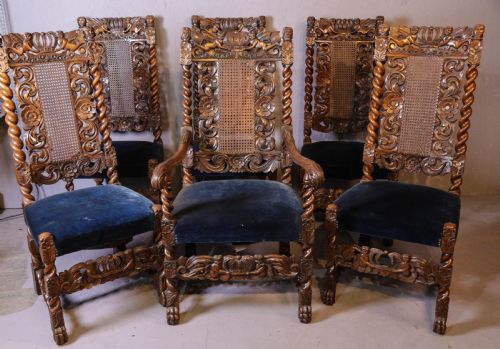


High Back Cane Chairs
High back cane chairs bring unmistakable seventeenth-century grandeur to a room, offering striking silhouettes and woven seats that command attention.
What high back cane chairs are
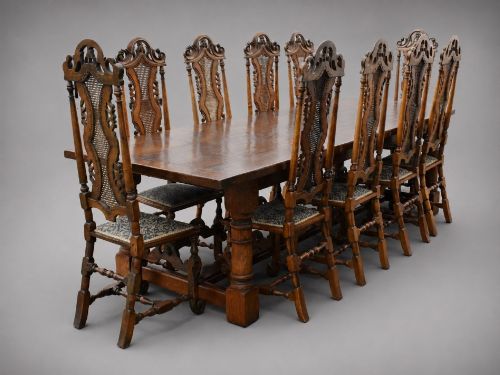
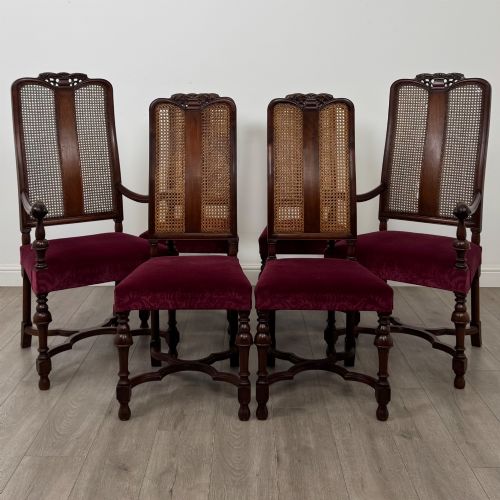
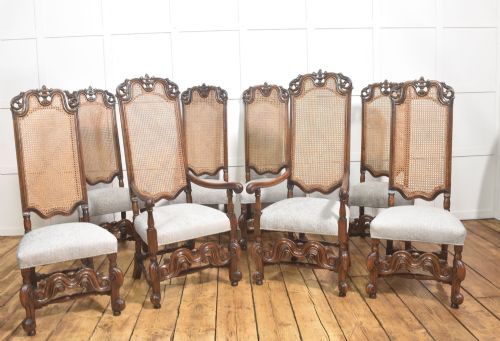
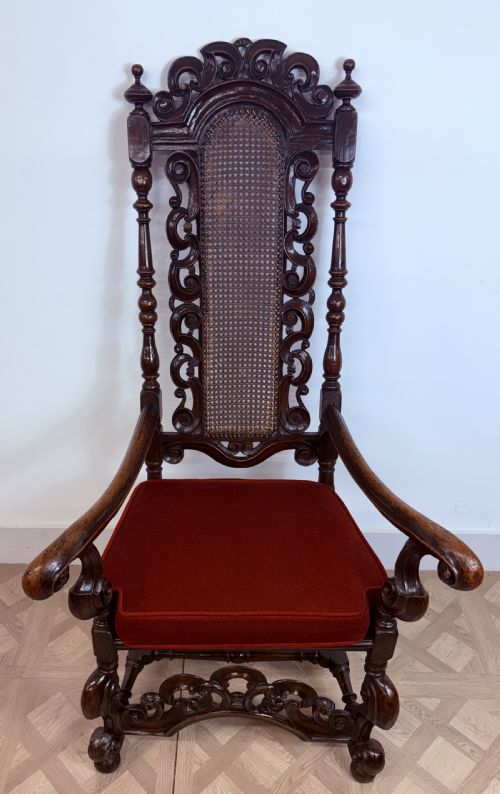
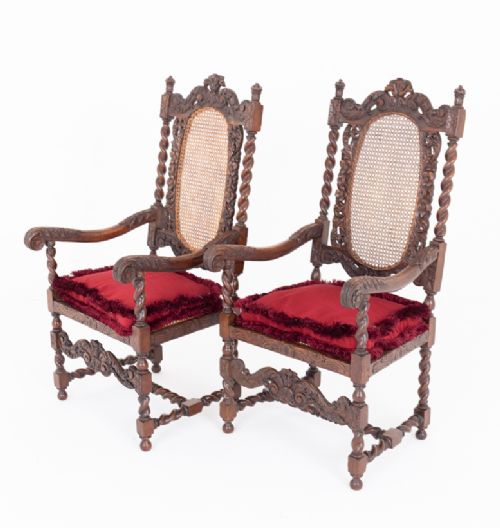
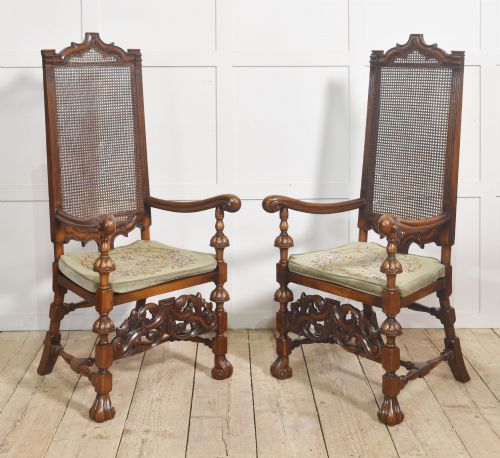
High back cane chairs draw inspiration from historical seventeenth-century aesthetics, notably the Carolean, Restoration, and William and Mary revivals. These pieces combine lofty, pierced wooden frames with resilient woven cane panels set into the backrests and seats.
Buyers frequently encounter matching sets intended for dining tables, alongside pairs of armchairs and side chairs. The selections span Edwardian interpretations, Victorian craftsmanship, and examples dated around nineteen hundred or eighteen hundred.
How they were made
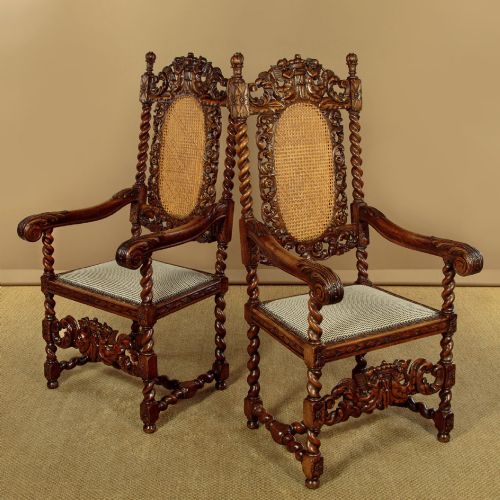
Cabinetmakers and joiners utilised solid hardwoods like walnut and oak to construct the substantial vertical frames required for these tall silhouettes. Timber was shaped using traditional turning techniques, producing distinctive supports such as barley twists that defined the structural uprights.
The characteristic woven panels relied on natural cane strands threaded meticulously through drilled holes in the wooden framework. Artisans combined this open-work weaving with dense carvings, occasionally incorporating upholstered elements in fabric, velvet, or tapestry for added comfort.
Retail Price Guide 2026
Typical UK retail prices for high back cane chairs, calculated from the Sellingantiques database of over a million retail prices indexed since 2003. This retail price guide relies exclusively on Sellingantiques data; no external sources or auction records are used, so the figures do not describe the wider market.
Barley twist supports invite guests to trace the spiralling wood with their fingers, convinced it grew that way on a very confused tree.
What varies in quality
Excellence in these pieces rests upon the depth and crispness of the hand-carving along the crest rails and stiles. Superior examples exhibit fluid, sharply defined motifs rather than shallow or mechanical shaping.
The integrity of the woven cane and the selection of timber elevate certain pieces above standard production. Dense, richly grained walnut or heavy oak coupled with tight, uniform caning distinguishes finer workshop output.
Waring & Gillow
The High Back Cane Chairs Glossary
- Cane
- A pliable material derived from the peeled outer bark of rattan palms, utilised for woven seats and backs. It provides a resilient, supportive surface while maintaining an airy appearance.
- Barley twist
- A decorative turning technique resembling a spiralling rope, frequently seen on the uprights and stretchers of revival seating. This form gained immense popularity during the seventeenth century and later revivals.
- Carolean
- A stylistic period corresponding to the reign of King Charles the Second, noted for lavish woodcarving, scrolling foliage, and grand proportions. Revivals of this aesthetic emerged strongly during the Victorian and Edwardian eras.
- Crest rail
- The uppermost horizontal member of a chair back, often shaped and heavily carved with heraldic or floral motifs. It serves as the focal decorative point when the chair is viewed from behind.
- Stretcher
- A horizontal wooden brace connecting the legs of a chair to provide structural rigidity. In these formal designs, stretchers often feature elaborate central finials and intricate carving.
Frequently Asked Questions
What periods do these chairs represent?
These pieces primarily date from revival periods spanning the Victorian and Edwardian eras, around nineteen hundred, alongside occasional pieces attributed to eighteen hundred or nineteenth century production. They deliberately echo seventeenth-century Carolean and William and Mary designs.
Maker attribution includes notable firms such as Waring and Gillow, reflecting the sustained popularity of historic revival styles among affluent households of the late nineteenth and early twentieth centuries.
How were high back cane chairs used historically?
Historically, such imposing seating was designed to project status and authority, positioned around large dining tables or placed formally against parlour walls. The elevated backrests allowed sitters to maintain an upright posture while displaying elaborate carved crests to assembled guests.
Because the woven cane offered flexible support, these chairs functioned well in formal entertaining spaces where visual drama outweighed deep, upholstered relaxation.
Are these chairs suitable for daily dining?
Dining sets and pairs of these chairs can accommodate regular use provided the underlying timber frame and woven cane remain secure. The sturdy oak and walnut construction offers reliable support for everyday meals.
Owners should consider adding loose squab cushions if softer seating is desired, as the original cane surface is firm and resilient by design.
How do I care for antique cane seating?
Maintaining cane panels involves keeping the material lightly hydrated with a damp sponge occasionally to prevent the natural fibres from becoming brittle. Direct heat sources and strong sunlight should be avoided to protect both the rattan and the polished wood.
Regular dusting with a soft brush prevents debris from settling within the interwoven strands, preserving the structural longevity of the weave.