

Antique Style Dining Chairs
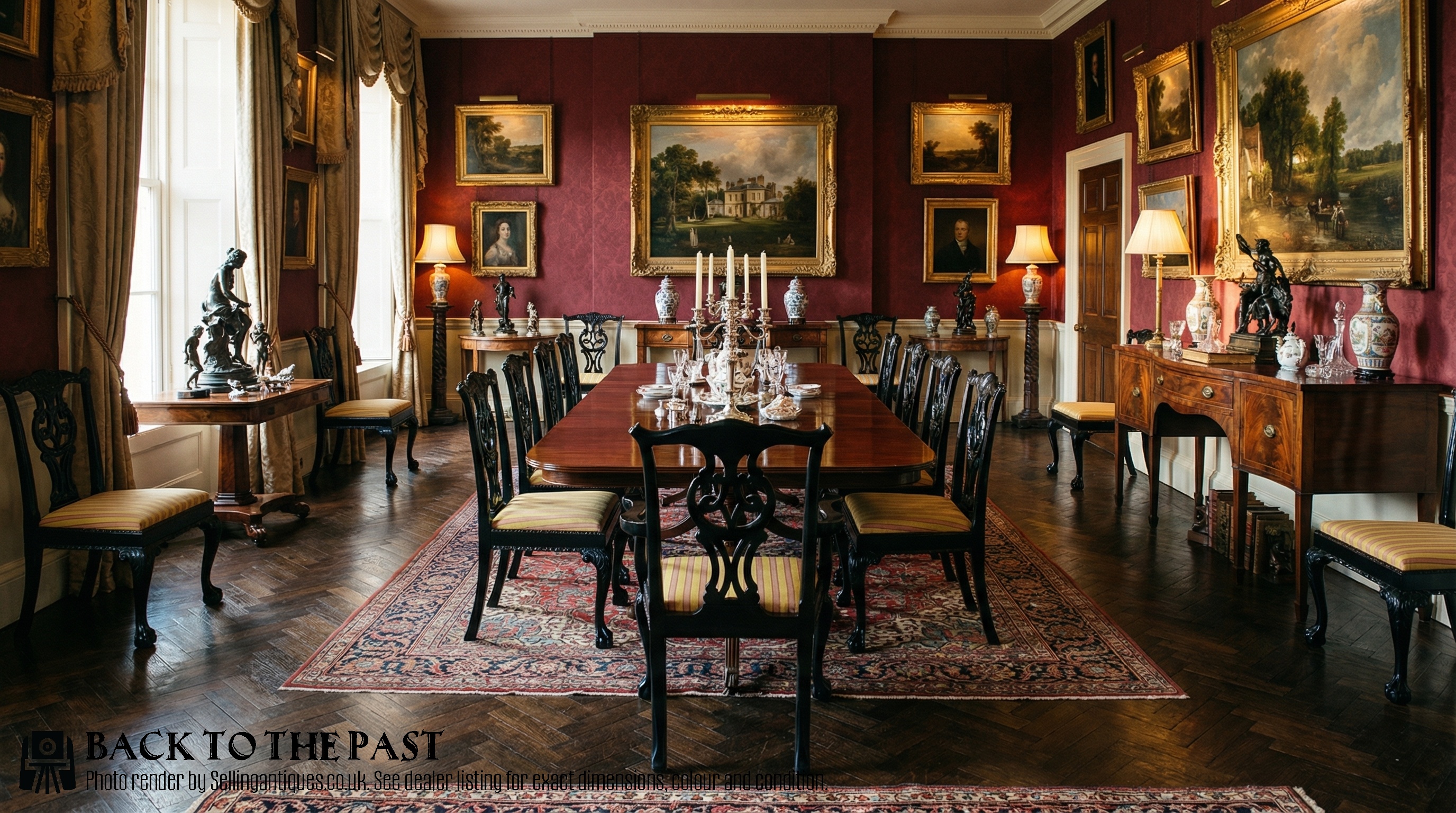
When you look for antique style dining chairs, you find seating that borrows historic Georgian and revival forms to anchor a room.
Antique Style Dining Chairs
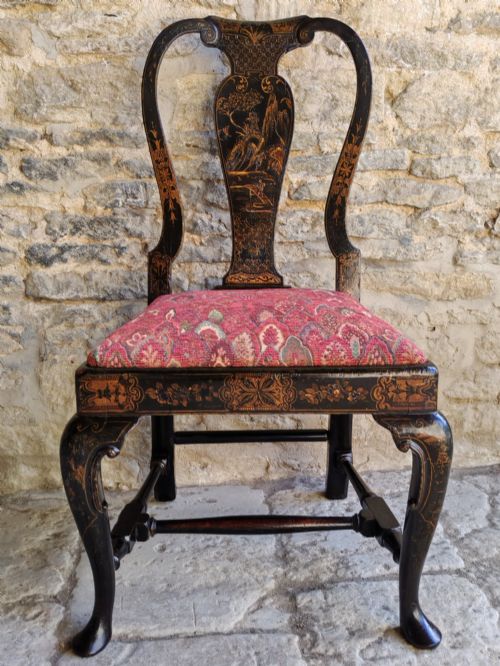
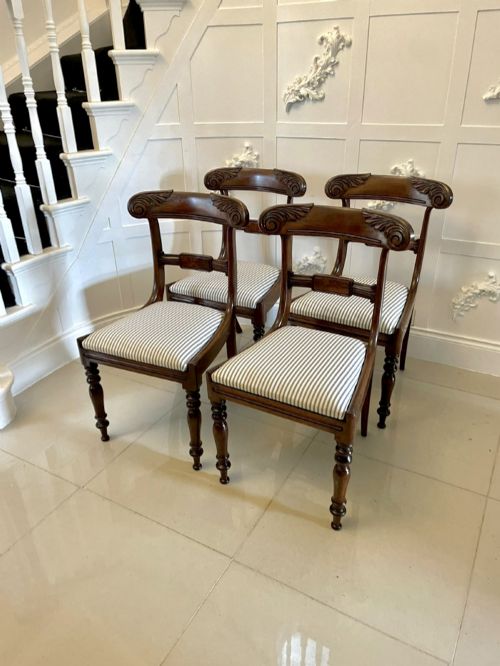
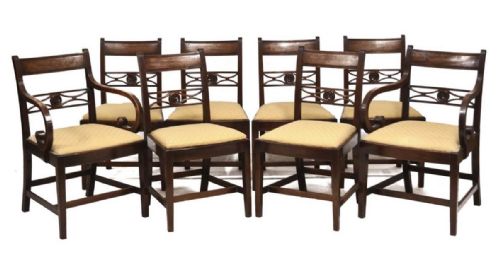
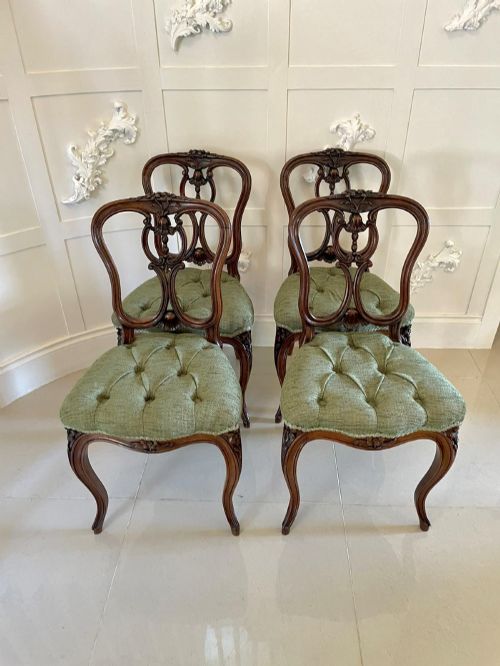
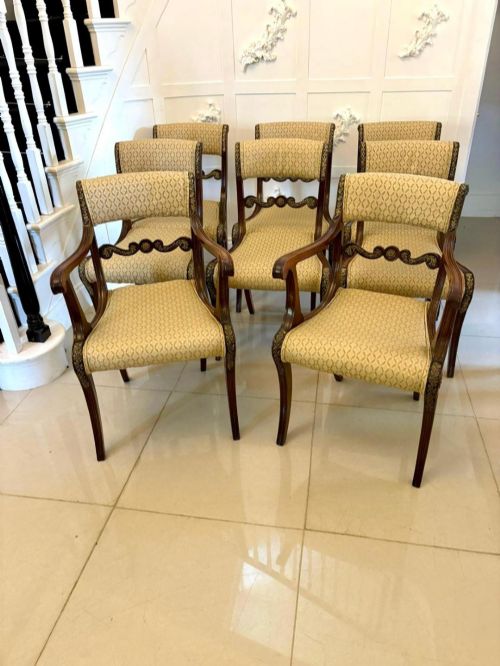
Antique style dining chairs encompass seating built in past centuries alongside later revival pieces that copy earlier designs. The phrase covers individual side chairs, elbow chairs, and large sets intended for formal dining rooms.
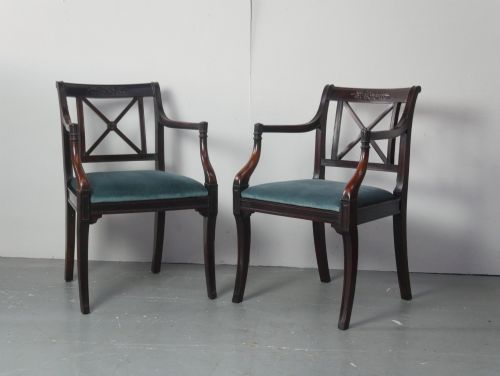
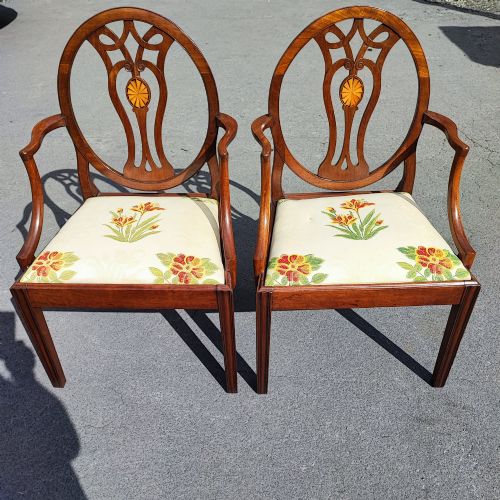
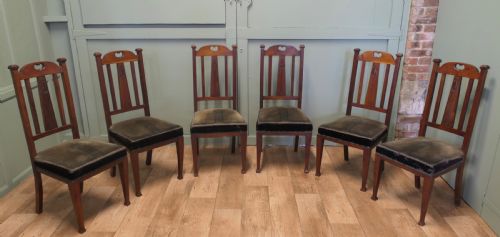
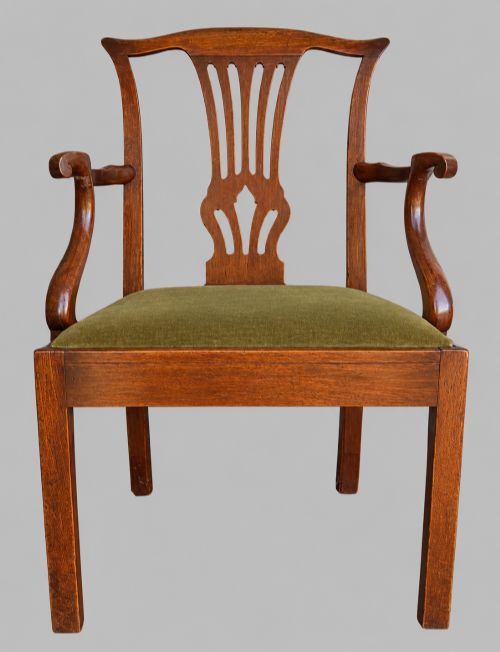
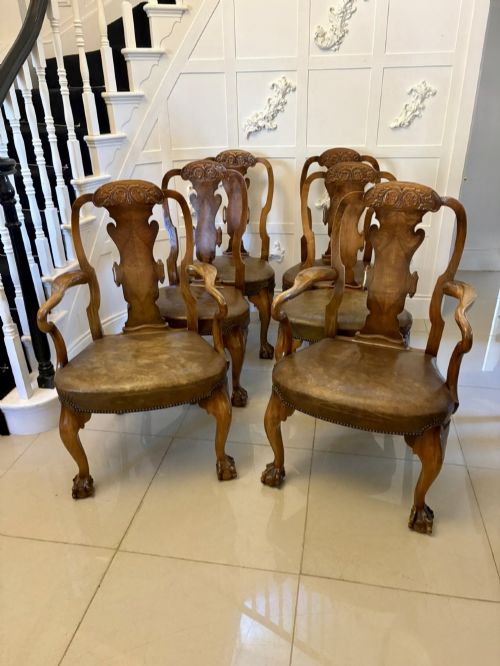
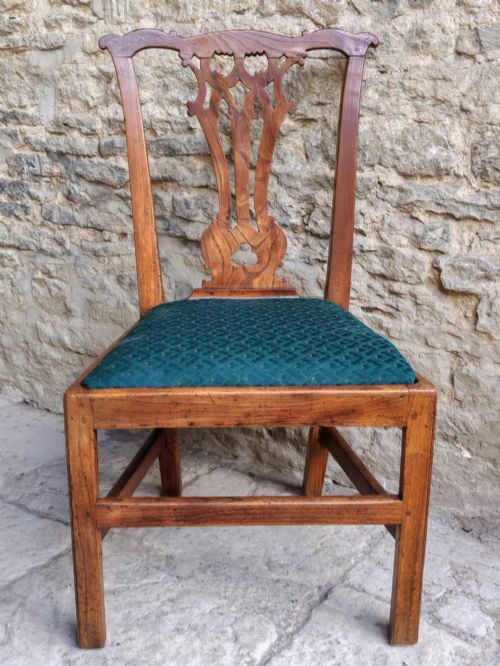
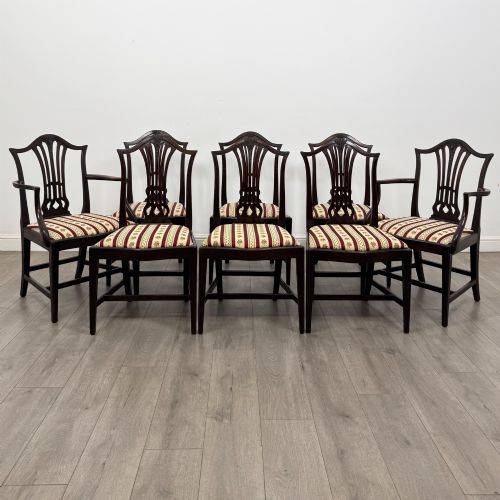
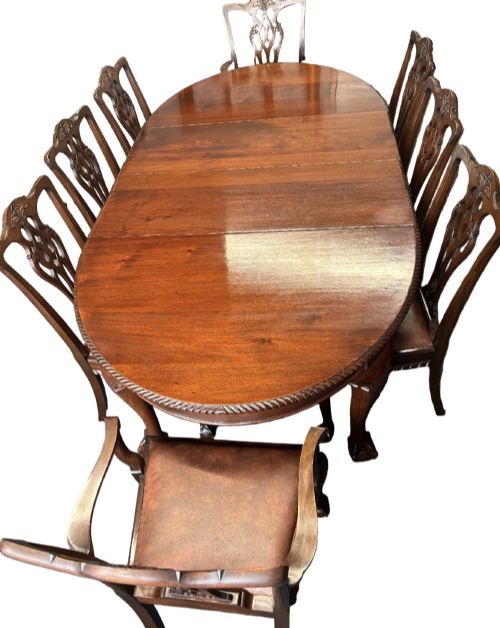
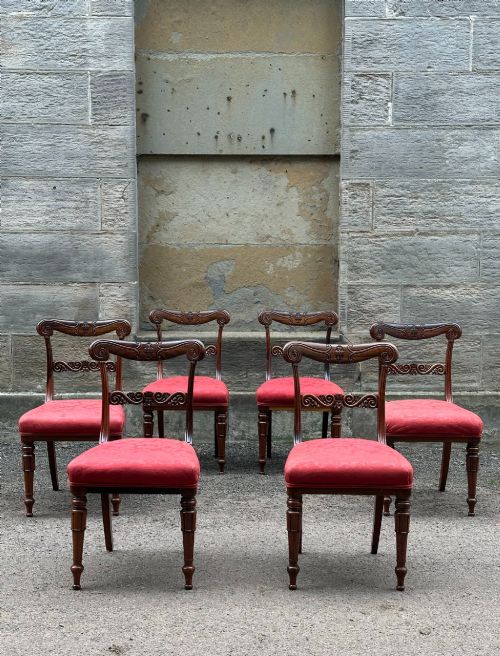
The most common examples on this page are mahogany chairs executed in the Chippendale, Hepplewhite, and Sheraton styles, alongside 19th-century and 20th-century revival sets.
Forms range from simple shield-back and ladder-back chairs to elaborate carved armchairs with upholstered seats in leather, fabric, or velvet.
How They Were Made
Cabinetmakers constructed these frames primarily in dense timbers such as mahogany, oak, walnut, and elm, relying on traditional joinery methods like mortise and tenon to secure the joints.
Surface decoration frequently involved hand carving on the splats and knees, alongside decorative inlay, brass accents, and applied veneers of burr walnut or mahogany.
Seats were traditionally built with drop-in pads or webbed upholstery frames covered in horsehair, leather, fabric, or woven rush.
Antique Style Dining Chairs Retail Price Guide 2026
Typical asking prices for style dining chairs among the pieces listed under this phrase on Sellingantiques today, from the lower quarter to the upper quarter. They describe what is for sale here now, not the wider market.
Listings feature dining chairs spanning from the 18th century through to the 1930s, built in mahogany, oak, walnut, elm, and ash.
What Varies in Quality
Quality rests in the crispness of the timber carving, the selection of figured wood grains, and the structural integrity of the frame joints under daily use.
Larger sets matched across twelve or twenty pieces demonstrate greater workshop skill than small pairs, maintaining consistent proportion and detail from the single chairs to the carvers.
Charles Tozer·Gillows
The Antique Style Dining Chairs Glossary
- Carver
- An armchair designed with elbow rests, traditionally placed at the head of a dining table.
- Splat
- The vertical wooden strip down the centre of a chair back, frequently pierced or carved in revival designs.
- Side Chair
- An upright chair built without arms, intended for the sides of a dining table.
- Shield Back
- A chair back shaped like a heraldic shield, popularized by Hepplewhite and later revival makers.
- Bar Back
- A horizontal cross rail across the upper back of a chair, common in William IV designs.
Antique Style Dining Chairs: Frequently Asked Questions
How do I spot a revival chair?
Revival chairs often copy 18th-century forms like Chippendale or Queen Anne while using 19th or 20th-century timber seasoning and machine-assisted joinery.
Examining the underside and the interior blockwork reveals the true age of the construction.
Can I mix singles and carvers?
Large dining sets historically combined a matching pair of armchairs with several single chairs for the table sides.
This traditional arrangement provides visual balance while placing comfortable elbow chairs at the ends.
What woods are most common?
Mahogany dominates formal 18th-century and revival dining seating due to its stability and dark grain.
Oak and elm appear frequently in country, Arts and Crafts, and Jacobean revival styles.
How are large sets matched?
Matching sets of eight, ten, or twelve chairs share identical turning, back splats, and timber finish across every piece.
Finding large uniform groups requires looking at workshop-produced sets rather than assembled singles.