
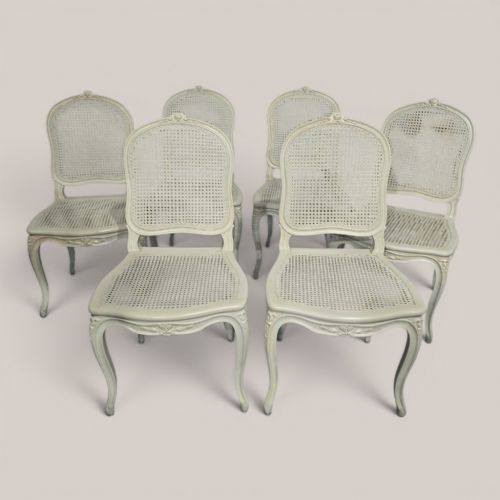
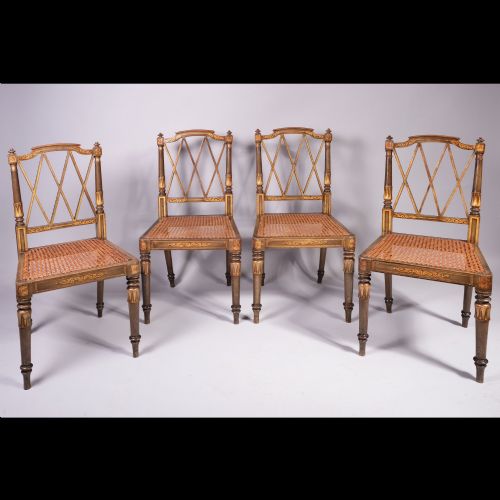
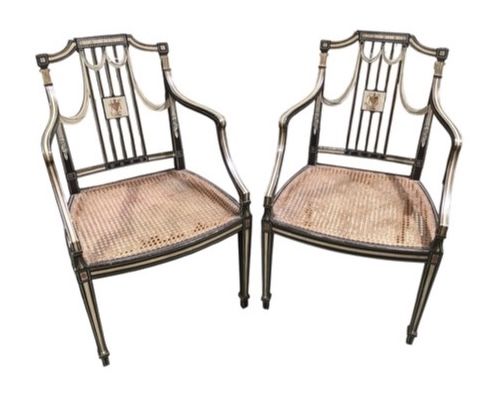

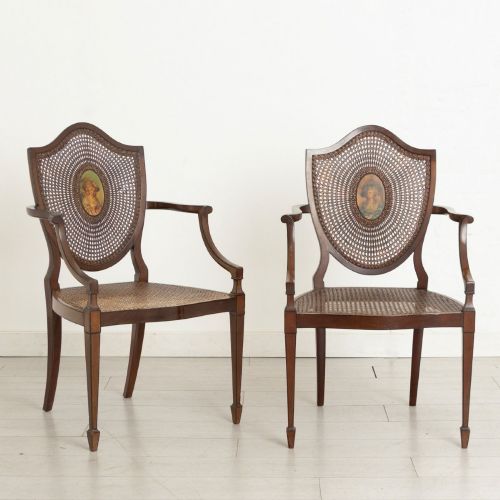

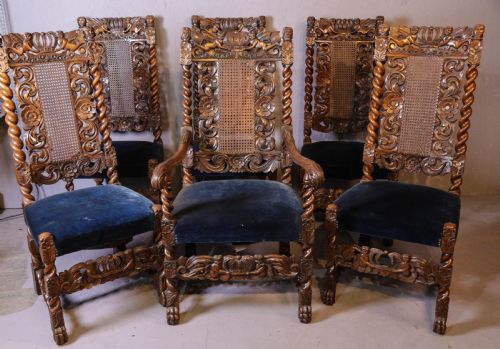

Cane Back Dining Chairs
Cane back dining chairs bring woven texture and historical form to a room, offering durability alongside lightness.

Cane Back Dining Chairs
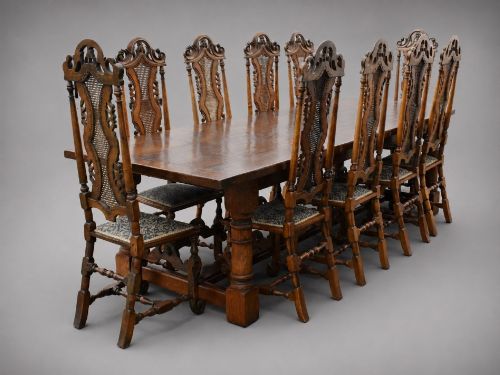
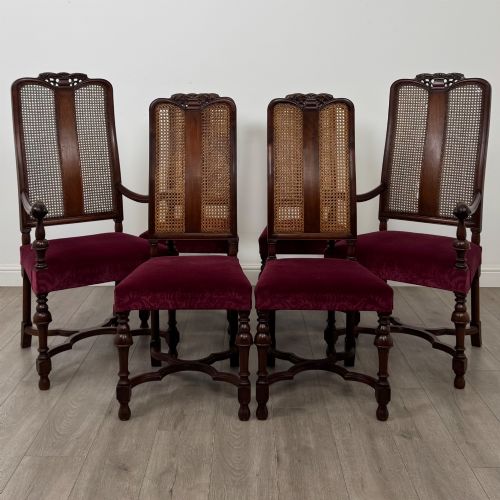
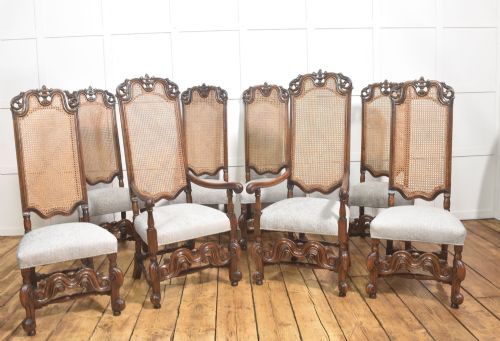
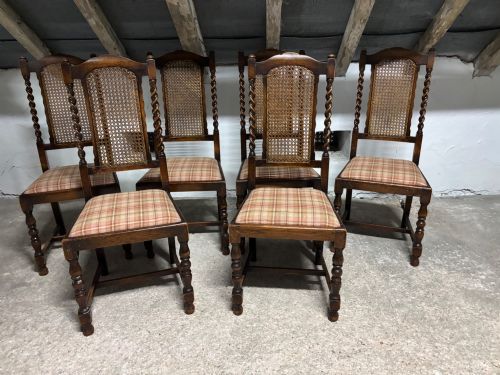
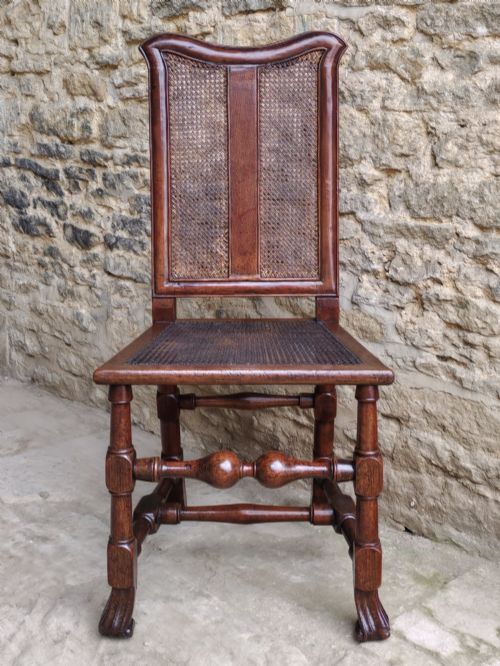
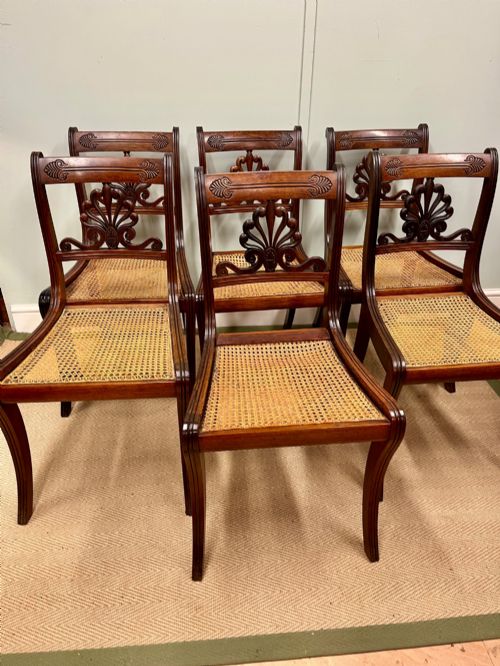
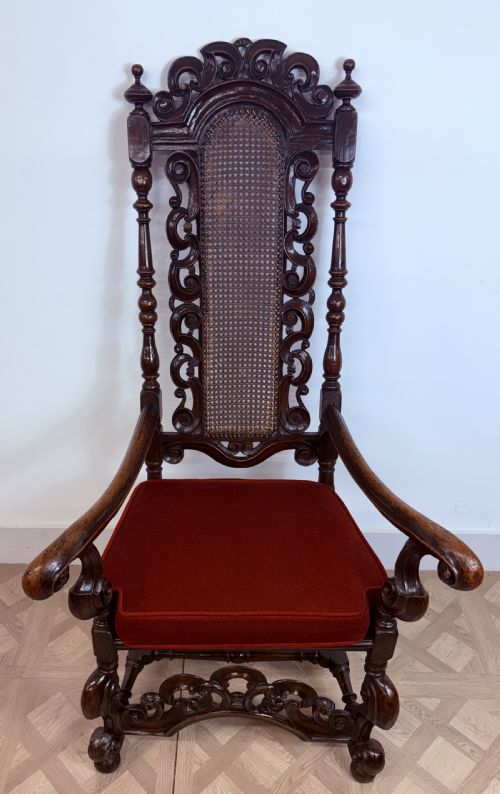
Cane back dining chairs combine woven seating panels with timber frames built for formal or everyday dining spaces. Pieces appearing on this page span several centuries, moving from seventeenth-century origins through Regency interpretations to twentieth-century revivals.
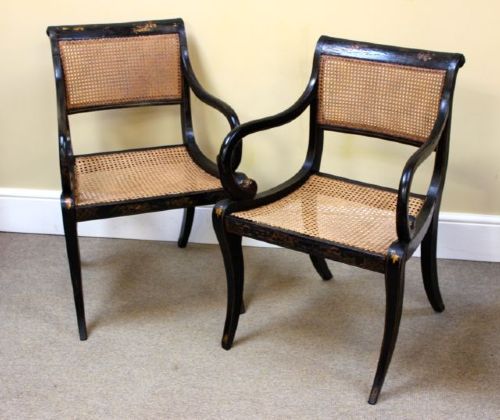
Buyers encounter single armchairs, pairs of side chairs, and matched sets numbering up to twelve pieces. Forms range from high-back Jacobean revival oak seats to French bergere chairs and ebonised Regency designs.
The material vocabulary draws on traditional timbers including oak, walnut, mahogany, and rosewood, alongside painted finishes and giltwood. Many examples incorporate upholstered squab cushions or cane seats to match the pierced back panels.
Materials and Construction
Cabinetmakers constructed the frames using native and imported hardwoods like oak, walnut, mahogany, and rosewood, often shaping them with barley twist legs or carved back rails. Frames employ traditional joinery such as mortise and tenon to support the tension of woven panels.
The cane itself uses peeled rattan strips threaded through drilled holes in the timber frame in intricate mesh patterns. Artisans supplemented these woven panels with secondary materials like fabric upholstery, leather, paint, and bone inlay depending on the stylistic period.
Cane Back Dining Chairs Retail Price Guide 2026
Typical asking prices for cane back dining chairs among the pieces listed under this phrase on Sellingantiques today, from the lower quarter to the upper quarter. They describe what is for sale here now, not the wider market.
Listings feature dining chairs spanning from the 17th century through the Victorian era to the 1920s, utilising oak, walnut, mahogany, and rosewood.
Assessing Quality
Quality rests on the crispness of the timber carving and the tightness of the cane weaving across the backrest and seat. Finer examples display deeply sculpted crest rails and perfectly tensioned rattan that yields slightly without sagging.
The integrity of the structural frame determines longevity, distinguishing workshop-produced seating from mass-produced revival pieces. Matching sets with uniform timber grain and consistent patination command greater attention than assembled groups.
Waring & Gillow·Gillows
The Cane Back Dining Chairs Glossary
- Cane
- Strips of woven rattan used to form flexible, breathable panels for chair backs and seats. This material creates a lightweight appearance while maintaining structural support.
- Bergere
- An enclosed upholstered armchair with wooden framing, often featuring cane side panels and a loose seat cushion. French models frequently exhibit carved woodwork.
- Barley Twist
- A turned furniture leg or stretcher carved in a helical screw pattern resembling twisted barley. This decorative turning appears frequently on seventeenth-century and revival oak chairs.
- Carolean
- A seventeenth-century English style spanning the reign of Charles II, characterised by rich walnut frames and elaborate scrollwork. Revival versions of this aesthetic emerged during the Victorian period.
- Ebonised
- Timber treated with a dark stain or finish to imitate ebony wood. This technique appears on nineteenth-century and twentieth-century Regency style dining chairs.
Cane Back Dining Chairs: Frequently Asked Questions
How do I clean cane furniture?
Wipe cane panels gently with a damp cloth using mild soap, avoiding excess moisture that causes the rattan to brittle. Condition the material periodically with linseed oil to maintain flexibility.
Keep these chairs away from direct heat sources and harsh sunlight to prevent the woven strands from drying out and snapping.
Can I use these chairs daily?
Most antique cane chairs tolerate regular daily use provided the woven panels remain taut and undamaged. Adding custom squab cushions reduces direct pressure on older cane.
Heavier sitters should exercise care with antique side chairs, reserving them for formal dining or occasional seating.
How do I spot a revival piece?
Revival chairs often feature machine-woven cane inserted into a groove with a separate spline, whereas older pieces show individual strands hand-drilled through the frame. Timber patination and tool marks also help differentiate nineteenth-century and twentieth-century copies from seventeenth-century originals.
Examine the underside of the seat for joinery methods and wood ageing that correspond to the stated period.
Are large sets difficult to find?
Assembled matching sets of six, eight, or twelve dining chairs appear less frequently than isolated pairs or single armchairs. Many larger dining sets represent later matched groupings rather than original factory sets.
Inspect the subtle variations in timber grain and frame dimensions to confirm whether a large set originated together.