
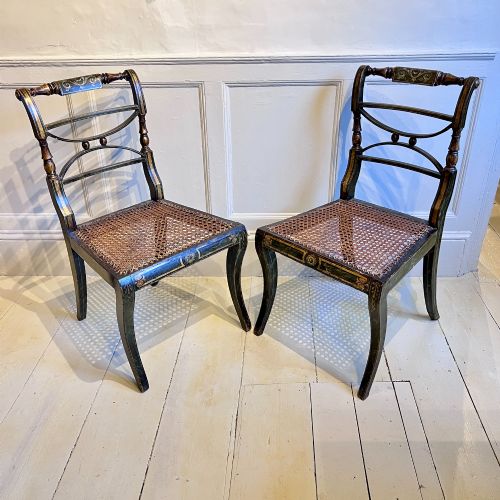
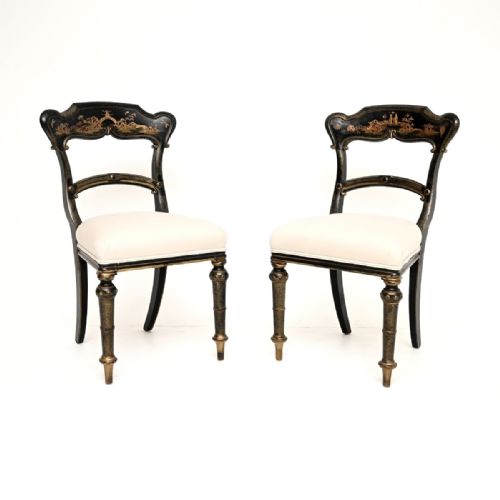
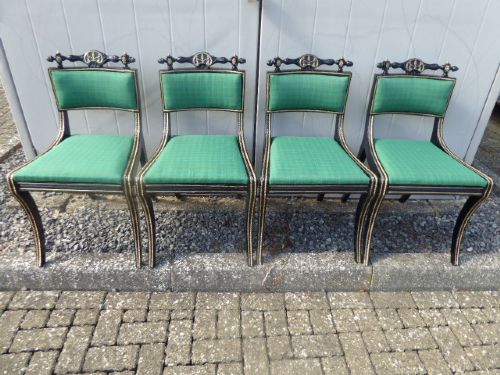
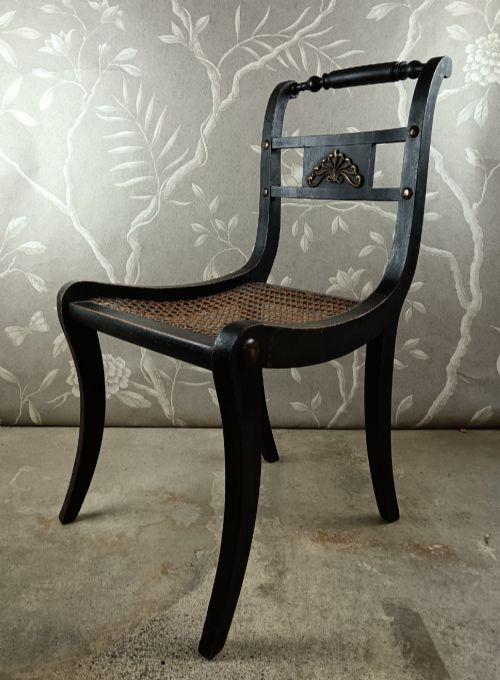
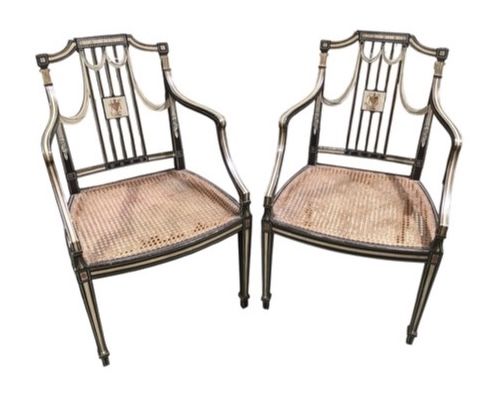


Ebonised Dining Chairs
These ebonised dining chairs bring dark, dramatic timber and painted finishes to the table, offering a striking alternative to standard mahogany.
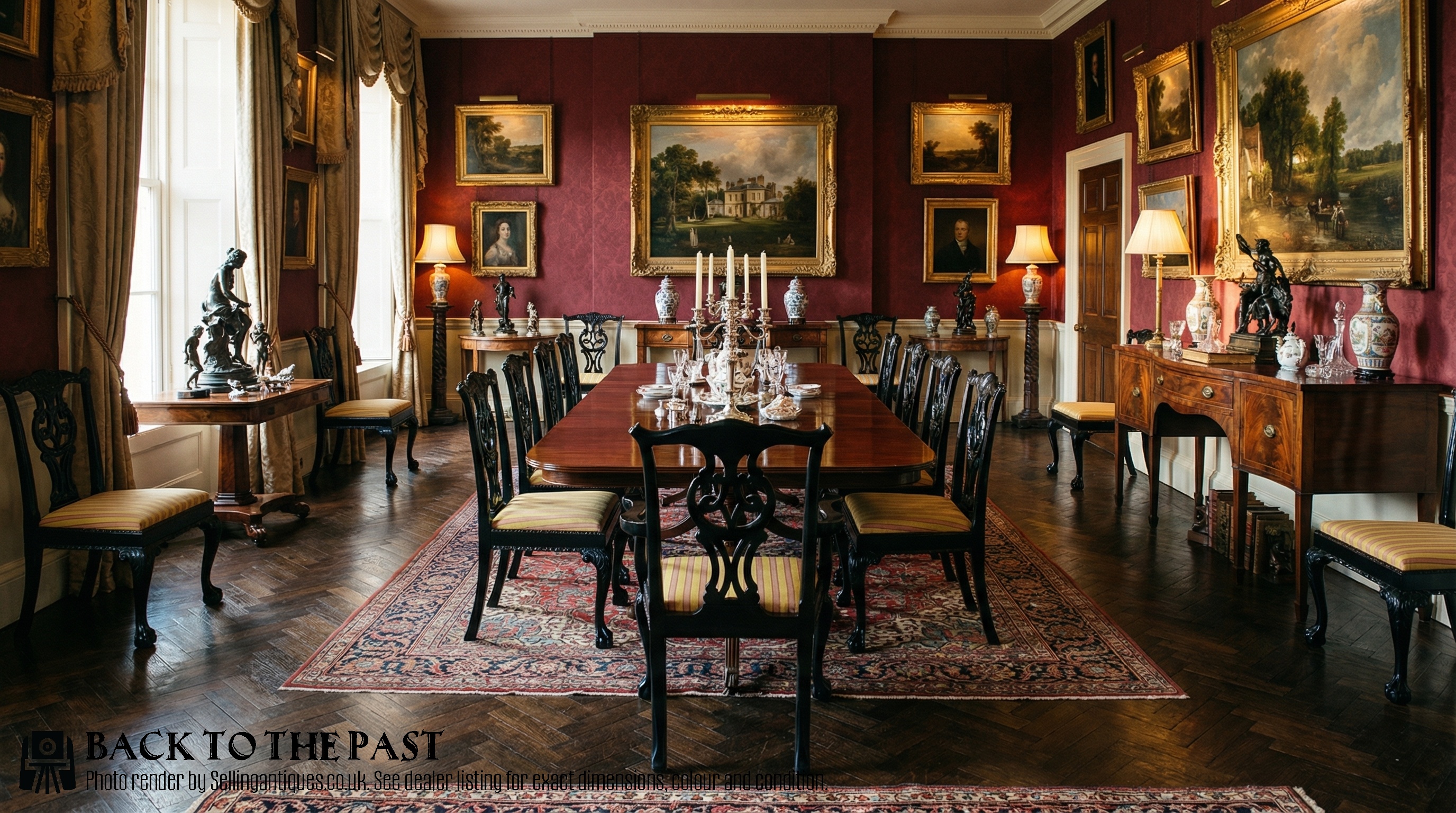
Ebonised Dining Chairs
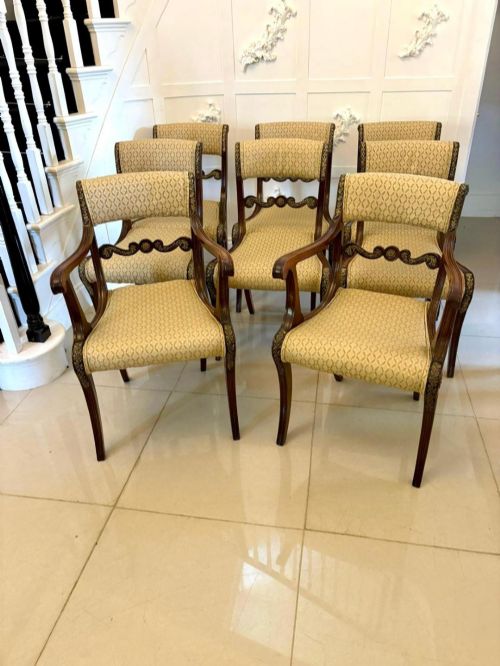
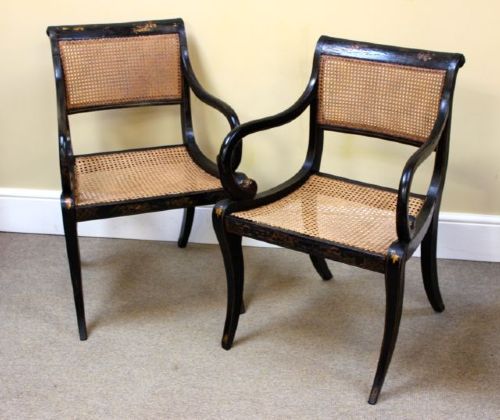
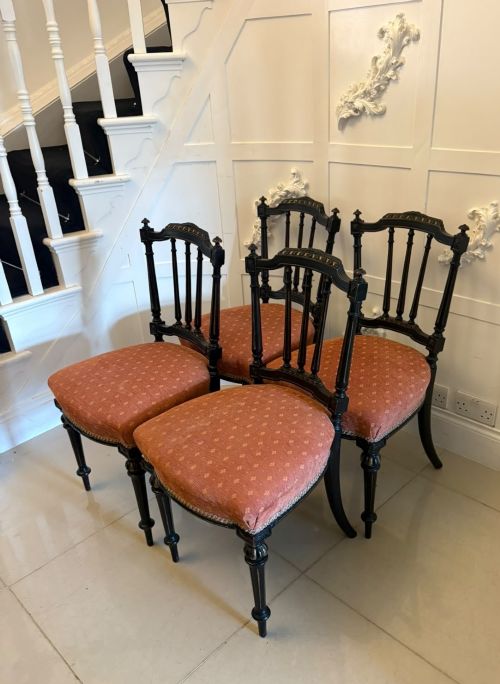
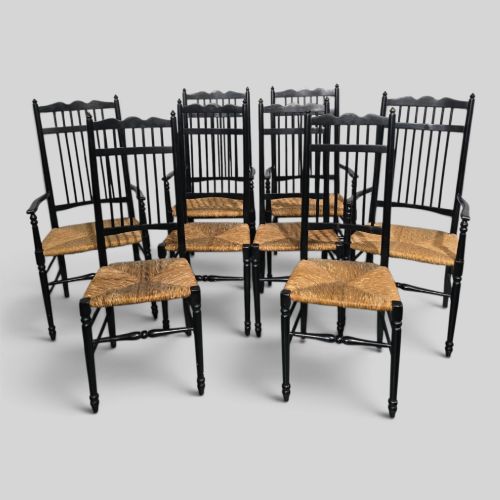
Ebonised dining chairs span several centuries, with the Regency and Victorian periods heavily represented among these listings. You will encounter side chairs, armchairs, and larger sets designed for formal dining rooms.
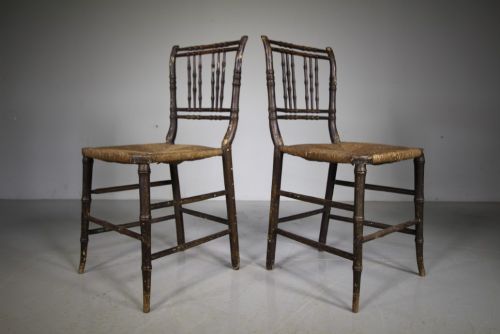
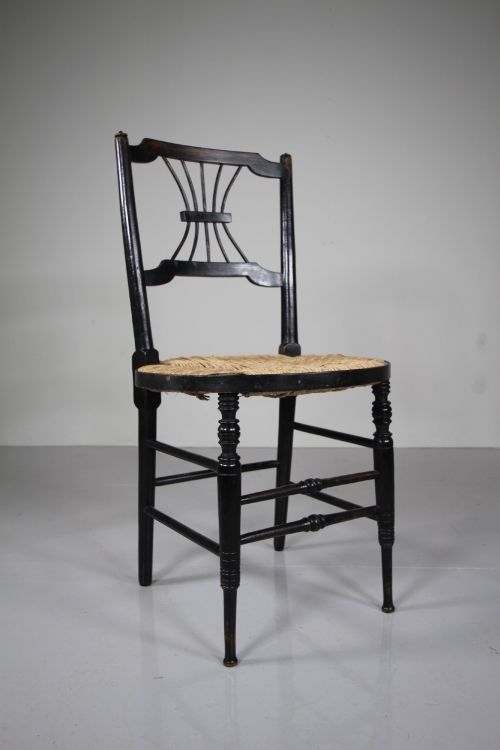
The selection ranges from early nineteenth-century painted and faux bamboo models to later Arts and Crafts and Aesthetic Movement designs. Many feature turned legs, caned seats, or upholstered pads.
Makers drew on diverse historical sources, producing everything from Gothic and Chippendale revivals to Anglo-Indian forms.
How they were made
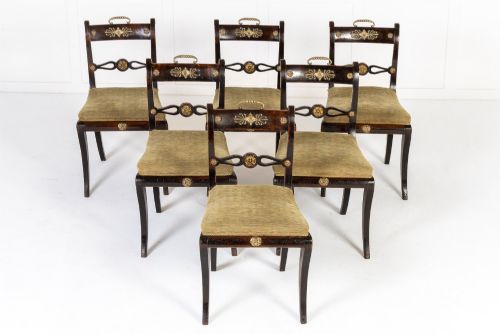
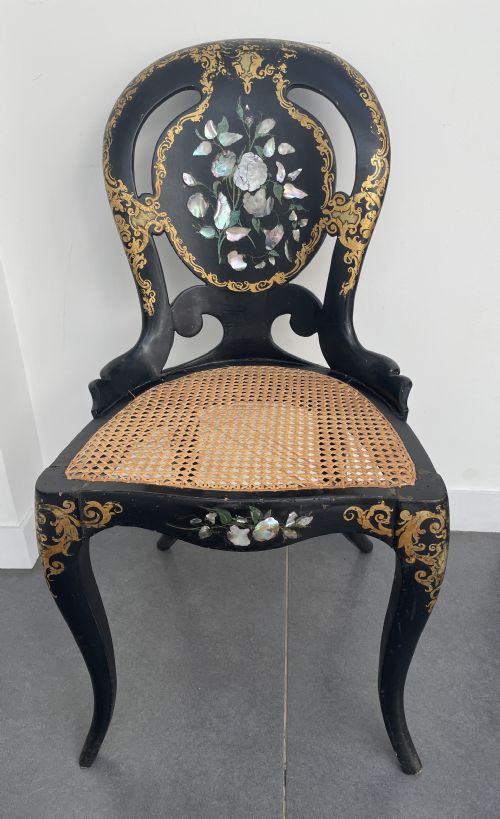
Craftsmen used timber such as beech, mahogany, or oak, applying dark paint, lacquer, or polish to simulate ebony. Gilt, brass, and mother-of-pearl inlay frequently highlight the dark surfaces.
Seats incorporate traditional materials like cane, rush, fabric, and painted wood. Structural framing relies on time-tested joinery suited to daily use around a dining table.
Ebonised Dining Chairs Retail Price Guide 2026
Typical asking prices for ebonised dining chairs among the pieces listed under this phrase on Sellingantiques today, from the lower quarter to the upper quarter. They describe what is for sale here now, not the wider market.
Some nineteenth-century makers cleverly turned ordinary beech into exotic ebony simply by applying a steady hand and a pot of black paint.
What varies in quality
Quality rests on the crispness of the carving, the finesse of the ebonisation or painted decoration, and the integrity of any applied gilt or inlay. Sets that remain together in large numbers command attention for their uniformity.
Finer examples show careful attention to detail in secondary woods, structural joinery, and original seating surfaces such as hand-woven cane.
William Morris·Philip Webb·Bruce J. Talbert
The Ebonised Dining Chairs Glossary
- Ebonised wood
- Timber treated with stain, paint, or polish to imitate the appearance of ebony. This dark finish gained immense popularity during the Regency and Victorian eras.
- Aesthetic Movement
- A late nineteenth-century design style emphasising visual beauty over narrative content. Pieces from this movement often display clean lines and Japanese-inspired decoration.
- Caned seat
- A seating surface woven from peeled rattan cane. It provides a light, flexible base frequently found on Regency and Victorian chairs.
- Parcel gilt
- A decorative technique where selected carved details or mouldings receive a thin application of gold leaf. It creates a bright contrast against ebonised surfaces.
- Sabre leg
- A concave, outwardly curving leg resembling a cavalry sabre. This form is a hallmark of Regency seating design.
Ebonised Dining Chairs: Frequently Asked Questions
How do I date an ebonised dining chair?
Dating relies on observing structural forms, turning styles, and decorative motifs like gilding or mother-of-pearl inlay. Regency models often show sabre legs or rope-back designs, whereas Victorian examples tend to incorporate heavier carved elements or Aesthetic Movement decoration.
Comparing the timber species and joining techniques also helps determine whether a chair originates from the early nineteenth century or a later revival period.
Are these chairs suitable for daily use?
Many of these chairs were built for practical dining rooms and remain sturdy enough for regular seating. Checking the rigidity of the frame and the condition of the joints ensures they withstand everyday life.
Caned or upholstered seats may require occasional maintenance or restoration if they show wear from long use.
What is the difference between Regency and Victorian styles here?
Regency ebonised chairs frequently draw on classical or faux bamboo inspirations, often featuring slender frames, cane seats, and subtle gilt accents. They reflect an earlier, restrained aesthetic.
Victorian pieces tend to be heavier, incorporating elaborate inlays, amboyna, mother-of-pearl, or distinct Gothic and Aesthetic Movement influences.
How do I care for ebonised wood?
Ebonised surfaces benefit from dusting with a soft, dry cloth and protection from direct sunlight and moisture. Avoid harsh modern chemical sprays that can dull the dark painted or polished finish.
Applying a suitable microcrystalline wax occasionally helps preserve the sheen of the timber without building up residue.