


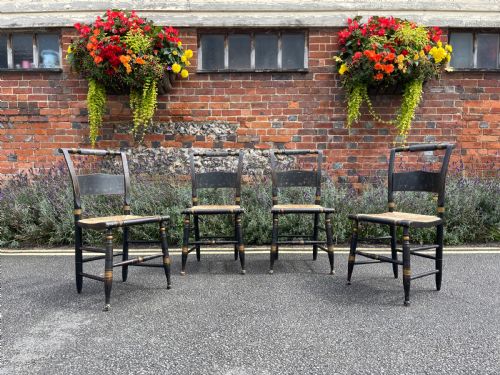


Black Painted Dining Chairs
Black painted dining chairs bring instant architecture to a room, offering the crisp silhouette of Georgian, Regency, and Victorian design.
Black Painted Dining Chairs
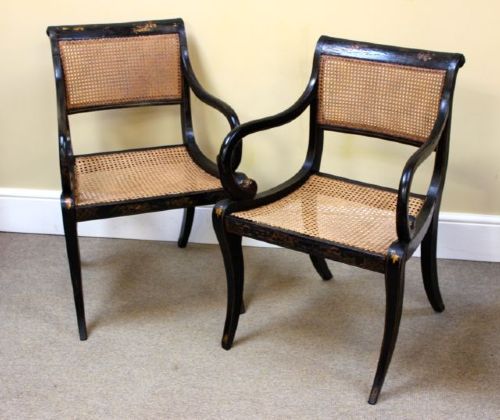
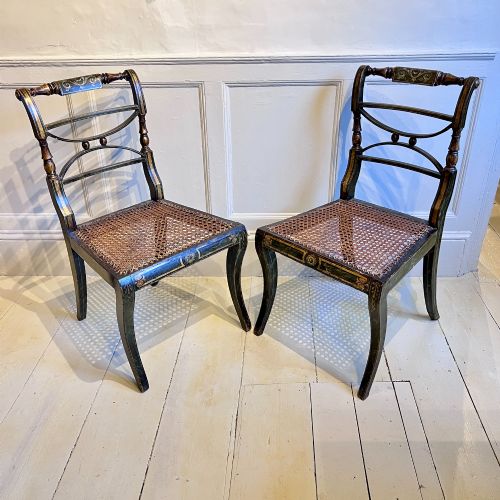
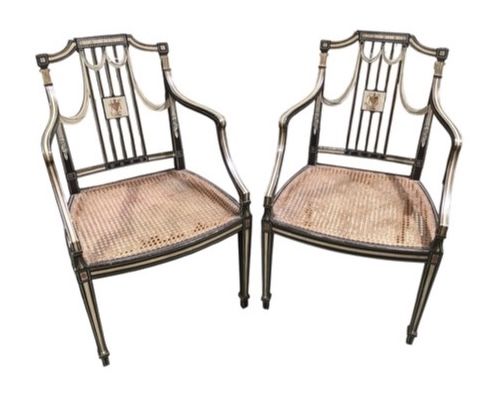
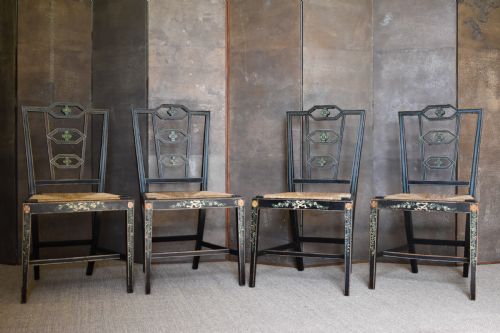
When you search for black painted dining chairs, you are looking at seating finished in dark paint, ebonised wood, or lacquer, spanning the Georgian, Regency, Victorian, and early twentieth century periods. These pieces appear as side chairs, open-arm armchairs, and elbow chairs, often shaped with shield backs or classical lines.
The versions you are most likely to meet on this page belong to the Regency period and its later revivals, alongside George III and nineteenth-century examples. They frequently arrive in matched pairs or larger sets, utilising cane, rush, or fabric seats.
How they were made
These chairs are constructed from wood finished with dark paint, ebonised treatments, or japanned lacquer, sometimes enhanced with gold leaf and decorative painting. Makers shaped timber into formal dining seats and armchairs, incorporating woven cane or rush into the frames.
Techniques range from traditional eighteenth-century joinery to later nineteenth-century revivals, utilising applied decoration and parcel gilding to highlight the structural lines of the wood.
Black Painted Dining Chairs Retail Price Guide 2026
Typical asking prices for black painted dining chairs among the pieces listed under this phrase on Sellingantiques today, from the lower quarter to the upper quarter. They describe what is for sale here now, not the wider market.
Block feet make an unexpected appearance on an eighteenth-century armchair, proving that even formal dining seats sometimes wore sensible shoes.
What varies in quality
Quality rests in the crispness of the turning, the integrity of the timber frame, and the precision of the painted or ebonised surface. Finer examples display careful joinery and refined proportions rather than heavy-handed restoration.
The sophistication of the painted decoration, whether simple parcel gilt accents or detailed japanned motifs, separates standard utility seating from more ambitious parlour and dining chairs.
The Black Painted Dining Chairs Glossary
- Ebonised wood
- Timber stained or painted black to imitate expensive ebony. This finish became particularly popular during the Regency and Victorian eras for formal seating.
- Caning
- Woven rattan material used for chair seats and backs. It provides a light, resilient surface that complements painted frames.
- Japanned
- European imitation of East Asian lacquerwork, featuring dark grounds and metallic decoration. It appears on decorative armchairs and single chairs.
- Shield back
- A chair back shaped like a heraldic shield, popularized during the Georgian period. It offers a graceful outline for painted and decorated designs.
- Parcel gilt
- Portions of a carved or painted surface highlighted with gold leaf. This technique adds contrast to black painted and ebonised frames.
Black Painted Dining Chairs: Frequently Asked Questions
How do I date black painted dining chairs?
Dating relies on the structural form, joinery methods, and the style of decoration. Regency and Georgian examples show distinct classical proportions, while later revivals adopt specific nineteenth-century interpretations.
Material choices like cane, rush, and underlying timber types also help place the chair within its historical period, distinguishing eighteenth-century originals from twentieth-century revivals.
Are painted dining chairs practical for daily use?
These chairs function well for everyday dining provided the timber frame remains stable and the joints are secure. Many historical examples were built for active domestic service.
Care involves protecting the painted or ebonised finish from excessive moisture and placing pads under cane or rush seats if heavy use is expected.
What is the difference between ebonised and painted chairs?
Ebonised chairs use wood treated with stains or dark finishes to penetrate the grain and resemble ebony, keeping the natural texture partially visible. Painted chairs carry an opaque layer of pigment over the timber.
Both finishes achieve a dark, formal appearance, but painted surfaces often incorporate decorative motifs or gold leaf detailing.