

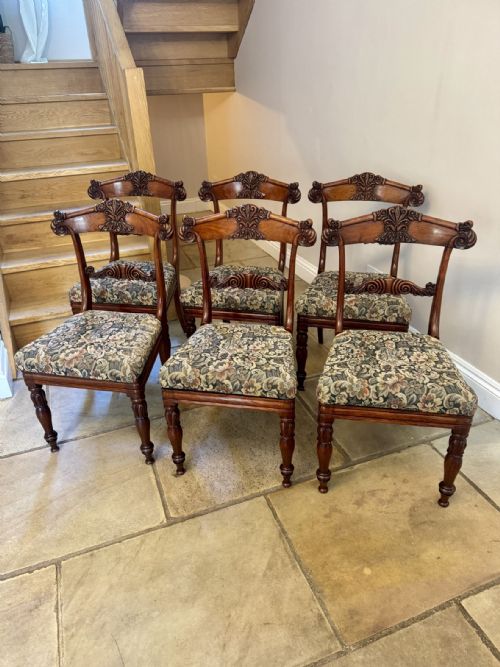
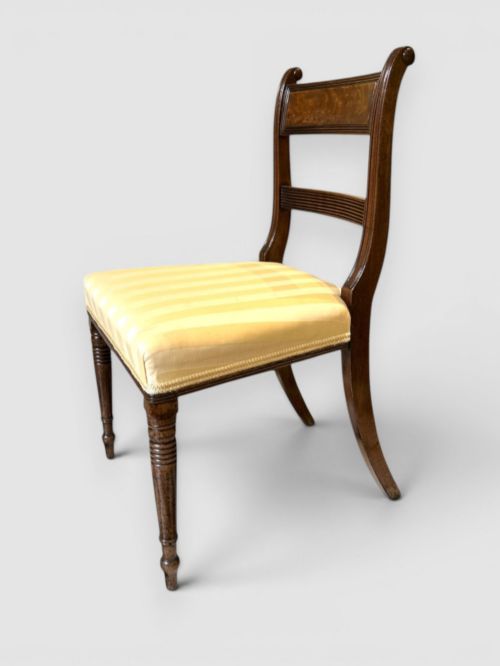
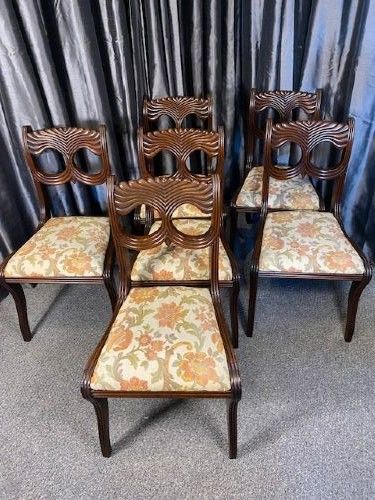
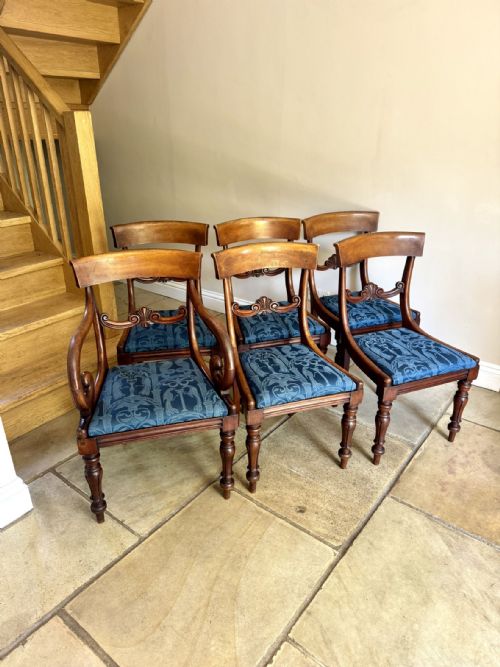

Set of Six Regency Chairs
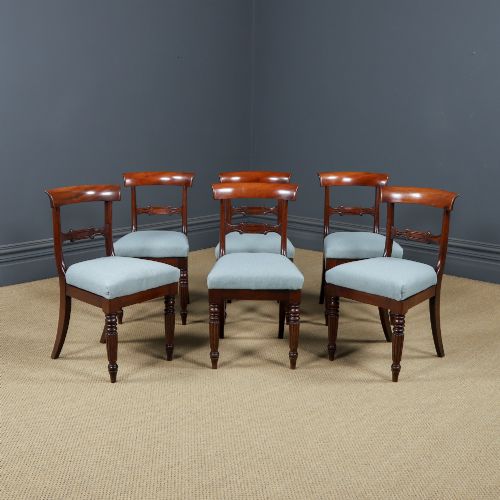
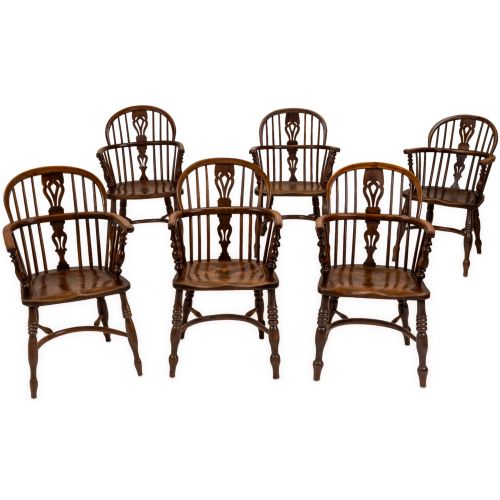
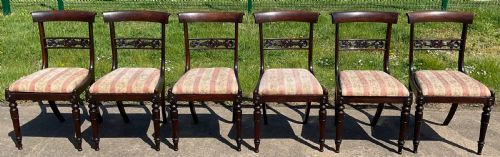
A set of six regency chairs brings architectural form and rich timbers to a dining room, offering matched seating from the early nineteenth century.
Set of Six Regency Chairs
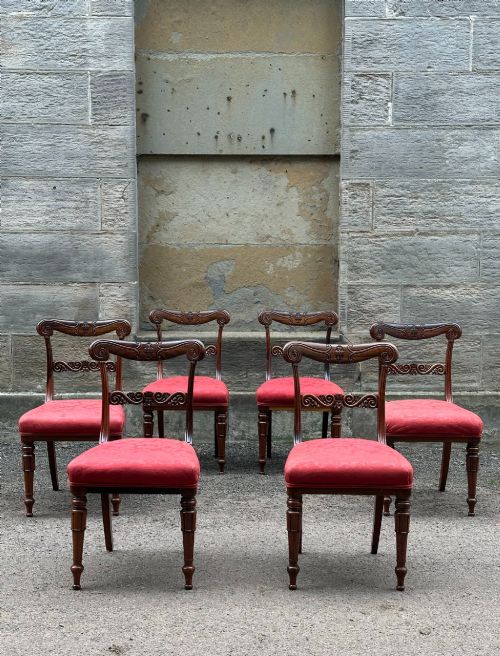
When searching for a set of six regency chairs, collectors encounter matched dining seating primarily produced during the early nineteenth century, alongside later nineteenth-century interpretations. These suites typically comprise dining chairs and occasional carvers executed in mahogany or rosewood, reflecting the classical tastes of the period.
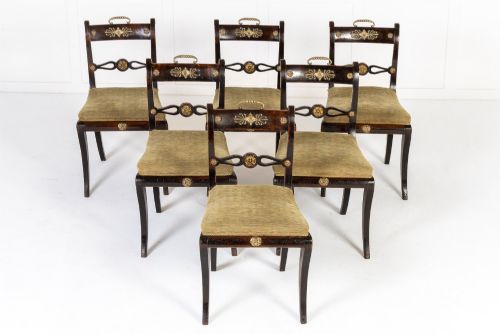
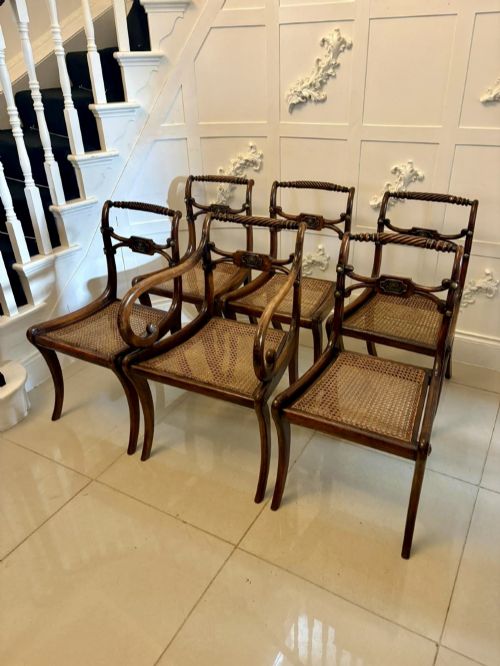
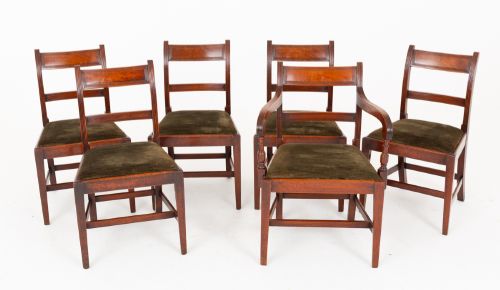
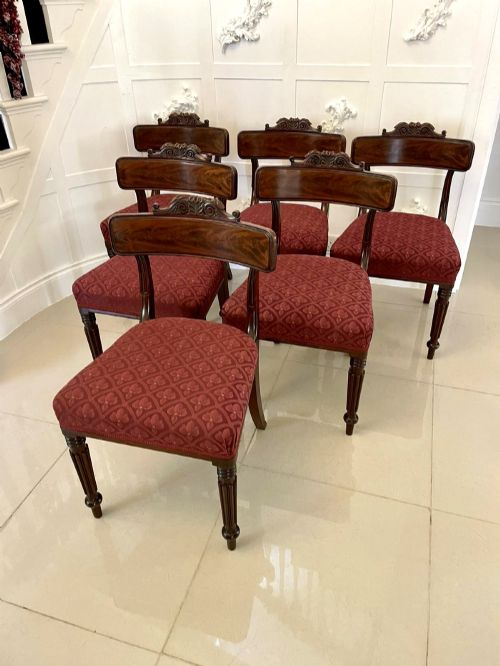
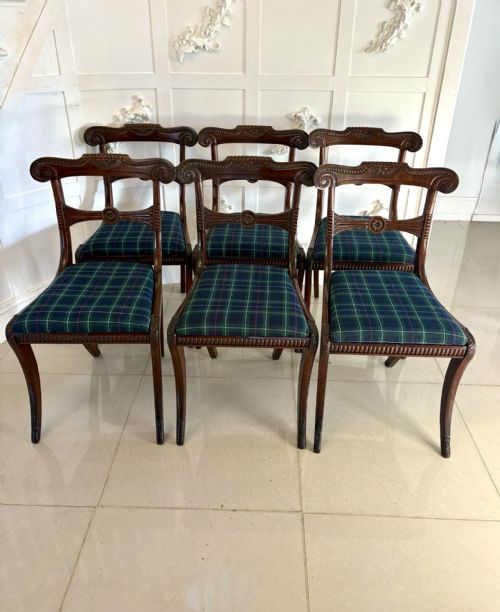
The configurations most frequently encountered on this page combine five single chairs with a single armchair, or six matching single chairs intended for formal dining. Stylistic variations span from plain bar back forms to elaborately carved or brass-inlaid examples referencing the Regency, William IV, and Georgian eras.
Materials and construction methods
The cabinetmakers who built these dining suites relied predominantly on solid mahogany and rosewood, occasionally utilising faux rosewood or ebonised finishes to mimic rarer timbers. Seat structures frequently incorporate drop-in pads upholstered in fabric, leather, or velvet, alongside woven cane panels.
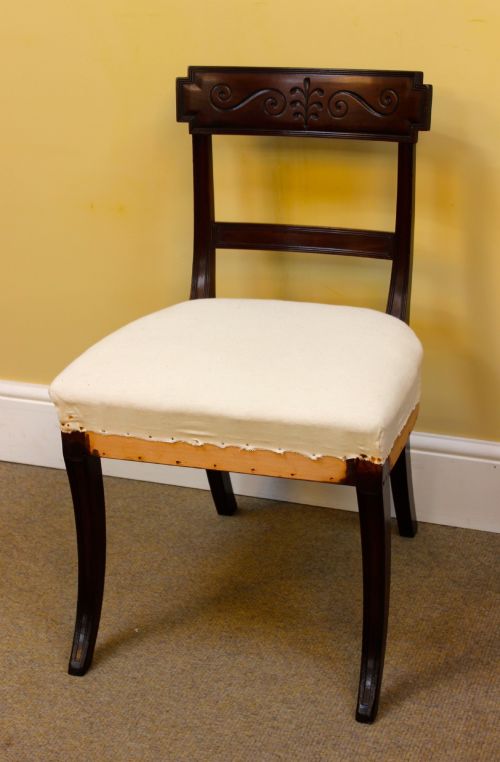
Structural integrity relies on traditional joinery augmented by curved elements such as rope backs, bar backs, and sabre legs. Detail work often includes brass inlay, delicate carvings, and hand-painted motifs executed in the prevailing taste of the era.
Listings feature dining chairs spanning the Georgian, Regency, and William IV periods, constructed from mahogany, rosewood, elm, and yew.
Distinctions in execution and timber
The upper tier of these dining sets is distinguished by superior timber selection, displaying rich grain patterns in the solid mahogany or rosewood. Master workshops invested greater labour in crisp, deep carvings and precise brass inlay work rather than relying on surface paint alone.
Structural harmony also dictates value, where a matched group retains uniform patination and sturdy leg construction across every single and carver. Finer examples exhibit thoughtful proportions and sophisticated backrest geometry that elevate them above standard utilitarian seating.
Gillows·George Maddox London
The Set of Six Regency Chairs Glossary
- Bar back
- A chair back featuring a horizontal crossbar, often shaped or reeded, connecting the uprights. This form became prevalent during the Regency and William IV periods.
- Sabre leg
- A curving, outward-swooping leg that tapers toward the foot, mimicking the shape of a cavalry sword. It is a defining structural feature of many Regency dining seats.
- Carver
- An armchair designed with elbow rests, traditionally placed at the head of a dining table. Suites often include one carver alongside several single chairs.
- Cane seat
- A seating surface woven from split rattan or cane strips, offering a resilient and flexible base. It frequently appears on lighter Regency dining chairs.
- Faux rosewood
- A decorative paint finish applied to a secondary timber to imitate the distinctive dark grain of true rosewood. This technique was popular in period furniture production.
Set of Six Regency Chairs: Frequently Asked Questions
How do I spot a matched set versus an assembled group?
Examine the subtle variations in timber grain, leg taper, and joinery details across all six pieces.
Original matched suites share identical wear patterns and construction traits from the same workshop bench.
Were these always used as dining sets?
While primarily built for formal dining rooms, these suites often served dual purposes in libraries and reception rooms.
Wealthy households commissioned them specifically to accommodate guests around extending dining tables during the Regency era.
How should I care for rosewood and mahogany frames?
Protect the timber from direct sunlight and fluctuating humidity to prevent the wood from drying out and splitting.
Apply traditional beeswax periodically to maintain the surface sheen without sealing the historical patina.
What distinguishes Regency style from William IV pieces?
Regency designs favour slender, neoclassical proportions with refined brass inlays and delicate sabre legs.
William IV furniture tends toward heavier, sturdier proportions with bolder carvings and robust bar backs.