


Georgian Cane Seat Chairs
Georgian cane seat chairs bring together lightness and robust construction, offering functional seating in mahogany, rosewood, and painted wood.
Georgian Cane Seat Chairs
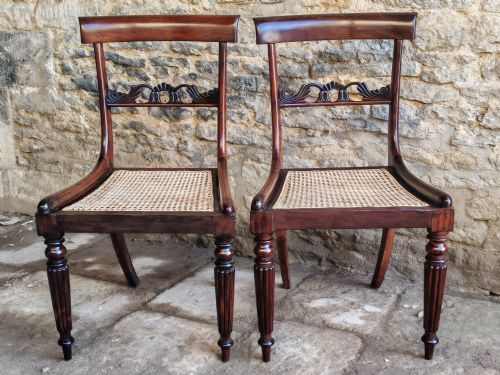
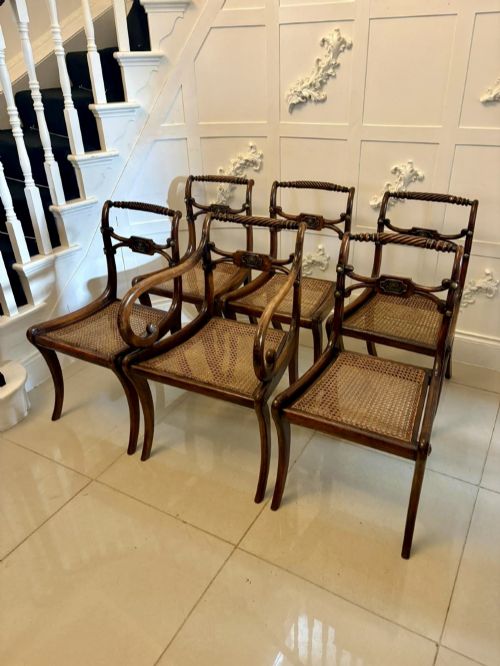
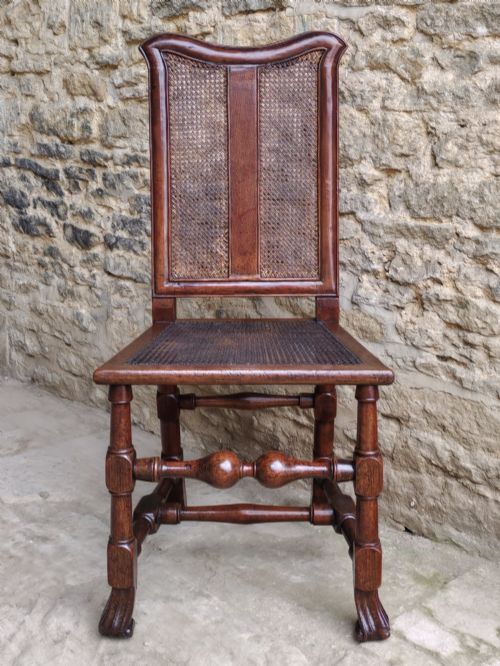
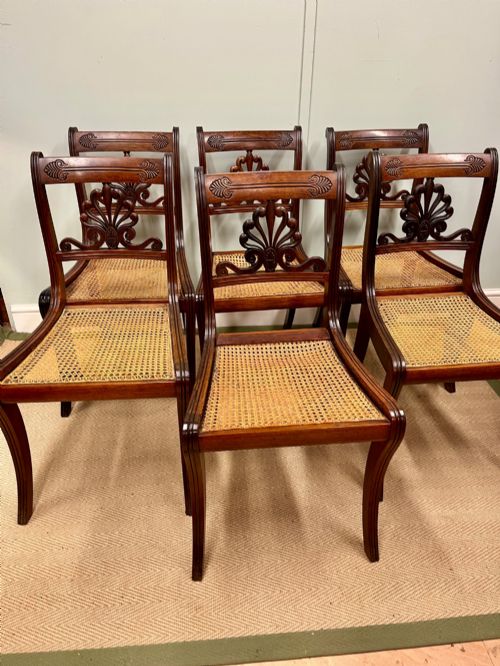
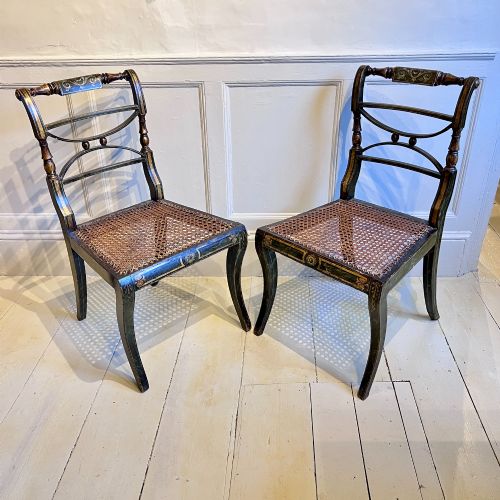
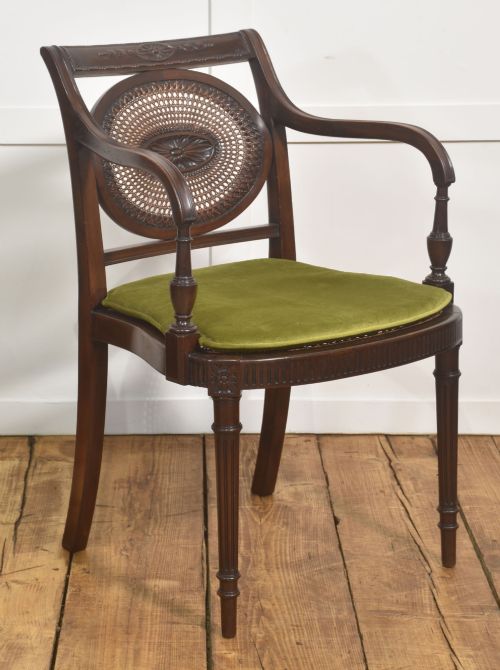
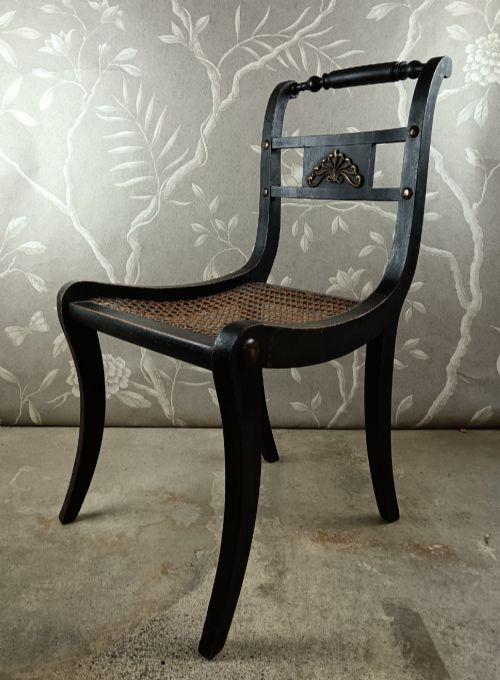
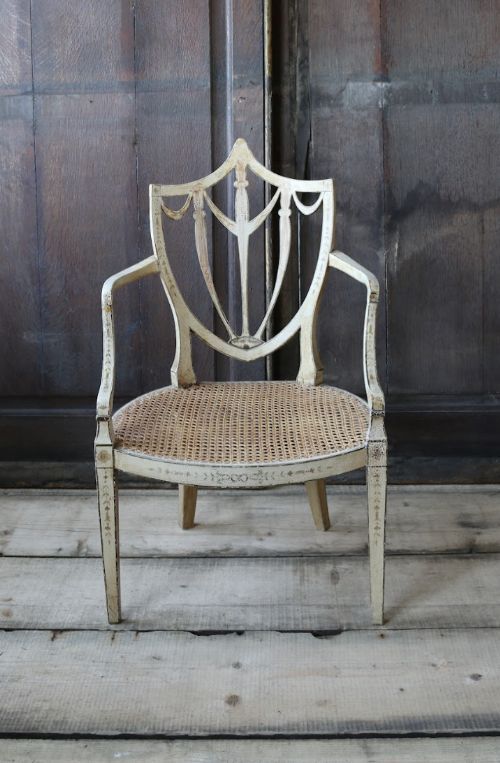
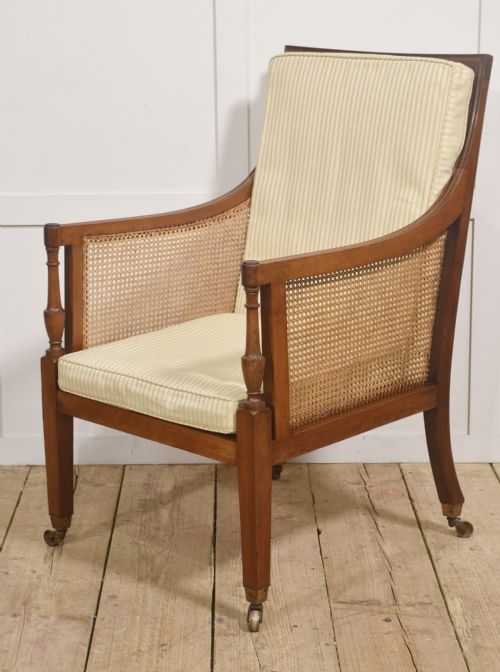
When you search for georgian cane seat chairs, you encounter seating solutions spanning the Georgian, Regency, and 19th Century periods. These pieces appear as side chairs, armchairs, dining chairs, library bergères, and child's high chairs.
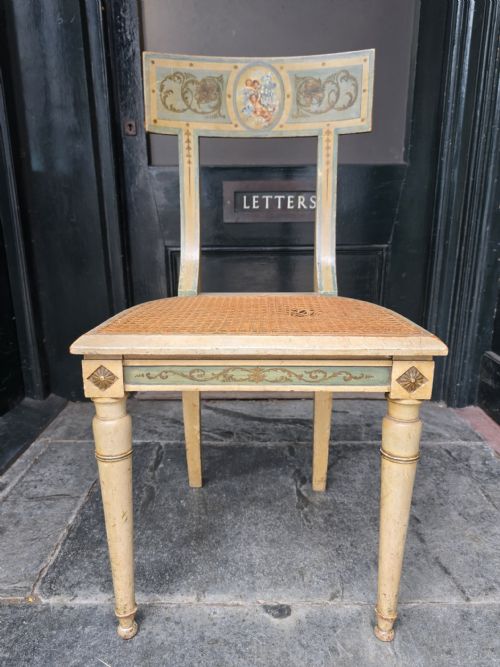
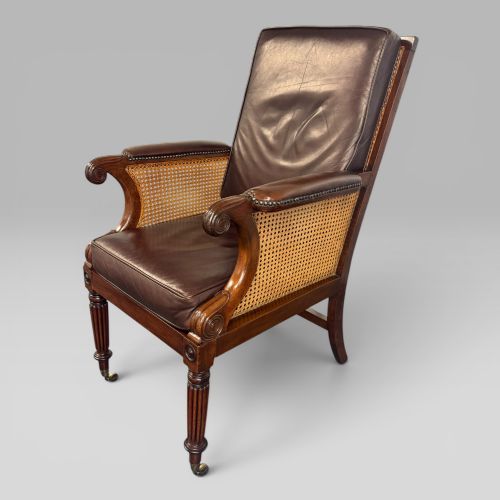
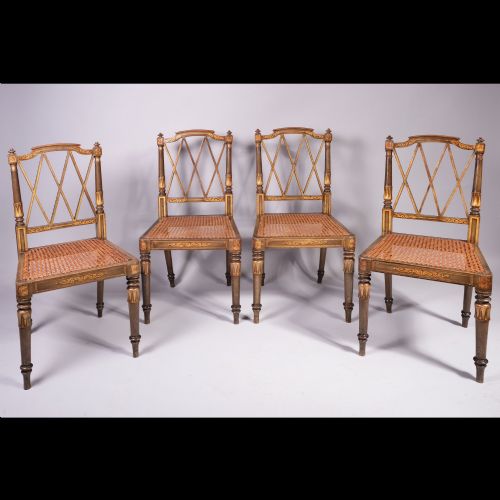
The version you are most likely to meet on this page is the Regency mahogany or rosewood dining chair and library armchair featuring woven cane panels. Styles range from George III Neoclassical and Sheraton Revival to William IV and Victorian interpretations.
How they were made
Cabinetmakers constructed these frames using hardwoods such as mahogany, walnut, rosewood, and solid ebony, alongside softer woods designated for paint or ebonising. Brass details and parcel gilt accents frequently ornamented the structural timber.
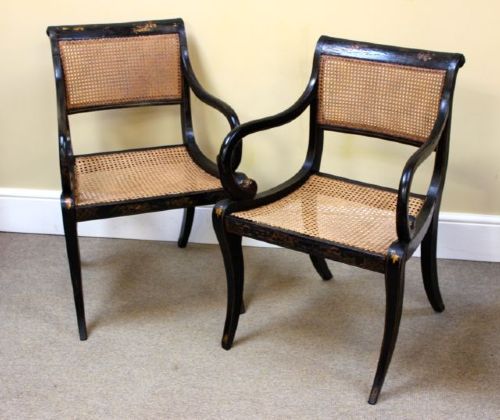
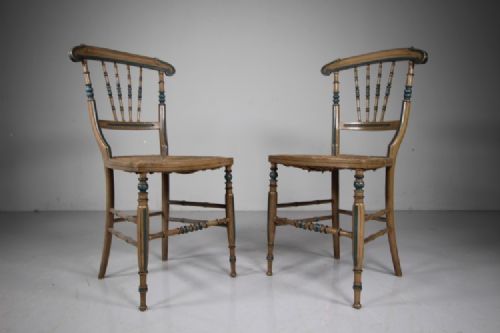
Cane panels were meticulously woven into the seat frames and backrests to provide a resilient and breathable surface. Artisans also applied simulated graining, faux bamboo shaping, and decorative hand-painting directly onto the wooden frames.
A tiny child can sit in miniature luxury on a caned mahogany tub highchair built precisely to nineteenth-century scale.
What varies in quality
The distinction between standard and superior pieces rests on the precision of the carving and the fidelity of the period style. Well-drawn frames with generous proportions and crisp detailing command greater visual presence.
The integrity of the original cane work and the preservation of surface treatments, such as original paint or simulated rosewood finishes, elevate the standing of an individual chair within its type.
The Georgian Cane Seat Chairs Glossary
- Bergère
- An enclosed upholstered or caned armchair with solid sides, often featuring a deep seat designed for library use.
- Carver
- An open armchair designed with elbow rests, traditionally used at the head of a dining table.
- Ebonised
- Wood treated with a dark stain or finish to imitate the appearance of ebony.
- Sabre leg
- A concave, outward-curving leg shape characteristic of Regency seating design.
- Shield-back
- A chair back carved in the outline of a heraldic shield, popular in late 18th century design.
Georgian Cane Seat Chairs: Frequently Asked Questions
Are cane seat chairs fragile?
Traditional cane work is surprisingly resilient and distributes weight evenly across the woven strands when used correctly.
They require normal indoor humidity and care to prevent the natural fibres from drying out excessively over time.
How do I identify a Regency chair?
Regency seating often displays classical influences, utilising sabre legs, brass inlays, and simulated rosewood or painted finishes.
Proportions tend to be clean and architectural, drawing inspiration from ancient Greek and Roman forms.
Can these chairs be used daily?
Most sturdy mahogany or rosewood examples are fully capable of regular daily use in a modern dining room or study.
Checking the tightness of the frame joints ensures stability before placing the seating into active service.
What is a library bergère?
A library bergère is a deep, comfortable armchair featuring caned or upholstered sides designed for extended periods of reading.
These generous seats frequently appear in mahogany or rosewood from the Regency period.