



Simulated Rosewood Chairs
Simulated rosewood chairs are clever painted timber seats that bring the rich, dark grain of exotic wood to domestic rooms.
Simulated Rosewood Chairs
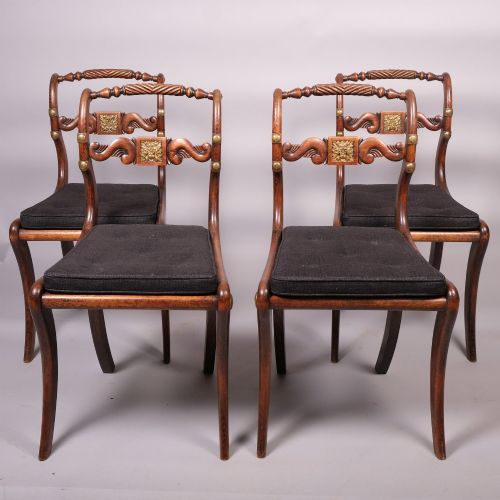
Simulated rosewood chairs offer the dark, figured appearance of costly timber through painted or grained surfaces on alternative woods. You will most frequently encounter dining chairs and side chairs from the Regency period on this page.
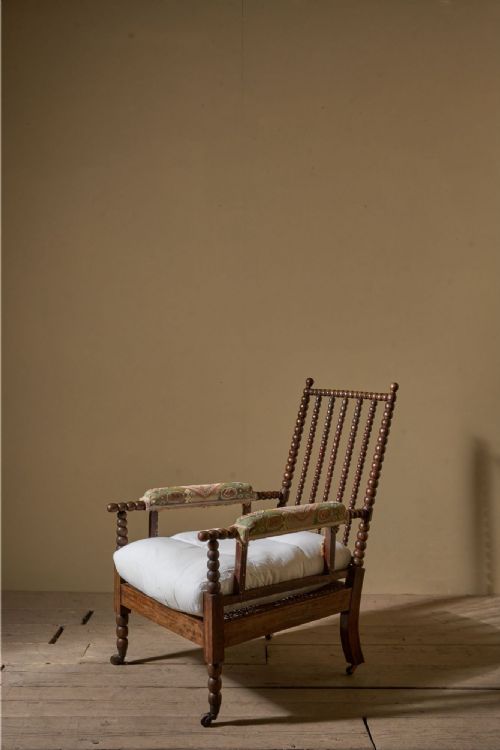
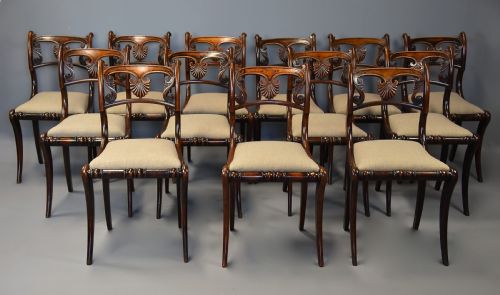
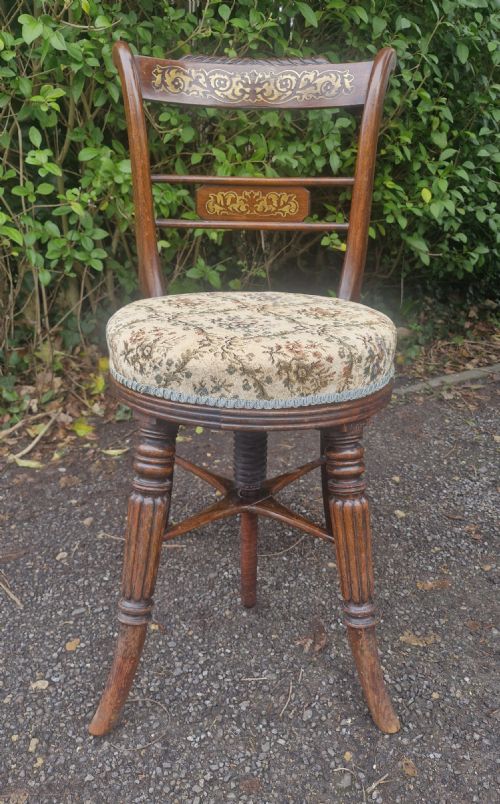
Makers produced these pieces in sets ranging from pairs to large dining sets of twelve or thirteen, alongside individual armchairs and music stools. The designs span formal Regency dining seats to Victorian balloon back and bobbin framed examples.
The aesthetic mimics genuine rosewood using clever paint techniques applied over lighter timbers. This visual deception allowed owners to achieve a fashionable, expensive look in their rooms without the high cost of imported wood.
Materials and construction
Workshops utilised accessible timbers such as beech, applying layered paint finishes and dark glazes to imitate the distinct grain patterns of rosewood. Artisans incorporated cane seating, upholstered squabs, brass inlays and metal mounts into the frames.
The structural framework relies on traditional joinery methods suited to dining chairs, armchairs and specialised seating like music stools. Cabinet makers painted the timber surfaces by hand to replicate natural heartwood and sapwood variations.
Simulated Rosewood Chairs Retail Price Guide 2026
Typical asking prices for simulated rosewood chairs among the pieces listed under this phrase on Sellingantiques today, from the lower quarter to the upper quarter. They describe what is for sale here now, not the wider market.
Some nineteenth century dining sets include thirteen chairs, ensuring a full complement for large tables without leaving a guest standing.
Assessing quality in faux finishes
Quality rests in the skill of the grain painting and the crispness of the carved or turned timber details. Superior examples display subtle tonal variation and depth in the simulated finish that closely resembles actual timber.
The integrity of the underlying frame and the preservation of original painted surfaces dictate the standing of a piece. Sets that retain their matching forms, cane seats or original metal mounts command greater interest than mismatched or heavily restored groups.
Gillows
The Simulated Rosewood Chairs Glossary
- Simulated rosewood
- Timber painted or grained to imitate the appearance of genuine rosewood. This finish appeared widely on Regency and Victorian furniture.
- Regency
- A British design period spanning the early nineteenth century. Furniture from this era often draws on classical Greek and Roman motifs.
- Bergere
- An enclosed upholstered armchair with wooden framing. These seats frequently feature cane work on the back and sides.
- Bobbin
- A style of turned furniture leg or framing resembling a string of spools. This decorative turning appears on nineteenth century chairs.
- Squab
- A loose cushion placed on a chair seat for comfort. These pads often appear with original covers in historical listings.
Simulated Rosewood Chairs: Frequently Asked Questions
Why did makers use simulated rosewood?
Makers painted cheaper timbers to look like expensive rosewood to meet fashionable demands at a lower cost.
This technique allowed buyers to furnish rooms with grand looking dining chairs and armchairs without paying for imported exotic hardwoods.
How do I identify the Regency period?
Regency chairs display classical lines, often incorporating elements from Greek revival styles or precise brass inlays.
These pieces usually date from the early nineteenth century and show lighter, more elegant proportions than later Victorian seating.
Are cane seats original to these chairs?
Many side chairs and armchairs from the early nineteenth century utilised woven cane for lightness and texture.
Craftspeople often paired these cane panels with loose squab cushions upholstered in fabric or leather.
How should I care for painted wood?
Protect the painted finish by keeping chairs away from direct sunlight and maintaining stable indoor humidity levels.
Dust the surface gently with a soft, dry cloth and avoid harsh chemical cleaners that might damage the historical grain effect.