
Regency Cane Seat Chairs
Regency cane seat chairs combine crisp classical lines with light woven seating, offering both the elegance of the early nineteenth century and practical comfort.
Regency Cane Seat Chairs
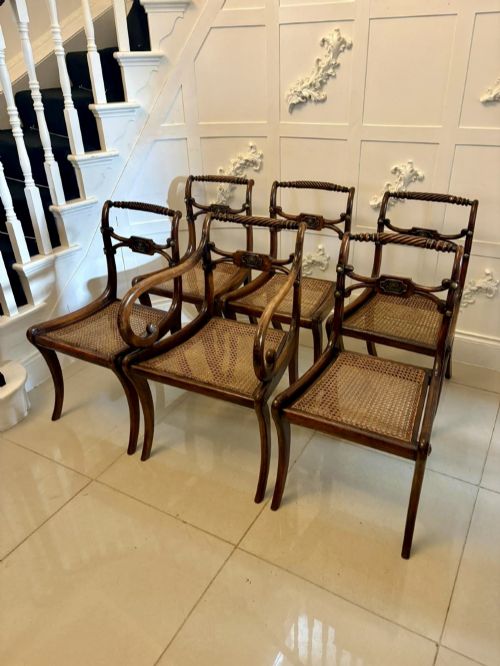
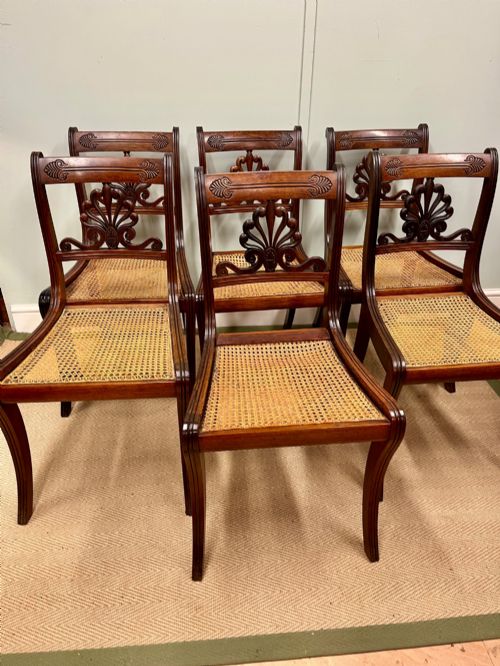
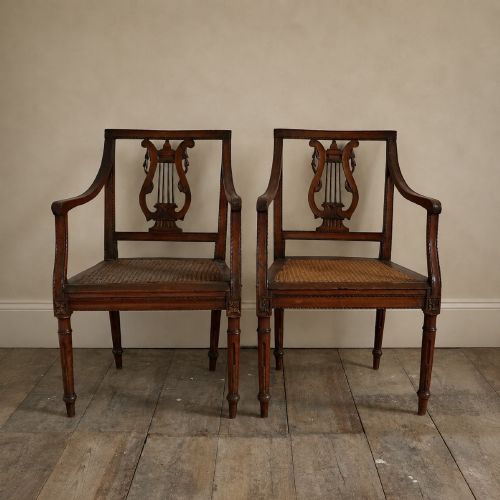
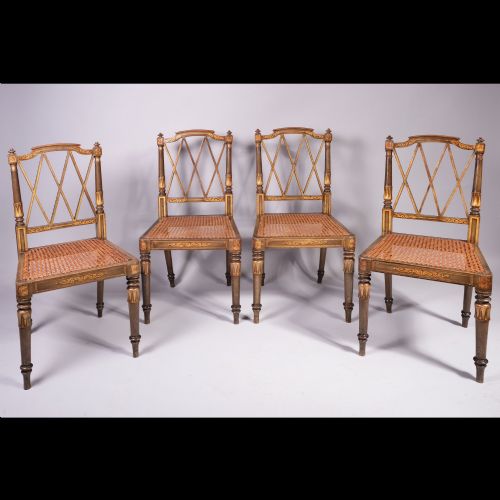
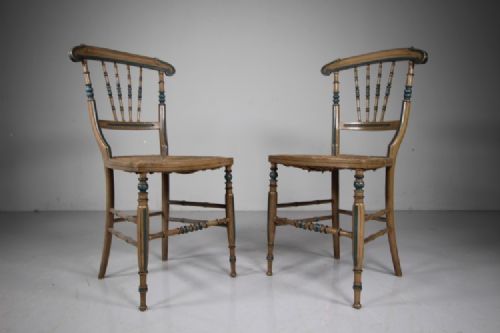
Regency cane seat chairs encompass seating made primarily during the early nineteenth century alongside later revivals, spanning forms from single dining chairs to library armchairs and settees. When searching for regency cane seat chairs, buyers encounter dining sets, pair side chairs, and larger armchairs designed for both formal rooms and private libraries.
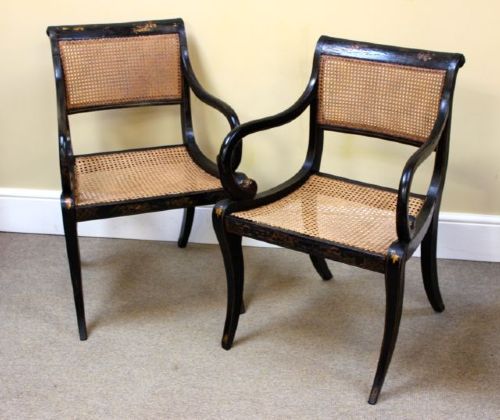
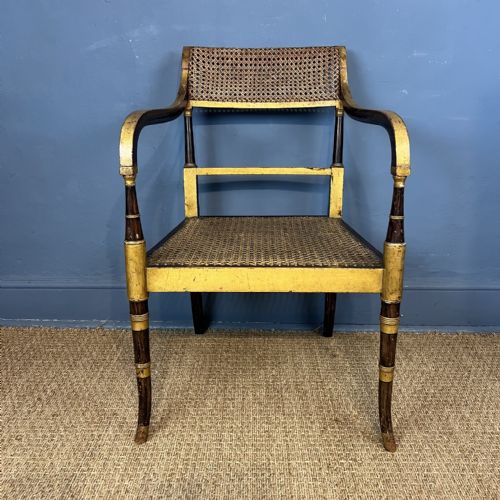
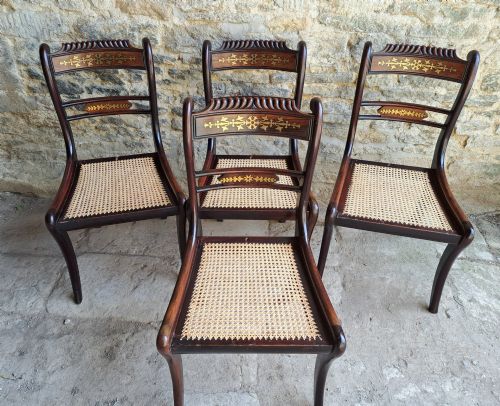
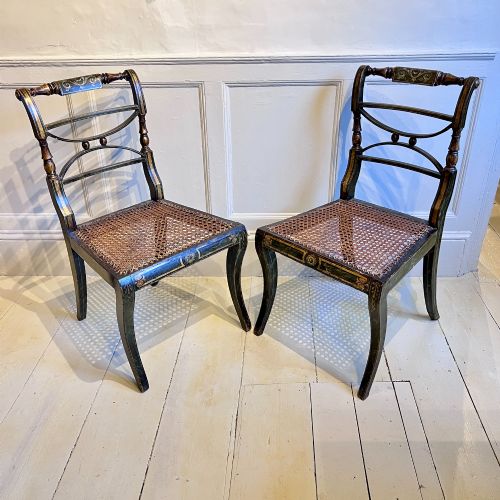
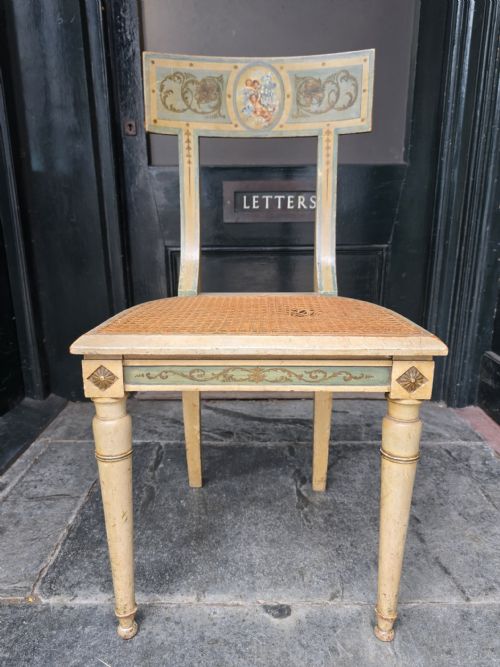
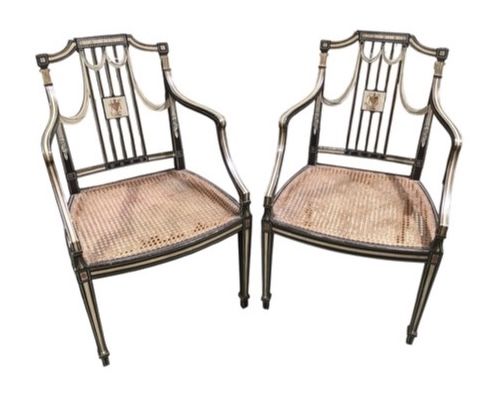
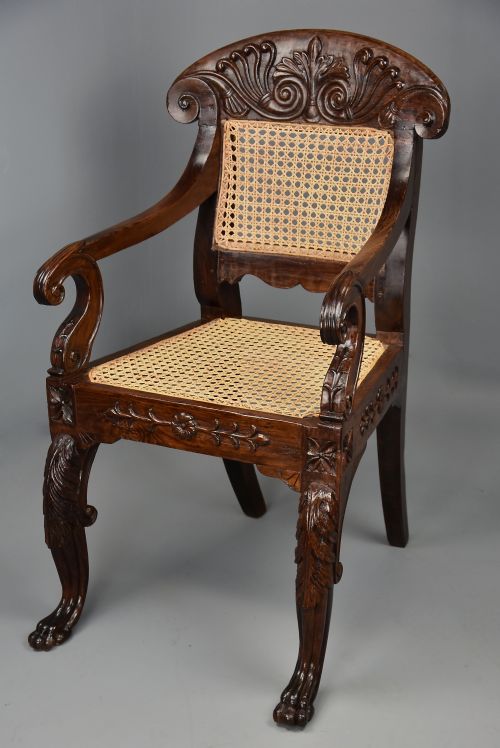
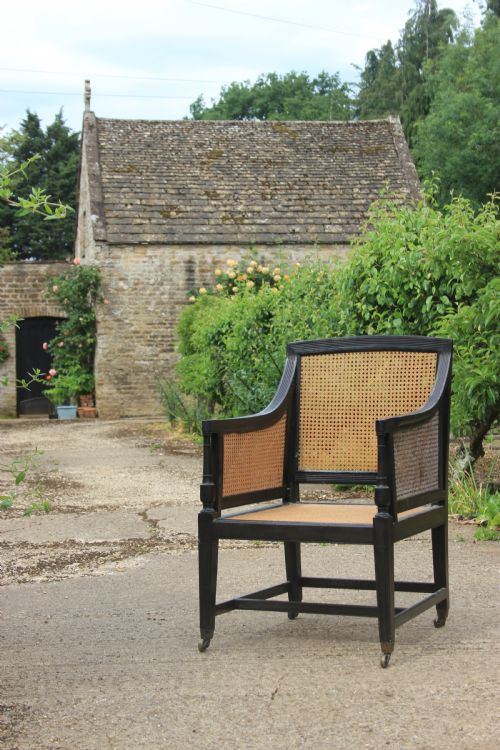
The selection ranges from standard mahogany and rosewood dining chairs to more elaborate painted, ebonised, and brass-inlaid examples. Anglo-Indian variations also appear, reflecting colonial trade networks through the use of exotic timbers like padouk and ebony.
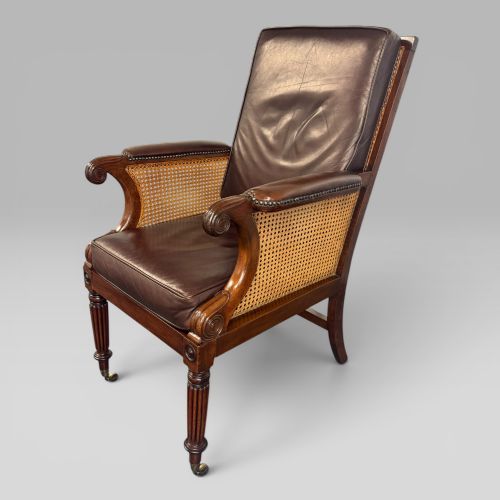
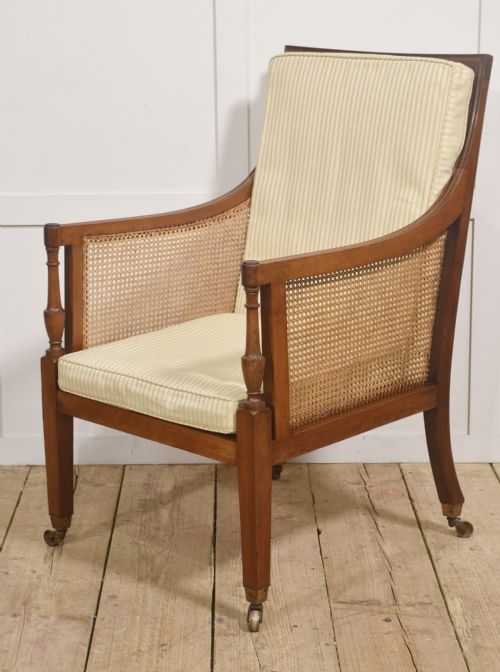
Dining chairs usually appear in sets or pairs, whilst library bergères offer deeper, more enclosed seating meant for reading. Side chairs and hall chairs provide lighter decorative accents for landings and reception spaces.
How They Were Made
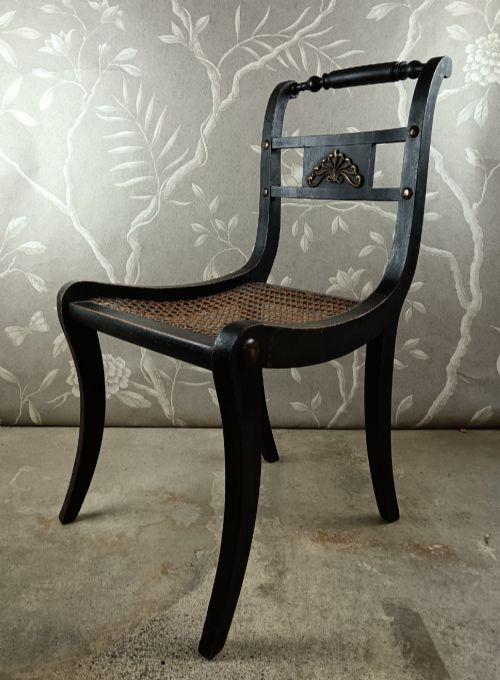
Cabinetmakers constructed these frames using dense timbers like mahogany, rosewood, and beech, often applying paint, gilding, or ebonisation to imitate more expensive woods. Brass inlay and mounts frequently accent the rails and crestings of finer pieces.
The signature cane seating involves split rattan woven tightly through holes drilled in the seat frame to create a resilient, breathable surface. Many examples also incorporate loose squab cushions upholstered in leather or fabric to provide extra padding.
Some diminutive child chairs survive from the Regency period, offering miniature sabre legs and tiny cane seats.
What Varies in Quality
The refinement of the carving and the fidelity of the classical proportions dictate the standing of each piece, from simple provincial items to master cabinetmaker output. Crisp detailing on sabre legs, lyre backs, and gilt enrichments marks the upper tier of production.
The integrity of the woven cane and the selection of cabinet timbers also divide grades, with evenly pierced frames and figured veneers indicating superior manufacture. Later revivals vary from careful nineteenth-century copies to twentieth-century interpretations.
The Regency Cane Seat Chairs Glossary
- Cane
- Woven split rattan material used to form resilient, lightweight seat panels. It allows air to circulate around the sitter.
- Bergère
- An enclosed upholstered armchair featuring cane or solid sides. These pieces often include loose seat cushions.
- Sabre leg
- A curved, outwardly tapering chair leg that mimics the shape of a cavalry sword. This form defines many classical Regency seating designs.
- Klismos
- An ancient Greek chair style with sweeping curved legs and a broad concave backrest. Regency designers revived this form to evoke classical antiquity.
- Ebonised
- Wood finished with a dark stain or polish to imitate genuine ebony. This technique created stark contrast against gilt brass mounts.
Regency Cane Seat Chairs: Frequently Asked Questions
Are these chairs comfortable for daily dining?
Woven cane offers a surprisingly springy and supportive surface that adapts well to extended sitting during meals.
Many examples were originally supplied with loose squab cushions, which add extra softness and can be recovered to match interior schemes.
How do I care for antique cane seats?
Cane requires moderate humidity to prevent the natural rattan fibres from becoming brittle and snapping under pressure.
Regular light dusting and occasional wiping with a damp cloth keep the weave clean and flexible over decades of use.
What is the difference between a single chair and a carver?
Single chairs feature plain side rails without arms, designed to tuck neatly beneath a dining table when not in use.
Carvers include open arms for added support and traditionally stood at the head of the dining table.
How do I distinguish original Regency pieces from later revivals?
Original pieces date from the early nineteenth century and show the tool marks, timber shrinkage, and wear consistent with age.
Revival pieces from later periods often display different construction methods, machine-woven cane patterns, and standardised timber cuts.