
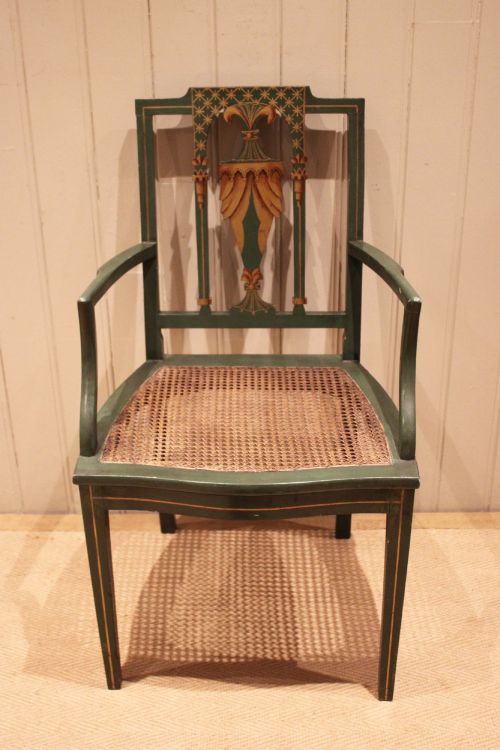
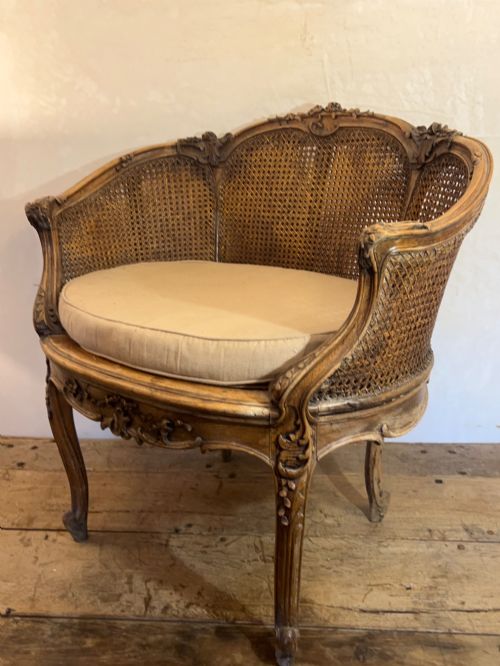
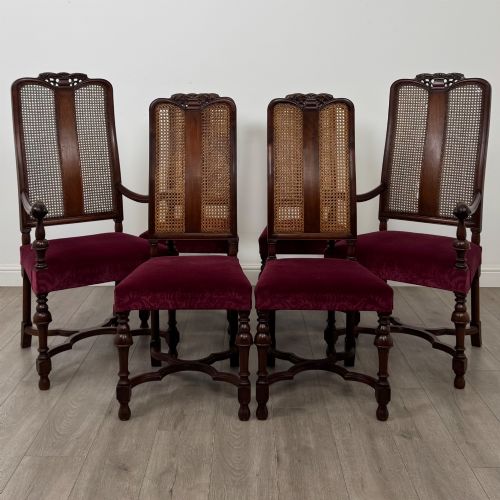
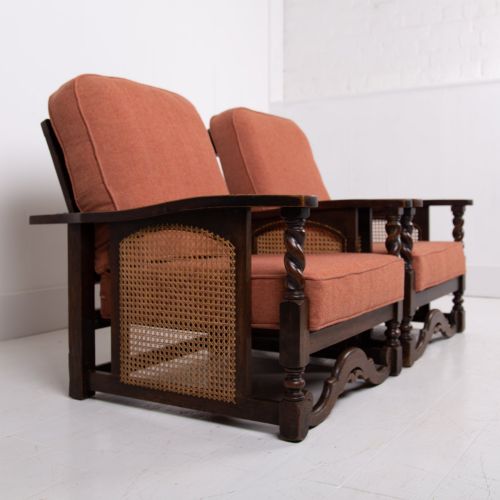
Caned Seat Armchairs
Caned seat armchairs combine woven natural materials with sturdy timber frames to offer resilient, light-weight seating suited to studies, libraries and drawing rooms.
Caned Seat Armchairs
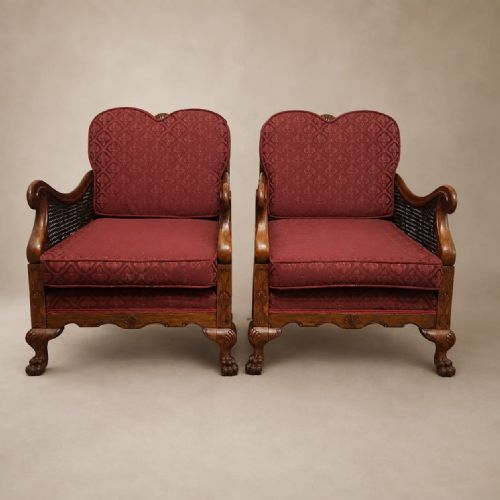
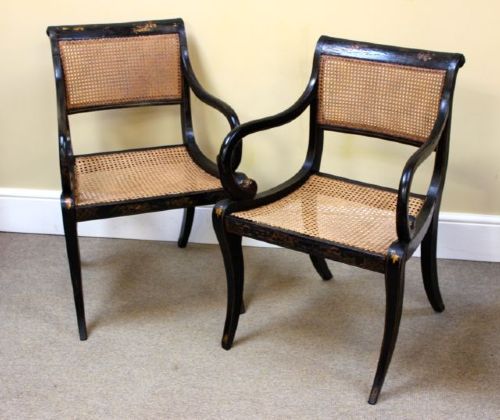
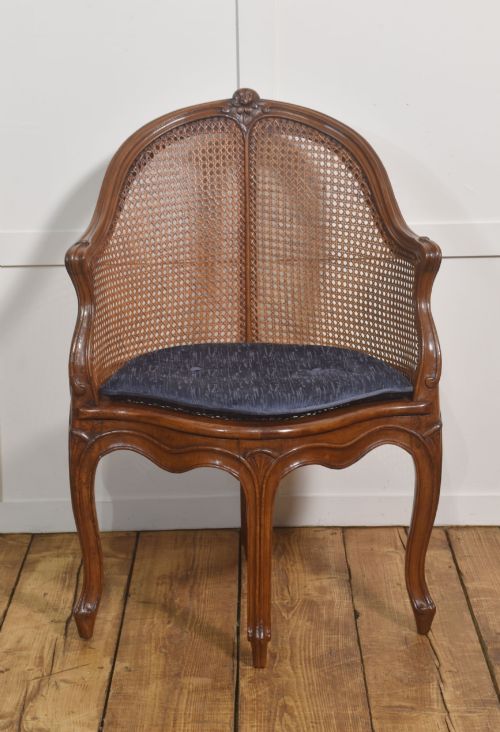
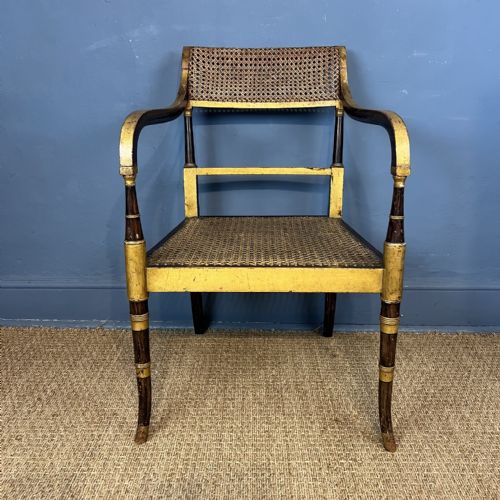
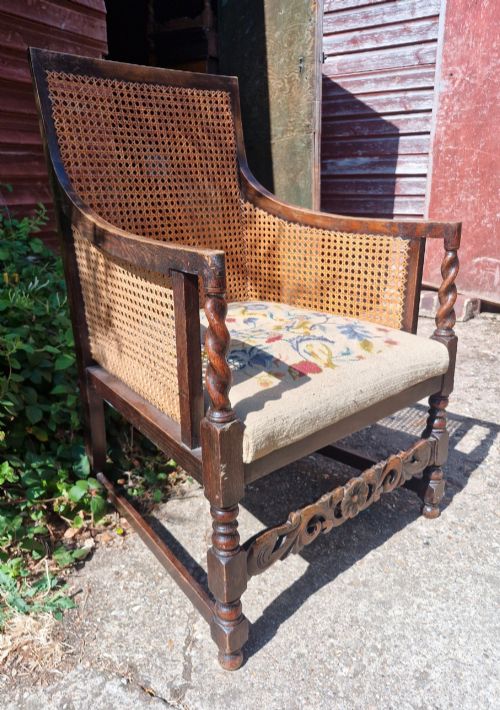
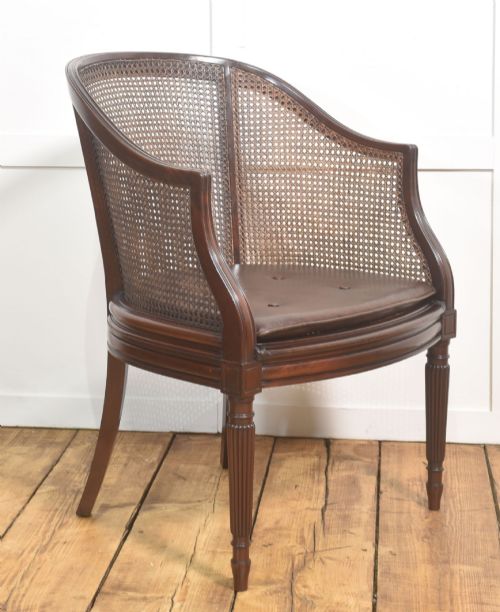
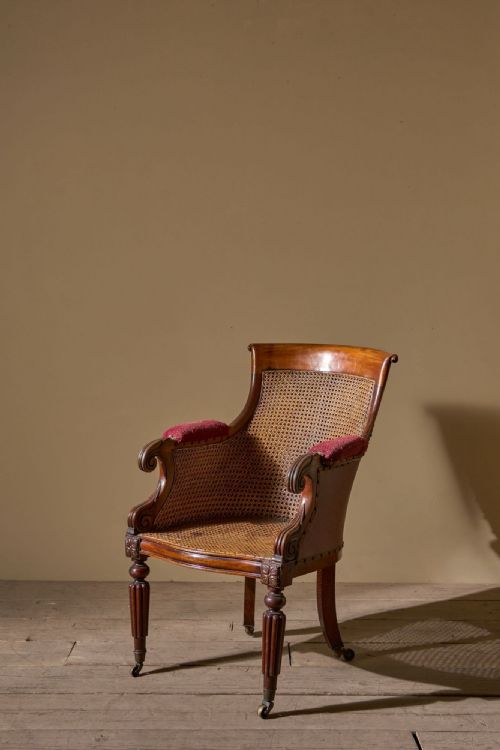
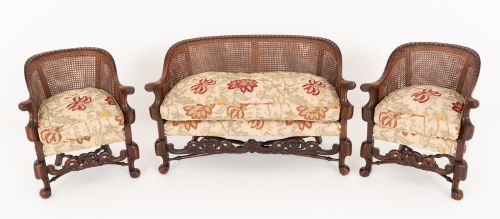
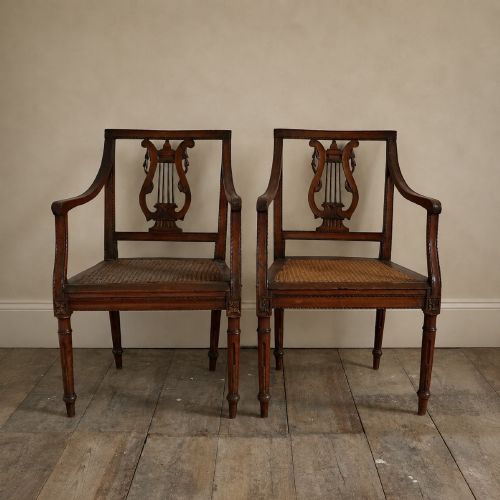
Caned seat armchairs appear across several distinct historical periods, running from the late eighteenth century through the Regency era and deep into the Victorian and Edwardian decades. Buyers examining this selection encounter various structural interpretations, including library armchairs, tub chairs, bergères and rocking chairs.
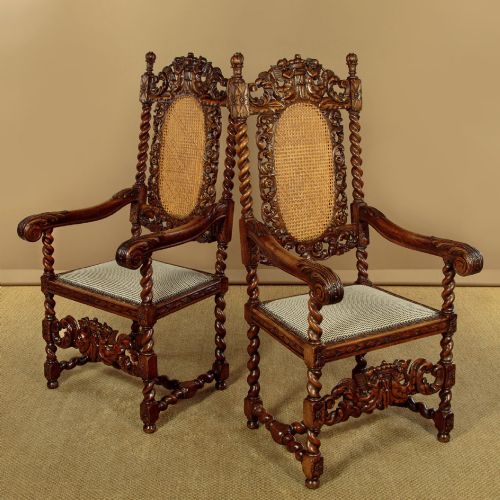
The regional origins and stylistic revivals represented span English Regency and Victorian designs, French Louis XV influences, Anglo-Indian colonial productions and Jacobean or Carolean revivals. Mahogany, walnut, oak and painted finishes frequently support the woven seating surfaces across these diverse forms.
Materials and Construction
Cabinetmakers constructed the supportive frames of these chairs using hardwoods such as mahogany, walnut, oak and satinwood, occasionally applying paint, parcel gilding or faux rosewood finishes. Solid ebony and padouk also appear in specific Anglo-Indian and mid-nineteenth-century examples.
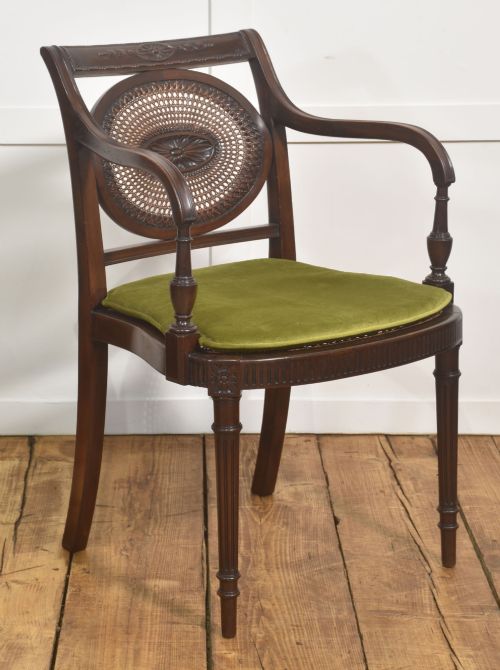
The seating panels utilise cane, rattan and split cane woven tightly through drilled holes or channel frames to create a flexible, durable support. Brass accents, leather and supplementary fabric cushions frequently complement the exposed timber and woven work.
Listings feature oak, mahogany, walnut, satinwood and solid ebony frames paired with cane, rattan and brass elements.
Assessing Craftsmanship
Quality rests upon the crispness of the timber carving and the integrity of the joinery within the frame, whether the style is a restrained Regency library chair or a heavily carved Carolean revival piece. Tighter, more uniform hand-weaving in the cane indicates superior workmanship compared to loose or uneven strands.
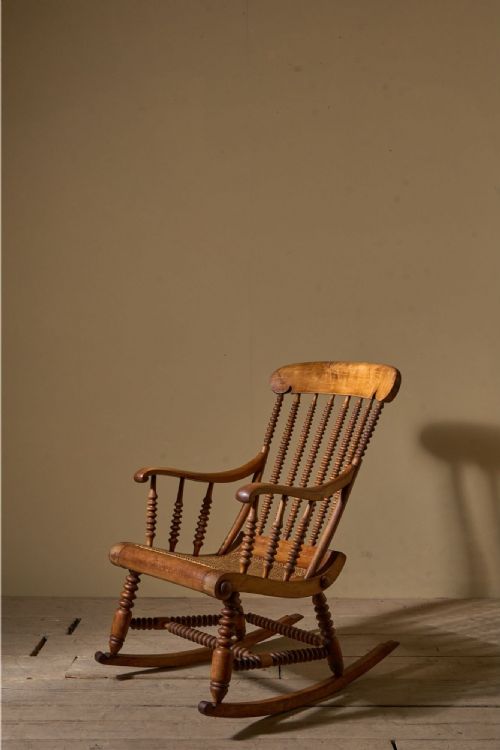
The harmony between the primary timber frame and secondary decorative elements, such as bobbin turning, lyre backs or painted highlights, dictates the refinement of the finished armchair.
James Shoolbred·Dryad And Co
The Caned Seat Armchairs Glossary
- Bergere
- An enclosed upholstered or caned armchair featuring solid sides and a low seat, popular during the Regency and later revival periods.
- Cane
- Strips of rattan peel woven into grid patterns to form resilient seats and backs.
- Bobbin turned
- Timber turned on a lathe to resemble a string of beads or bobbins, seen on seventeenth-century and revival frames.
- Parcel gilt
- Partially gilded with thin gold leaf applied to specific carved details on a painted or polished timber surface.
Caned Seat Armchairs: Frequently Asked Questions
How do I care for cane seats?
Keep caned panels slightly hydrated by wiping them occasionally with a damp cloth to prevent the natural rattan from becoming brittle. Avoid placing these chairs near direct heat sources or in overly dry rooms.
Weight distribution matters greatly with woven seating, so ensure cushions are used if the frame is designed to take them. Regular gentle cleaning maintains the flexibility of the plant fibres.
Are these chairs suitable for daily use?
Many sturdy mahogany, oak and walnut examples handle regular sitting comfortably, provided the woven panels remain taut and secure. Library and desk armchairs from the Regency and Victorian eras were built for practical daily service.
Lighter decorative pieces, such as painted satinwood or delicate tub chairs, benefit from more careful placement. Assessing the firmness of the frame helps determine appropriate everyday placement.
How do I distinguish Regency from revival styles?
Original Regency armchairs exhibit authentic period proportions, clean classical lines and genuine aged patination on the mahogany or rosewood surfaces. Revival pieces made around nineteen-hundred often display heavier carving and distinct construction traits associated with later workshops.
Examining the underside, timber shrinkage and tool marks provides further clues to dating. Revival makers deliberately copied earlier Georgian and French aesthetics but utilised contemporary manufacturing methods.
What is a bergere armchair?
A bergere is a French-style armchair featuring enclosed sides filled with cane or upholstery, offering a deeper and more encompassing seat than an open armchair. These pieces often include loose seat cushions for added comfort.
Originating in earlier centuries, bergere designs were frequently reinterpreted during the Regency and Edwardian eras. They served primarily as reading and relaxation chairs in grand libraries and drawing rooms.