

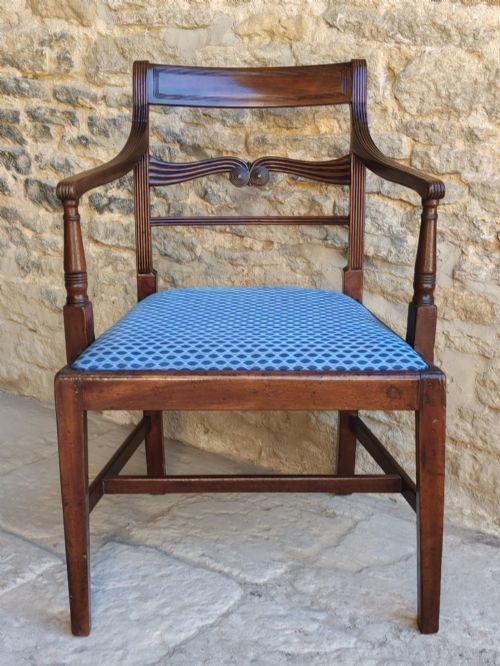
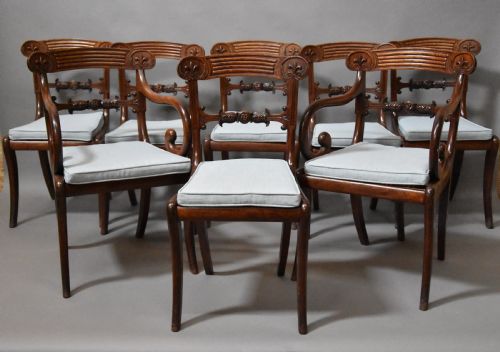
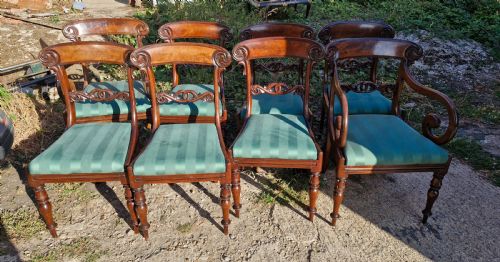
Regency Period Armchair
These regency period armchair examples bring architectural line and rich timber to a room, offering sturdy seating with distinct classical form.
What a regency period armchair is
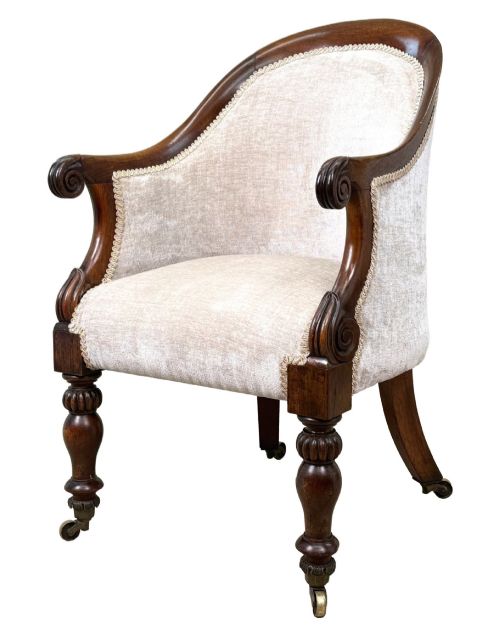
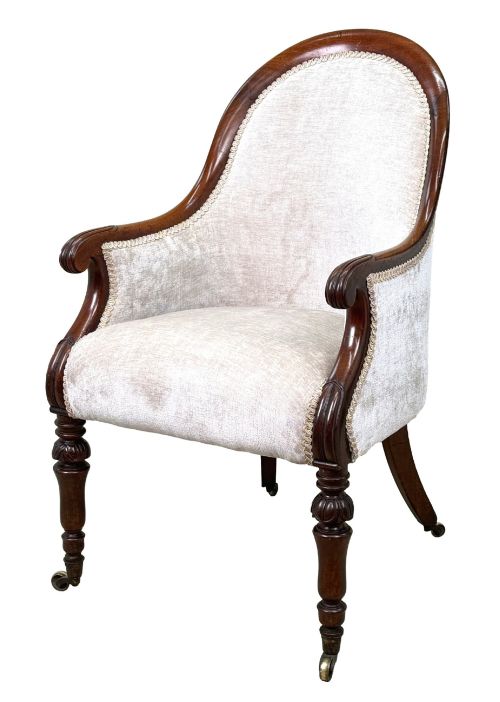
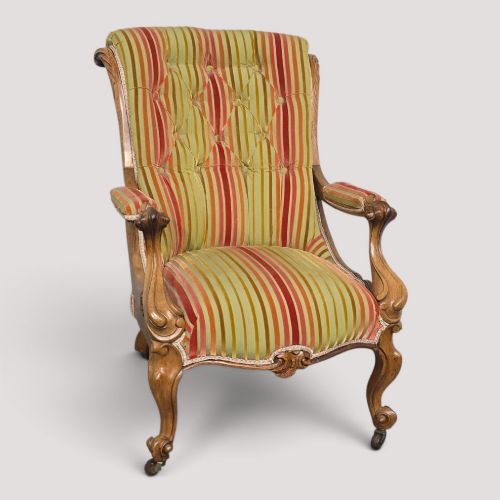
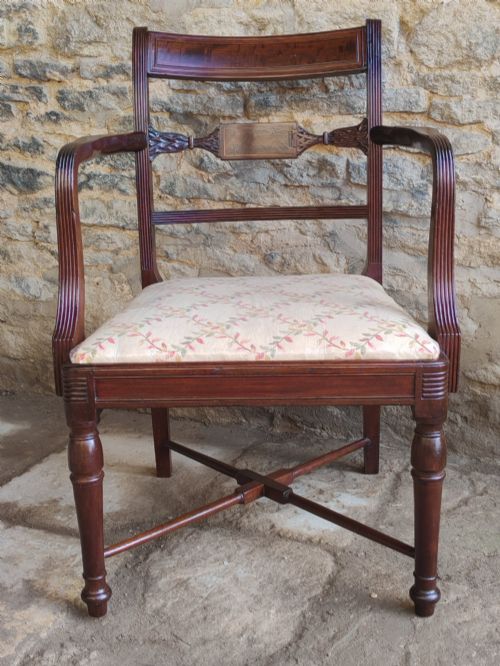
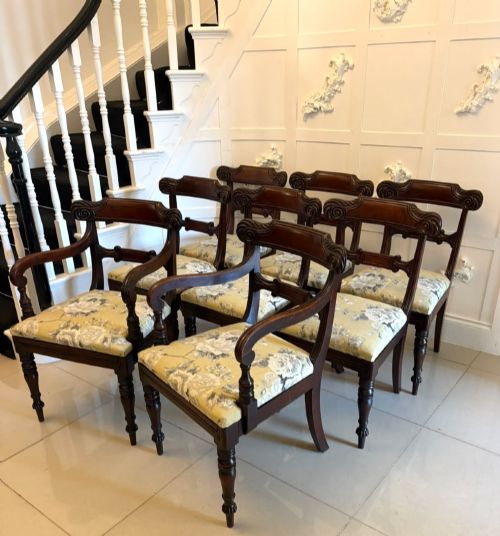
A regency period armchair combines classical proportion with refined woodwork, appearing most often in mahogany or rosewood across this selection. These chairs serve as library, desk, or salon seating, designed with open arms or fully upholstered frames.
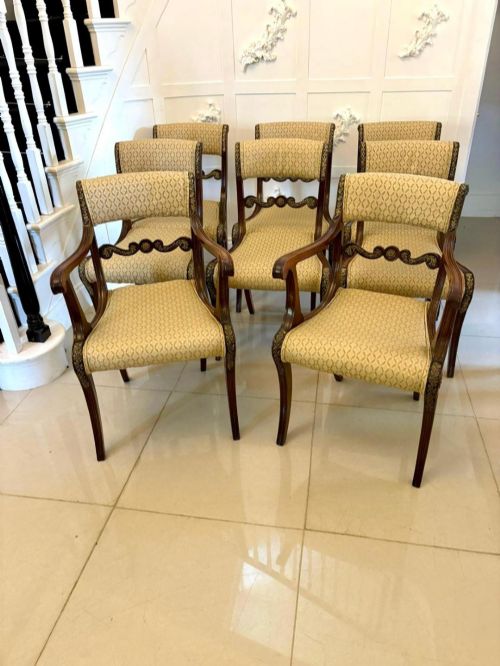
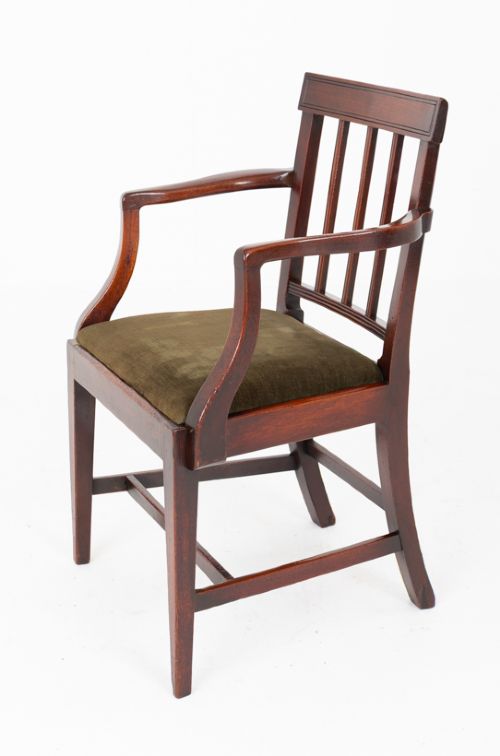
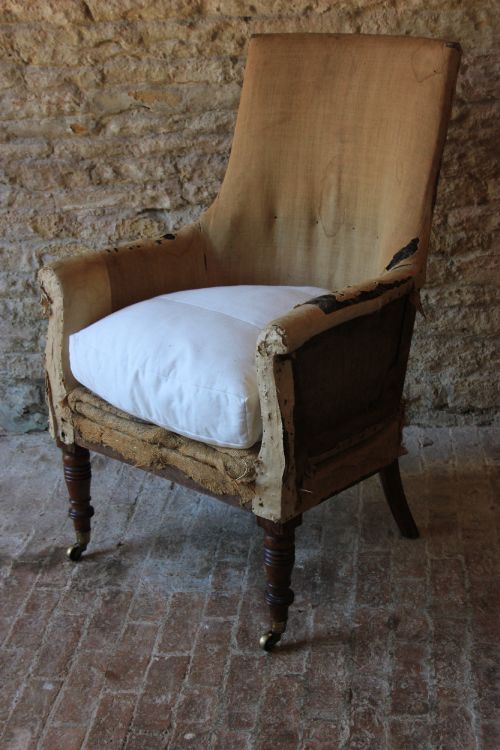
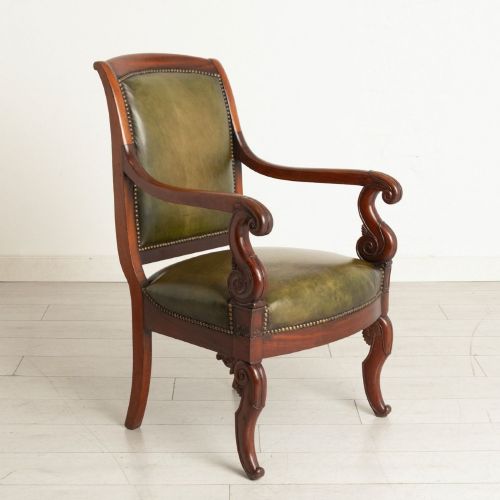
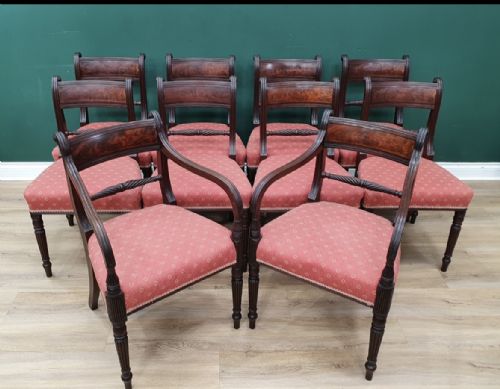
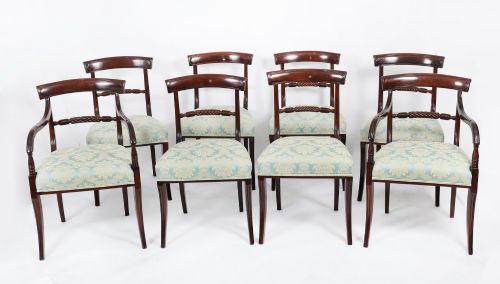
The evidence shows forms ranging from standard armchairs and carvers to tub library chairs, bergères with cane panels, and childs chairs. Most examples date from the Regency era itself, while others extend into the later nineteenth century.
Makers drew on classical antiquity for inspiration, resulting in distinct scroll arms, reeded members, and sabre legs. Buyers encounter both plain timber frames and elaborate models embellished with brass inlay.
How they were made
Cabinetmakers utilised solid timbers such as mahogany, rosewood, oak, and coromandel, often turning structural elements like bobbin-turned supports. Brass inlay adds linear contrast to rosewood and mahogany surfaces.
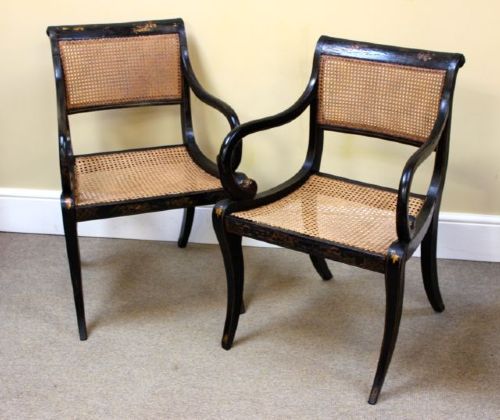
Bergère models incorporate woven cane panels into the back and sides, requiring skilled craftsmanship to tension the material correctly. Upholstered variants rely on textile, leather, velvet, and fabric coverings fixed over webbed frames.
Retail Price Guide 2026
Typical UK retail prices for regency period armchair, calculated from the Sellingantiques database of over a million retail prices indexed since 2003. This retail price guide relies exclusively on Sellingantiques data; no external sources or auction records are used, so the figures do not describe the wider market.
Listings feature mahogany, rosewood, oak, and coromandel timbers combined with cane, leather, velvet, and standard textile upholstery.
What varies in quality
The hierarchy of these chairs rests upon the selection of timber grain, the crispness of carved details, and the integrity of the frame construction. Rich colour and balanced proportions distinguish the finer library and desk armchairs from standard seating.
Detailing such as precise brass inlay work, well-executed scroll arms, and original caning elevate an example above plain utilitarian variants. The presence of documented workshop attribution further separates notable pieces from anonymous production.
Gillow·George Smith
The Regency Period Armchair Glossary
- Bergere
- An enclosed armchair with cane or upholstered sides and back. This form often includes a fitted squab cushion for seating comfort.
- Carver
- An armchair designed to match a set of dining chairs, usually featuring arms set wider to accommodate clothing. These pieces function well at a desk or table.
- Reeded
- A decorative moulding formed of parallel convex strips carved into the timber. This finish appears frequently on the legs and arm supports.
- Sabre leg
- A curved chair leg that tapers toward the foot, spreading outward in imitation of classical Greek furniture. This structural form provides stability to the seat.
- Tub chair
- An upholstered armchair with a rounded back that curves continuously into the arms. This enclosed shape creates a secure and comfortable seat.
Frequently Asked Questions
Where were these chairs used?
Owners placed them in libraries, studies, and drawing rooms for reading or desk work.
Library armchairs were built sturdy for daily use while salon chairs favoured lighter decorative timbers.
What is the difference between a carver and an armchair?
Carvers typically formed part of a dining set with proportions matching smaller side chairs.
Armchairs stood alone as larger desk or library seating with wider spans between the arms.
How do I care for rosewood and mahogany?
Keep timber furniture away from direct sunlight and sudden temperature changes to prevent splitting.
Apply occasional wax polish to maintain the finish and feed the dry wood grain.