

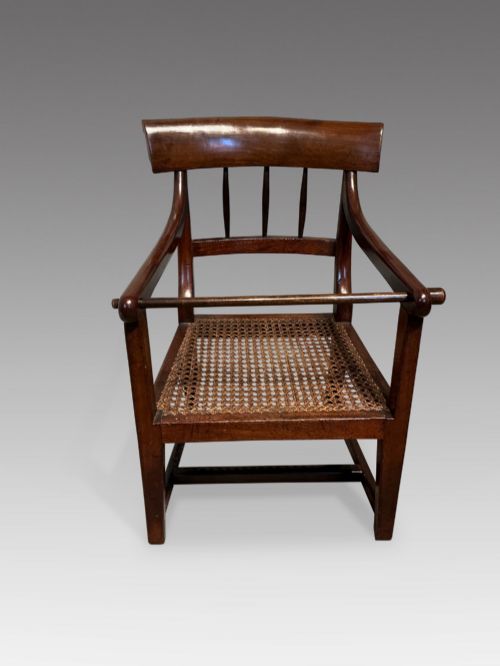
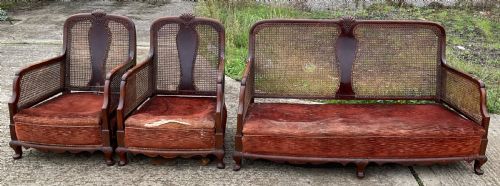
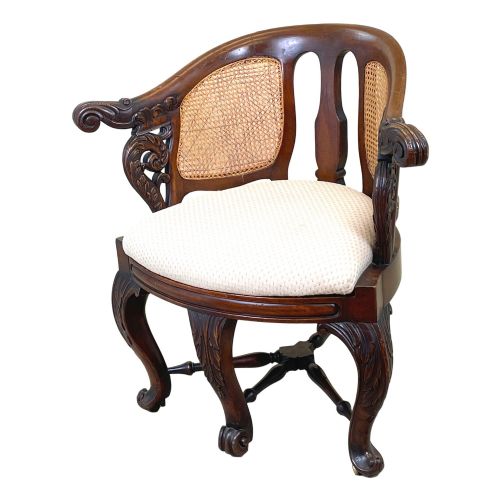
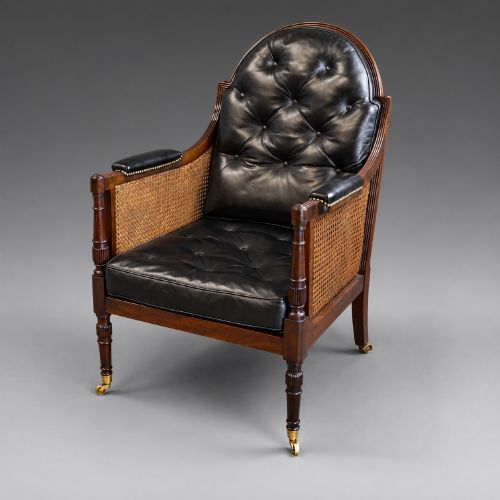
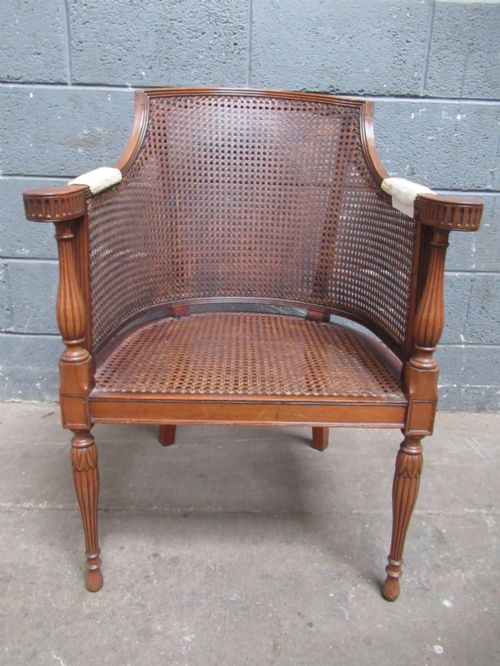
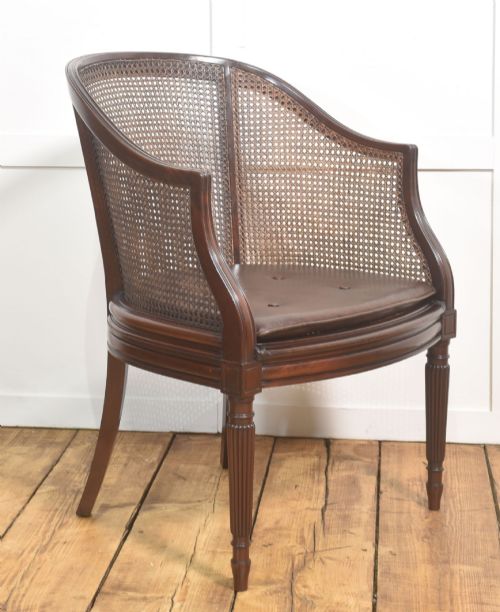
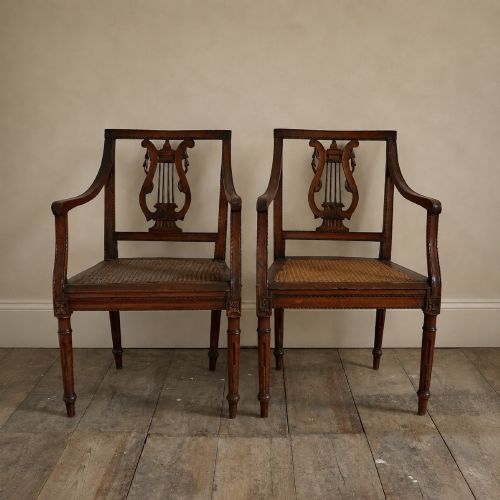
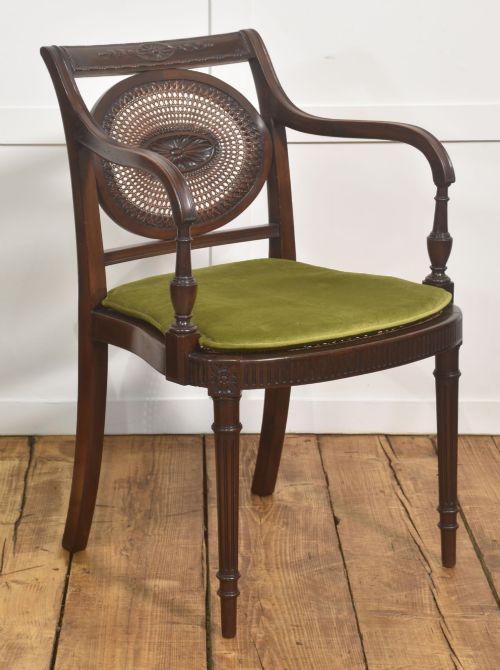

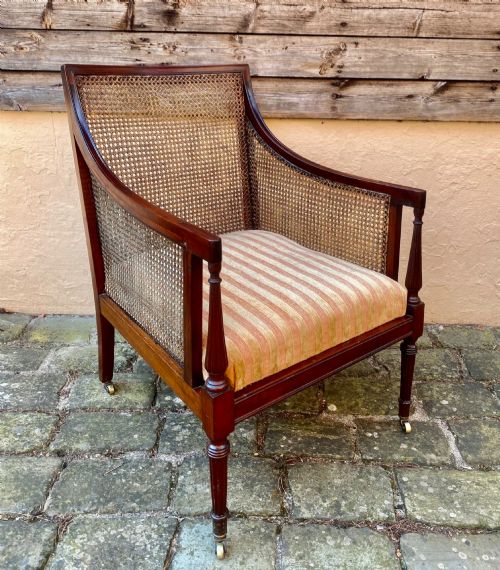

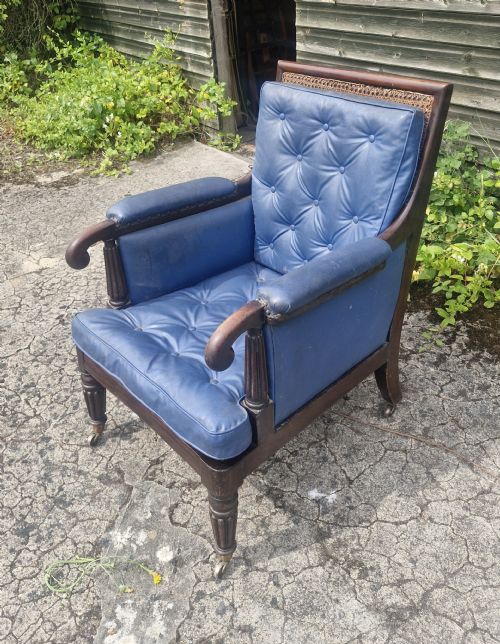
Caned Mahogany Armchair
A caned mahogany armchair offers a deep seat and sturdy frame, bringing historic craftsmanship and natural texture into a room.

Caned Mahogany Armchair
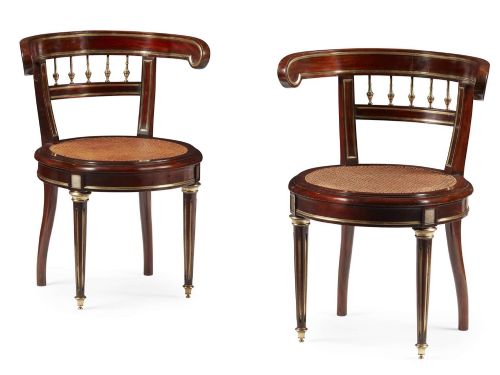
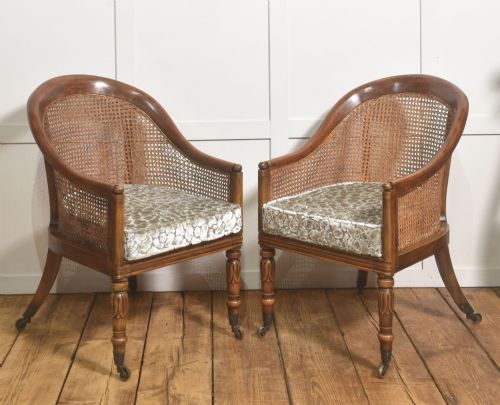
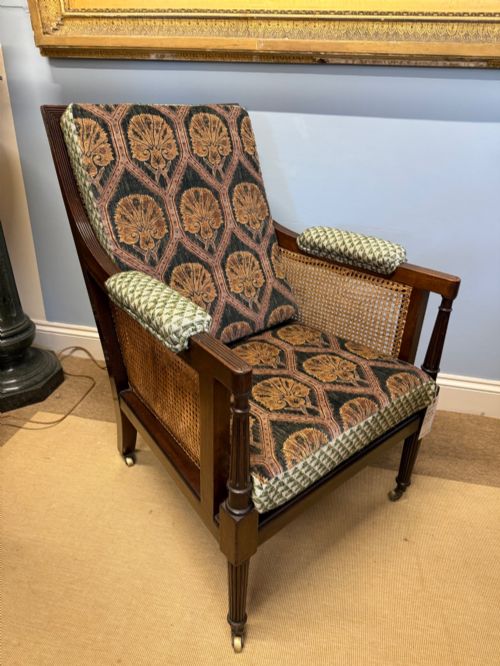
A caned mahogany armchair combines a hardwood timber frame with woven plant material to create a supportive seat for reading rooms and parlours. These forms appear frequently in formats such as library bergères, tub chairs, and occasional seating across multiple historical eras.
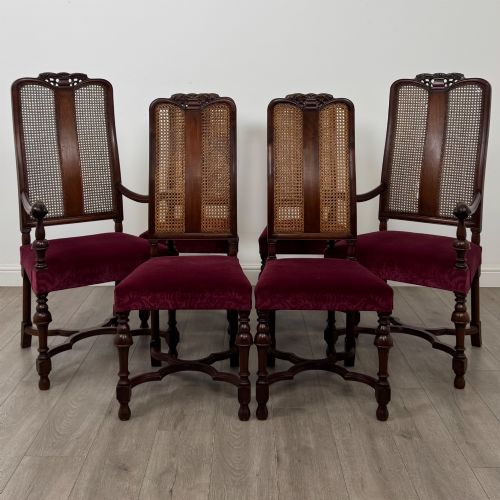
The pieces on this page span several stylistic periods, with Regency, Victorian, and Edwardian examples forming the core of the selection. Buyers frequently encounter library armchairs alongside lighter bedroom and dining variants constructed from the same core materials.
Makers adapted the form for diverse uses, producing everything from standard elbow chairs to metamorphic library steps and reclining plantation chairs. This variety ensures that a caned mahogany armchair fits equally well beside a fireside or in a quiet study.
Materials and construction
Makers utilised dense tropical hardwood for the structural frames, allowing for slender members that could still bear substantial weight. This timber was often polished to a deep lustre, highlighting the natural grain of the wood.
The seating areas and backs incorporate woven cane or rattan cane, sometimes utilising split cane techniques to achieve tighter patterns. Artisans secured these woven panels into channels routed directly into the timber frame.
Additional elements such as brass castors, leather upholstery, fabric cushions, and velvet pads appear alongside the primary wood and cane. These supplementary materials provided added comfort and mobility for heavy library chairs.
Caned Mahogany Armchair Retail Price Guide 2026
Typical asking prices for caned mahogany armchair among the pieces listed under this phrase on Sellingantiques today, from the lower quarter to the upper quarter. They describe what is for sale here now, not the wider market.
The inventory spans multiple design movements, including Regency, Victorian, Edwardian, William IV, Georgian, and distinct revival styles.
Assessing quality in the workshop
Quality rests upon the tightness and regularity of the cane weave, which dictates how well the seat distributes weight over decades of use. Tightly woven panels show skilled hand labour, whereas loose or uneven strands indicate hurried production.
The joinery of the mahogany frame reveals the skill of the original cabinetmaker, particularly where arms meet the upright supports and legs join the seat rail. Solid, uncompromised timber joints ensure the chair remains rigid during daily deployment.
Proportion and carved detail separate standard production pieces from exceptional workshop creations. Well-defined curves, restrained inlay, and balanced dimensions elevate a utilitarian seat into a notable piece of furniture.
Gillows
The Caned Mahogany Armchair Glossary
- Bergère
- A fully or partially enclosed upholstered armchair featuring wooden sides filled with cane work. These seats often include loose squab cushions for added comfort.
- Caning
- The craft of weaving plant stems, specifically rattan, into open mesh patterns for chair backs and seats. This technique offers flexible support and visual lightness.
- Metamorphic
- Furniture designed to transform into another functional object, such as an armchair converting into library steps. These pieces demonstrate clever mechanical ingenuity.
- Tub chair
- A curved armchair where the back rail flows continuously down into the arms. The enclosed shape creates a snug seating experience.
- Squab
- A loose, upholstered cushion designed to fit directly onto the caned base of a chair. These cushions provide softness while preserving the view of the woven cane beneath.
Caned Mahogany Armchair: Frequently Asked Questions
What is a bergere armchair?
A bergere armchair is a French-influenced seat style featuring enclosed upholstered or caned sides and a supportive wooden frame. They are designed for relaxed sitting and often include a fitted cushion.
These chairs became popular in British interiors during the Regency period and remained favoured through the Victorian and Edwardian eras. Their deep proportions make them ideal for libraries and sitting rooms.
How do I care for cane seats?
Cane requires moderate humidity to prevent the natural fibres from becoming brittle and snapping under pressure. Keeping the material clean from dust helps maintain its flexibility.
Using loose cushions on caned seats reduces direct wear and prolongs the lifespan of the woven panel. Periodic light wiping with a damp cloth keeps the rattan supple.
Are these chairs comfortable to sit in?
Most of these armchairs were built with generous proportions and supportive raked backs designed for extended reading or resting. The addition of down or hair-filled squab cushions further enhances the seating comfort.
While the cane itself provides a sprung, resilient base, the presence of original or replacement cushions dictates the softness of the seat. Many historical models rival modern seating for ergonomic support.
How do I date a mahogany armchair?
Dating relies on examining the turning of the legs, the profile of the arm supports, and the specific method used to bore holes for the cane. Regency chairs often display sabre legs or reeded details, whereas Edwardian pieces lean towards revival styles.
Tool marks left by hand saws or primitive lathes on the inner frame timbers also point towards earlier Georgian and Regency manufacturing methods. Comparing the secondary woods helps confirm the period of construction.