


Antique Step Chair
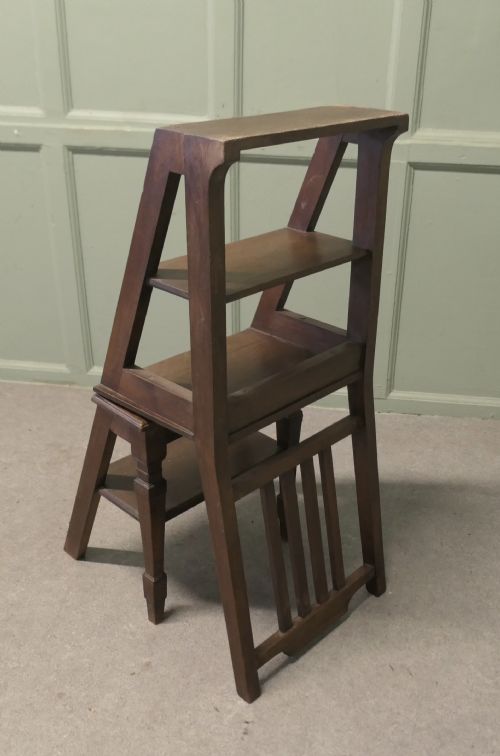
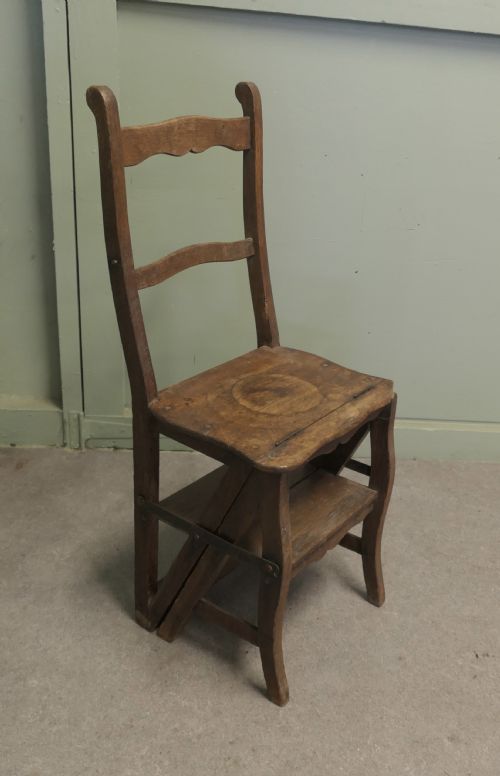
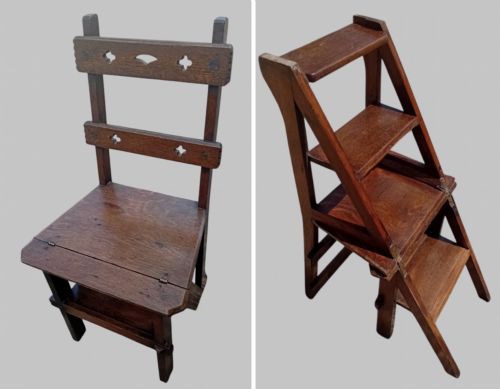
An antique step chair turns a seat into a set of library steps with a simple mechanical movement.
What an antique step chair is
An antique step chair functions as a standard seat before converting into a set of library steps for reaching high bookshelves. This dual purpose design appears in forms such as armchairs, library chairs, and chair ladders.
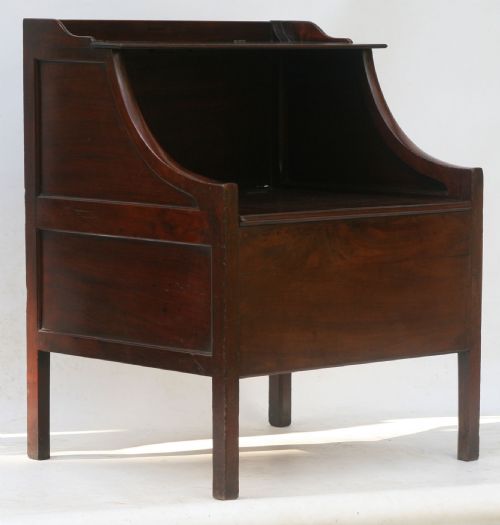
The pieces on this page span several distinct periods including Georgian, Regency, Edwardian, and the late nineteenth century around eighteen ninety. Different examples reflect regional vernacular traditions alongside formal library furnishings.
Makers designed these items to solve the domestic problem of accessing tall bookcases in private studies and grand libraries without needing a separate ladder. Most domestic interiors encountered today feature sturdy oak or polished mahogany versions.
Materials and construction
Joiners built these dual purpose seats using durable hardwoods such as oak and mahogany, often combining structural elements with cane or leather seat inserts. Brass pivots, hinges, and locking catches facilitate the mechanical transformation from furniture to steps.
Traditional woodworking joints secure the moving sections, allowing the backrest or side frames to pivot and unfold safely under weight. Certain examples incorporate wicker or woven cane panels to reduce the overall weight of the frame.
Retail Price Guide 2026
Typical UK retail prices for step chair, calculated from the Sellingantiques database of over a million retail prices indexed since 2003. This retail price guide relies exclusively on Sellingantiques data; no external sources or auction records are used, so the figures do not describe the wider market.
Distinctions in quality
Superior examples rely on precise mechanical engineering where the hinges and pivots operate smoothly without binding or requiring excessive force. The stability of the frame when locked into the step configuration marks the difference between a master cabinetmaker's work and a simpler utility piece.
The choice of timber grain and the neatness of the secondary joints dictate the visual refinement of the finished item. Finer specimens maintain harmonious proportions whether viewed as a chair or extended as a flight of steps.
The Antique Step Chair Glossary
- Metamorphic furniture
- Pieces designed to transform from one functional form into another, such as a seat converting into a ladder.
- Library steps
- Free standing or folding steps used historically to reach books on high shelves in private and institutional libraries.
- Mahogany
- A dense tropical hardwood favoured by cabinetmakers during the Georgian and Regency periods for its rich reddish brown hue and fine grain.
- Arts and Crafts
- A design movement of the late nineteenth century prioritising visible construction and honest materials over heavy ornamentation.
Frequently Asked Questions
How do metamorphic library chairs work?
The backrest and upper frame pivot downward or outward on concealed brass hinges to transform the seating surface into a stable flight of steps.
Users simply lift and rotate the moving sections until the locking catches engage securely in place.
Were these chairs used in homes?
Owners placed these items in private studies, drawing rooms, and personal libraries where tall bookcases required regular access.
Their dual purpose nature saved valuable floor space in rooms where a separate wooden ladder would prove cumbersome.
How do I date an antique step chair?
Stylistic details such as reeded mahogany legs indicate Regency or Georgian origins, whereas simpler oak frames often point towards the late Victorian era or the Arts and Crafts movement.
Examining the metalwork and the type of wood helps narrow down the period of manufacture.
Can I sit on a metamorphic chair safely?
Most examples function adequately as everyday seating provided the internal hinges and wooden joints remain tight and secure.
It is wise to inspect the pivot points before applying full weight in either the chair or the step configuration.