


Metamorphic Chair Steps
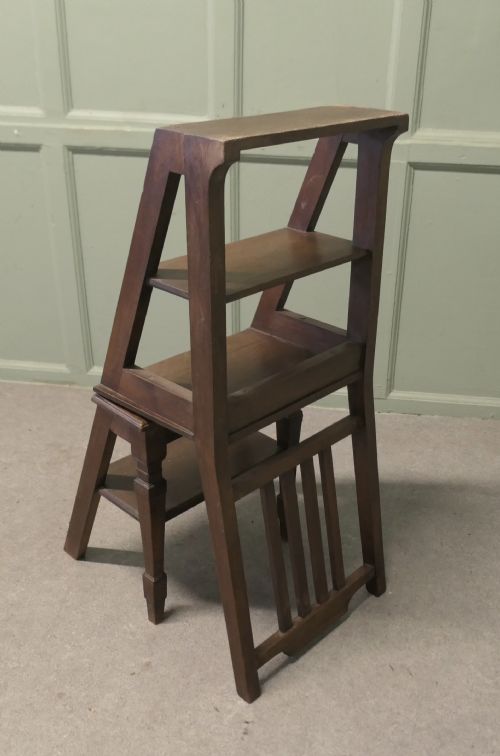
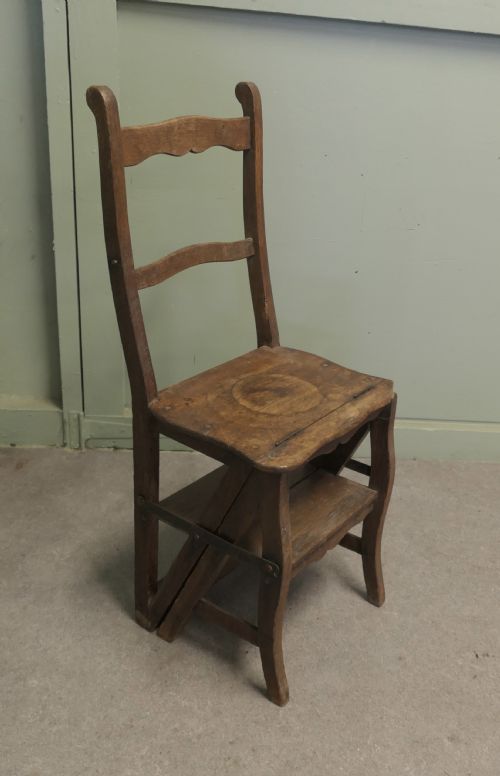
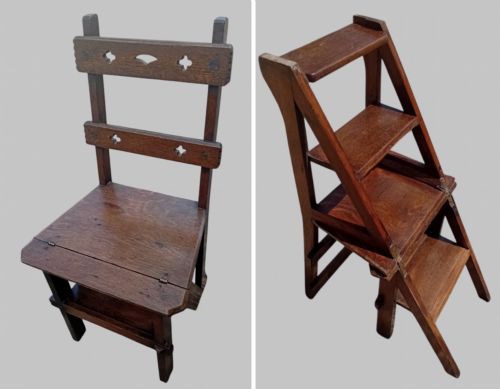
Metamorphic chair steps transform from an ordinary seat into a sturdy set of library steps with a simple mechanical pivot.
Metamorphic Chair Steps
Metamorphic chair steps serve a dual purpose in the domestic interior, functioning primarily as an armchair or side chair before converting into functional access steps for high bookshelves. Pieces matching this description appear across multiple periods, including the Georgian, Regency and Edwardian eras, alongside the Victorian and Arts and Crafts movements.
The most common formats found on this page combine a timber framework in mahogany, oak or walnut with a seat insert of leather or cane. Designs range from formal library armchairs with concealed folding treads to rustic and Gothic Revival forms intended for country houses and ecclesiastical spaces.
Makers utilised ingenious pivoting hinges, sliding sections and locking brass hardware to ensure stability in both configurations. The transition from seating to climbing requires precise engineering concealed within the structural rails of the frame.
Materials and construction
Cabinet makers built these convertible items primarily using hardwoods such as mahogany and oak, supplemented by walnut and occasional exotic timbers. Selected woods needed sufficient density to support the weight of a climber while maintaining domestic elegance as a chair.
Functional metal components, notably brass hinges, brackets and locking pins, bear the mechanical strain of the conversion process. These fittings were integrated discreetly into the framework so the piece retained its appearance as standard furniture when closed.
Upholstered elements frequently incorporate leather or cane for the seat pad, which doubles as the top tread or folds away during the transformation. Joinery techniques relied on traditional mortise and tenon joints to withstand the repeated stress of shifting configurations.
Listings feature oak, mahogany and walnut pieces spanning the Georgian, Regency, Victorian and Edwardian periods.
Evaluating quality and execution
The sophistication of the conversion mechanism dictates the overall quality of a piece, distinguishing standard utility items from high-end cabinet work. Superior examples operate smoothly without excessive friction, locking securely into position in both chair and step modes.
Timber selection and secondary framing choices reveal the ambition of the original maker, with finely figured mahogany and quarter-sawn oak representing the upper tier of production. Joinery tightness and the retention of original brass hardware further separate workshop standards.
Morgan and Sanders·Richard Hicks Bridgens·James Shoolbred and Co
The Metamorphic Chair Steps Glossary
- Metamorphic furniture
- Items designed to transform from one functional form into another, such as a chair becoming a set of steps.
- Regency
- An English design period spanning the early nineteenth century characterised by classical restraint and rich mahogany timbers.
- Arts and Crafts
- A late nineteenth-century movement prioritising honest construction, visible joinery and traditional craftsmanship over machine finish.
- Gothic Revival
- A nineteenth-century style drawing inspiration from medieval architecture, featuring pointed arches and heavy ecclesiastical oak framing.
- Aesthetic Movement
- A late Victorian design phase focused on artistic expression, often incorporating ebonised surfaces and stylized decorative motifs.
Metamorphic Chair Steps: Frequently Asked Questions
How do metamorphic chair steps work?
The backrest or upper section pivots forward or downward on hidden brass hinges to reveal a tiered staircase beneath the seat frame. Users lift and lock the components into position using integrated metal catches.
Once secured, the structure bears weight safely for reaching high library shelves before folding back into a standard chair.
Were these used only in libraries?
While designed primarily for accessing private book collections, their dual purpose suited grand drawing rooms, studies and country house parlours where space efficiency mattered.
Ecclesiastical and rustic variants also served functional roles in vestries and high-ceilinged domestic interiors.
How do I date a pair of steps?
Dating relies on timber choice, stylistic revival details and the complexity of the internal brass hardware. Georgian and Regency pieces favour mahogany with restrained classical lines.
Victorian and Edwardian examples often display heavier oak construction, Gothic Revival motifs or Arts and Crafts simplicity.
Are they safe to climb on?
Original pieces were engineered to support adult weight, provided the mechanical hinges and wooden joints remain structurally sound. Regular use requires checking that locking pins engage fully before stepping upward.
Careful handling of the pivoting mechanism preserves the antique joinery over time.