
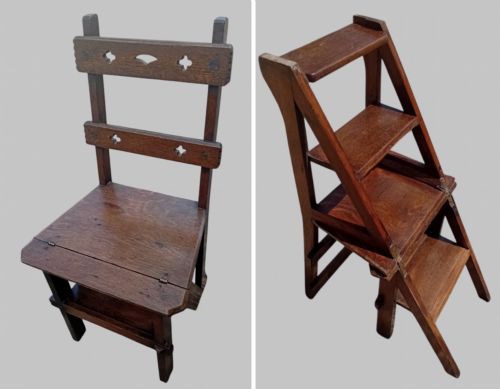


Metamorphic Library Chair
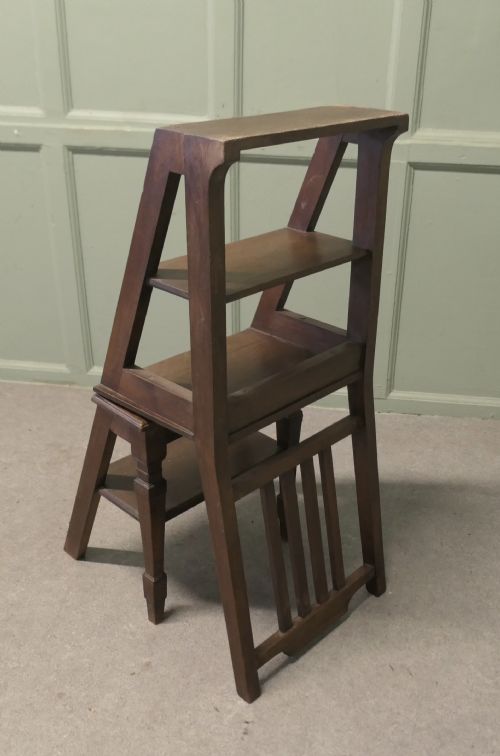
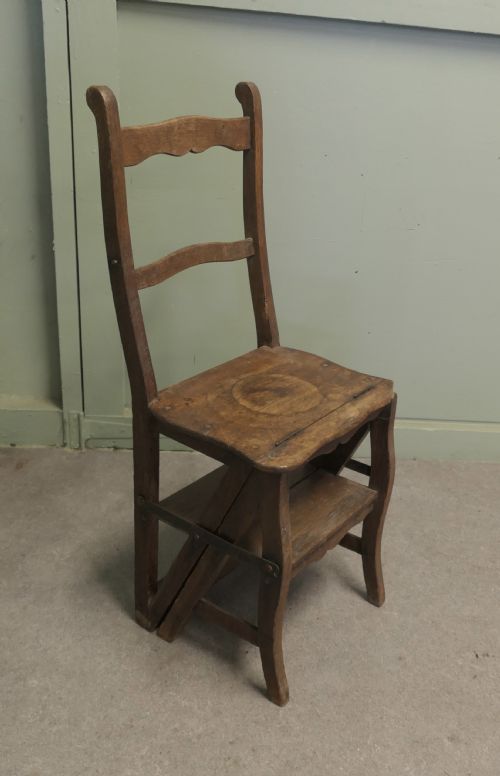
A metamorphic library chair is a dual-purpose piece that folds from a comfortable seat into sturdy steps, offering both utility and mechanical ingenuity.
Metamorphic Library Chair
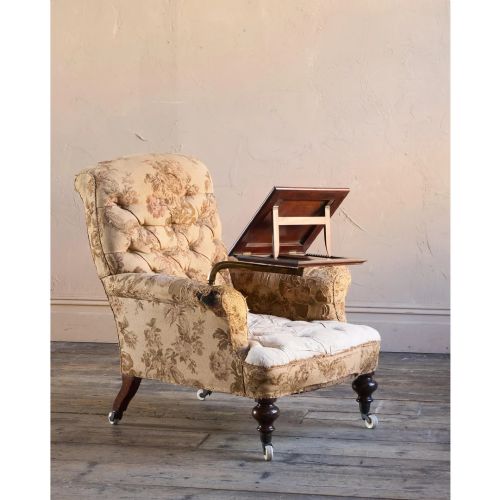
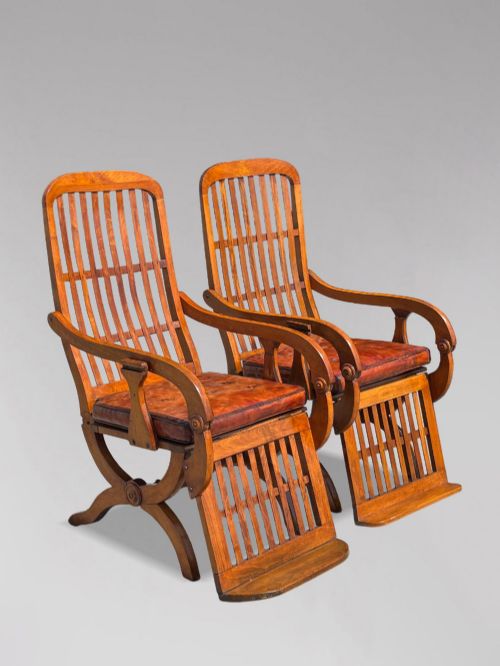
A metamorphic library chair provides a seat for reading before transforming into a set of library steps to reach high shelves. These dual-purpose items range from Georgian and Regency prototypes to Victorian, Edwardian, and Arts and Crafts examples.
Most pieces encountered on this page date from the nineteenth century, including specific periods such as eighteen eighty, eighteen ninety, and eighteen sixty. They take forms from armchairs and side chairs to folding steps and ladder combinations, executed in oak, mahogany, walnut, and hardwood.
How they were made
Joinery relies on solid timber construction designed to bear weight securely in both configurations, utilising brass mechanisms to lock the folding sections safely into place during use.
Recorded styles span Regency, Victorian, Gothic Revival, Arts and Crafts, and Edwardian design vocabulary.
What varies in quality
The sophistication of the pivoting mechanism dictates the success of the transition, where superior examples operate smoothly without binding or requiring excessive force. The integration of the design ensures that neither the chair nor the step configuration betrays its secondary function.
The choice of timber and the execution of carved or turned details in mahogany, oak, or walnut distinguish standard production from finer workshop output, alongside the durability of original brass fittings and leather or cane surfaces.
J Foot And Son·Morgan And Sanders·Richard Hicks Bridgens·James Shoolbred And Co
The Metamorphic Library Chair Glossary
- Metamorphic furniture
- Pieces designed to transform from one form of furniture into another, such as a chair converting into steps.
- Aesthetic Movement
- A late nineteenth-century design style focusing on visual and artistic qualities rather than narrative content, often seen in oak and walnut pieces.
- Gothic Revival
- An architectural and decorative style drawing on medieval forms, frequently identified by pointed arches and robust framing.
- Regency
- The period of British design spanning the early nineteenth century, noted for classical restraint and rich mahogany timbers.
Metamorphic Library Chair: Frequently Asked Questions
How do metamorphic library chairs work?
These pieces use clever pivoting joints and hinges hidden within the frame. By lifting or unfolding specific sections, the backrest and seat transform into a stable set of library steps.
Most mechanisms rely on brass fittings that guide the movement smoothly between the seating position and the ladder configuration.
What periods do these chairs date from?
The pieces span from the Georgian and Regency eras through the Victorian and Edwardian periods. Nineteenth-century examples are particularly common in the archive.
Styles range from classical mahogany Regency designs to oak Arts and Crafts and Gothic Revival interpretations from the late nineteenth century.
Were these chairs used only in libraries?
While designed primarily for domestic libraries to reach high bookshelves, their dual function made them practical in studies and parlours. They served as comfortable armchairs or side chairs for everyday reading.
The seating comfort was preserved alongside the engineering required for safe climbing.
What materials were used to make them?
Cabinetmakers selected durable hardwoods such as mahogany, oak, walnut, and general hardwood for the primary frames. Brass hardware provided the necessary strength for the moving joints.
Upholstery materials included brown leather, fabric, and cane, supported by iron elements where extra structural reinforcement was needed.