


Folding Library Chair Steps
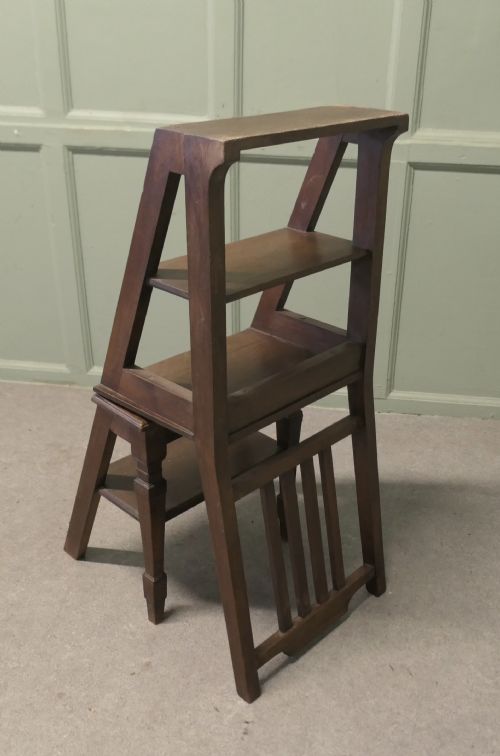
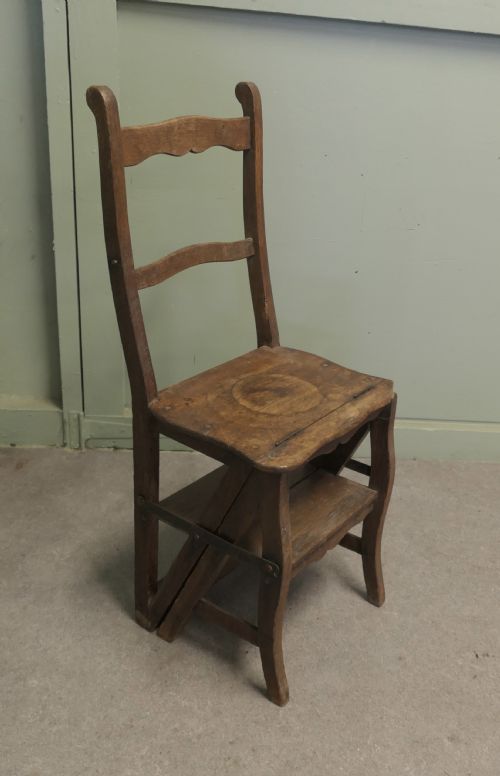
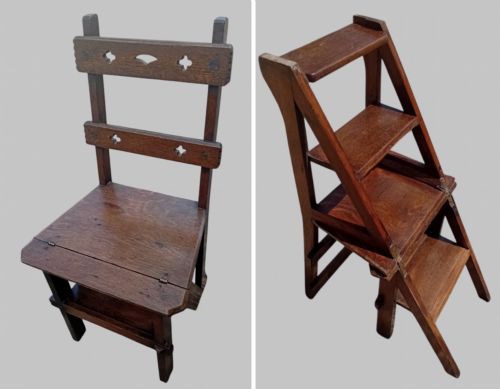
These folding library chair steps are ingenious double-duty pieces of furniture designed to transform from a comfortable seat into sturdy steps.
Folding Library Chair Steps
When you search for folding library chair steps, you are looking at dual-purpose furniture that serves as both seating and a set of steps for reaching high bookshelves. These pieces transform through clever mechanical actions, pivoting or unfolding from an armchair into a staircase.
On this page, you are most likely to meet mahogany or oak versions dating from the Georgian, Regency, and Victorian periods. The selection ranges from formal library armchairs to rustic French country step chairs and Arts and Crafts examples.
The forms combine domestic comfort with practical utility, reflecting the grand private libraries of the nineteenth century where accessing towering volumes required discreet engineering. Each piece bridges the gap between functional woodwork and mechanical ingenuity.
How they were made
Cabinetmakers constructed these metamorphic pieces using dense timbers such as mahogany and oak, often incorporating brass hinges, pivots, and locking brackets to manage the frequent transformation. The structural integrity relies on robust joinery that conceals the folding mechanisms within the frame of an armchair.
Seating surfaces frequently feature leather inserts or cane panels, balancing the heavy wooden framework with lighter materials suited for a chair. Hardwood runners and iron fittings guide the moving sections smoothly from the seated configuration into an elevated platform.
Listings feature pieces from the Georgian, Regency, and Edwardian periods, constructed in oak, mahogany, and hardwood with brass and iron hardware.
What varies in quality
The distinction between ordinary and exceptional pieces rests on the smoothness of the metamorphic action and the concealment of the mechanism. Top-tier examples operate with seamless precision, locking firmly into both chair and step configurations without exposing clumsy ironwork.
Material selection and timber figuring also dictate the upper range, where cabinetmakers utilised finely grained mahogany or quarter-sawn oak with detailed carvings in Gothic Revival or Regency styles. Lesser pieces rely on heavier, stiffer hinges and simpler utilitarian construction.
Morgan and Sanders·Richard Hicks Bridgens
The Folding Library Chair Steps Glossary
- Metamorphic furniture
- Pieces designed to transform from one functional form into another, such as an armchair turning into a set of library steps. This clever engineering was especially popular during the Georgian and Victorian eras.
- Regency
- A British design period spanning the early nineteenth century, known for classical restraint and refined mahogany construction. Pieces from this era often feature elegant curves and understated brass mounts.
- Arts and Crafts
- A movement prioritising visible craftsmanship and honest use of materials like oak, often seen in late nineteenth-century pieces. It rejected mass production in favour of hand-finished integrity.
- Gothic Revival
- A style drawing on medieval architectural motifs, featuring pointed arches, heavy oak framing, and decorative tracery. This aesthetic often appeared in Victorian library furnishings.
Folding Library Chair Steps: Frequently Asked Questions
How do folding library chair steps work?
The chair back or seat sections pivot on hidden brass hinges and runners, unfolding outwards and downwards to form a stable staircase. Once inverted, the former seat transforms into the treads while the backrest anchors the top step.
This mechanical shift allows a single piece of furniture to occupy minimal floor space as a chair while providing safe elevation for reaching high shelves.
What periods do these chairs come from?
The available pieces span from the Georgian era through the Regency period and into late Victorian and Edwardian times. Earlier examples often feature rich mahogany, while later pieces frequently utilise oak.
Stylistic details such as Gothic Revival motifs or Arts and Crafts simplicity help place each piece within its specific nineteenth-century context.
Are they sturdy enough to climb?
Original metamorphic steps were built for daily use in private libraries by cabinetmakers using dense timbers like oak and mahogany. Their structural integrity depends on the original brass and iron hinges remaining secure.
When properly maintained, the locking mechanisms provide solid support for climbing, though care should be taken with antique pivots.
What materials were used?
Cabinetmakers primarily relied on hardwoods such as mahogany and oak to support the weight of a person climbing. Secondary materials included leather for desk or seat inserts, cane for ventilation, and brass or iron for the working mechanisms.
These durable substances ensured the furniture could withstand the physical stress of constant transformation.