


Antique Library Ladder Steps
Antique library ladder steps let you reach high shelves, combining practical ascent with fine cabinet work.
Antique Library Ladder Steps
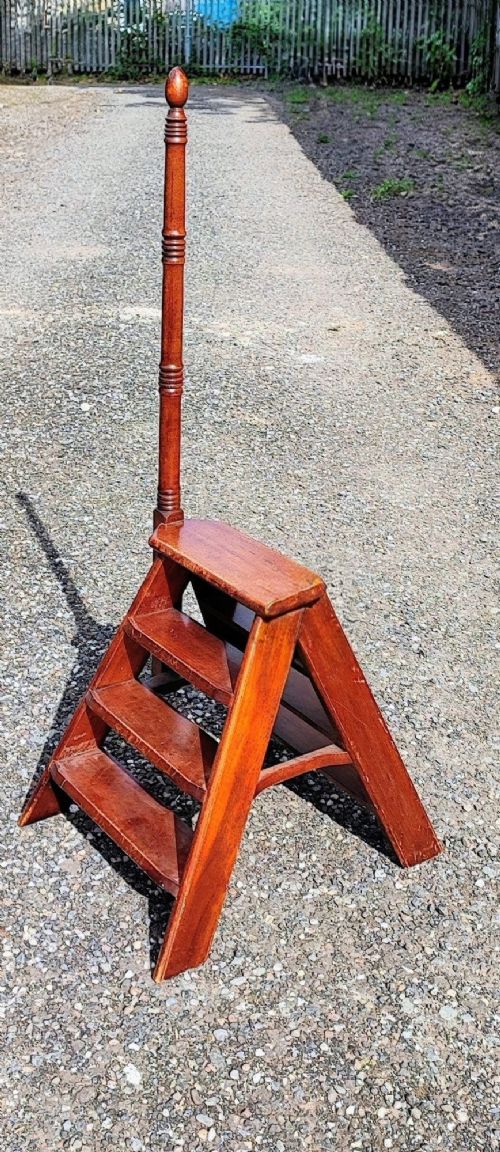
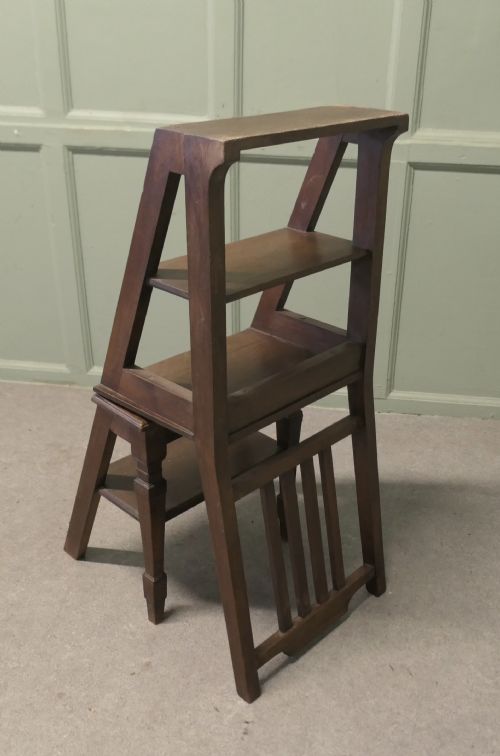
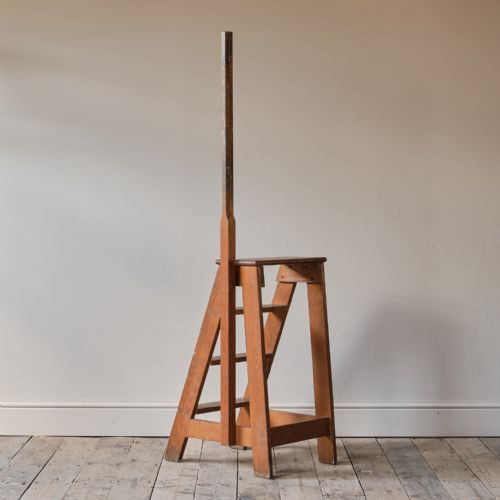
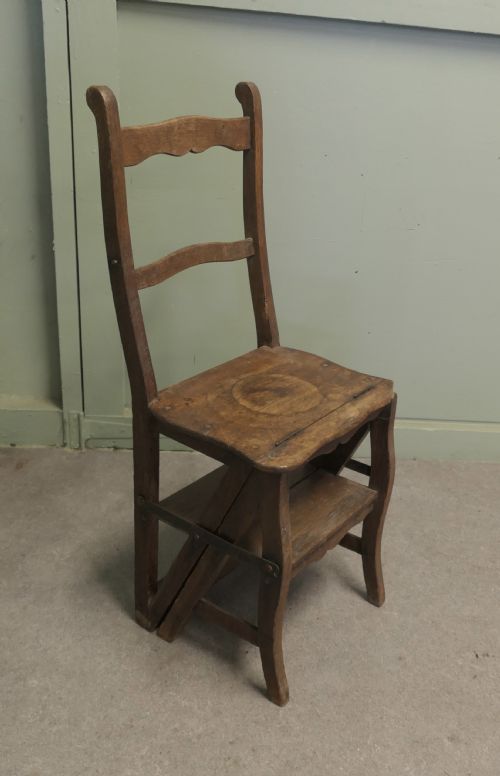
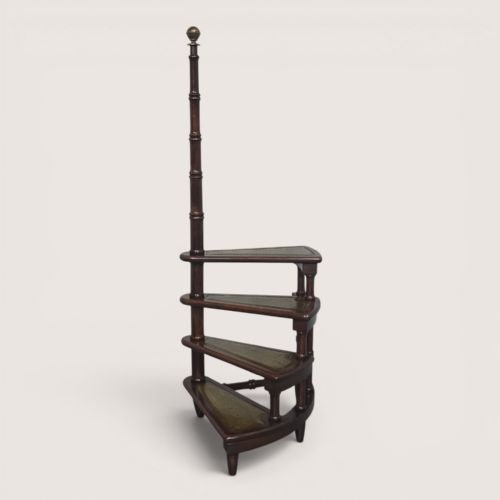
Antique library ladder steps comprise flights, folding frames, and clever metamorphic designs intended for accessing tall bookshelves. You will frequently encounter mahogany and oak pieces from the Georgian, Regency, and Victorian eras, alongside Edwardian and later examples.
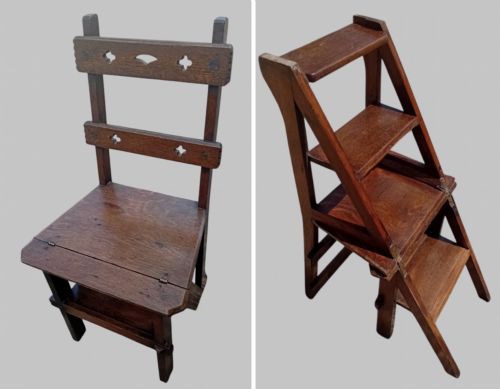
The selection ranges from simple folding flight steps to complex metamorphic armchairs that transform into steps with a simple movement. Spiral variants and sturdy pine step ladders also appear, serving both grand architectural libraries and modest domestic spaces.
Materials and construction
Cabinet makers utilised dense hardwoods like mahogany, oak, yew, and fruitwood for durability and rich grain, often incorporating turned supports and brass hardware. Leather panels frequently inset the treads to provide grip and cushion the foot.
Joinery techniques focus on stability under load, using sturdy framing for A-frame steps and precise hinges or pivots for folding and metamorphic pieces. Pine and painted finishes served more utilitarian environments, while Gothic Revival and Arts and Crafts pieces displayed carved detailing.
Listings feature woods including oak, mahogany, pine, yew, fruitwood, and cane, paired with brass and iron hardware.
Judging quality
Quality rests in the smoothness of the mechanical action on metamorphic pieces and the rigidity of the joints across a flight of steps. Solid timber selection and crisp turning on uprights or hand poles elevate the piece beyond a purely utilitarian tool.
Finer examples maintain original leather treads, harmonious wood tones, and subtle period styling such as Gothic tracery or Regency brass inlay. Lesser pieces show utilitarian wear without the refined cabinet work seen in commissioned library furniture.
The Antique Library Ladder Steps Glossary
- Metamorphic
- Furniture designed to transform from one object into another, such as an armchair converting into a flight of library steps.
- Tread
- The horizontal flat surface or step upon which one places the foot when ascending.
- Gothic Revival
- A nineteenth-century style drawing inspiration from medieval architecture, featuring pointed arches and heavy timber construction.
- A-frame
- A self-supporting structural configuration shaped like the capital letter A, providing stability without leaning against a wall.
Antique Library Ladder Steps: Frequently Asked Questions
How do metamorphic library chairs work?
Metamorphic chairs feature hinged sections and pivoting frames that unfold smoothly to transform a seat into a functional set of steps.
Once returned to the closed position, they function as a standard armchair or porter's chair while concealing their mechanical purpose.
Are these steps safe for daily use?
Most antique library ladder steps remain structurally sound if constructed from hardwoods like oak and mahogany with solid joinery.
Buyers should inspect the pivot points and tread stability before placing weight on older folding or spiral designs.
What woods were commonly used?
Mahogany and oak dominate the surviving examples, prized by makers for their strength and ability to take a fine polished finish.
Pine, fruitwood, and yew also appear in regional pieces, utility ladders, and circular library steps.
How do I identify a Regency period piece?
Regency library steps often feature refined mahogany construction, clean classical lines, and sophisticated mechanical transformations.
They frequently combine the function of an armchair with folding steps in the manner of notable makers like Morgan and Sanders.