


Library Step Stool
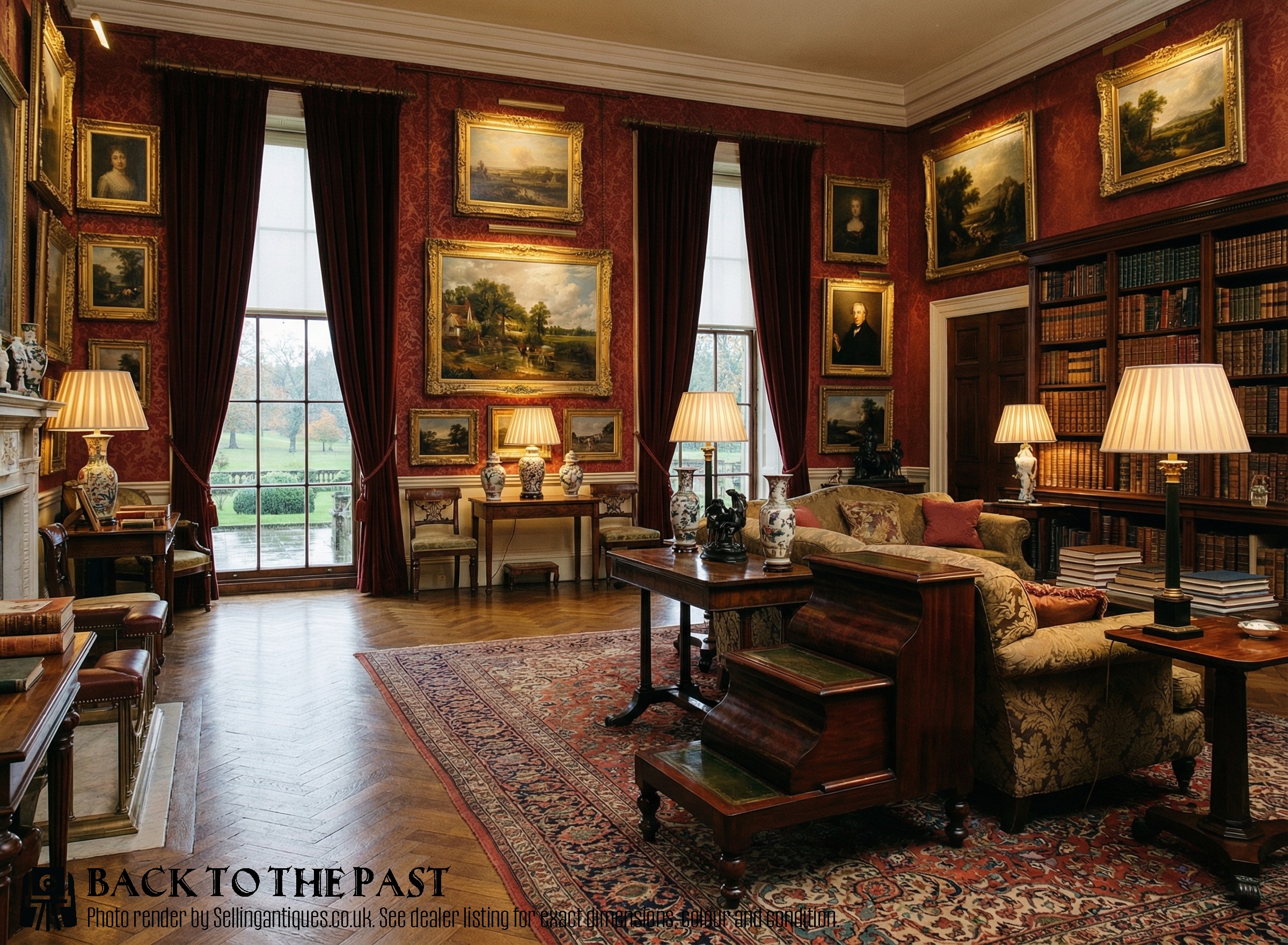
A library step stool bridges the gap between high bookshelves and the floor, offering sturdy elevation that doubles as seating.
Library Step Stool
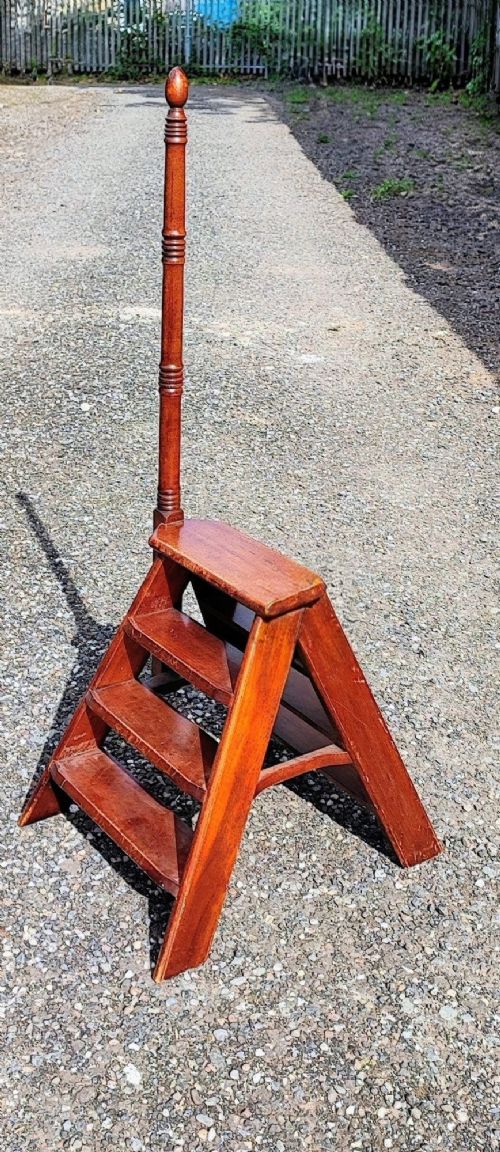
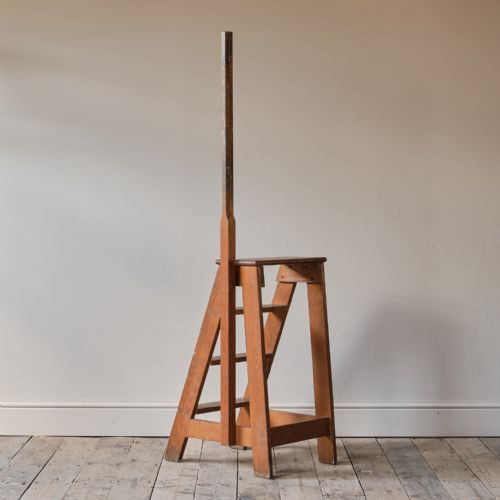
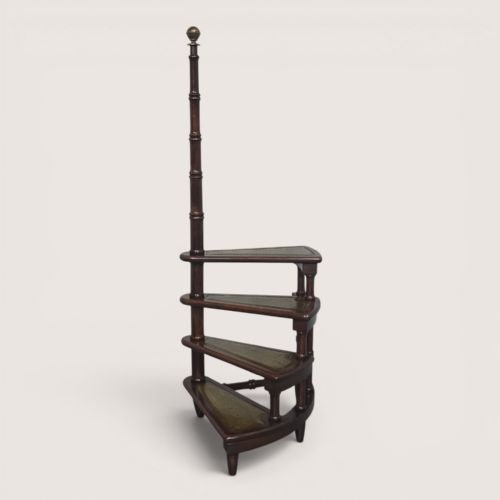
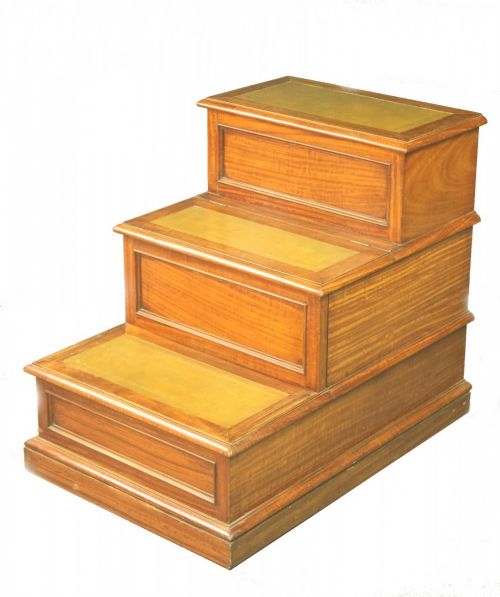
A library step stool serves as both a practical climbing aid and a piece of functional furniture, frequently taking the form of a set of portable treads, a flight of stairs, or a tall ladder. These items appear across periods spanning from the Georgian and Regency eras through the Victorian and Edwardian decades into the 1920s and 1930s.
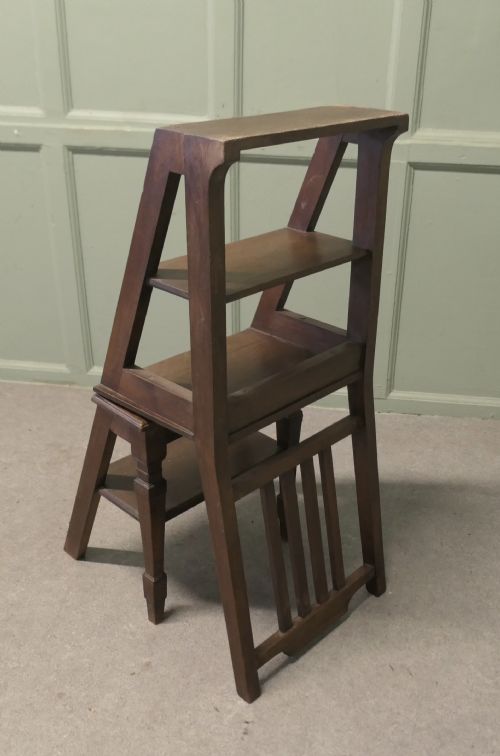
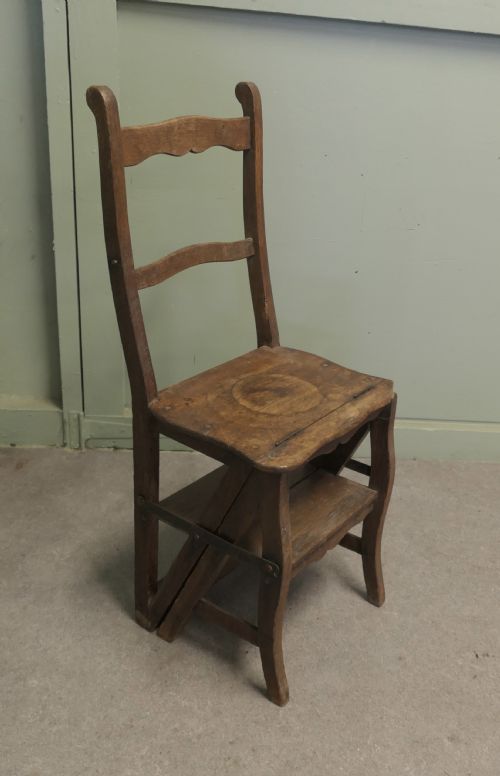
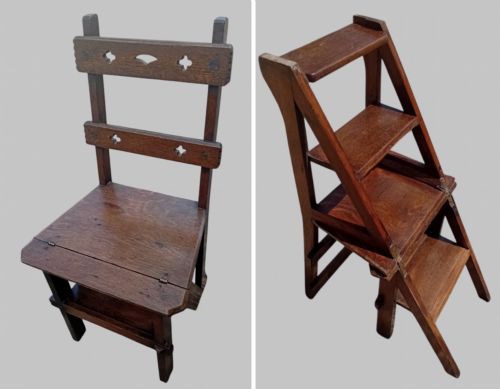
Metamorphic designs dominate this category, transforming cleverly from a compact stool, chair, or table into an ascent of steps. Buyers encounter simple fixed pine and oak ladders alongside sophisticated mahogany folding variants intended for domestic libraries.
Regional and utilitarian examples also surface, including railway steps and rustic country pieces, demonstrating that these objects served working environments as well as grand private collections.
Materials and Construction
Cabinet makers utilised dense hardwoods such as mahogany, oak, satinwood, and fruitwood to build durable frames capable of supporting weight. Leather inset treads frequently appear on finer examples to provide grip and protect the wood surface.
Joinery methods range from straightforward pegged framing on pine utility ladders to intricate hinges, pivots, and ratchets on metamorphic chairs that shift configurations smoothly. Brass fittings and iron hardware reinforce stress points on folding and revolving spiral forms.
Library Step Stool Retail Price Guide 2026
Typical asking prices for library step stool among the pieces listed under this phrase on Sellingantiques today, from the lower quarter to the upper quarter. They describe what is for sale here now, not the wider market.
Period styles include Georgian, Regency, Victorian, Gothic Revival, Aesthetic Movement, Arts and Crafts, and Edwardian designs.
Craftsmanship and Design
The sophistication of the mechanism dictates the tier of the piece, moving from straightforward fixed flights to complex dual-purpose chairs and tables engineered with concealed joints. Cabinet work involving figured mahogany or carved gothic details separates standard utility items from salon pieces.
Proportion and stability define everyday utility, where tighter timber joints and well-balanced treads endure decades of physical climbing without loosening.
Gillows·J.Jarvis
The Library Step Stool Glossary
- Metamorphic furniture
- Pieces designed to transform from one furniture type into another, such as an armchair converting into a flight of steps.
- Tread
- The horizontal flat board or step upon which a person places their foot during ascent.
- Commode
- A piece of furniture incorporating an enclosed chamber pot, which in this context occasionally integrates with a set of steps or a stool.
- Aesthetic Movement
- A late nineteenth-century design style emphasising visual and artistic qualities over strict historical revivalism.
Library Step Stool: Frequently Asked Questions
How do metamorphic library steps work?
These pieces use hidden hinges, pivots, and sliding tracks that allow the upper treads to swing or flip outward from a stool, chair, or table base.
Once repositioned, they lock securely into a stable flight of stairs for reaching high shelves.
Can I use an antique step stool safely?
Most antique library steps remain structurally robust due to dense hardwood construction and solid joinery, but testing the locking mechanism is wise before climbing.
Checking the stability of hinges and treads ensures safe daily use in modern spaces.
What is the difference between library steps and a bed step?
Bed steps were originally designed to help people climb into high four-poster beds during the Georgian and Regency periods, typically featuring two shallow treads.
Library steps generally offer three or more taller treads to reach elevated bookshelves.
How do I identify a Regency period step stool?
Regency pieces often display classical restrained lines, reeded or turned legs, and rich mahogany timbers reflecting early nineteenth-century cabinet making.
Maker stamps or characteristic metamorphic mechanisms can also point to this specific era.