


Victorian Mahogany Steps
Victorian mahogany steps are functional library and bed steps designed for reaching high shelves or tall beds, combining utility with fine timber construction.
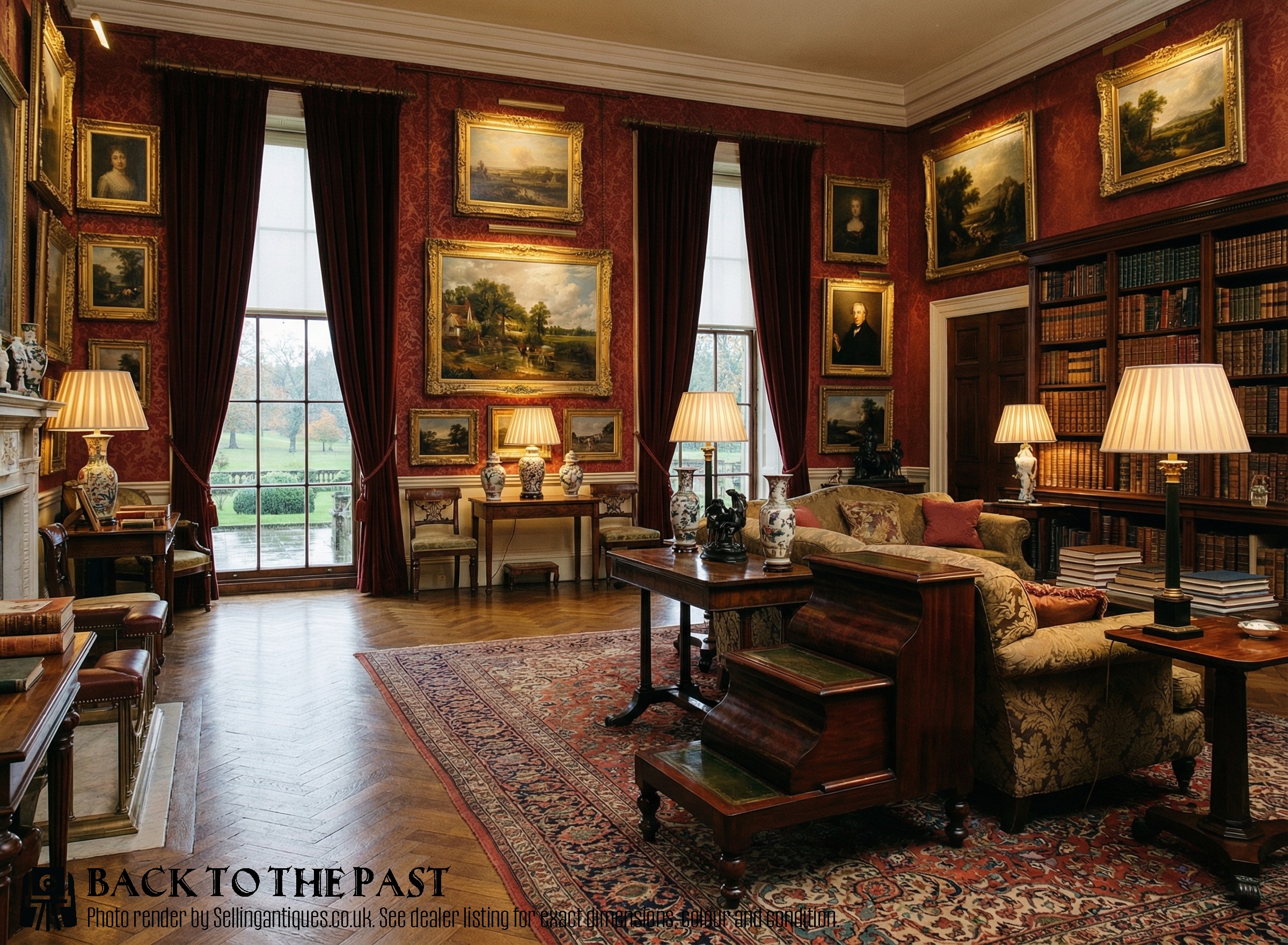
Victorian Mahogany Steps
When you search for victorian mahogany steps, you are looking at functional staircase pieces built to reach high shelves or tall beds. The pieces recorded here span library steps, bed steps, and related metamorphic forms.
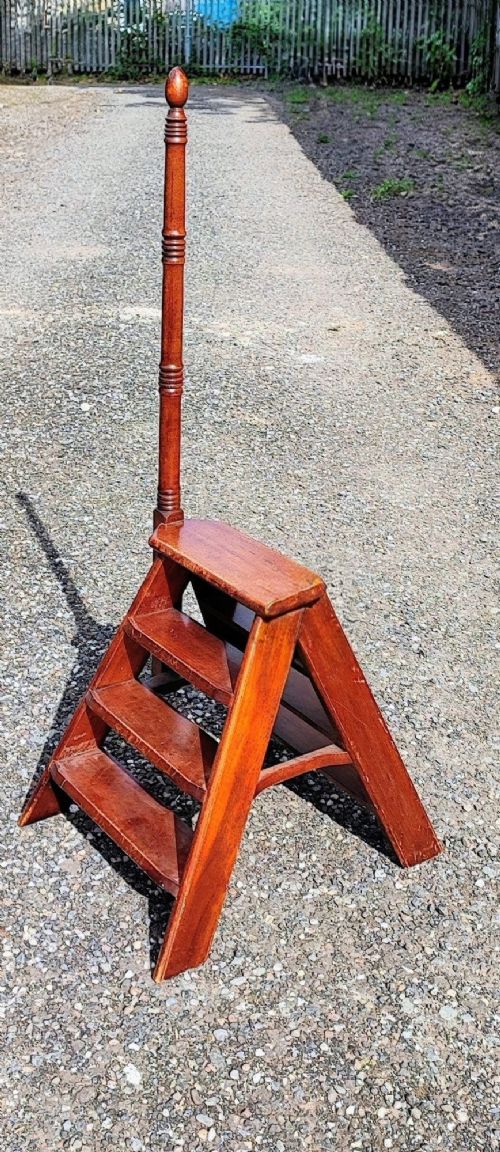
You are most likely to meet standard library steps or bed steps dating from the nineteenth century, often constructed as folding sets or multi-tier staircase units. These items reflect the domestic and study needs of their original period.
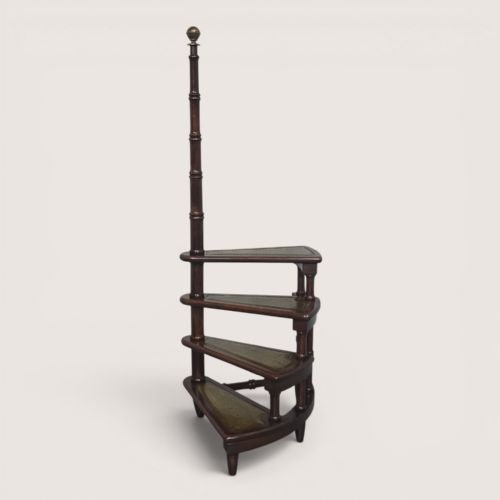
The evidence shows a strong presence of nineteenth century and Victorian items, alongside occasional 1920 and 1930 interpretations of earlier styles. Such pieces range from straightforward sets to more elaborate spiral designs.
How they were made
Makers utilised solid timber and veneers, frequently employing mahogany as the primary structural material alongside satinwood and ebonised wood details. Brass fittings provide functional hinges and structural support for folding mechanisms.
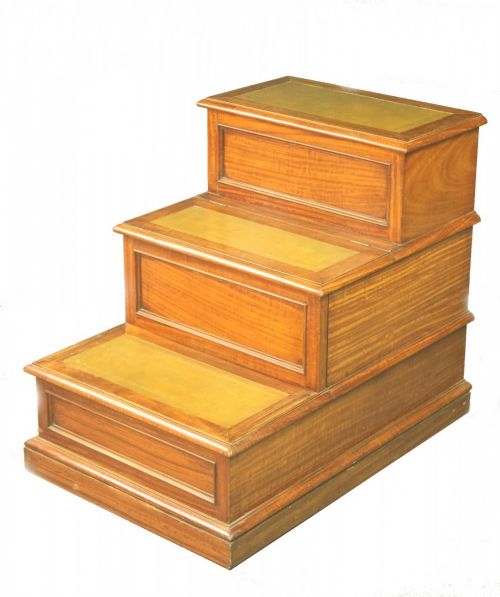
Treads were frequently inset with leather surfaces, adding a tactile element to the step tops and protecting the wood during daily use. Turned supports and structural joinery give these staircase units their stability and upright form.
Some industrious Victorians climbed into bed with a hidden commode tucked neatly beneath their feet.
What varies in quality
The standard of timber selection and the complexity of the design set individual pieces apart. Plain timber constructions sit at one end, while flame mahogany and integrated leather treads represent a higher grade of finish.
Mechanical ingenuity also marks the difference between basic sets and superior examples. Folding mechanisms, metamorphic capabilities that transform steps into chairs, and spiral configurations require precise carpentry to execute successfully.
The Victorian Mahogany Steps Glossary
- Mahogany
- A durable tropical hardwood known for its reddish-brown colour and fine grain. It served as the primary material for high-quality nineteenth-century domestic furniture.
- Tread
- The horizontal surface of a step upon which the foot rests. In library steps, these surfaces are frequently inset with leather.
- Metamorphic
- A descriptive term for furniture that transforms from one object into another, such as steps that convert into a chair. This clever engineering allowed dual functionality in period rooms.
- Commode
- A piece of furniture that often combined storage or concealed functions with step forms. These dual-purpose items served bedrooms and dressing rooms.
- Ebonised
- Wood treated to imitate ebony through a staining and finishing process. This technique provided sharp dark contrasts against standard mahogany sections.
Victorian Mahogany Steps: Frequently Asked Questions
How were library steps used?
Library steps provided access to high bookshelves in private and institutional rooms during the nineteenth century. Their sturdy construction allowed users to reach upper tiers safely.
Many examples folded away when not in use, saving valuable floor space in cramped studies. Others remained as permanent fixtures or doubled as seating and commodes.
What is the difference between library and bed steps?
Library steps were typically taller, built with three or more tiers to reach elevated wall shelving. They often incorporated handrails or sturdy upright supports for safety.
Bed steps sat lower to the ground, usually featuring two or three shallow tiers designed for climbing into high four-poster beds. Some bed steps also concealed commodes within their lower sections.
How do I identify a Victorian piece?
Victorian pieces display construction methods typical of the nineteenth century, including hand-cut dovetails and traditional timber framing. The materials match those recorded in period workshops.
Design motifs reflect the revival styles popular during the reign, combined with practical nineteenth-century domestic requirements. Later twentieth-century items often copy these established nineteenth-century forms.
Do these steps fold for storage?
Many surviving sets feature folding mechanisms that allow the tiers to collapse into a compact unit. This clever engineering was essential for multi-purpose rooms.
Other configurations remain fixed, particularly spiral designs or heavy metamorphic chairs. Inspecting the hinges and pivots reveals how each individual set operates.