


Nineteenth Century Steps
Nineteenth century steps provide practical elevation for high libraries and domestic use, uniting functional design with rich period timber.
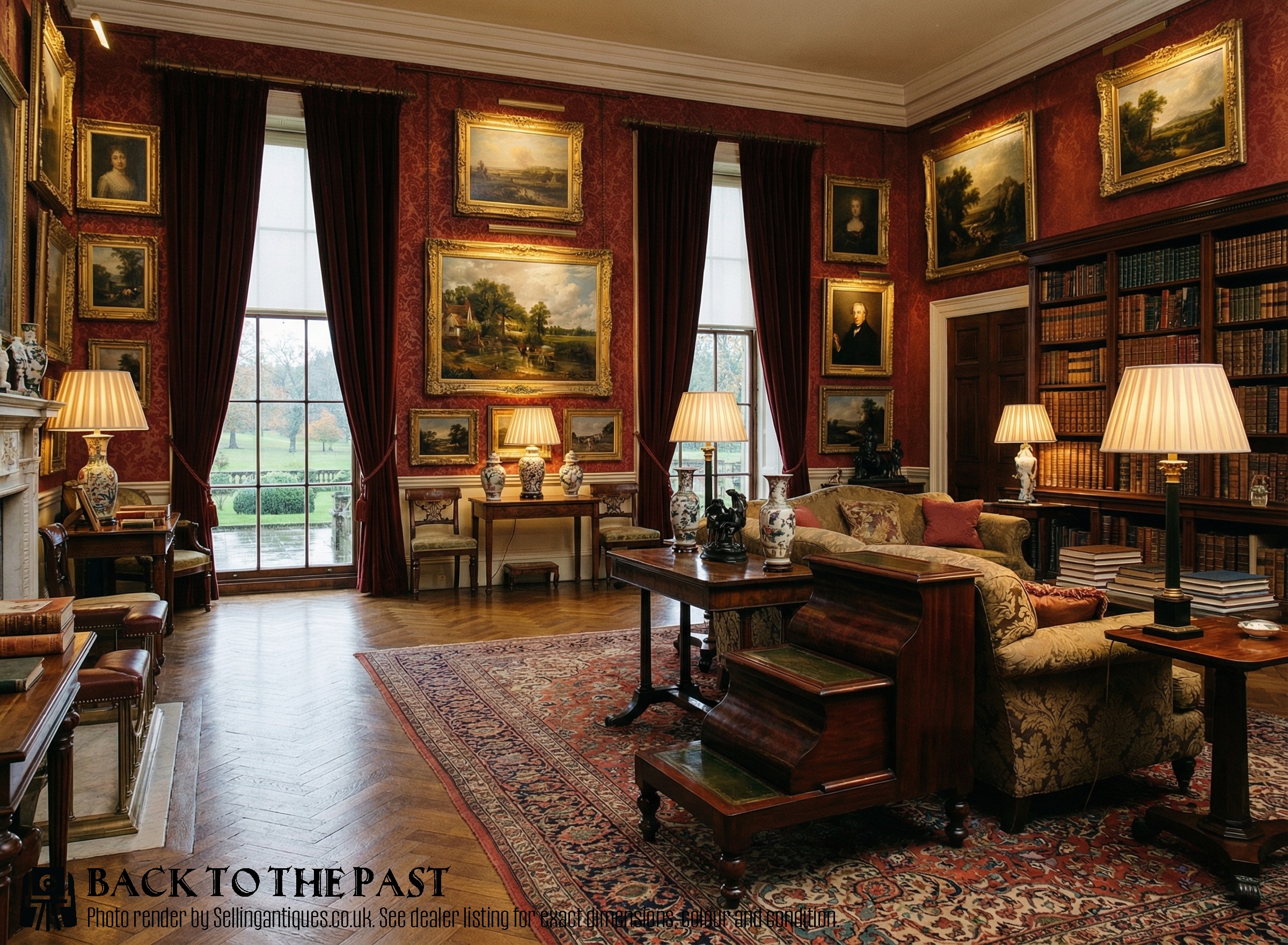
Nineteenth Century Steps
Nineteenth century steps encompass functional library ascents and domestic bedsteps designed for high furniture and tall shelving. These pieces appear primarily in mahogany and oak, reflecting the domestic utility of the period.
The selection ranges from standard tiered library steps to convertible metamorphic armchairs that unfold into steps. Examples often date across the nineteenth century and into the early twentieth century.
Buyers frequently encounter mahogany library steps featuring multiple treads, alongside rarer metamorphic forms. Each variant demonstrates the distinct joinery methods typical of nineteenth century cabinet making.
Materials and construction
Makers utilised solid mahogany and oak for the structural frames, ensuring stability for weight-bearing use. These timbers were selected for their dense grain and structural integrity.
Joinery methods included mortise and tenon construction to withstand regular climbing and movement. Secondary details occasionally incorporate leather inset treads or brass hardware to secure the folding mechanisms.
Assessing quality and execution
Quality separates standard utility pieces from sophisticated metamorphic designs that transform between seating and elevation. The complexity of the internal mechanism dictates the grade of the piece.
The choice of timber grain and the crispness of the turned or reeded supports indicate the skill of the workshop. Superior examples retain their original timber surfaces and smooth mechanical movement without excessive play in the joints.
Richard Hicks Bridgens
The Nineteenth Century Steps Glossary
- Metamorphic
- Furniture designed to transform from one object into another, such as an armchair converting into a set of steps.
- Bedsteps
- Low sets of steps historically placed beside high beds to ease access.
- Library steps
- Freestanding sets of stairs built to reach high bookshelves in private studies.
- Reeded
- A decorative moulding consisting of parallel convex strips resembling bundled reeds.
- Tread
- The horizontal surface of a step upon which the foot is placed.
Nineteenth Century Steps: Frequently Asked Questions
What are nineteenth century steps used for?
These steps were originally built to provide access to high bookshelves in domestic libraries or to reach elevated beds in period chambers. They served a purely practical domestic function in large houses.
Today, they are utilised both for their original purpose and as decorative furniture displays within traditional interiors.
How do metamorphic steps work?
Metamorphic pieces utilise concealed hinges and pivoting joints that allow the back of an armchair to fold forward or drop down into a tiered staircase. The design hides the functional steps entirely within the seating frame.
Operating the mechanism requires gentle handling to protect the nineteenth century pivot pins and timber pivots from unnecessary strain.
What timber are library steps made from?
The majority of library steps from this period are constructed from mahogany, selected for its strength and dark reddish hue. Oak is also found in earlier or alternative domestic designs.
Secondary woods may include pine or other regional timbers used internally for unseen structural supports.
How do I care for antique library steps?
Keep the timber conditioned with traditional wax to prevent the wood from drying out in modern heated rooms. Avoid placing them in direct sunlight which can fade the mahogany finish.
Check the stability of the joints periodically if the steps are used regularly for climbing.