


Victorian Library Stairs
Victorian library stairs are functional timber ascents designed for reaching high shelves, prized for their sturdy construction and rich period timbers.
Victorian Library Stairs
Victorian library stairs encompass various timber ascents designed to reach elevated bookshelves in domestic and institutional settings. Pieces on this page span the 19th Century, Victorian, Late Victorian, Edwardian, and Regency styles, alongside pieces dated to 1920 and 1930.
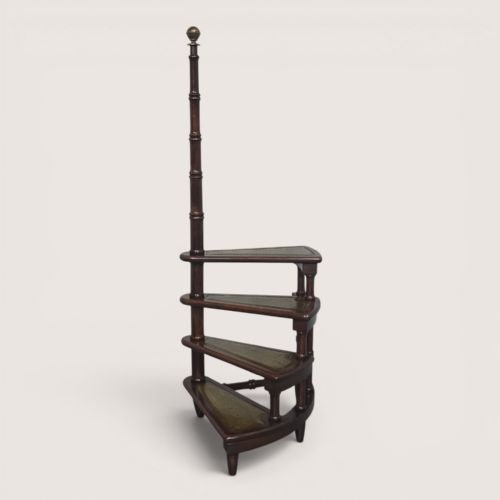
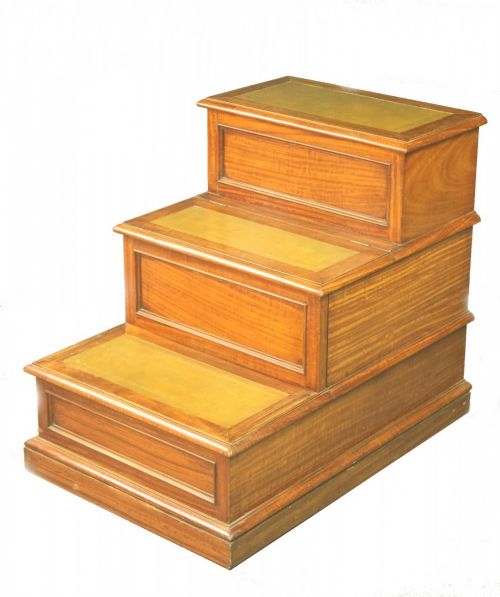
The primary forms appearing in the listings are library steps, bed steps, and library ladders. These range from traditional flights of stairs to spiral library steps and large ladders.
Makers and builders utilised a range of domestic and exotic timbers for these ascents. Mahogany, oak, satinwood, pine, and brass are the primary materials recorded across the pieces.
How they were made
Makers constructed these ascents using solid hardwoods such as mahogany and oak, often incorporating brass hardware for structural stability and movement. Satinwood and pine also appear as principal materials in construction.
Treads were frequently finished with inset leather surfaces to provide grip and reduce wear underfoot. Turned supports and spiral configurations demonstrate the woodworking techniques employed by period craftsmen.
Some library steps decided to take a turn for the whimsical, arriving in delightful spiral configurations with turned wooden supports.
What varies in quality
Quality in these ascents is determined by the choice of timber, ranging from dense mahogany and figured satinwood to simpler pine frames. The use of supplementary materials like brass and leather inlay elevates a piece.
Construction complexity also separates standard flights from more ambitious forms like spiral steps with turned supports. Finer examples display superior joinery and sophisticated design adaptation for domestic or institutional libraries.
The Victorian Library Stairs Glossary
- Library Steps
- A freestanding flight of stairs designed for accessing tall bookcases. These typically feature three or four treads and occasionally incorporate storage or folding mechanisms.
- Bed Steps
- A small set of steps historically placed beside high four-poster beds to assist with rising. They share construction methods with library steps but are generally more compact.
- Treads
- The horizontal surfaces of the steps upon which one places feet. In library stairs, these are frequently lined with leather.
- Gothic Revival
- An architectural and decorative style drawing inspiration from medieval design. Pieces in this style often feature pointed arches and heavy timber framing.
Victorian Library Stairs: Frequently Asked Questions
What are victorian library stairs?
Victorian library stairs are timber ascents built to reach tall bookshelves in period rooms. They range from simple pine ladders to elaborate mahogany flights.
These pieces combine utilitarian design with cabinet maker craftsmanship, utilising woods like oak, satinwood, and mahogany alongside brass fittings.
How were library steps used?
Library steps were positioned against tall bookcases to allow access to upper shelves in private studies and institutional libraries. Some variations, such as bed steps, served similar elevation purposes in bedrooms.
They provided a safe, stable platform for reaching heavy volumes stored beyond normal standing reach.
What materials are they made from?
Makers constructed these pieces primarily from hardwoods such as mahogany and oak, alongside pine and satinwood. Leather was commonly inset into the treads for grip.
Brass hardware frequently appears as structural reinforcement or decorative detailing across the steps and ladders.
How do I identify the period?
Period identification relies on timber selection, construction techniques, and stylistic markers such as Gothic Revival details or Regency influences. Pieces span the nineteenth century into the early twentieth century.
Turned supports and leather-topped treads help distinguish particular manufacturing eras and regional workshop traditions.