


Dark Wood Step Stool
A dark wood step stool offers practical elevation and fine period craftsmanship, making it an essential utility piece for any traditional interior.
Dark Wood Step Stool
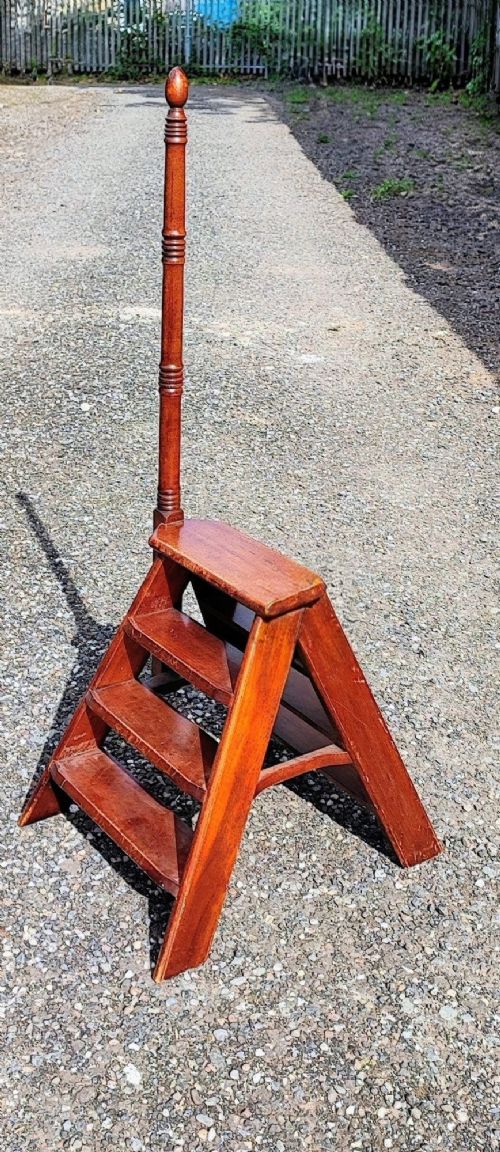
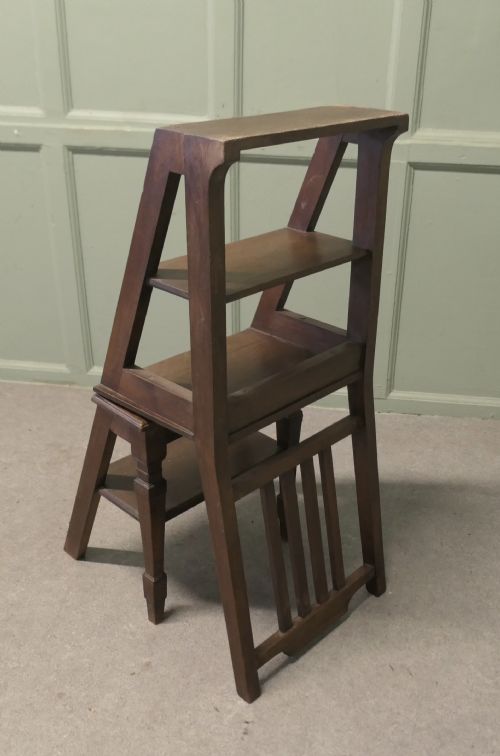
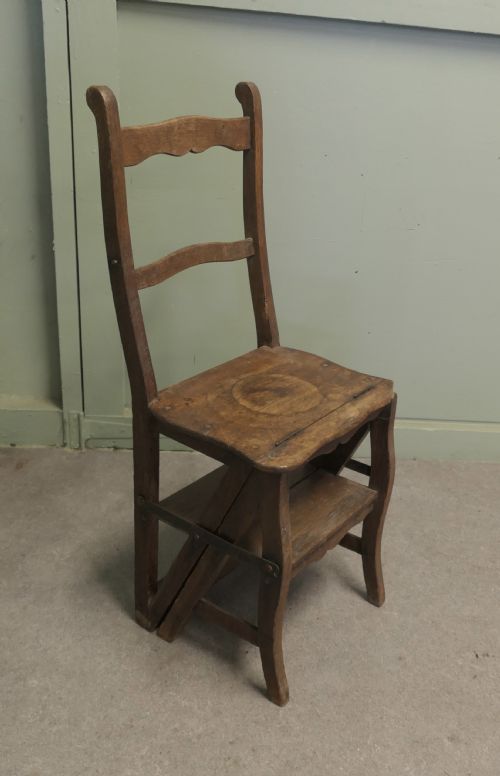
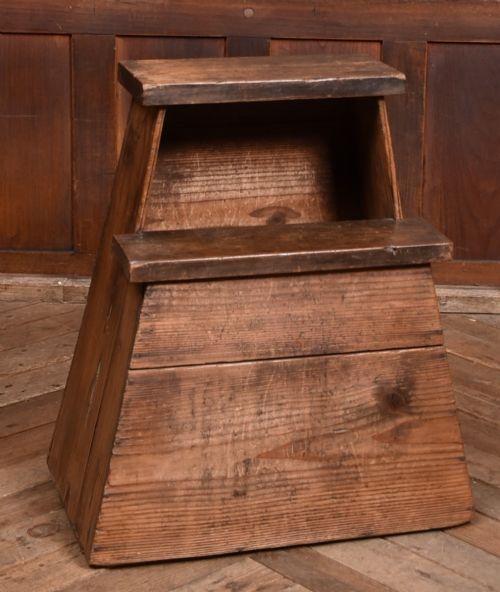
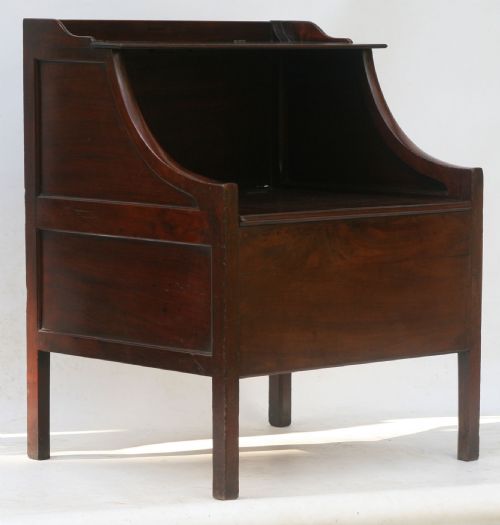
When you search for a dark wood step stool, you are looking at functional climbing furniture designed for domestic and library use, often constructed from rich timbers like mahogany and oak. These items range from simple rustic country stools to sophisticated metamorphic pieces that transform from steps into chairs or accommodation for a commode.
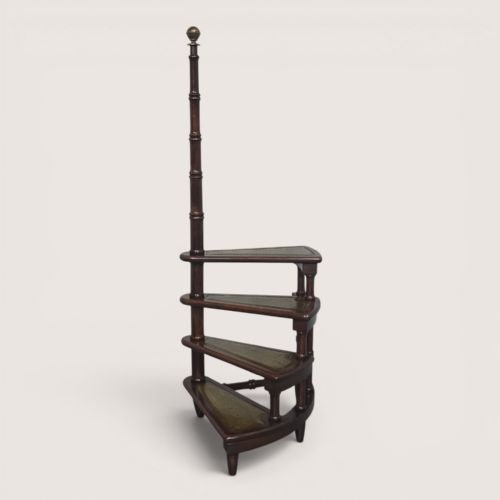
The versions you are most likely to encounter on this page span the eighteenth, nineteenth, and early twentieth centuries, reflecting classic Georgian, Victorian, and Edwardian tastes. Forms vary from sturdy box stools and street-vendor items to spiral library steps with turned supports.
Makers utilised resilient hardwoods to construct these items, ensuring durability across decades of heavy domestic service. The variety includes specialised library steps alongside humble country variants, demonstrating both high-style cabinet making and utilitarian folk traditions.
How they were made
Makers constructed these pieces primarily using solid mahogany, oak, and other native hardwoods, selected for their structural strength and deep grain. Joinery techniques varied from simple rustic assembly in country pieces to precise cabinet-making in Georgian and Victorian library steps.
Metal components such as brass fittings and iron hardware frequently reinforced moving joints, particularly in metamorphic designs that shifted between functions. Leather insets often surfaced on step treads, providing grip and cushioning during use.
Dark Wood Step Stool Retail Price Guide 2026
Typical asking prices for dark wood step stool among the pieces listed under this phrase on Sellingantiques today, from the lower quarter to the upper quarter. They describe what is for sale here now, not the wider market.
Some nineteenth-century makers cleverly hid sanitation inside household steps, proving that even a commode deserved a respectable climb.
What varies in quality
The refinement of the timber and the complexity of the mechanism separate standard utility items from superior examples. Elaborate turnings, integrated leather treads, and sophisticated metamorphic mechanics distinguish fine library pieces from basic country stools.
The integrity of the structural joints and the depth of the natural wood patina dictate the overall success of the piece. Master craftsmanship appears in the seamless operation of folding elements and the careful selection of figured hardwood veneers.
The Dark Wood Step Stool Glossary
- Metamorphic
- Furniture designed to transform into another object, such as steps converting into a chair. This clever engineering allowed dual functionality in compact domestic spaces.
- Library steps
- A set of portable stairs used to reach high bookshelves in private studies and large libraries. They often featured multiple tiers and robust handrails or turned supports.
- Box stool
- A seating form incorporating a concealed compartment beneath the lid or seat. These versatile pieces frequently served multiple practical purposes in the home.
- Step commode
- A combination piece enclosing a chamber pot beneath a step or seat arrangement. Georgian examples combined discretion with everyday utility.
- Turned supports
- Structural columns or legs shaped on a lathe to create decorative circular profiles. They added both rigidity and visual flair to nineteenth-century steps.
Dark Wood Step Stool: Frequently Asked Questions
How were metamorphic steps used?
Metamorphic steps served a dual purpose in period homes, functioning primarily as library steps for reaching high shelves.
When folded or adjusted, they transformed into chairs or stools, making them highly efficient space-saving furniture.
How do I date a step stool?
Dating involves examining the timber species, joinery methods, and overall style relative to known historical periods like the Georgian or Victorian eras.
Specific design cues, such as turned supports or brass hardware, often align with nineteenth or early twentieth-century manufacturing practices.
Where should I place a step stool?
These pieces fit naturally in studies, libraries, or living spaces where traditional furniture complements the room layout.
They function both as display surfaces for decorative objects and as practical furniture for daily domestic use.
What materials are common?
Hardwoods such as mahogany and oak dominate the construction of these pieces, often paired with brass or iron hardware.
Some examples also incorporate leather step inserts and softwood elements depending on their origin and period.