


Antique Step Ladder
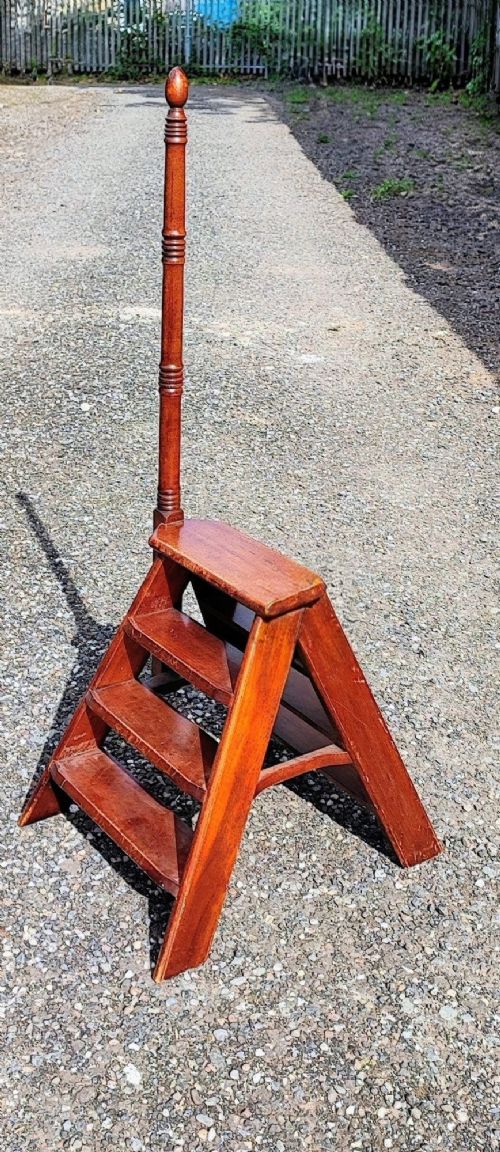
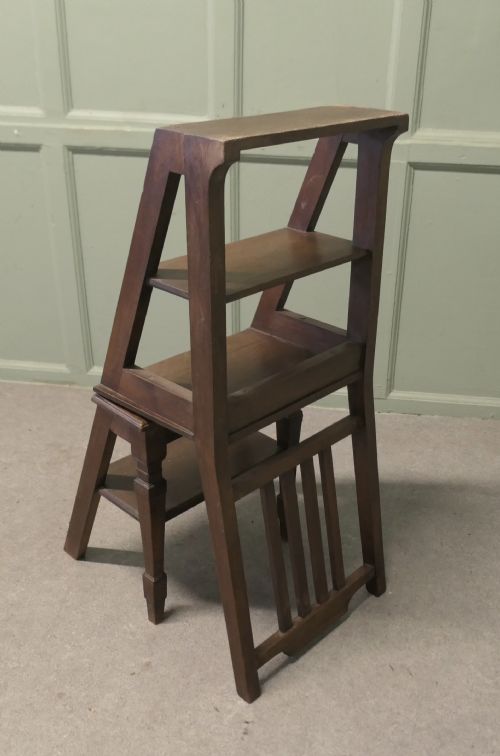
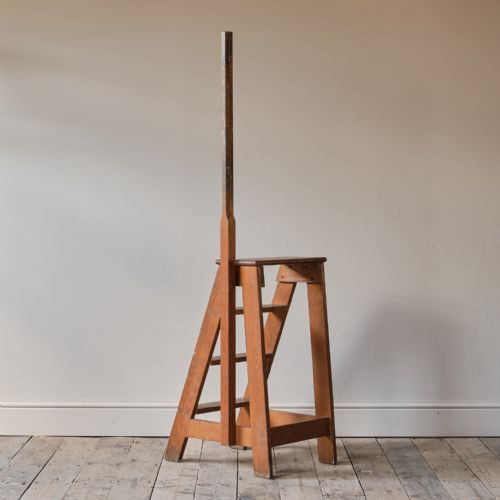
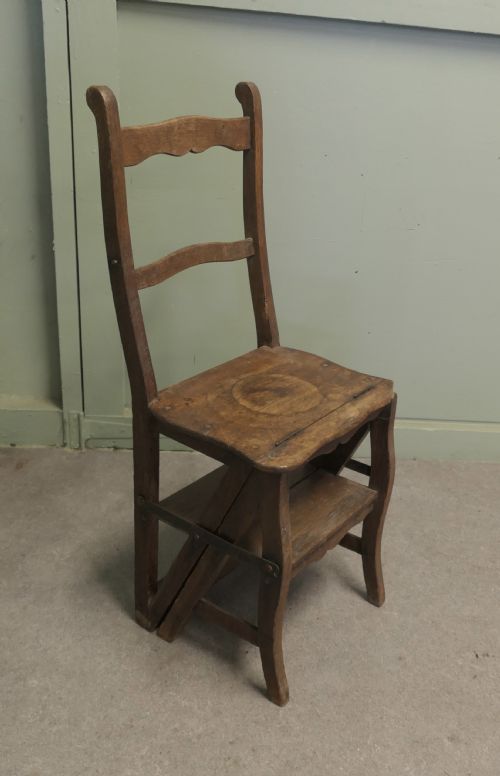
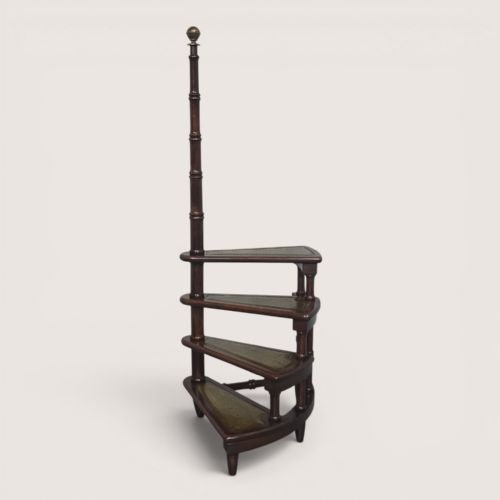
These pieces of antique step ladder range from domestic utility pine to mahogany library chairs that unfold for high shelves.
Antique Step Ladder
An antique step ladder serves functional heights in libraries and homes, spanning simple folding pine flights and ingenious metamorphic forms. When you search for an antique step ladder, you encounter pieces designed for practical service as well as refined library furnishings from Georgian and Victorian periods.
The selection on this page relies heavily on nineteenth-century examples alongside Edwardian and 1920s utilitarian items. Mahogany library steps dominate the formal end of the scale, while pine and oak serve utility and country workshops.
Materials and construction
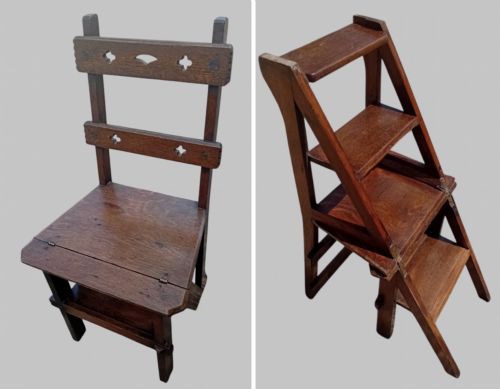
Timbers like mahogany, oak, pine, and fruitwood form the structural basis of these steps, joined with brass fittings and sometimes leather-topped treads. Metamorphic pieces incorporate intricate hinges and pivots to transform an armchair into a flight of steps without compromising stability.
Makers utilised solid timbers alongside turned supports and leather insets, deploying Gothic Revival or Arts and Crafts styling where appropriate. Construction methods range from rustic country carpentry to precise cabinet-making seen in Regency and Georgian library furniture.
Listings feature timbers including mahogany, oak, pine, fruitwood, and teak, spanning the Georgian, Victorian, and Edwardian eras.
Distinctions in quality
Quality rests upon the integrity of the joinery and the ingenuity of the mechanism in metamorphic examples. A piece that moves fluidly between chair and ladder without looseness separates the master cabinet-maker's work from standard domestic carpentry.
Choice of timber further defines the tier, with figured mahogany and golden oak commanding higher regard than utility pine. Original leather treads and sound structural brasswork preserve the integrity of the piece.
Morgan and Sanders·Hatherleys
The Antique Step Ladder Glossary
- Metamorphic
- Furniture designed to transform from one object into another, such as an armchair converting into library steps. This clever dual purpose solved space issues in grand libraries.
- Tread
- The horizontal flat part of the step upon which a foot rests. Treads occasionally feature leather inserts or turned supports.
- Library steps
- Free-standing sets of stairs built to reach high bookshelves in period rooms. They appear in straight flights, spiral arrangements, or folding formats.
- Gothic Revival
- An architectural and decorative style drawing on medieval forms, frequently seen in pointed arches and heavy timber construction on nineteenth-century pieces.
Antique Step Ladder: Frequently Asked Questions
How do metamorphic library steps work?
Metamorphic library steps utilise hidden hinges, pivots, and sliding tracks to reconfigure an armchair or table into a stable staircase. The upper sections fold or rotate outward from the frame.
This clever engineering allowed gentlemen to reach high bookshelves without keeping a bulky permanent ladder in a reading room.
What woods were used for library steps?
Cabinet-makers predominantly selected dense hardwoods like mahogany and oak for formal library settings. These timbers supported the weight-bearing demands of frequent climbing.
Country pieces and utility ladders relied on pine, fruitwood, ash, or teak for everyday domestic or pantry tasks.
Are these steps safe to climb?
Many antique step ladders remain structurally sound, but their load-bearing capacity depends entirely on individual condition and joint tightness. Heavy mahogany library steps and robust oak A-frames generally offer solid support.
Utility pine ladders from the nineteenth century require careful inspection of the timber and treads before any weight is applied.
How do I date an antique step ladder?
Dating relies on timber choice, construction techniques, and stylistic markers such as Gothic Revival tracery or Regency reeding. Georgian and Regency pieces show refined cabinet-making in mahogany.
Later nineteenth-century and Edwardian examples often incorporate simpler pine construction or industrial metal hardware associated with factories and railways.