


Antique Wooden Stairs
Antique wooden stairs offer practical elevation for tall bookcases and historical interiors alike, bringing sturdy craftsmanship and rich timbers to any room.
Antique Wooden Stairs
When buyers search for antique wooden stairs, they are typically looking at library steps, bed steps, library ladders, and step chests designed for domestic and scholarly utility. These items provide functional access to high shelves or beds, combining utilitarian design with decorative joinery.
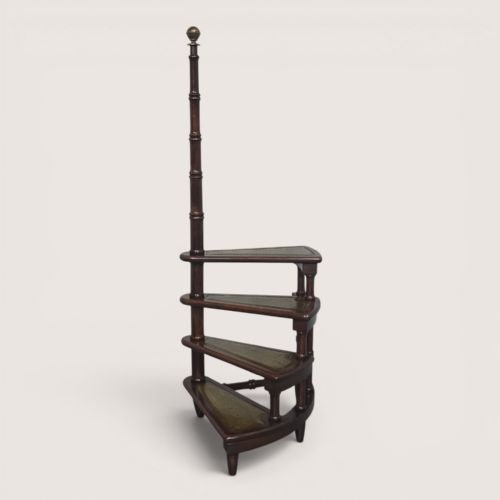
The versions most commonly met on this page span the eighteenth, nineteenth, and early twentieth centuries, reflecting diverse periods such as Georgian, Victorian, and Edwardian design. Forms range from spiral library steps with leather-topped treads to sturdy oak ladders and Japanese step chests.
How they were made
Cabinet makers and joiners constructed these stairs using durable timbers such as mahogany, oak, and pine, selected for structural integrity and grain figure. Timber preparation relied on traditional hand tools, ensuring precise joints that could support regular climbing.
Surface treatments and finer details involved inset leather treads for grip, brass fittings for stability, and turned supports for architectural character. Workshops employed techniques suited to each form, from the stepped drawers of Japanese kaidan tansu to the sweeping curves of spiral library stairs.
Some library steps cleverly conceal a hidden set of stairs that fold out from what initially appears to be a modest gentleman's cabinet.
What varies in quality
The distinction between standard utility items and superior examples lies in the choice of timber and the sophistication of the joinery. Fine mahogany and figured satinwood with integrated leather treads represent a higher grade of craftsmanship than plain pine or utilitarian workshop ladders.
Design ambition also separates pieces, with spiral configurations and architectural turned supports demanding greater skill from the maker than straightforward straight-flight steps. The integration of secondary materials like brass hardware and carefully tooled leather further elevates the standing of a piece.
The Antique Wooden Stairs Glossary
- Library steps
- Self-supporting sets of steps designed to reach high bookshelves. They frequently fold or transform into tables or chairs.
- Bed steps
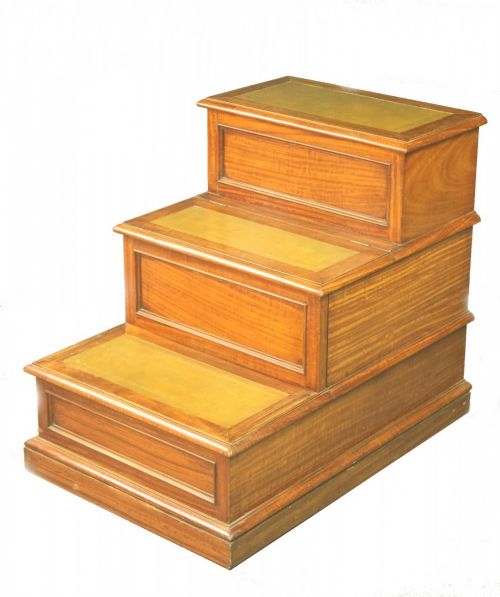
- Small flights of steps used to climb into high historical beds. They often incorporate compartments or storage beneath the treads.
- Kaidan tansu
- Japanese traditional step chests used for storage and access to loft spaces. These pieces combine drawers within a stepped structural form.
- Tread
- The horizontal flat surface of a step upon which the foot rests. In finer library steps, these are often lined with tooled leather.
- Spiral library steps
- A helical configuration of steps allowing ascent in a confined footprint. These structures often feature central turned supports.
Antique Wooden Stairs: Frequently Asked Questions
What are antique wooden stairs used for?
These pieces serve both practical and decorative functions in historic and contemporary homes. Originally designed to reach elevated bookshelves or high four-poster beds, they now find placement as display stands or sculptural furniture.
Their sturdy timber construction allows them to continue fulfilling their original purpose of elevation while adding architectural interest to a room.
How do I identify the period of wooden steps?
Dating relies on observing the timber species, construction techniques, and stylistic vocabulary present in the piece. Georgian and Regency examples often utilise rich mahogany with restrained classical lines, whilst Victorian and Edwardian pieces may feature heavier oak or gothic revival details.
Examining the underside and drawer construction, where applicable, provides further clues regarding the age and workshop methods employed.
Are library steps stable enough for daily use?
Most antique library steps and ladders are constructed from dense hardwoods like mahogany and oak, ensuring robust structural integrity. However, their suitability for daily use depends on the specific condition of the joints and historical repairs.
Careful placement and gentle use preserve their structural stability while allowing them to function safely in a modern interior.
What is a step chest?
A step chest, or kaidan tansu, is a traditional Japanese storage chest built in the form of a staircase. These pieces were utilised in traditional Japanese dwellings to access upper levels while providing integrated drawer storage within the risers.
Their distinctive stepped profile makes them striking focal points in contemporary interior design schemes.