


Edwardian Library Steps
Edwardian library steps are practical climbing furniture designed for tall shelves, combining utilitarian timber construction with clever folding or transforming mechanics.
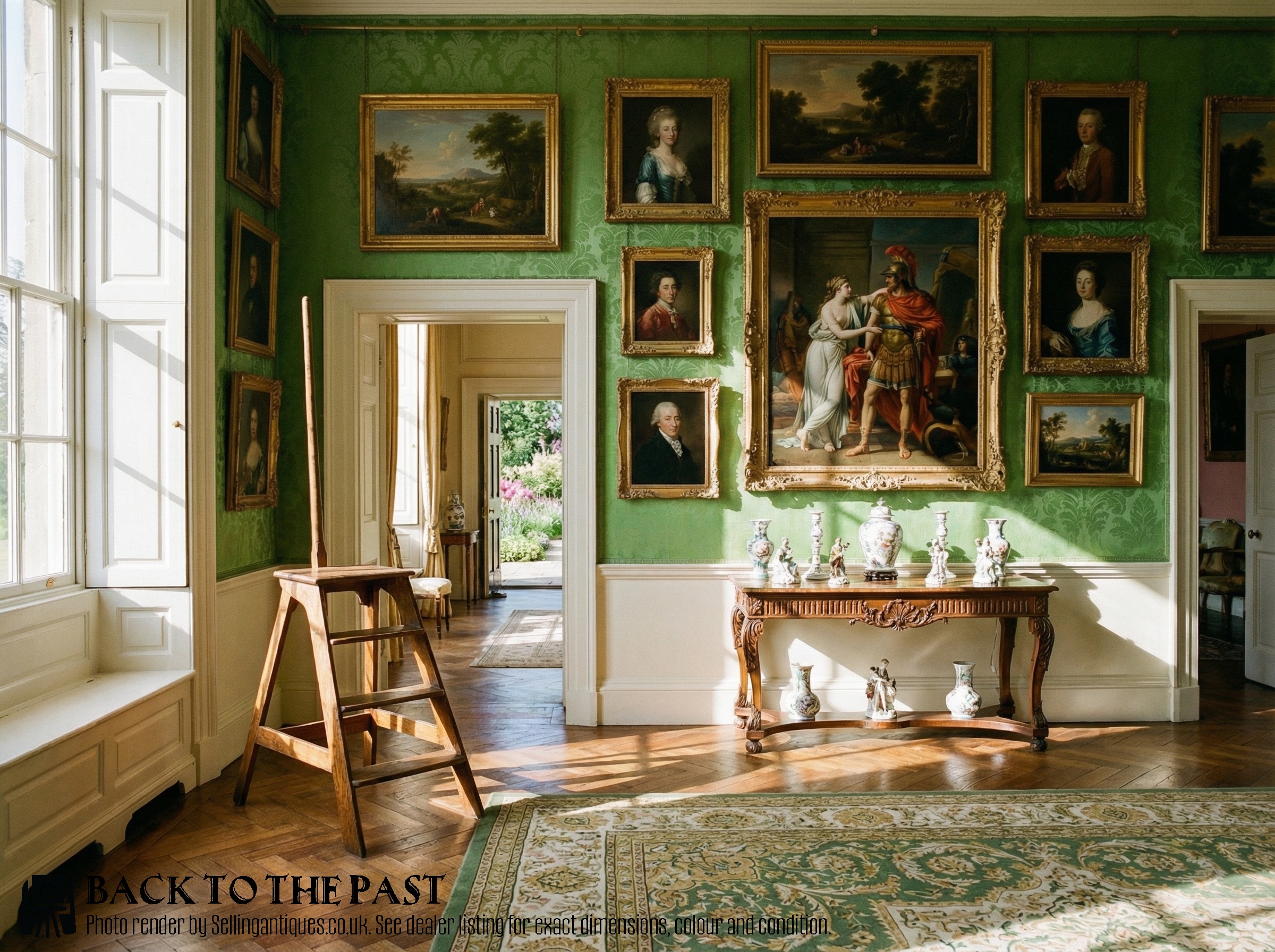
What edwardian library steps are
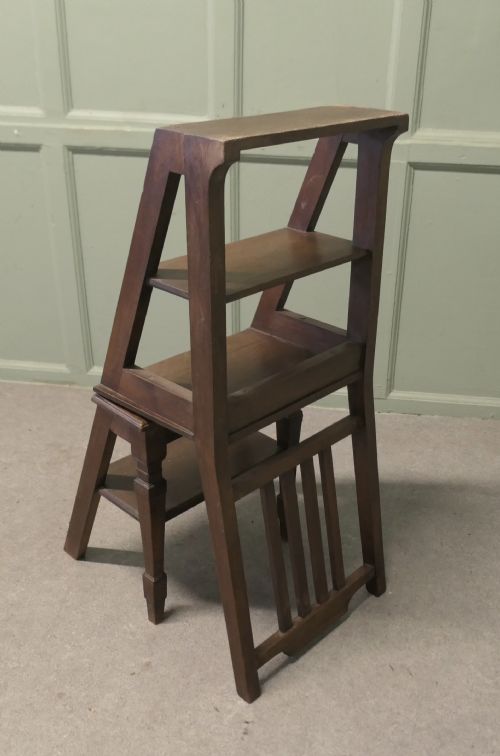
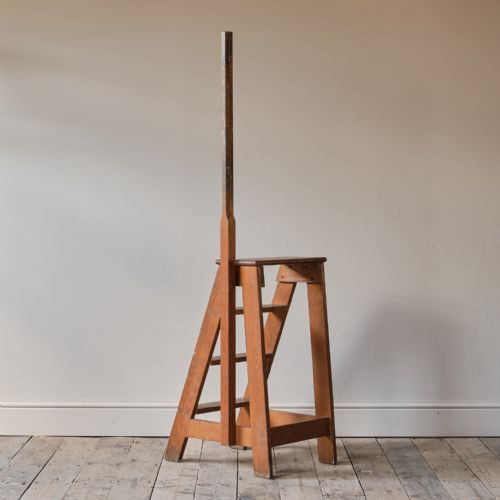
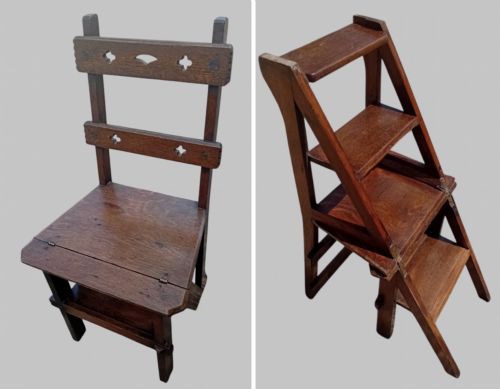
Edwardian library steps span traditional static stair forms and clever dual-purpose metamorphic designs that shift between seats and climbing tiers. When searching for edwardian library steps, buyers encounter both dedicated stair units and ingenious metamorphic chair combinations that save domestic floor space.
The materials and styles reflect a continuation of late Victorian tastes alongside simpler Arts and Crafts construction. Pieces appear in oak, mahogany, pine, and hardwood, often incorporating leather treads or brass fittings.
How they were made
Cabinetmakers utilised solid timbers such as oak, mahogany, and pine to build sturdy frames capable of supporting weight. Hardwood construction ensures the stability required for domestic library use.
Hinges, pivots, and locking mechanisms in brass allow the folding and transforming actions on metamorphic chairs and step sets. Treads frequently feature inset leather panels for grip and appearance.
Retail Price Guide 2026
Typical UK retail prices for edwardian library steps, calculated from the Sellingantiques database of over a million retail prices indexed since 2003. This retail price guide relies exclusively on Sellingantiques data; no external sources or auction records are used, so the figures do not describe the wider market.
Listings for edwardian library steps feature oak, mahogany, pine, and hardwood materials combined with brass hardware.
What varies in quality
Quality rests in the precision of the metamorphic mechanism and the density of the timber selected. Superior examples operate smoothly without timber binding or excessive play in the joints.
The choice of primary wood and secondary details, such as brass hardware and inset leather quality, separates standard utility pieces from finer cabinet work.
The Edwardian Library Steps Glossary
- Metamorphic
- Furniture that transforms from one functional form into another, such as a chair converting into a flight of steps. This dual purpose appealed to Edwardian homeowners seeking space-saving ingenuity.
- Tread
- The horizontal flat board of a step upon which the foot rests. These often feature inset leather surfaces.
- Hardwood
- Timber derived from broad-leaved trees, providing the dense structural strength necessary for weight-bearing library steps. Oak and mahogany are typical examples found in these pieces.
- Arts and Crafts
- A design movement valuing honest construction and visible material qualities over excessive ornamentation. Pieces from this tradition show straightforward timber framing.
Frequently Asked Questions
How do metamorphic library steps work?
Metamorphic library steps utilise pivot hinges and sliding joints to transform from a standard chair into a stable set of steps. Users simply manipulate the backrest or sections to alter the configuration.
This clever engineering allowed domestic spaces to house practical climbing furniture disguised as everyday seating.
What woods were used for library steps?
Maker workshops constructed these pieces primarily in oak, mahogany, pine, and mixed hardwoods. Timber selection depended on the desired finish and the required structural strength.
Oak and mahogany dominate the better pieces, while pine served for simpler utility steps.
Are these steps safe to climb?
Most solid hardwood and oak library steps remain structurally robust for normal domestic climbing. Proper joint tightness and secure locking mechanisms ensure stability during use.
Buyers should check that folding iterations lock firmly into position before applying weight.
How do I identify an Edwardian piece?
Edwardian library steps display construction traits and timber treatments typical of the period around nineteen hundred. They often bridge late Victorian heaviness and lighter Arts and Crafts forms.
Historical records and stylistic clues within the woodwork help confirm the manufacturing era.