


Traditional Library Ladder
A traditional library ladder reaches high shelves with practical grace, offering sturdy timber and iron construction built for daily utility.
Traditional Library Ladder
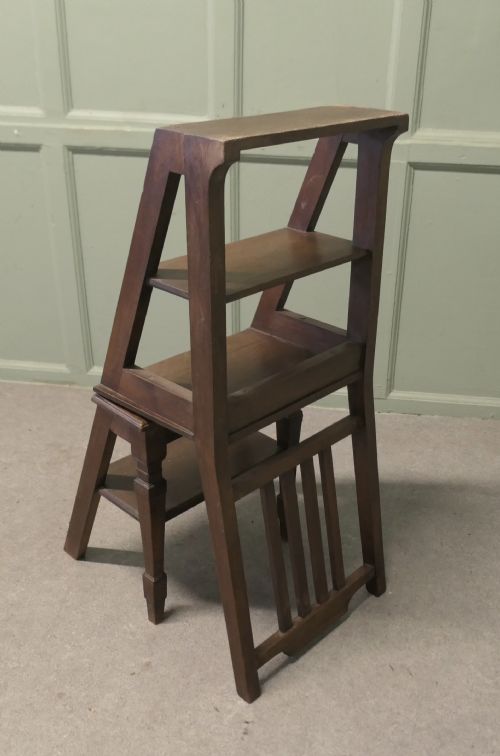
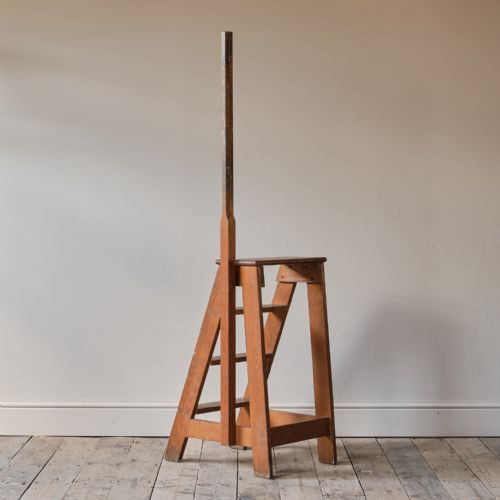
A traditional library ladder spans practical vertical access and domestic utility, emerging in forms from Georgian A-frame designs to Victorian and Edwardian folding steps and metamorphic chairs. Buyers searching for a traditional library ladder encounter structural timber helpers designed to reach high volumes in domestic and institutional settings. The selection includes tall wooden loft ladders, compact step stools, and spiral library steps fitted with leather-topped treads.
Origins stretch across the eighteenth, nineteenth, and early twentieth centuries, encompassing Georgian, Victorian, Edwardian, and later periods up to nineteen-thirty. Forms vary from sturdy oak A-frame configurations to painted finishes and pine shop ladders adapted for domestic libraries and kitchens. These pieces serve both functional shelving access and decorative interior focal points.
Makers and craftsmen utilised robust timbers suited to weight-bearing demands, resulting in surviving examples that retain their structural integrity. Whether sourcing a large proportion golden oak set or a decorative pine version, collectors find pieces that reflect period woodworking traditions. The variety on offer captures utilitarian needs alongside refined domestic craftsmanship.
How they were made
Construction relies heavily on durable hardwoods and softwoods, with oak, mahogany, pine, and general hardwood appearing frequently across the inventory. Carpenters joined structural members using traditional joinery methods suited to weight-bearing stepladders and metamorphic library steps. Metal components such as iron and brass provide reinforcement, hinges, and operational pivots for folding or convertible designs.
Surface treatments range from polished natural timber to painted finishes and applied leather accents on treads. Leather-topped treads add grip and a refined visual texture, often bordered with subtle tooling. Pine examples frequently show painted surfaces, while oak and mahogany pieces highlight the natural grain of the wood.
Some library steps double as chairs, proving that eighteenth-century book lovers appreciated clever furniture that saved floor space.
What varies in quality
The choice of primary timber establishes the foundational caliber of each piece, distinguishing fine mahogany and golden oak from utilitarian pine. Heavier proportions and substantial framing indicate sturdiness intended for serious institutional or domestic archive use. Finer details such as leather tread inserts and brass hardware elevate standard utility steps into sophisticated library furnishings.
Structural complexity also dictates distinction, separating simple straight ladders from elaborate metamorphic chair combinations and spiral configurations. The precision of the joinery and the retention of original surface treatments preserve the historical integrity of the piece. Superior examples combine robust load-bearing mechanics with elegant period styling.
The Traditional Library Ladder Glossary
- Metamorphic
- A piece of furniture designed to transform from one form into another, such as library steps that fold down into a chair. This dual-purpose engineering exemplifies clever period craftsmanship.
- A-frame
- A self-supporting structural configuration shaped like the letter A, providing stability without needing to lean against a wall. This design underpins many freestanding library steps.
- Tread
- The horizontal surface of a step upon which a foot rests during climbing. In library steps, treads are occasionally inset with leather for grip and appearance.
- Proportion
- The relative size and scale of structural elements, which determines the visual balance and physical footprint of larger ladder sets. Large proportion pieces offer commanding presence in high-ceilinged rooms.
Traditional Library Ladder: Frequently Asked Questions
How do library steps work?
Library steps utilise hinged or pivoting frames to ascend safely to high bookshelves. Many configurations allow the unit to stand independently or fold flat when not in use.
Metamorphic versions cleverly transform from a sturdy chair into a set of steps. This dual functionality provided practical access in private studies where space remained at a premium.
What woods were used?
Carpenters relied on durable timbers capable of supporting regular weight and heavy usage. Oak and mahogany appear frequently in finer domestic libraries and institutional settings.
Pine and general hardwoods served utilitarian purposes, often receiving painted finishes. Brass and iron hardware provided essential reinforcement to joints and moving parts.
Are they safe to climb?
Most traditional ladders and steps remain structurally sound due to robust period construction. However, buyers should assess the specific stability of joints and treads before active weight-bearing use.
Many collectors utilise these pieces primarily for display or gentle domestic access. Proper placement on level flooring ensures secure footing.
How do I date a ladder?
Stylistic markers and material choices help indicate the period of manufacture, spanning Georgian, Victorian, and Edwardian eras. Simpler pine shop ladders often contrast with polished mahogany or golden oak Georgian and Victorian designs.
Hardware styles and construction techniques provide further clues to age. C19th and early twentieth-century examples display distinct joinery traits characteristic of their decades.