

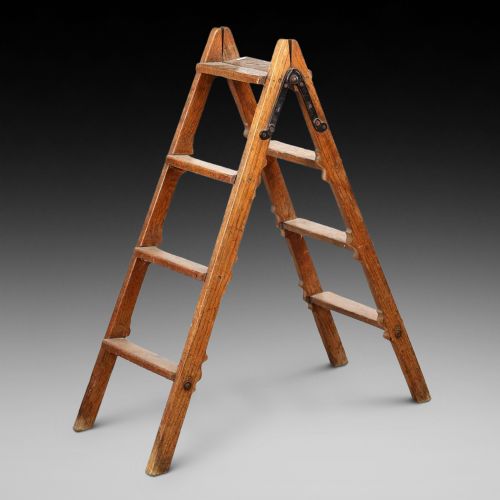
Antique Steps for Library
These antique steps for library combine practical height with architectural presence, offering a functional ascension piece for high shelves.
Antique Steps for Library
When you search for antique steps for library, you encounter a specialised form of ascending furniture designed to reach high volumes in private studies and institutional collections. The pieces on this page span several centuries and range from humble utilitarian ladders to grand architectural flights.
You are most likely to meet mahogany and oak examples dating from the Georgian, Regency, and Victorian periods. These frequently take the form of folding flights, A-frame constructions, or clever metamorphic chairs that transform from seating into steps.
Materials and construction methods
The makers of these steps relied heavily on timber such as mahogany, oak, pine, and ash, often joining structural members with traditional cabinet-making joints. Many treads incorporate inset panels of leather, sometimes decorated with blind tooling, to provide grip and protect the wood.
Brass fittings, hinges, and pivoting hardware allowed folding and metamorphic designs to operate smoothly without compromising the structural load. Iron and glass elements occasionally appear in railway or industrial variations, while turned supports and carved details reflect specific historical styles.
Antique Steps for Library Retail Price Guide 2026
Typical asking prices for steps for library among the pieces listed under this phrase on Sellingantiques today, from the lower quarter to the upper quarter. They describe what is for sale here now, not the wider market.
The listings here include mahogany, oak, pine, and ash pieces spanning the Georgian, Regency, and Victorian periods alongside 1920s and 1930s examples.
Assessing quality in library steps
Quality reveals itself in the rigidity of the joints and the cleverness of the mechanics, particularly in metamorphic armchair designs where hidden pivots must bear weight securely. Superior examples maintain stability and smooth movement across every folding action without looseness in the frame.
The choice of primary timber and secondary woods dictates the visual depth of the piece, with finely figured mahogany and golden oak sitting at the upper end of the scale. Subtle details like leather treads with gilt tooling or turned structural supports elevate a utilitarian object into fine cabinetwork.
The Antique Steps for Library Glossary
- Metamorphic
- Furniture designed to transform from one functional object into another, such as a chair turning into a flight of steps. This dual purpose was especially popular in Regency libraries.
- Tread
- The horizontal surface of a step upon which one places the foot. In library steps, these treads are frequently inset with leather.
- A-frame
- A self-supporting structural configuration shaped like the capital letter A. This design provides stability for folding library ladders and steps without requiring wall support.
- Fusee
- A conical pulley used in clockwork mechanisms to equalise the power of the mainspring. It appears in specific library timepieces associated with study interiors.
Antique Steps for Library: Frequently Asked Questions
How do metamorphic library steps work?
These clever pieces use hidden hinges and pivoting joints to shift positions.
By releasing a catch or unfolding the seat back, the armchair transforms into a stable flight of steps.
What woods were used for library steps?
Cabinetmakers primarily worked with dense hardwoods like mahogany and oak for formal domestic libraries.
Softer timbers such as pine and ash appear more frequently in utilitarian or pantry ladders.
Are these steps safe to use today?
Most antique steps remain structurally sound if the joints and hardware are stable.
Checking the movement of folding mechanisms ensures they lock securely before bearing weight.
How do I identify a Regency set?
Regency pieces often display clean classical lines, rich mahogany grain, and restrained brass mounts.
They frequently manifest as metamorphic armchairs or compact folding flights designed for refined interiors.