


Vintage Library Steps
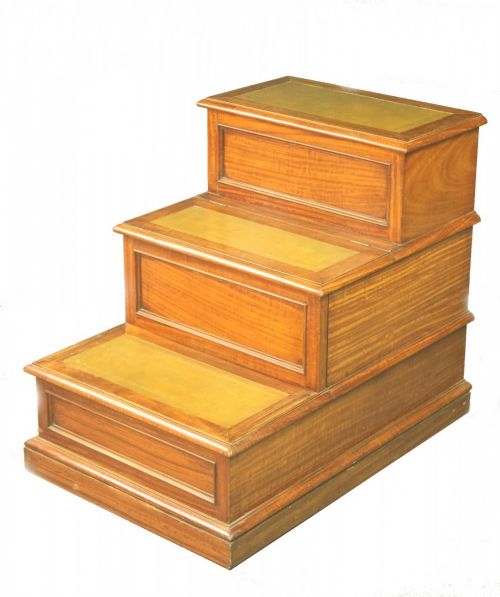
Vintage library steps are utilitarian ascents of mahogany, oak, pine, and iron built to reach high shelves, combining practical function with architectural presence.
What vintage library steps are
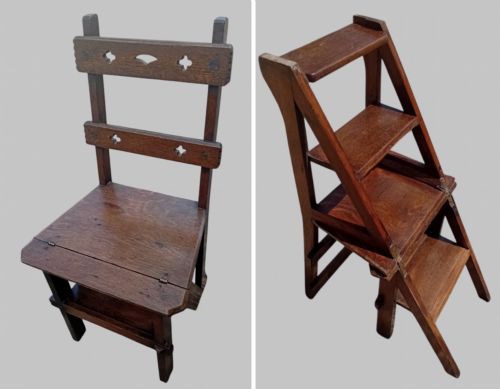
Vintage library steps comprise a range of functional climbing aids, from stately Regency mahogany pieces to rugged industrial stepladders and rustic wooden stairs. When searching for vintage library steps, buyers encounter both domestic domestic library furnishings and heavy-duty utility designs.
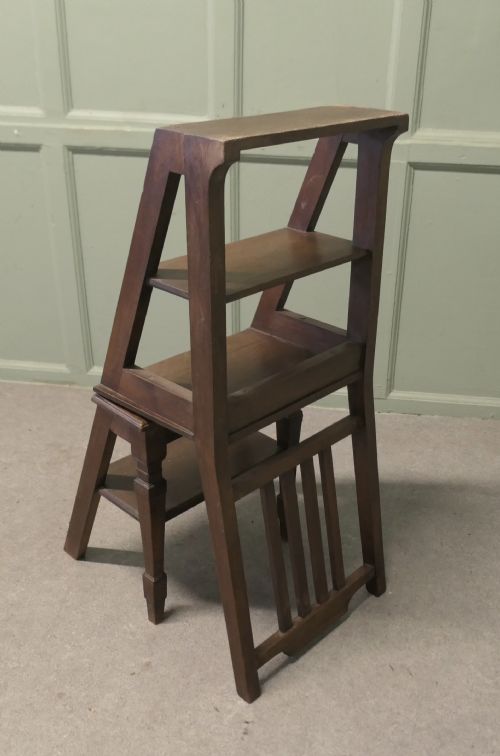
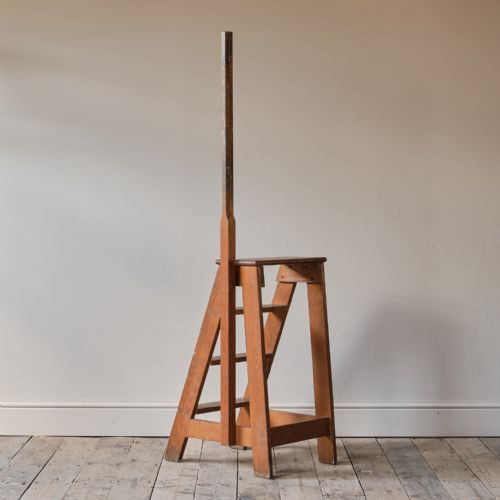
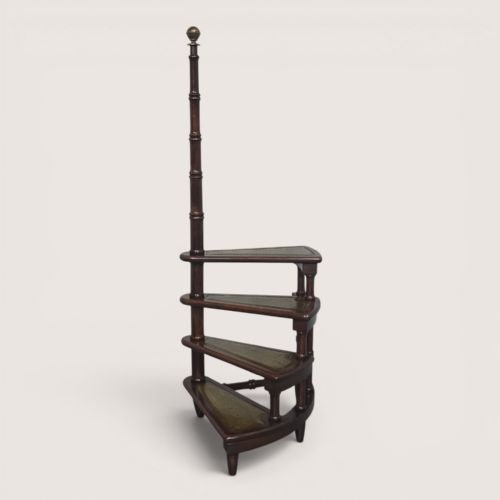
The domestic forms include sets featuring turned supports, spiral configurations, and multi-functional pieces incorporating commodes. Heavier utility variants span industrial stepladders and tall garden wooden stairs dating from the nineteenth and early twentieth centuries.
The selection on this page bridges formal interior designs and robust utilitarian objects, reflecting both Victorian refinement and functional 1930s utility. These pieces primarily serve to bridge height differences in domestic or working spaces while acting as focal decorative furniture.
How they were made
Construction relies heavily on traditional hardwoods such as mahogany and oak, alongside utilitarian pine, iron, and brass fittings. Joinery methods support the weight-bearing demands of each design, whether built as a domestic set of steps or a heavy industrial ladder.
Surface treatments and upholstery frequently incorporate leather treads, adding grip and a refined finish to formal nineteenth-century pieces. Structural metal elements, including iron and brass, reinforce the joints and mechanisms of industrial utility and spiral designs.
Retail Price Guide 2026
Typical UK retail prices for vintage library steps, calculated from the Sellingantiques database of over a million retail prices indexed since 2003. This retail price guide relies exclusively on Sellingantiques data; no external sources or auction records are used, so the figures do not describe the wider market.
Listings feature items built from mahogany, oak, pine, brass, iron, and leather across the nineteenth and early twentieth centuries.
What varies in quality
Quality rests in the choice of timber and the sophistication of the joinery, distinguishing finely turned Regency mahogany structures from basic utility pine ladders. Finer examples integrate thoughtful detailing, such as turned supports and leather-lined treads, rather than purely functional bracing.
The Vintage Library Steps Glossary
- Regency
- A style period spanning the early nineteenth century, known for classical restraint and elegant proportions in furniture design. Pieces from this era often utilise rich mahogany and refined turning.
- Victorian
- The period of the nineteenth century associated with diverse revival styles and robust domestic manufacturing. Library steps from this time frequently employ solid mahogany and traditional joinery.
- Commode
- A piece of furniture that conceals a chamber pot, occasionally integrated cleverly beneath the treads of nineteenth-century steps. This dual-purpose design maximised utility in period bedrooms and libraries.
- Spiral steps
- A configuration where the ascent winds around a central axis, supported by turned vertical timbers. This space-saving form offers a distinct architectural silhouette compared to straight runs.
Frequently Asked Questions
How do I date vintage library steps?
Dating relies on identifying timber species, hardware construction, and stylistic markers associated with periods like the Regency era or the Victorian decades. Subtle details such as turned supports and timber patination offer clues to the age of the piece.
Industrial utility pieces and 1930s stepladders display different manufacturing hallmarks compared to domestic library furniture from the mid-nineteenth century. Comparing the joinery and materials helps place the object within its historical production window.
Were library steps used for anything else?
Certain period designs served dual purposes, most notably step commodes that concealed functional ceramic vessels beneath the wooden treads. This allowed homeowners to save space in domestic quarters while maintaining a respectable furniture facade.
Tall variations also crossed over into garden display use and heavy workplace tasks, depending on whether their build was domestic or industrial. Their primary role, however, remained assisting readers in reaching high-shelf volumes.
What materials were used to build them?
Cabinetmakers primarily used dense hardwoods like mahogany and oak for domestic library steps, frequently incorporating leather inserts on the treads for traction. Brass fittings and iron reinforcement appeared where structural strength was paramount.
Utilitarian examples and later stepladders relied more heavily on pine and iron components. These varied material choices reflect whether the item was intended for a refined study or a working industrial environment.
How do I incorporate them into a modern room?
These steps function naturally as display stands for plants and books, or as standalone architectural accents in living spaces. Their compact footprints allow them to fit into corners that require vertical interest.
Selecting between a formal mahogany set and a rustic wooden ladder helps anchor the room's desired aesthetic. They provide functional surface levels while introducing historical texture to contemporary interiors.