


Mahogany Step Stool
These mahogany step stool pieces are clever metamorphic furniture designed for reaching high shelves or seating, combining practicality with fine cabinet-making.
Understanding mahogany step stool pieces
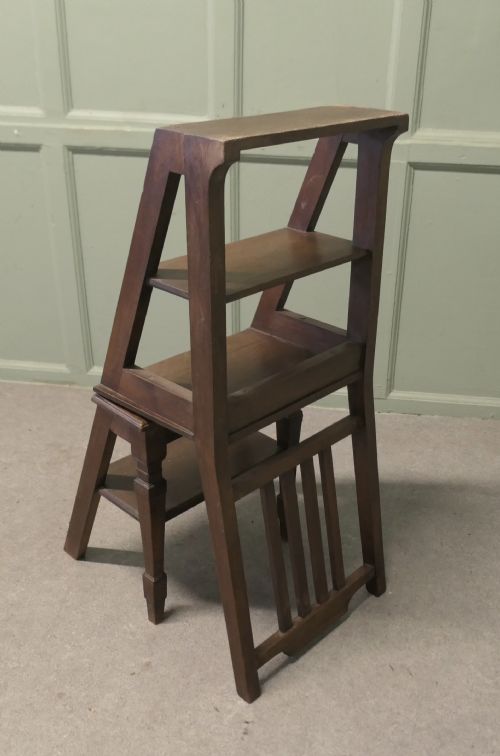
A mahogany step stool provides dual functionality, transforming smoothly from a compact stool or commode into a set of sturdy steps for the library or bedroom. These items appear across the Regency and Victorian eras, alongside pieces dated to eighteen-fifty and nineteen-thirty.
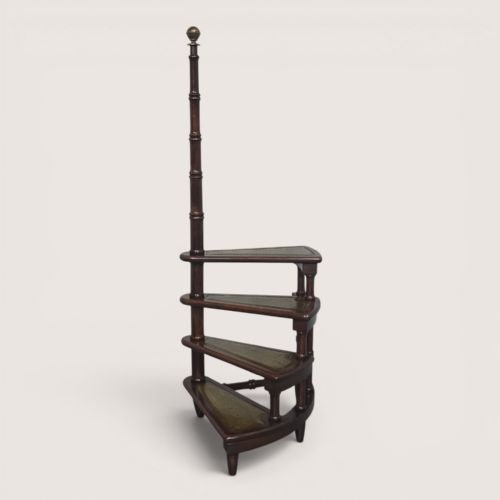
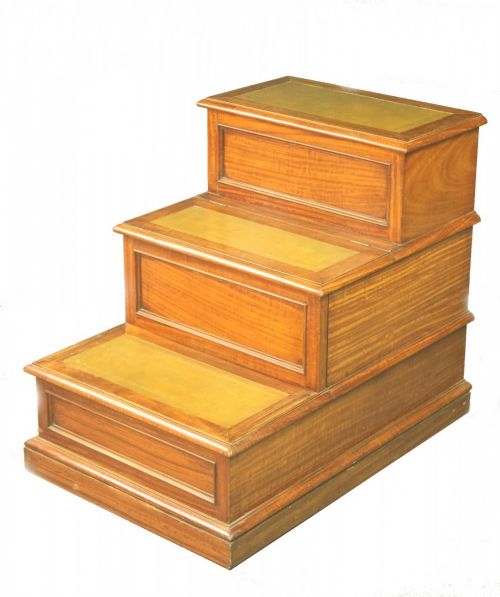
The most common formats met on this page include library steps, bedsteps, and three-step commodes. These configurations reflect the domestic requirements of large houses with high ceilings and four-poster beds.
Origins span defined historical periods including the Regency and nineteenth century. Cabinet-makers constructed these items to serve everyday utility while maintaining the dignified appearance expected in polite rooms.
Materials and construction
Makers relied primarily on mahogany for its strength, rich grain, and stability, frequently combining the timber with brass fittings and hinges to manage the folding mechanisms. Treads often received insets of leather or fabric to provide grip and protect the wood during daily use.
Metamorphic designs required precise joinery and pivoting hardware so the steps could expand and collapse without jamming. The internal framing concealed the functional hinges while supporting the weight of a person climbing to upper shelves.
Retail Price Guide 2026
Typical UK retail prices for mahogany step stool, calculated from the Sellingantiques database of over a million retail prices indexed since 2003. This retail price guide relies exclusively on Sellingantiques data; no external sources or auction records are used, so the figures do not describe the wider market.
Listings incorporate items from the Regency and Victorian periods, alongside specific years like eighteen-fifty and nineteen-thirty.
Distinctions in quality
Quality rests on the ingenuity of the metamorphic mechanism and the crispness of the cabinet-making. Superior examples operate smoothly without excessive looseness in the joints, while simpler versions rely on more straightforward folding arrangements.
The choice of secondary timbers, the quality of the mahogany figure, and the preservation of original leather or brass elements elevate certain pieces. Better examples maintain tight tolerances in their moving parts after decades of opening and closing.
Gillows
The Mahogany Step Stool Glossary
- Metamorphic furniture
- Pieces designed to transform from one form of furniture into another, such as a stool converting into a set of steps.
- Bedsteps
- A set of small steps used historically to reach high-set beds, often containing a concealed commode compartment.
- Commode
- A piece of furniture containing a chamber pot, which in these instances was cleverly integrated beneath the treads of a stool.
- Treads
- The horizontal surfaces of the steps upon which a person places their feet when climbing.
Frequently Asked Questions
What is a mahogany step stool?
A mahogany step stool is a dual-purpose piece of antique furniture that functions as a seat or commode and folds out into a set of steps.
These clever items allowed people to reach high bookshelves or elevated beds in historic homes without needing large, permanent ladders.
How do metamorphic steps work?
Metamorphic steps use hidden hinges, pivots, and sliding sections built into the frame of the stool.
By lifting or shifting the top sections, the compact block expands outward to reveal multiple sturdy treads for climbing.
Where were these steps used?
Library steps were kept in studies and large libraries to reach high bookcases lining the walls.
Bedsteps stood beside tall four-poster beds in bedrooms, sometimes doubling as commodes during the night.
What materials are used?
The primary timber is mahogany, chosen for its durability and rich appearance.
Many examples feature brass hinges and leather or fabric inserts on the treads to provide grip.
How do I date a piece?
Dating relies on the style of the mahogany framing, the sophistication of the hardware, and the historical period associated with the construction.
Pieces range from Regency and George III designs through to nineteenth-century and early twentieth-century examples.