




Georgian Bed Steps
Georgian bed steps are clever pieces of antique furniture designed to reach high sleeping quarters, combining practical ascent with discreet storage.
Georgian Bed Steps
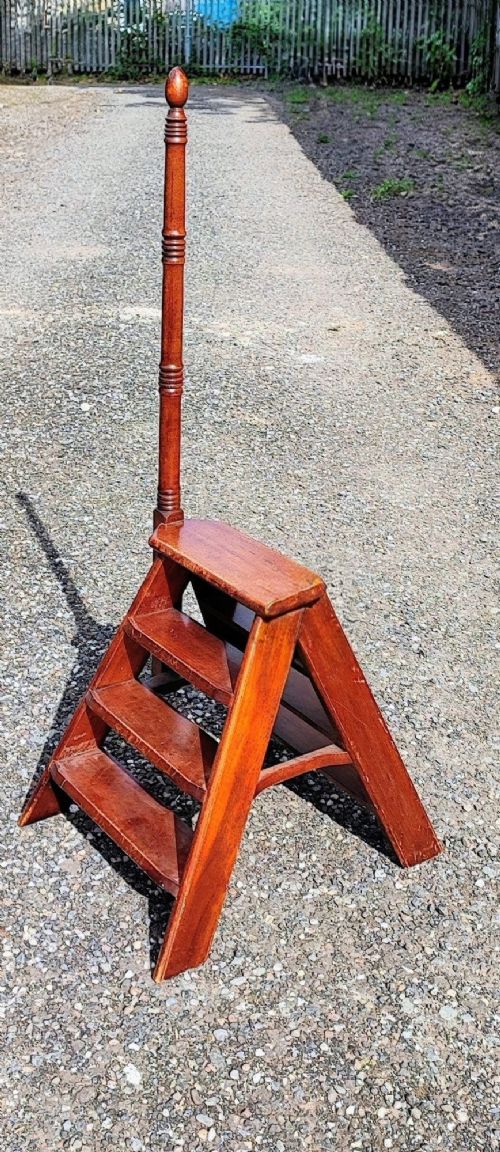
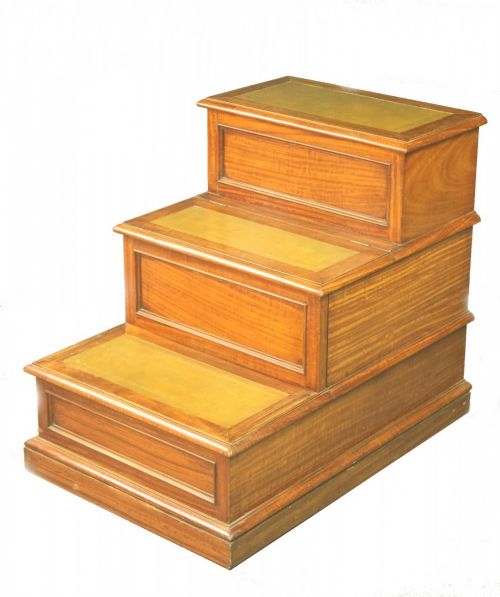
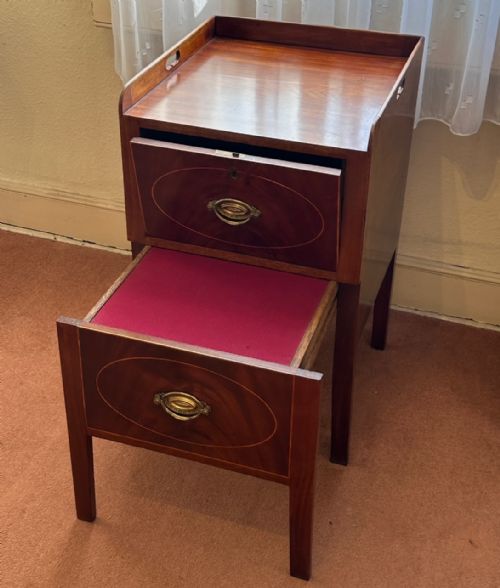
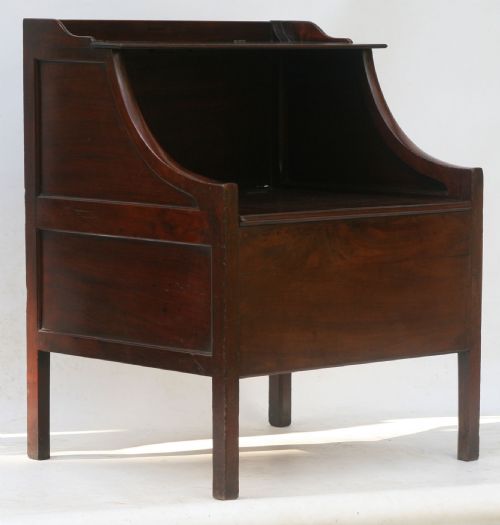
Georgian bed steps are specialised pieces of furniture built to help people climb into high historical beds before modern mattress heights became standard. These items often double as clever multi-purpose furniture, housing commodes or pull-out steps within enclosed cabinets.
You are most likely to encounter mahogany examples originating from the Regency and George III periods on this page. Many pieces also bridge the gap into library steps, serving dual functions in domestic spaces.
How they were made
Cabinetmakers constructed these steps primarily from solid timber, utilising rich mahogany, satinwood, and occasional fruitwood veneers over sturdy frames. Fine joinery ensures the multi-tier structures remain stable under weight while maintaining a refined domestic appearance.
Insets of leather and brass hardware provide functional grip and structural reinforcement on the tread surfaces and opening mechanisms. Fabric linings and timber compartments complete the internal storage spaces found in commode variants.
Georgian Bed Steps Retail Price Guide 2026
Typical asking prices for georgian bed steps among the pieces listed under this phrase on Sellingantiques today, from the lower quarter to the upper quarter. They describe what is for sale here now, not the wider market.
Some steps hid a secret commode inside, proving Georgian bedroom etiquette valued multi-tasking furniture just as much as we do.
What varies in quality
Quality rests heavily on the choice of timber and the crispness of the cabinetmaking. Superior examples feature carefully selected grain patterns, robust structural integrity, and clever internal mechanisms that operate smoothly.
The degree of original hardware preservation and the cleverness of dual-purpose designs, such as hidden commodes or concealed steps, distinguish standard items from exceptional ones.
J.Jarvis
The Georgian Bed Steps Glossary
- Bed steps
- A set of portable wooden steps designed to assist users in mounting high beds of the eighteenth and nineteenth centuries. They frequently incorporate hinged treads that lift to reveal hidden storage or commode functions.
- Commode
- A piece of furniture containing a concealed basin or chamber pot. In the context of bed steps, this is neatly housed within a cabinet base beneath the treads.
- Regency
- An English stylistic period spanning the early nineteenth century. Furniture from this era often exhibits clean classical lines and rich mahogany construction.
- Satinwood
- A durable timber with a characteristic golden sheen, highly valued for decorative cabinetwork during the Georgian and Regency eras.
Georgian Bed Steps: Frequently Asked Questions
What are Georgian bed steps?
Georgian bed steps are small, multi-tiered sets of wooden stairs built to help people reach lofty historical beds. They often feature clever hidden compartments and folding designs.
Cabinetmakers constructed them to blend seamlessly with bedroom and library furniture while serving a very specific daily domestic purpose.
How were bed steps used?
Owners used them primarily for climbing into high-frame beds during an era when mattresses sat much further from the floor. Many designs also served a secondary function as enclosed commodes or bedside storage.
In some households, the same pieces doubled as library steps for reaching upper bookshelves, reflecting the versatile nature of Georgian furniture.
How do I spot a Regency piece?
Regency pieces often display distinct classical influences, cleaner geometric lines, and dark mahogany timbers. Look for robust brass mounts and understated decorative restraint typical of the early nineteenth century.
Makers from this era occasionally stamped their work, providing a clear signature of origin.
Are bed steps and library steps the same?
While they share similar tiered wooden structures, bed steps often incorporate enclosed cabinet bases or commode drawers. Library steps tend to be taller and sometimes feature handrails or folding ladder mechanisms.
Over time, many surviving examples served both rooms interchangeably depending on the household needs.