




Regency Mahogany Steps
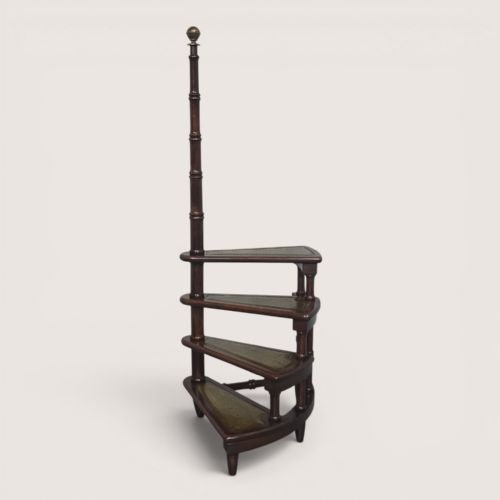
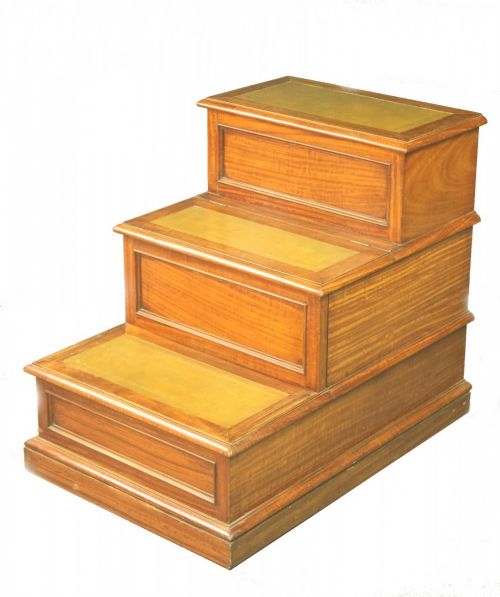
Regency mahogany steps are practical multi-tiered pieces designed for reaching high shelves or beds, combining clever engineering with fine cabinet-making.
Regency Mahogany Steps
When you search for regency mahogany steps, you encounter architectural pieces built to solve the practical problem of high ceilings and tall libraries in period homes. The most common forms on this page include standard multi-tiered sets alongside clever metamorphic designs that transform from armchairs or stools into functional staircases.
The material palette recorded across these listings centres on rich timber and flame mahogany veneer, often accented with brass fittings. Pieces span the Regency era through to later 19th-century interpretations and 20th-century reproductions in the same style.
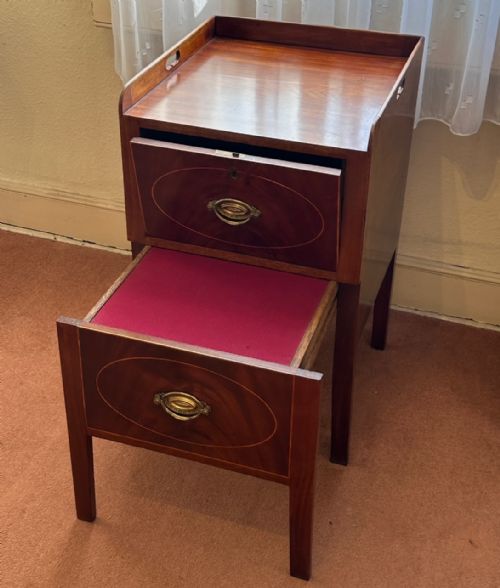
Beyond standard library access, the evidence shows variants functioning as bed steps and bedside commodes with pull-out steps. This multifunctionality reflects the spatial efficiency valued by period makers.
Materials and Construction
Cabinet-makers relied heavily on solid mahogany and flame mahogany veneer to construct these frames, bringing out deep reddish-brown grains and rich patination. Timber soundness was essential to support the weight of a person climbing to upper shelves.
Functional details such as leather or fabric inset treads were frequently incorporated to provide grip and protect the wood during daily use. Brass hardware, turned supports, and clever hinges enabled the folding mechanisms seen in metamorphic armchairs and compact step sets.
Listings feature mahogany, brass, leather, fabric, cane, satinwood, timber, and flame mahogany veneer.
Distinguishing Quality
The hierarchy of quality rests on the cleverness of the mechanical transition in metamorphic pieces and the crispness of the cabinet-work. Superior examples conceal their secondary function seamlessly when closed, whether shaped as a stool, chair, or side table.
Subtleties in timber selection, such as the use of highly figured flame mahogany veneer and matched grain patterns, separate standard utility pieces from high-end commissions. The integrity of the structural joints and original leather treads further distinguishes finer workshops.
J.Jarvis·Morgan and Sanders·Gillows·Lodge and Co
The Regency Mahogany Steps Glossary
- Metamorphic furniture
- Pieces designed to transform from one form of furniture into another, such as an armchair converting into a set of library steps.
- Treads
- The horizontal upper surfaces of each step upon which a person places their feet when climbing.
- Commode
- A piece of furniture containing a concealed chamber pot, sometimes combined with folding steps in bedroom settings.
- Veneer
- A thin layer of finely figured wood, such as flame mahogany, applied over a secondary timber base to create a decorative exterior surface.
- Flame mahogany
- A highly figured wood grain pattern resembling flickering flames, prized by cabinet-makers for its visual impact.
Regency Mahogany Steps: Frequently Asked Questions
How do metamorphic steps work?
These clever pieces use hidden hinges, pivots, and sliding tracks to allow the upper treads to fold out from beneath a seat or table top. The transformation requires precise joinery so the structure locks securely into a staircase position.
Once finished using the steps, the user simply folds the sections back inward to restore the piece to its primary function as an armchair, stool, or commode.
Were these made for libraries or bedrooms?
Both environments required them, though their form often gave away their intended room. Library versions were taller and designed to reach high bookshelves, whilst bed steps were lower and frequently doubled as commodes.
Many designs bridged the gap between public reception rooms and private quarters, reflecting the multi-use nature of Regency domestic spaces.
How do I spot a later reproduction?
Examinations of the timber backing, secondary woods, and hinge mechanisms often reveal the true age of a piece. Earlier examples display hand-cut joinery and period-appropriate wear patterns on the treads.
Later 19th-century or 20th-century interpretations in the Regency taste typically show different construction methods and machine-made hardware beneath the surface.
How should I care for leather treads?
Leather inset treads benefit from occasional gentle cleaning and conditioning to prevent the material from drying out over time. Avoiding direct sunlight helps preserve the colour and suppleness of the hide.
Careful dusting around the brass mounts and wooden edges keeps the surrounding mahogany finish protected from abrasive grit.