


Convertible Library Steps
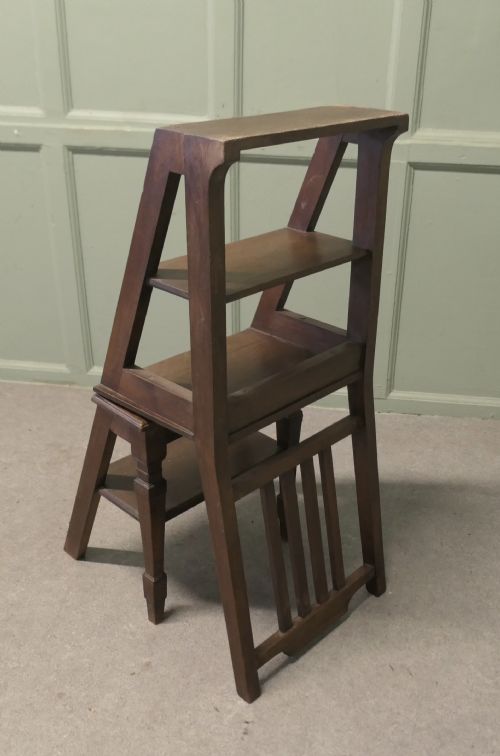
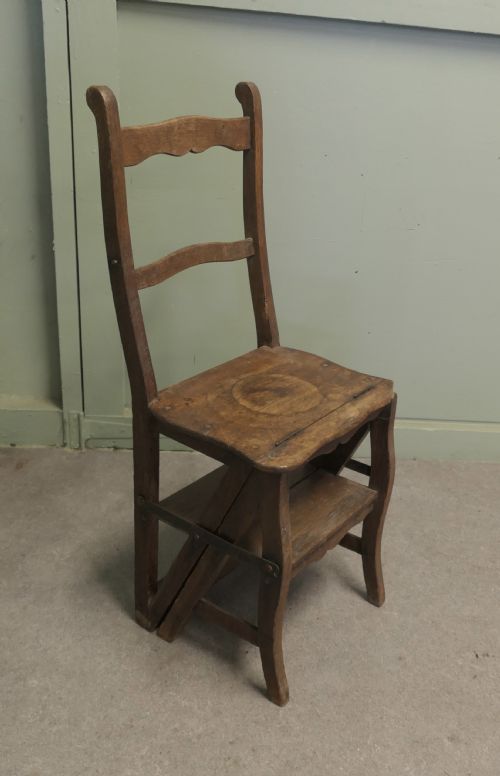
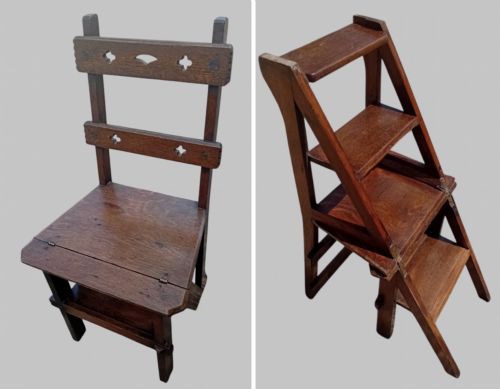
Convertible library steps are ingenious pieces of dual-purpose furniture that transform from seating into climbing tiers.
Convertible Library Steps
Convertible library steps appear across several distinct historical periods, including the Georgian, Regency, Victorian, and Edwardian eras. These dual-purpose objects most frequently take the form of metamorphic armchairs or library chairs that unfold into stair structures.
The inventory on this page shows pieces constructed in both oak and mahogany, occasionally incorporating leather or cane details. Makers designed these clever items to serve as everyday seating before deploying as functional ladders for reaching high bookshelves.
How they were made
Makers utilised solid timbers such as oak and mahogany to build the structural frames required to bear weight safely in both configurations. Brass hinges, pivots, and locking mechanisms provide the covert articulation that allows the chair or stool to transition smoothly into a set of steps.
Upholstered elements frequently feature leather inserts on the treads or seat pads, adding durability and grip during use. Secondary materials like cane and iron also appear in specific examples, supporting the mechanical folding actions.
Some chairs hid their steps so well that unsuspecting guests sat down entirely unaware they were perched atop a staircase.
What varies in quality
The sophistication of the internal mechanism separates standard utilitarian designs from exceptional workshop productions. Clever engineering ensures that the transition between seating and step configurations operates with precision and structural stability.
Timber selection and the finesse of the cabinetmaking heavily influence the overall character of the piece. Well-figured mahogany and richly patinated oak elevate the visual appeal of the furniture when closed.
J.Jarvis·Morgan and Sanders·Richard Hicks Bridgens
The Convertible Library Steps Glossary
- Metamorphic furniture
- Pieces designed to transform from one distinct furniture type into another through hinges, pivots, or sliding sections. This clever domestic engineering became particularly popular in the Georgian and Regency periods.
- Tread
- The horizontal surface of a step upon which a person places their foot. In convertible library steps, these surfaces are frequently lined with leather.
- Gothic Revival
- An architectural and decorative style drawing inspiration from medieval design. Pieces in this style often feature pointed arches and tracery.
- Aesthetic Movement
- A late nineteenth-century design current that emphasised visual beauty over narrative or moral themes. Furniture from this movement often displays simpler lines and craftsmanship.
Convertible Library Steps: Frequently Asked Questions
How do convertible library steps work?
These pieces utilise hidden hinges and pivoting joints that allow the backrest and seat sections to fold outward. This movement reorganises the timber framework from a standard armchair or stool into a sturdy flight of steps.
Once the transformation is complete, secure locking devices hold the structure rigid to ensure safety while climbing. Returning the item to its seating position simply reverses the mechanical sequence.
Were these steps used only in libraries?
While originally commissioned for grand domestic libraries to access high bookshelves, their dual-purpose nature suited various reception rooms. Owners appreciated having an extra seat that could instantly double as a functional ladder.
Their compact footprint made them practical additions to smaller studies where space precluded storing a separate set of steps and an armchair.
How do I identify a Regency example?
Regency pieces often feature rich mahogany timbers with clean classical lines influenced by ancient Roman and Greek design. The turning and joinery on these examples tend to display refined proportions typical of the early nineteenth century.
Makers from this era occasionally stamped their work or produced designs associated with prominent cabinetmakers like Morgan and Sanders.
How do I care for leather treads?
Leather inserts on the steps require gentle cleaning with a slightly damp cloth followed by a suitable leather dressing to prevent drying. Avoid harsh chemical cleaners that can strip the natural finish and colour from the hide.
Regular light dusting keeps abrasive grit from wearing away the surface during foot traffic.