

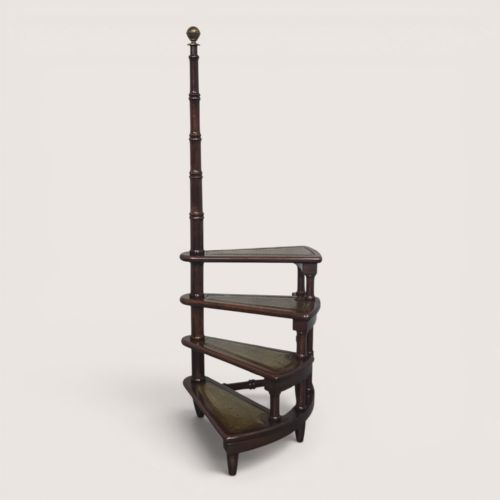


Wooden Library Steps
These wooden library steps are sturdy climbs for tall shelves, combining practical function with fine cabinetmaking.
Wooden Library Steps
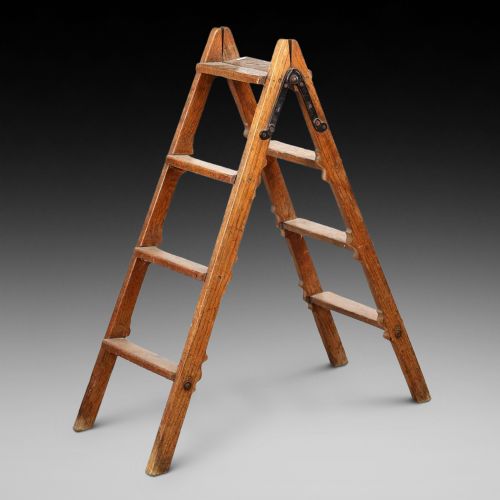
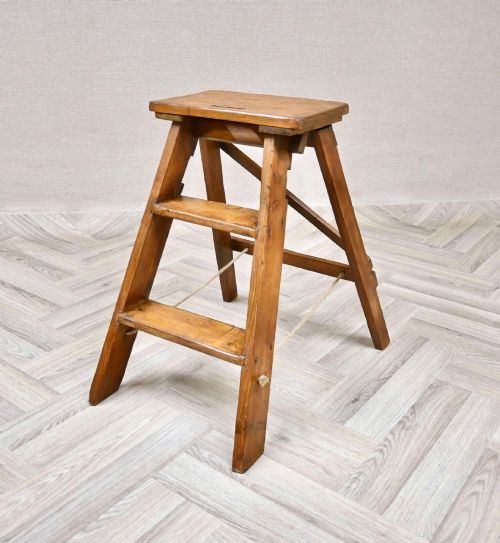
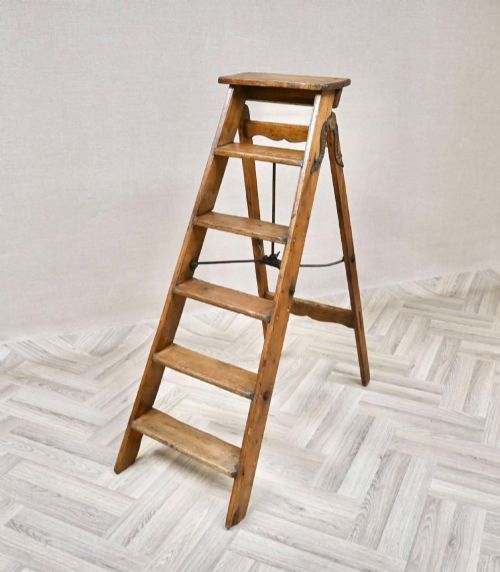
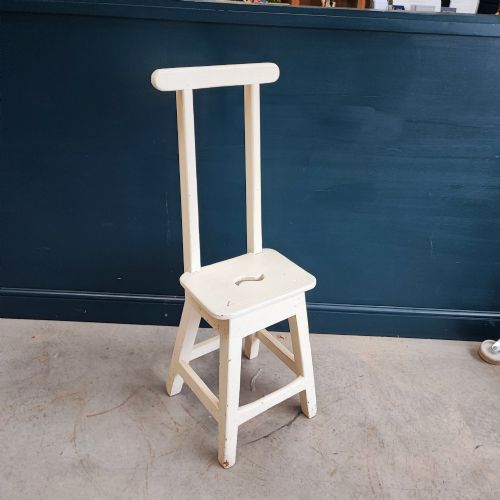
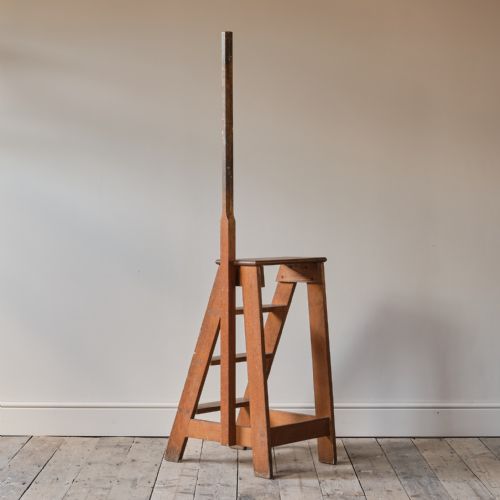
Wooden library steps provide access to high bookshelves, appearing in forms such as standard flights, folding flights, and spiral configurations. Buyers encountering these pieces commonly find mahogany, oak, and pine examples dating from the Georgian, Victorian, and Edwardian periods.
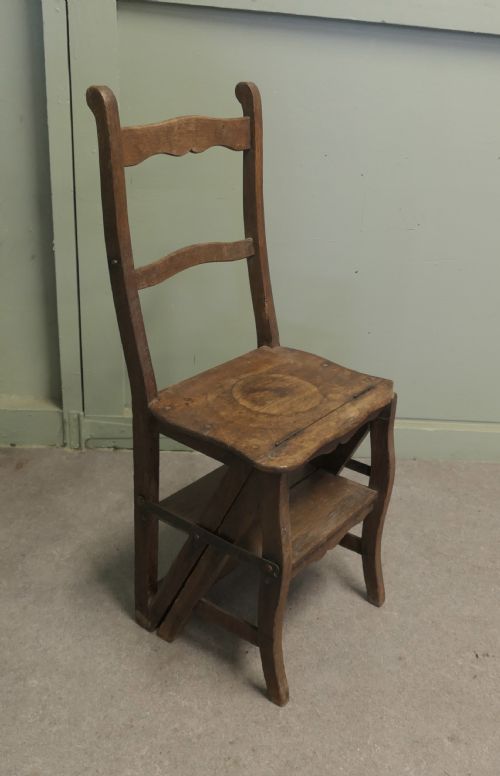
Dual-purpose furniture also surfaces within this selection, featuring metamorphic library chairs that transform from seating into step ladders. These clever pieces date across the nineteenth and early twentieth centuries, offering practical utility alongside domestic seating.
How they were made
Cabinetmakers constructed these steps using hardwoods like mahogany, oak, walnut, satinwood, and fruitwood, occasionally turning to pine for utilitarian or country pieces. Structural integrity relied on solid timber framing, reinforced by brass fittings and iron hardware on folding and metamorphic mechanisms.
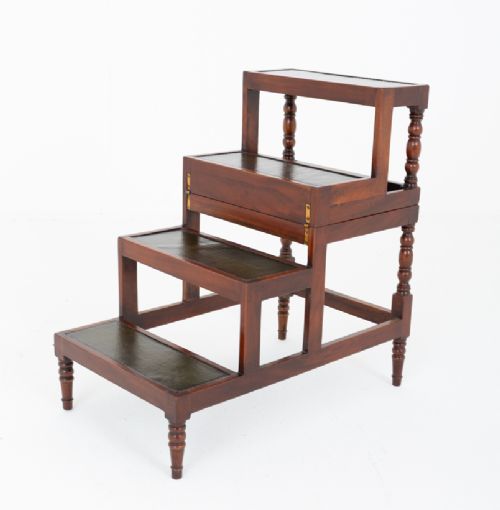
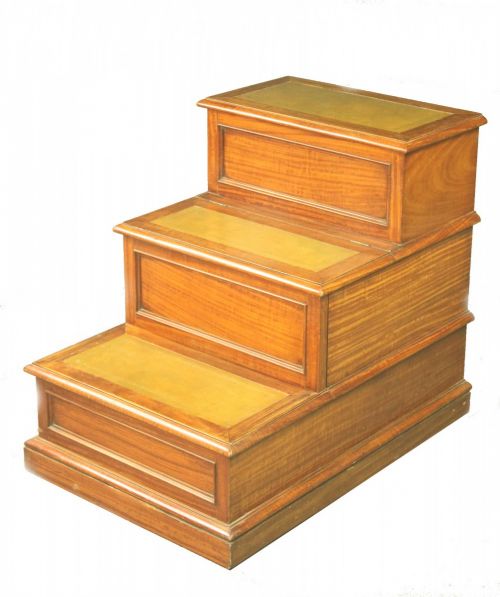
Treads frequently incorporated inset leather panels for grip, while uprights displayed turned supports, spiral designs, and Gothic revival detailing. Surface finishes ranged from polished wood to painted or French polished exteriors depending on the workshop and period.
Wooden Library Steps Retail Price Guide 2026
Typical asking prices for wooden library steps among the pieces listed under this phrase on Sellingantiques today, from the lower quarter to the upper quarter. They describe what is for sale here now, not the wider market.
One set even carries railway history on its treads, proving that travellers sometimes took their climbing very seriously indeed.
What varies in quality
The distinction between standard utility steps and fine library furniture rests on timber selection and secondary details. Better examples utilise figured mahogany, satinwood, or golden oak, matched with superior turning, leather-topped treads, and precise joinery.
Metamorphic items are judged on the smoothness of their conversion mechanisms and the discretion of their hinges. Pieces attributed to known makers or specific stylistic movements command greater attention through refined proportions and cabinetry skill.
J.Jarvis·Morgan and Sanders
The Wooden Library Steps Glossary
- Metamorphic furniture
- Pieces designed to transform from one furniture type into another, such as an armchair converting into a flight of library steps.
- Treads
- The horizontal steps or surfaces upon which a person places their feet when climbing.
- Gothic Revival
- A nineteenth-century design style drawing inspiration from medieval architecture, featuring pointed arches and tracery motifs.
- Bedsteps
- Small sets of steps originally designed to assist people into high historical beds, frequently adapted for library use.
Wooden Library Steps: Frequently Asked Questions
How do metamorphic library chairs work?
These clever items pivot or unfold at the joints to transform an ordinary armchair into a secure flight of wooden steps. The mechanics rely on concealed hinges and interlocking wooden frames that lock firmly into position during either configuration.
Collectors prize them for their dual functionality in studies or libraries where space is at a premium. Transitioning between uses requires simple manual adjustment without removing structural components.
Where were library steps placed?
These steps stood beside tall bookcases in private libraries, gentlemen's studies, and institutional book rooms. They provided necessary vertical reach while matching the surrounding mahogany or oak shelving.
Today they transition easily into domestic living spaces as plant stands, display units, or functional home accessories.
What woods were used for steps?
Cabinetmakers primarily worked with dense hardwoods like mahogany and oak to support daily climbing. Satinwood, walnut, and fruitwood appeared in finer formal pieces, while pine served for utility and country workshops.
Inns and railway offices utilised simpler pine step ladders, whereas grand libraries featured polished mahogany and decorated leather treads.
How are periods told apart?
Georgian and Regency examples display refined classical proportions, delicate reeded legs, and high-grade mahogany. Victorian pieces often incorporate bolder Gothic Revival motifs, heavy turning, and oak construction.
Edwardian items lean towards lighter scaling, simpler folding mechanisms, and varied softwood or hardwood combinations.