


Oak Library Ladder
An oak library ladder combines practical reach with sturdy craftsmanship, offering the exact ascent you need for high shelves.
Oak Library Ladder
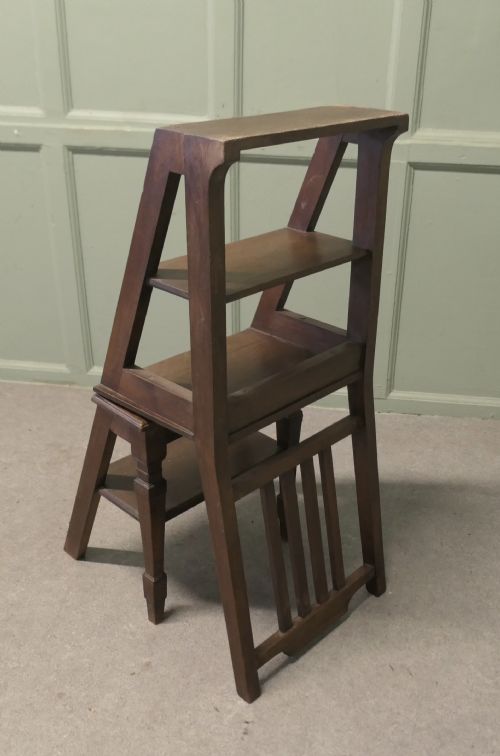
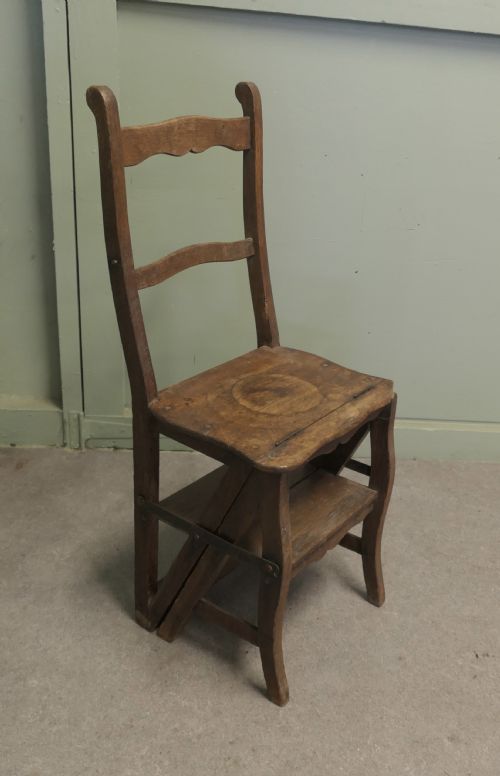
When you search for an oak library ladder, you encounter a practical apparatus designed to reach high volumes in traditional settings. These pieces range from upright flights of steps to folding metamorphic designs that transform between seating and climbing positions.
The selections available here lean heavily towards nineteenth-century and early twentieth-century examples. You will frequently find pieces spanning the Georgian, Victorian, Edwardian, and subsequent decades, including specific configurations like A-frame steps and metamorphic chairs.
Many of these items originate from domestic and institutional libraries where robust construction was essential for daily use. Their forms vary from simple utility ladders to ornate Gothic Revival and Arts and Crafts interpretations.
How they were made
Makers relied primarily on solid oak, selected for its dense grain and structural integrity, often complemented by secondary hardwoods. This timber provided the necessary strength to support the weight of a person climbing to elevated shelves.
Metal components played a crucial functional role, with iron and brass fixings, hinges, and sliding mechanisms securing the moving parts. Some specialised examples incorporated leather details, particularly on the surfaces of metamorphic chair steps.
What varies in quality
Quality in these ladders reveals itself in the joinery and the smoothness of any metamorphic action. Superior pieces demonstrate tight joints and well-fitted pivots that allow seamless transformation between a chair and a flight of steps.
The choice of timber and the depth of the grain also distinguish finer examples from standard utility pieces. Golden oak patination and thoughtful decorative touches, such as Gothic carvings, separate standard workshop output from exceptional craftsmanship.
The Oak Library Ladder Glossary
- Metamorphic
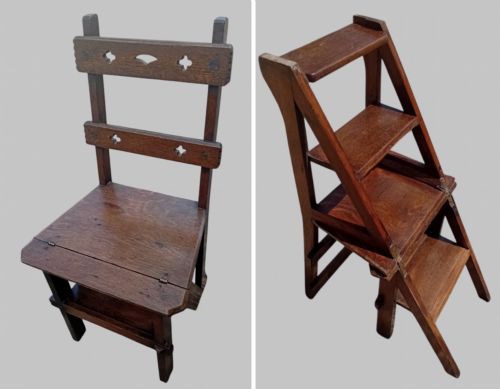
- Furniture designed to transform from one functional object into another, such as a chair that unfolds into a flight of steps. This ingenious design maximised utility in compact historic libraries.
- A-frame
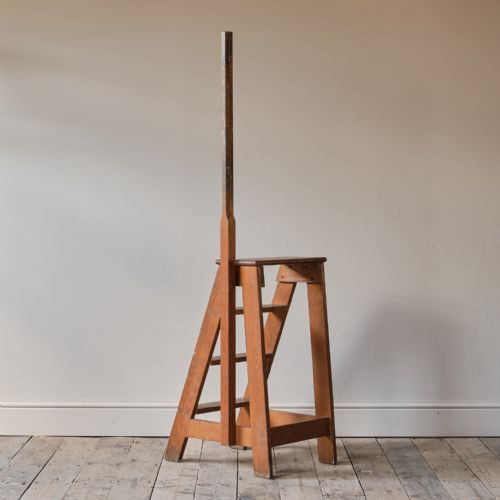
- A self-supporting structural configuration shaped like the capital letter A, providing stability without leaning against a wall. This format appears frequently in freestanding library steps.
- Gothic Revival
- An architectural and decorative style drawing inspiration from medieval design, featuring pointed arches and heavy tracery. Pieces in this style often display dramatic vertical lines and solemn oak tones.
- Arts and Crafts
- A design movement emphasising handcraftsmanship, simple forms, and visible construction methods. Items from this tradition prioritize honest materials over superfluous ornamentation.
- Pariat
- A term relating to historical attribution, though here specific makers are scarce beyond general period styles. It denotes the character of design execution associated with particular Victorian aesthetics.
Oak Library Ladder: Frequently Asked Questions
What is a metamorphic library ladder?
A metamorphic library ladder is a dual-purpose piece of furniture that converts from a standard chair or stool into a sturdy flight of steps.
These clever designs allowed homeowners and scholars to save space while maintaining easy access to high bookshelves.
How do I date an oak library ladder?
Dating relies on examining the construction techniques, hardware materials, and stylistic markers such as Gothic Revival or Arts and Crafts details.
Periods represented in these pieces typically span from the Georgian era through the Edwardian period and into the early twentieth century.
Were these ladders used in homes?
These ladders served both grand private country house libraries and institutional settings where extensive book collections demanded vertical storage.
Their robust construction in solid oak ensured they could withstand regular daily climbing.
What woods are used besides oak?
While oak forms the primary structural timber across these listings, makers occasionally utilised other hardwoods for internal or supporting components.
Brass and iron hardware, along with leather upholstery on chair steps, frequently accompany the timber.
How do I care for antique oak?
Preserving these pieces involves keeping them away from direct heat sources and sudden humidity changes to prevent the timber from splitting.
Regular gentle dusting and occasional appropriate wax application help maintain the natural lustre of the oak surfaces.