
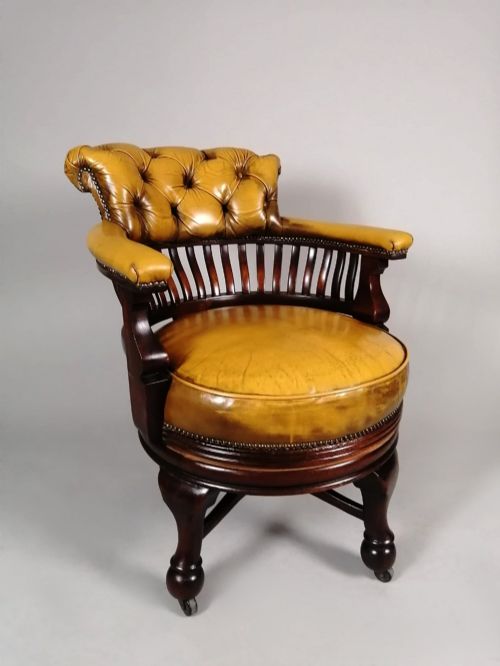
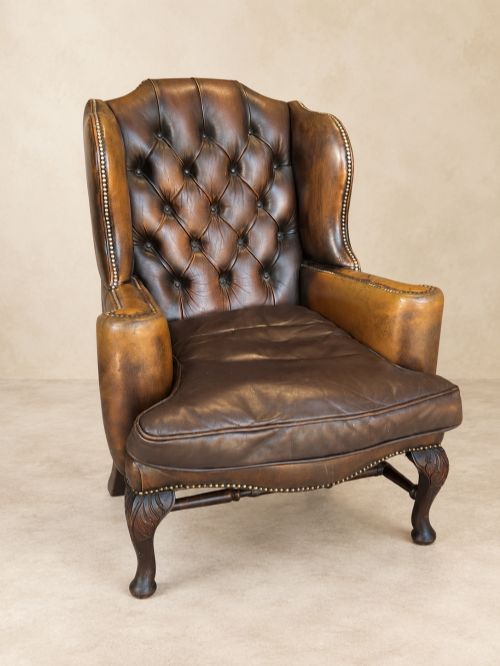


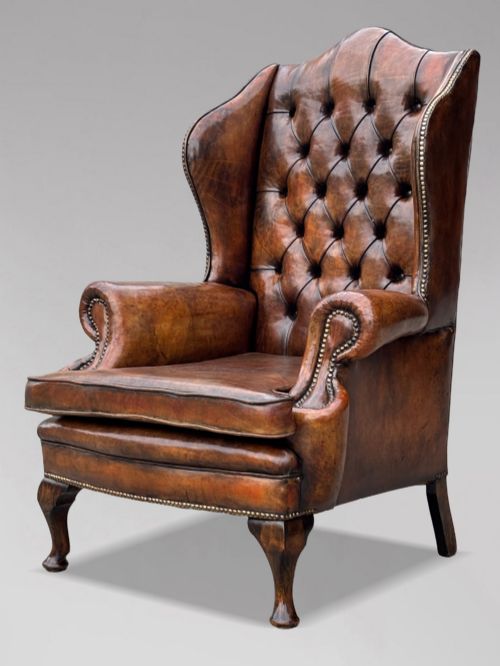
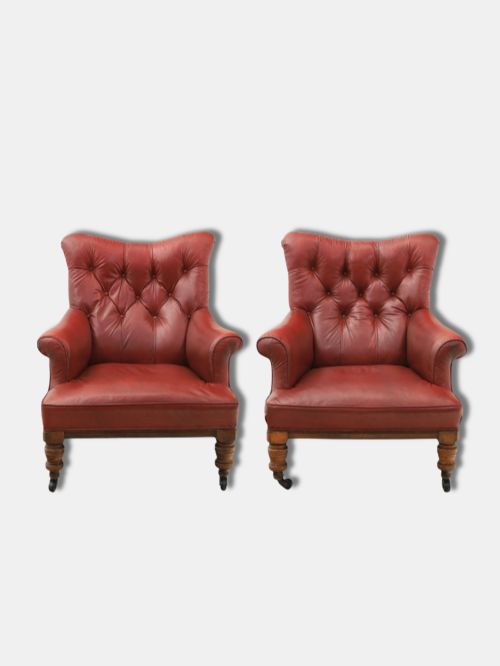
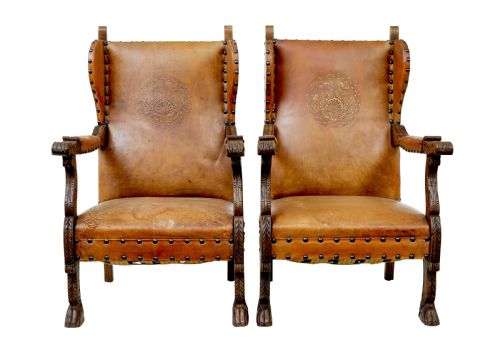
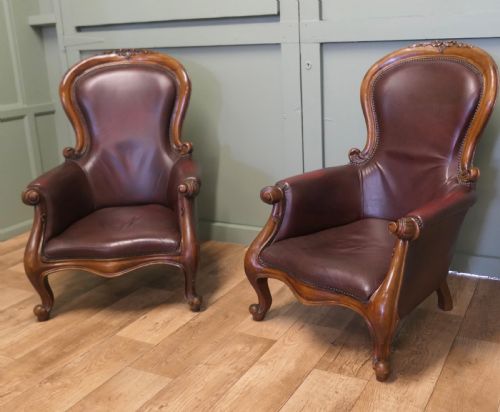
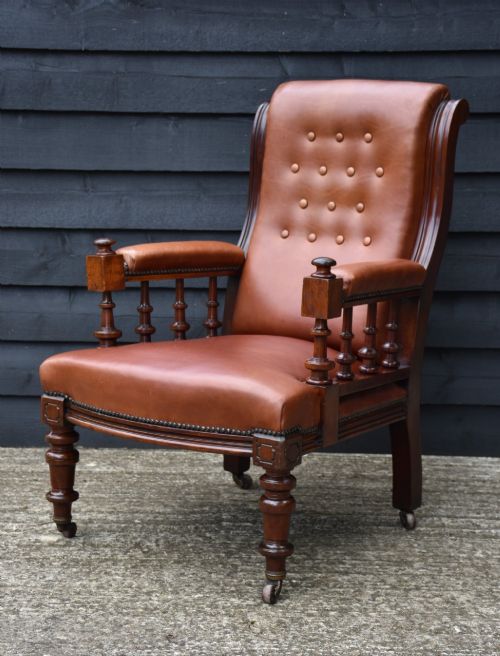
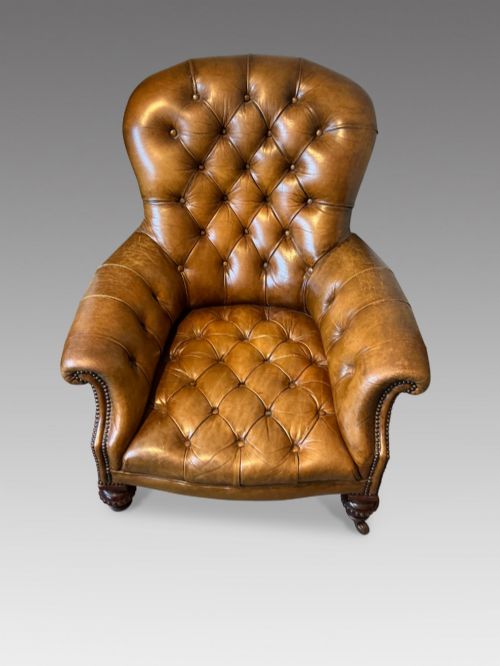
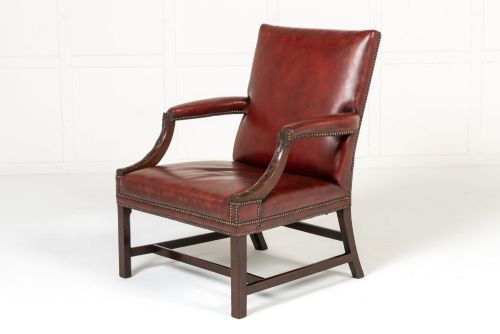
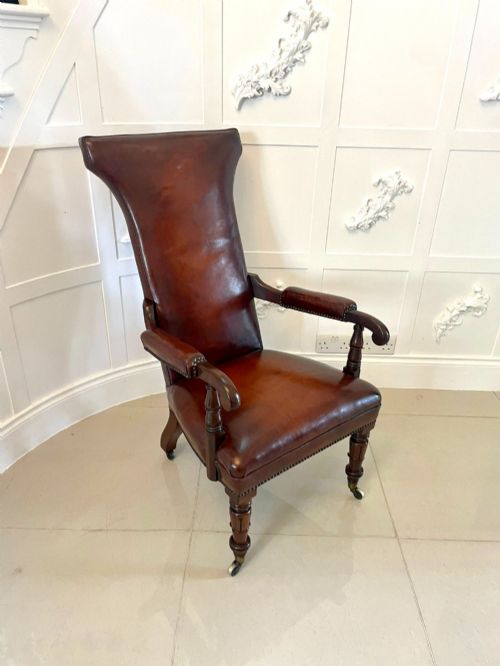
Leather Back Library Chair
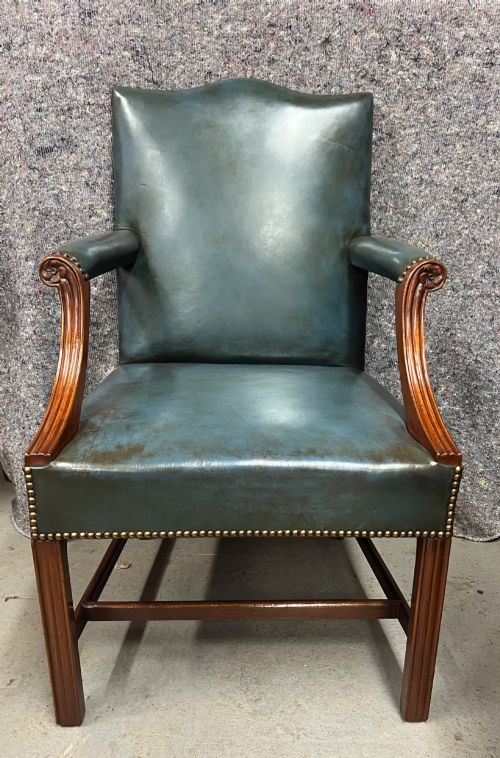
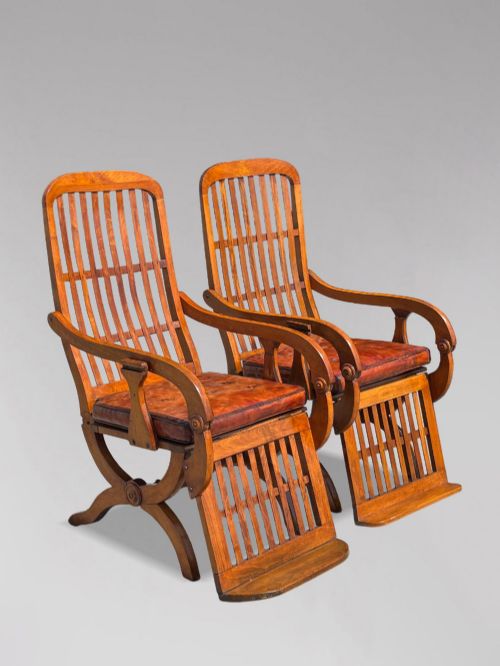
A leather back library chair is a sturdy seat designed for reading and study, combining a supportive wooden frame with durable hide upholstery.
Leather Back Library Chair
A leather back library chair serves as a practical seat for study spaces, offering firm support for long hours of reading. The selection spans the eighteenth, nineteenth, and early twentieth centuries, drawing on Victorian, Regency, and William IV designs.
How they were made
Frames are constructed from solid timbers such as mahogany, oak, walnut, and burr elm, providing structural integrity. Woodworkers shaped these materials into robust legs, arms, and backrests designed to endure daily use.
Hides are stretched over the frame and secured with brass elements or buttoning techniques to create a taut, supportive surface. Caning and padding materials add further comfort to the seat and back.
Listings span multiple decades from the eighteenth century to the early twentieth century, utilising mahogany, oak, walnut, and cane.
What varies in quality
The choice of timber and the precision of the frame construction distinguish different tiers of furniture. Selected hardwoods and careful joinery provide greater stability and longevity over time.
The treatment of the hide and the execution of buttoning or brass detailing reflect the standard of the piece. Finer examples display meticulous stitching and well-preserved upholstery materials.
William Birch
The Leather Back Library Chair Glossary
- Bergere
- An upholstered armchair with an enclosed cane or wooden frame. These chairs typically include a fitted seat cushion.
- Gainsborough chair
- A wide, upholstered armchair with open padded arms and short legs. This form originated in the eighteenth century for use at desks and in libraries.
- Button back
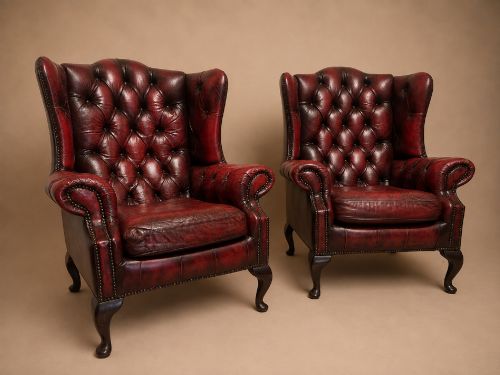
- An upholstery style where depressions are formed in the padding by stitches pulled tight and secured with buttons. This technique keeps the padding evenly distributed.
- Rexine
- A brand of artificial leather made from cloth coated with nitrocellulose. It appears on some twentieth-century seating options.
- Wing chair
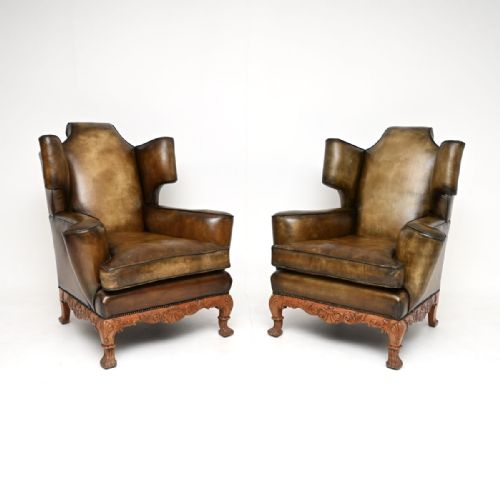
- An armchair with side panels attached to the back. These extensions historically protected occupants from drafts.
Leather Back Library Chair: Frequently Asked Questions
What rooms suit a library chair?
These chairs fit well in studies, home offices, and reading corners where comfortable seating is needed. Their traditional proportions also allow them to sit alongside sofas in living rooms.
They pair effectively with wooden desks, writing tables, and sideboards, anchoring a room with a traditional aesthetic.
How do I identify a Victorian piece?
Victorian examples often feature dark woods like mahogany or walnut, frequently paired with buttoned upholstery. Look for turned legs and traditional proportions typical of the nineteenth century.
Construction methods, such as hand-cut joinery and traditional hardware like brass castors, help distinguish pieces from this era.
Were these chairs used at desks?
Many library chairs function as desk chairs, providing an upright posture and supportive armrests for writing. Swivel and revolving mechanisms appear on specific nineteenth-century desk chair variations.
Lower seat heights and open arm designs allowed users to move easily while working at a table.
How should I care for the hide?
Keep the material away from direct sunlight and heat sources to prevent the hide from drying out. Regular dusting with a soft cloth maintains the surface.
Appropriate leather conditioners can be applied periodically to keep the material supple and prevent cracking over time.