


Convertible Chair Steps
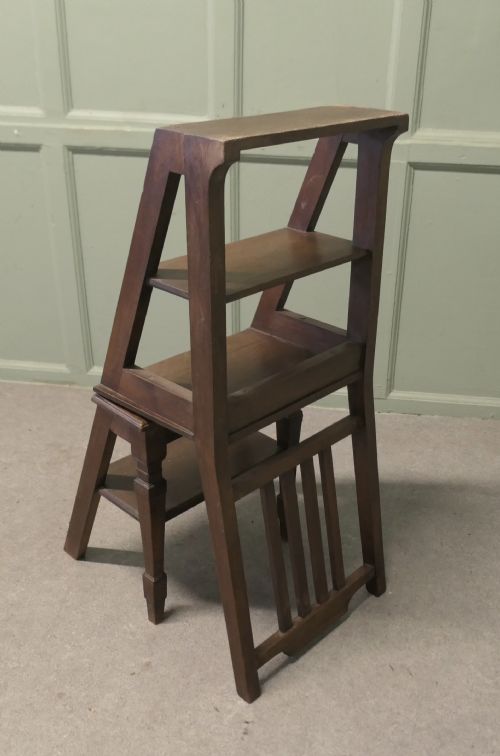
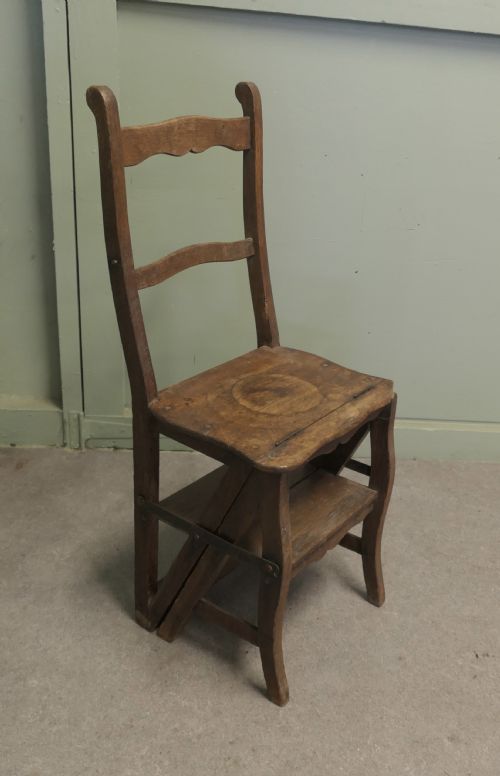
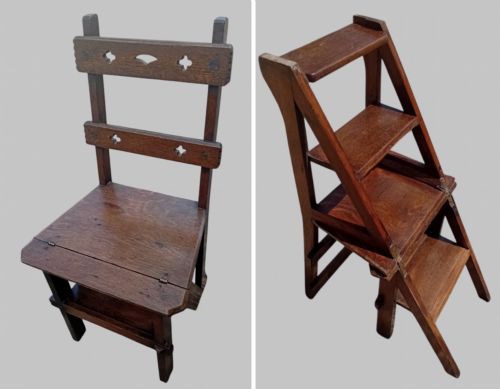
These convertible chair steps are clever dual-purpose library seats that transform into sturdy ladders for reaching high shelves.
Convertible Chair Steps
When you search for convertible chair steps, you are looking at ingenious dual-purpose library furniture designed to function as an armchair before pivoting or folding down into a set of steps. These pieces solve the practical problem of accessing high bookshelves in private libraries without cluttering the room with a separate ladder.
You are most likely to meet mahogany or oak examples from the Georgian, Regency, and Victorian periods on this page, alongside Edwardian variations. They range from formal library armchairs to rustic French country step chairs and pieces influenced by the Arts and Crafts movement or Gothic Revival.
The forms combine seating comfort with hidden mechanical transformation, often presenting as standard library chairs or library armchairs until the backrest or seat pivots outward. This clever engineering reflects the domestic ingenuity of the nineteenth century, catering to scholars and collectors who required functional utility disguised as elegant room furnishings.
How they were made
Cabinetmakers utilised dense timbers such as mahogany, oak, and other hardwoods to ensure the frames could safely support the weight of a person climbing to upper shelves. These woods were joined using traditional cabinetmaking techniques to withstand the daily stress of pivoting joints and folding mechanisms.
Fittings in brass and iron provide the necessary hinges, pivots, and locking catches that allow the transition from chair to ladder to happen smoothly. Surfaces frequently incorporate leather inserts on the steps or seats, alongside cane details or upholstered cushions for comfortable seating.
Some nineteenth-century scholars likely climbed their own armchairs in search of heavy dictionaries.
What varies in quality
The distinction between standard examples and finer pieces lies in the sophistication of the metamorphic mechanism and the seamlessness of its integration into the furniture design. Superior items conceal their transformation points entirely within the silhouette of the chair, so that neither function compromises the aesthetic of the other.
Material selection and execution also drive the hierarchy, separating utilitarian workshop pieces from finely polished Regency mahogany or detailed Gothic Revival and Aesthetic Movement carving. The smoothness of the pivot action and the rigidity of the steps when locked into place reflect the precision of the original construction.
The Convertible Chair Steps Glossary
- Metamorphic
- Furniture designed to transform from one object into another, such as an armchair turning into a set of library steps. This clever engineering became particularly popular during the Georgian and Victorian periods.
- Library chair
- A sturdy seat designed for long periods of reading, often featuring wide arms and upholstered leather. When combined with metamorphic mechanisms, it serves a dual purpose.
- Gothic Revival
- A design style drawing on medieval architectural motifs, featuring pointed arches and heavy carved details. Pieces from this movement often utilise dark oak.
- Regency
- A British design period spanning the early nineteenth century, known for elegant proportions and classical influences. Mahogany is frequently encountered in furniture of this era.
- Arts and Crafts
- A late nineteenth-century movement emphasising honest construction and visible craftsmanship. Oak is the primary wood associated with this style.
Convertible Chair Steps: Frequently Asked Questions
How do convertible chair steps work?
The chair back or seat pivots and unfolds on hidden brass or iron hinges to reveal a sturdy tiered ladder. This transformation allows a seated reader to convert their furniture into climbing steps within seconds.
Once the task is finished, the steps fold neatly back into the frame to resume the appearance of a standard library chair or armchair.
What periods do these chairs come from?
These pieces date primarily from the nineteenth century, spanning Georgian, Regency, Victorian, and Edwardian eras. Makers adapted prevailing stylistic shifts, from early classical mahogany designs to later oak Arts and Crafts interpretations.
Earlier examples often display sophisticated hidden mechanisms, while Edwardian versions continue the tradition with varied timber choices.
Which woods were used for these steps?
Cabinetmakers relied on durable hardwoods capable of bearing weight safely during climbing. Mahogany and oak are the most frequent materials found across these listings.
Additional elements include brass and iron hardware for the moving joints, alongside leather and cane for the seats and treads.
Are these chairs comfortable for daily seating?
Many examples were built specifically as library armchairs, prioritising comfort alongside their dual mechanical purpose. Upholstered leather panels and supportive wooden backs make them suitable for regular use at a desk or reading table.
The complexity of the folding mechanism does not generally compromise the ergonomic shape of the chair when it is closed.