



Antique Step Stools
A seat-height stool that folds or hinges out into a short flight of steps, made for reaching the upper shelves of a tall bookcase without keeping a ladder in the room.
Antique Step Stools
The piece that dominates the heading is the metamorphic library stool: a stool by day, opened out into treads when something on a high shelf was wanted. Nine of the twenty-two listings on Sellingantiques use the word "metamorphic", eight say "library" and eight say "steps", and those words largely travel together on the same pieces.
Steps that hinge away belong to the age of the tall domestic bookcase, when a library needed height it could store in plain sight. Bed steps did the same job beside a high bedstead, and one Victorian example turns up in the group.
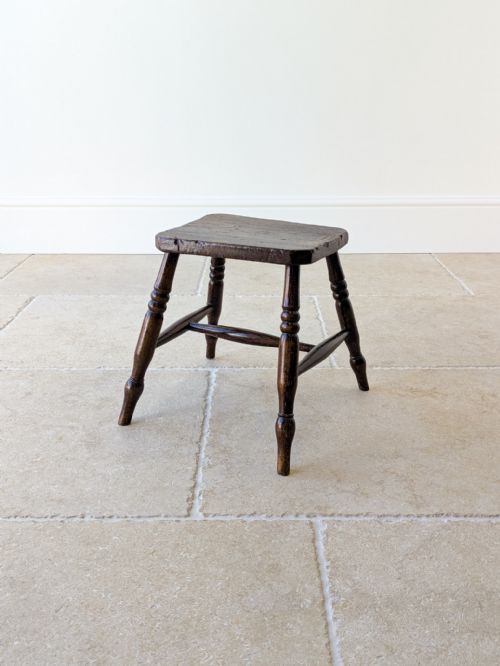
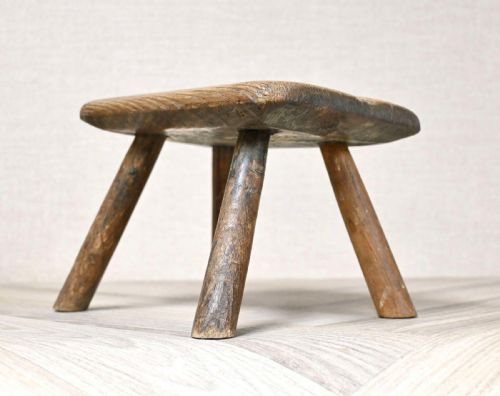
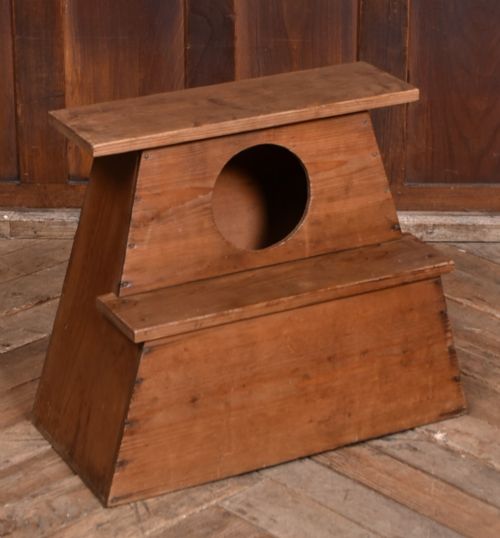
Alongside the convertible pieces sit plain low stools sold under the same heading: country and hearth stools, a carved oak footstool, a box stool with a compartment under the seat. Timber is named in nine titles, and only two are named at all, mahogany at the upper end and oak lower down. Two Japanese street-vendor stools are the only non-European pieces.
Dating is loose more often than exact. "19th Century" carries eight listings, "Georgian" two, and only seven of the twenty-two give a clean year at all, running from 1800 through to 1930. Four sit in the twentieth century, so the form was still being sold long after the tall bookcase had gone out of fashion.
Where The Range Splits
The action is the first divide. Every listing above the middle of the range carries "metamorphic", and the stools that stay stools sit at the bottom. What a buyer is paying for is the hinge or fold that turns a seat into treads, and the joinery that made that possible in one piece of furniture.
Timber follows the same line. Mahogany is named across the top of the group and oak across the cheapest carved and country stools, with nothing else named in any title. Room matters too: "library" clusters at the upper end, while kitchen, shop, hearth and country descriptors sit below it.
Then there is how the period is named. A title that says George III or Regency sits at the top; "19th Century" on its own sits mid-range, and the undated pieces, including both Japanese vendor's stools, sit at the bottom. The word "rare" appears in two titles, both near the top.
Antique Step Stools Retail Price Guide 2026
Typical UK retail prices for step stools, calculated from the Sellingantiques database of over a million retail prices indexed since 2003. This retail price guide relies exclusively on Sellingantiques data; no external sources or auction records are used, so the figures do not describe the wider market.
19th Century is the period label used most on Sellingantiques for step stools, with Georgian next and 18th Century third.
The Antique Step Stools Glossary
- Metamorphic
- Converts from one form to another. Here, a stool or seat that opens out into a short flight of steps.
- Library steps
- A short flight for reaching high shelves, and often the folded-out state of the stool itself.
- Treads
- The flat surfaces you stand on once the piece is opened out.
- Set of steps
- Dealer phrasing for the whole piece rather than a single tread.
- High stool
- A stool above normal seat height, as several of the metamorphic pieces are described.
- Box stool
- A stool with a lidded compartment under the seat. One turns up in this group and nowhere else.
Antique Step Stools: Frequently Asked Questions
What does metamorphic mean on a step stool?
It means the piece converts. A stool or seat hinges, folds or lifts out into a short flight of treads, then goes back to being a stool.
It is the single most common word in this category on Sellingantiques, on nine of twenty-two titles, and it appears on every listing above the middle of the range.
Which timbers turn up in this category?
Only two are named in the titles: mahogany and oak. Mahogany carries the metamorphic library pieces at the top, oak the country, hearth and carved stools lower down.
Nine of the twenty-two titles name a timber at all. The rest leave it undescribed.
How old are these pieces usually?
Dating is mostly broad. Eight listings say "19th Century", two say "Georgian" and two give only "18th Century".
Seven carry a clean year, spread thinly from 1800 to 1930. Four of the group are twentieth century, two of those dated 1930.
Are step stools and library steps the same thing?
On this heading they overlap heavily. "Library" and "steps" each appear on eight titles, largely the same pieces, which is how the convertible form announces itself.
But the heading also holds plain low seating sold alongside: country stools, hearth stools, a footstool and a box stool, none of which convert.
Do any carry a maker's name?
None. Across all twenty-two listings no maker, workshop or retailer is named, stamped or attributed.
What the titles use instead is period and timber. A named period such as George III or Regency does more work at the top of this range than any signature.
Why are there Japanese stools in this category?
Two listings are Japanese street-vendor stools, the only non-European pieces in the group. Both are undated.
They sit at the bottom of the range, sold as small low seating rather than as anything that converts.