


Antique Milking Stools
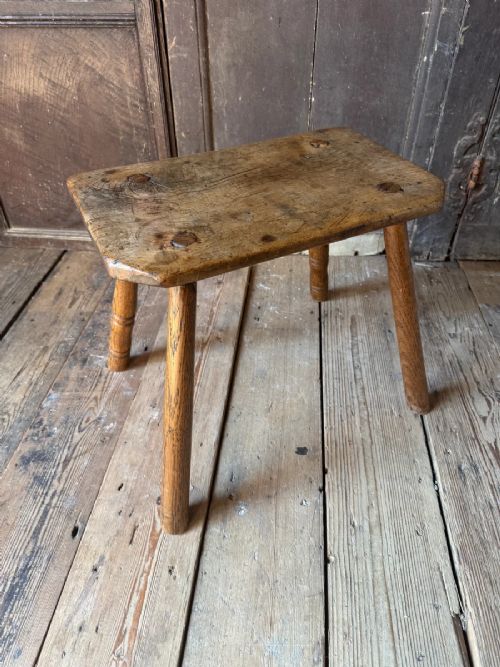
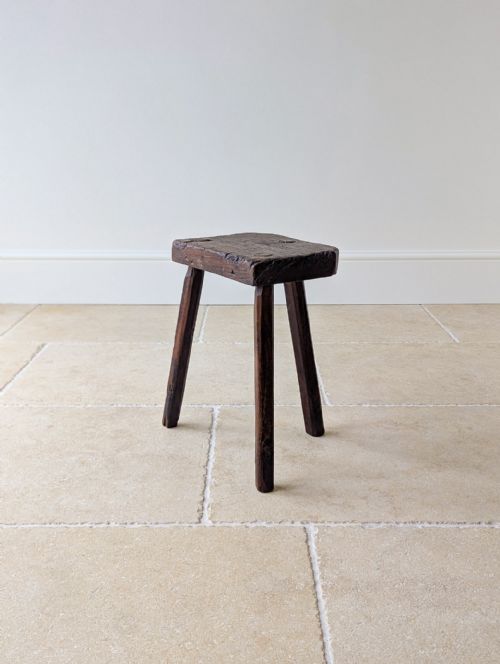
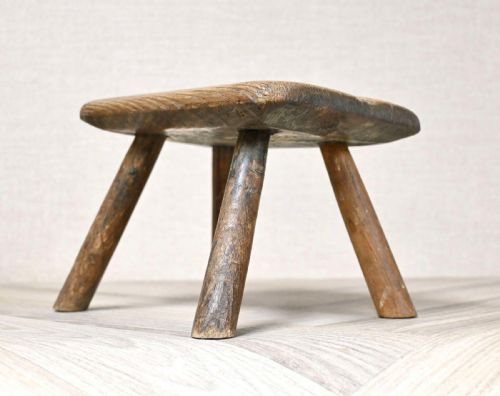
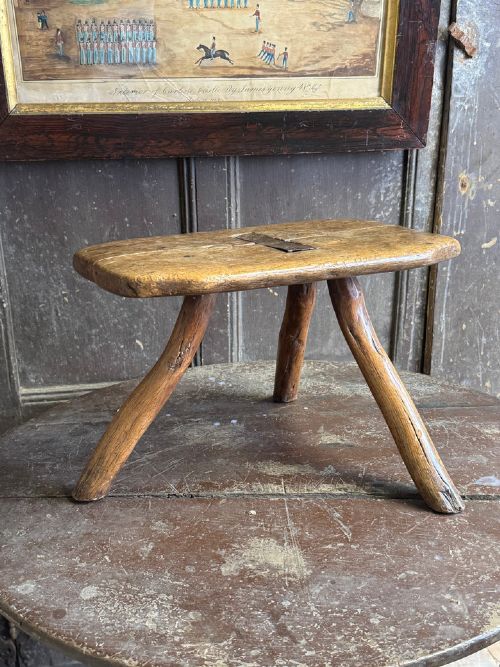
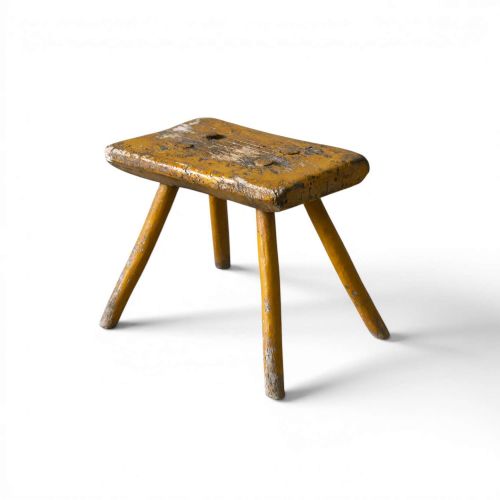
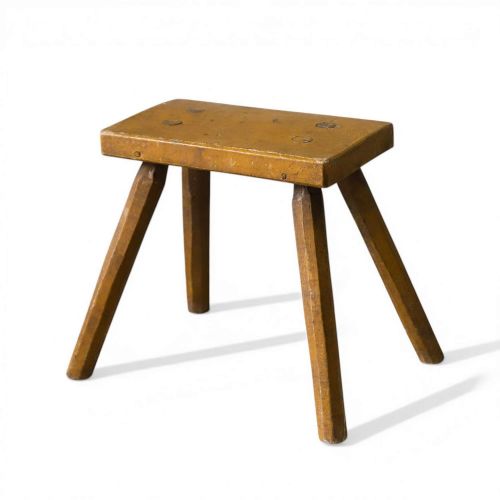
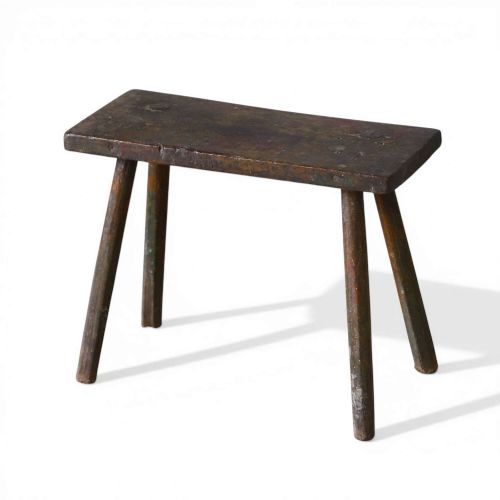
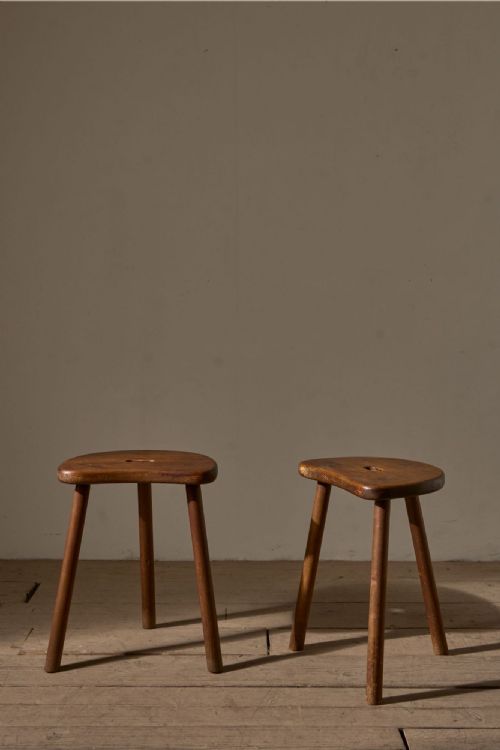
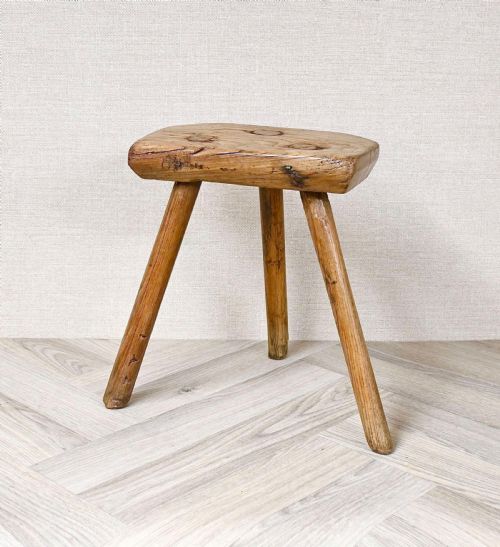
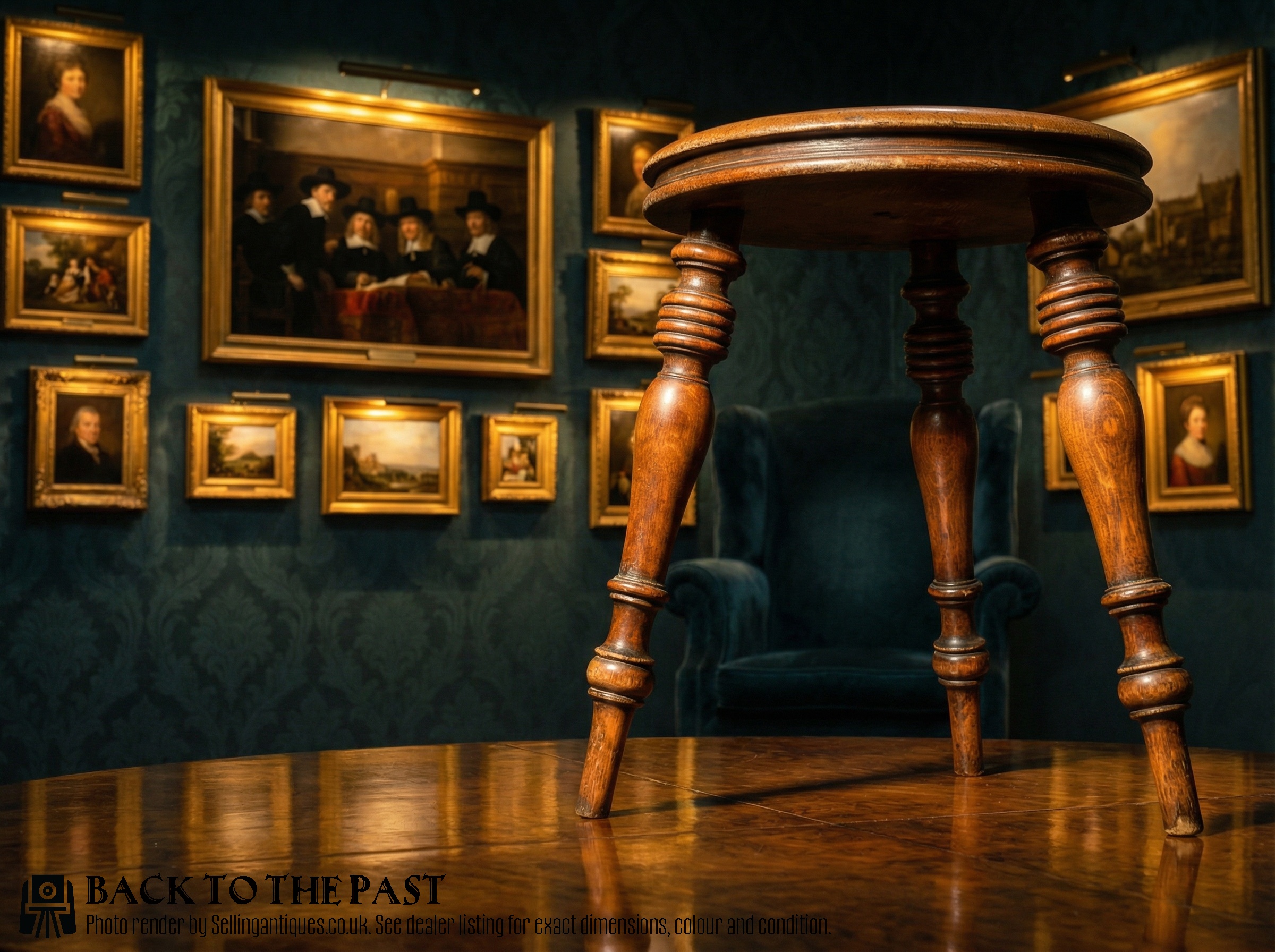
A low three-legged seat with splayed legs socketed into a solid slab, made in country workshops for use in the dairy and the byre.
Antique Milking Stools
A milking stool is a working dairy seat. Three legs, splayed and socketed straight into a thick plank, so it stands steady on a rough byre or yard floor. They were made in country workshops from whatever native timber was to hand, and used across Britain and continental Europe.
The stool you are most likely to meet on Sellingantiques is a single 19th-century English example in elm or ash, legs roughly turned or cut from hedgerow growth, sold plain and bare. "19th Century" is the dated field on 54 of 119 listings, and elm leads the timbers, named in a fifth of titles. Oak and ash follow; sycamore, fruitwood, yew and pine turn up singly.
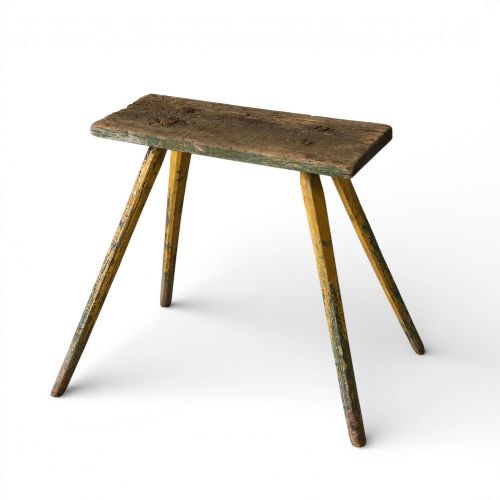
Regional attribution is uncommon. Welsh appears on nine titles, West Country twice, Scotland once. A small handful of continental stools carry original paint, including three Eastern European examples in green, yellow and ochre that arrived together, and a French painted one. Two stools carry pokerwork.
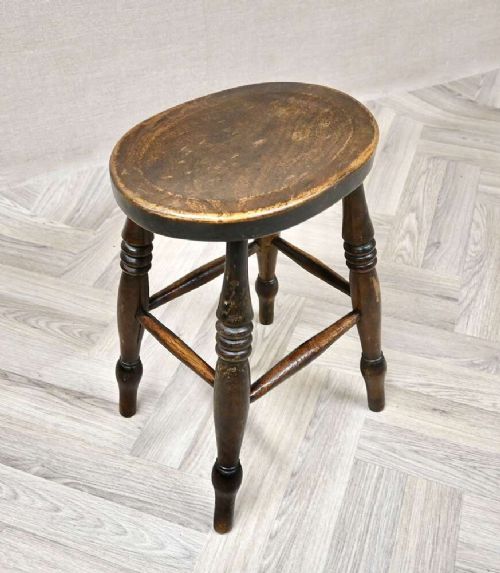
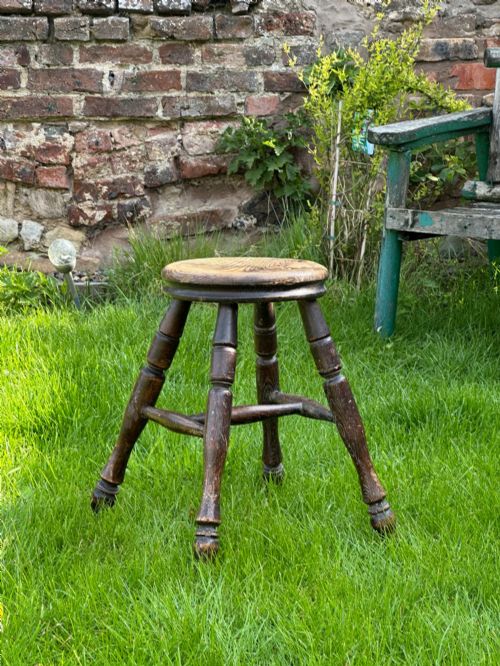
The heading also gathers other low vernacular seats: hearth stools, tavern and alehouse stools, nursery stools, and stools tied to a trade such as cutler's and jeweller's work. Most listings are of one stool. Pairs recur, one lot offered three, and one dealer listed a collection of ten.
Where The Range Sits
Surface does more work than anything else. Titles that single out colour and patina, or original paint, sit above the plain undescribed stools, and painted survivors are scarce enough that they read as an event rather than a variation. A stool listed simply as "Milking Stool" is the bottom of the range by default.
Age and timber pull in the same direction. Stools tagged 18th century or Georgian cluster in the upper half, including one oak example inscribed 1771. Named or figured woods do the same: burr yew, wild elm, walnut, live edge elm, sycamore. Generic descriptions stay lower.
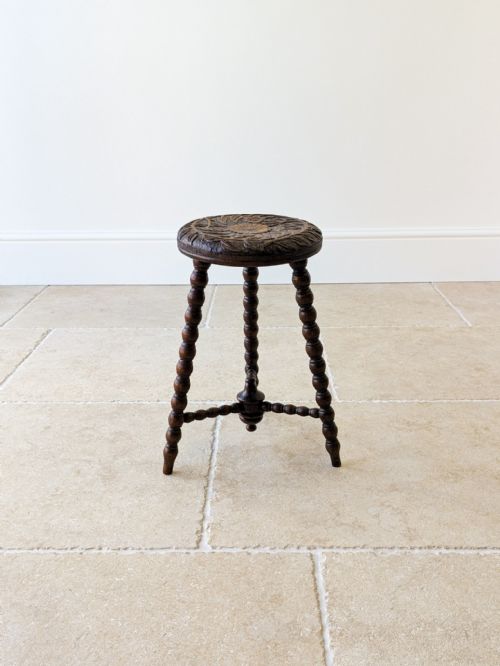
Then there is what the seat looks like and how many you get. Dished, sculpted or carved tops and pokerwork decoration are called out in titles at the higher end. Pairs, the set of three and the group of ten sit well above single stools, as do the genuinely odd things: a one-legged stool, a jeweller's stool, blacksmith repairs to hedgerow legs.
Antique Milking Stools Retail Price Guide 2026
Typical UK retail prices for milking stools, calculated from the Sellingantiques database of over a million retail prices indexed since 2003. This retail price guide relies exclusively on Sellingantiques data; no external sources or auction records are used, so the figures do not describe the wider market.
Most milking stools on Sellingantiques are sold singly. The largest grouping was a collection of ten, offered together for farmhouse tables.
The Antique Milking Stools Glossary
- Dished seat
- A top hollowed or sculpted for comfort, described in titles as "dished topped" or "dish seat".
- Primitive
- Dealer shorthand for unrefined, hand-worked country make. It appears in twelve titles in this archive.
- Hedgerow
- Legs cut from natural growth timber rather than sawn stock, used of both ash and oak examples.
- Elm
- The commonest seat timber here, valued for a plank that won't split around the leg sockets.
- Pokerwork
- Decoration burnt into the surface. Two stools carry it, one of them a Scottish example with an inscription.
- Pegged or five-plank
- Joined construction using wooden pegs rather than legs socketed into a slab; one oak stool is described this way.
Antique Milking Stools: Frequently Asked Questions
Why do milking stools have three legs?
Three legs sit level on uneven ground without rocking, which matters on a byre or yard floor. The legs are splayed and socketed straight into a solid slab seat.
Three-legged and tripod forms are named repeatedly in listings on Sellingantiques. A one-legged milking stool has appeared once, flagged as unusual.
What wood are they usually made from?
Elm dominates, named in a fifth of all titles. Oak and ash follow it, with ash often in the legs and elm in the seat.
Sycamore, fruitwood, walnut, burr yew, pine and Chinese hardwood each turn up only once or twice. Sycamore has a traditional dairy association as a pale, close-grained wood.
How old are most of these stools?
The dated field runs from 1750 to 1920. Fifty-four of 119 listings are tagged 19th Century, with ten at 18th Century, ten Georgian and eight Victorian.
Only 25 listings carry a clean year, so a century label here should be read as an unnarrowed attribution. Some titles hedge further still, with forms like "18th/E19thc" or "Late 19th/Early 20th Century".
Are painted milking stools common?
No. The bulk of the category is bare timber, sold plain.
Painted survivors amount to a small handful: three Eastern European stools in original green, yellow and ochre paint that came to market together, a French painted example, and one dairy stool described simply as being in paint.
Can you buy them as pairs or sets?
Single stools are the norm, but multiples do come up. Pairs in oak, elm and pine recur, and one lot offered three together.
The largest grouping in the archive is a collection of ten, listed for use with farmhouse tables.
What else gets listed under this heading?
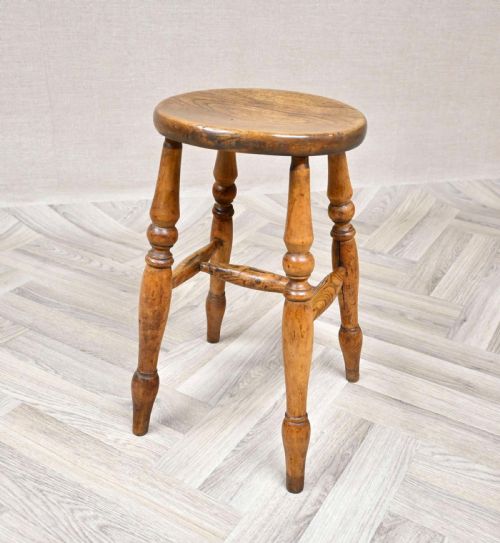
Other low vernacular seats sit alongside the dairy stools: hearth stools, tavern and alehouse stools and nursery stools.
Trade stools shade in at the upper end, including cutler's stools, a Birmingham jeweller's stool and a saddle stool.
About fourteen stools come to market on Sellingantiques in a year, listed by 43 different dealers over time.