
Antique Country Stools
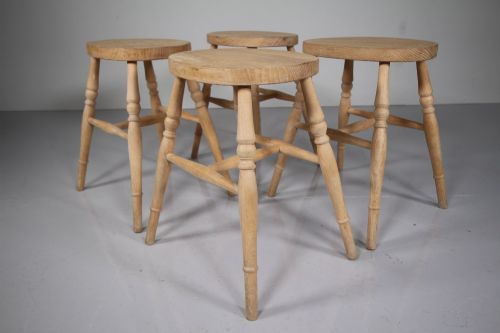
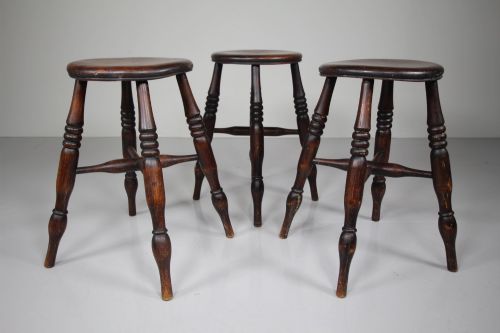
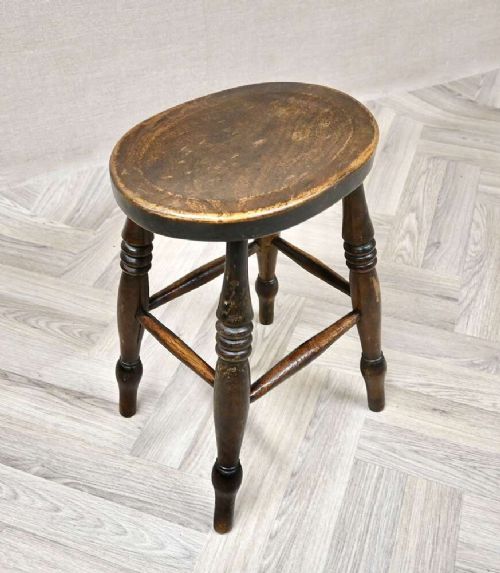
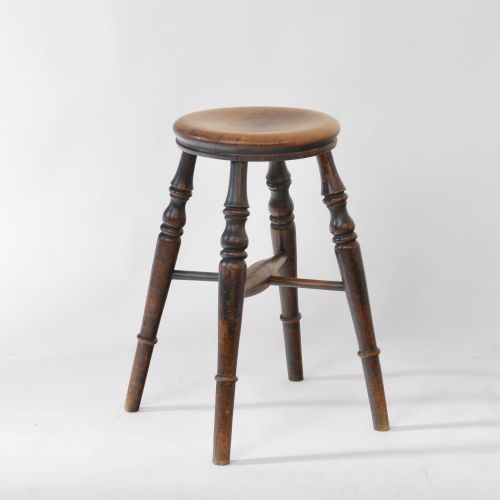
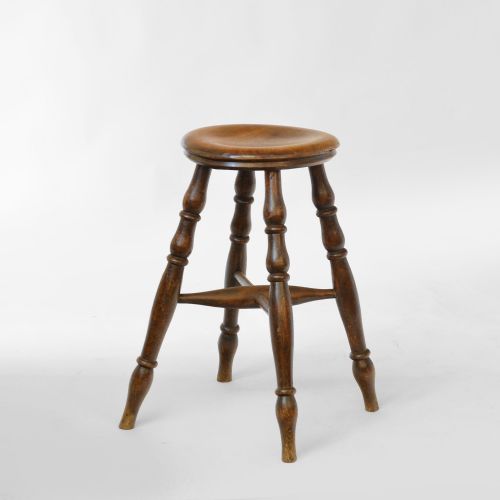
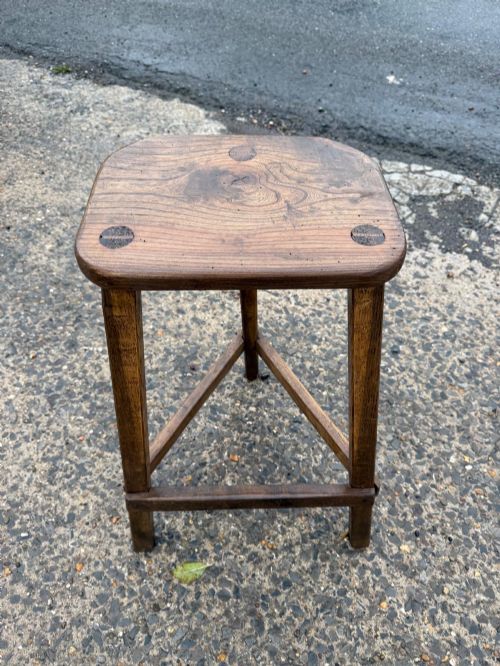
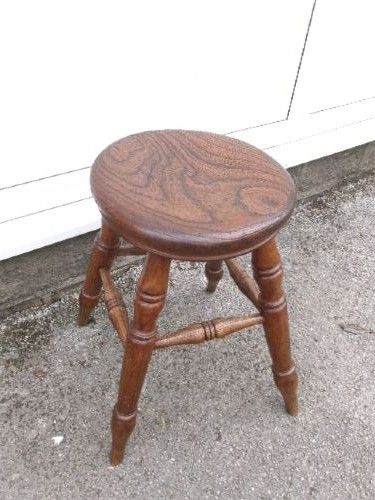
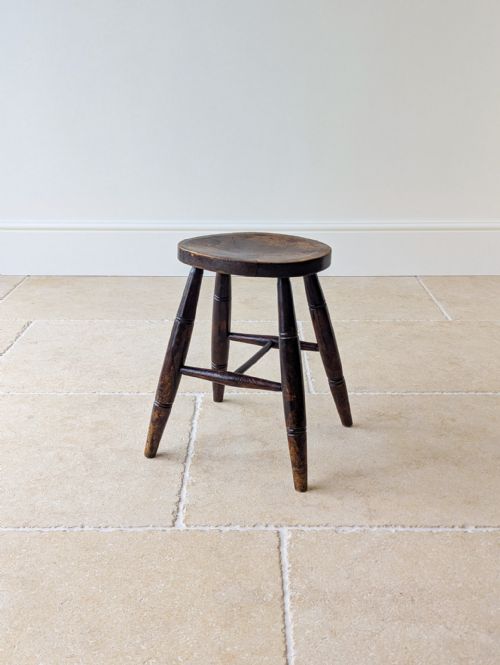
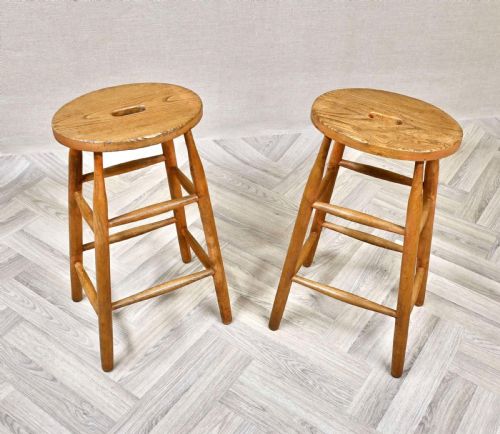
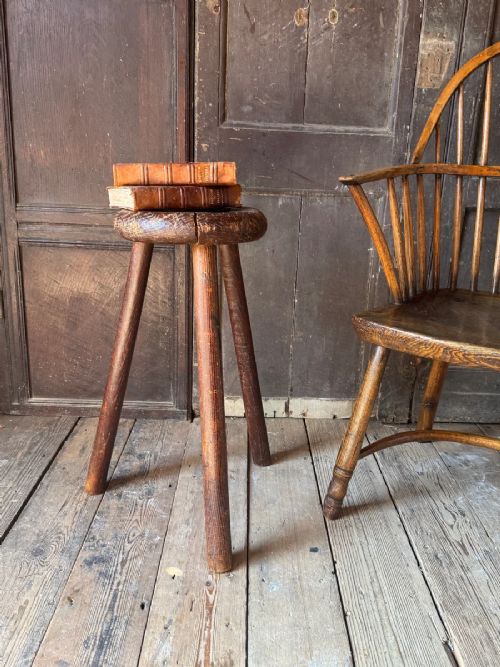
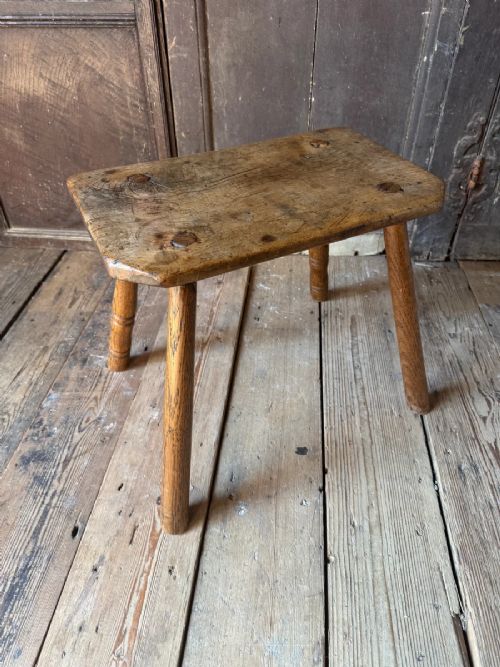
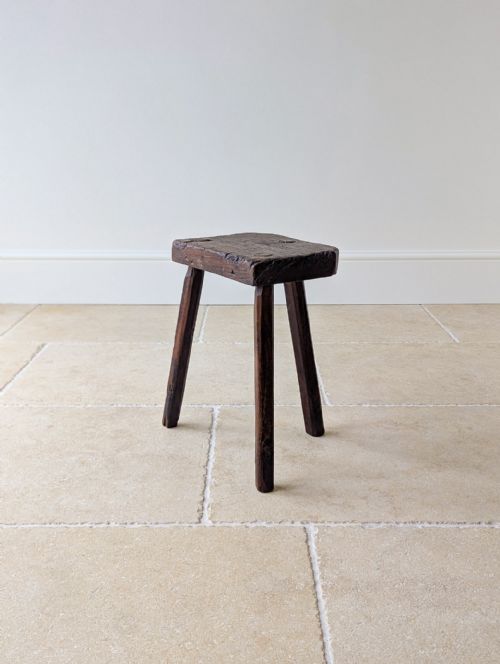
A country stool is a small vernacular seat in native timber, made locally for milking, sitting at the hearth, working at a bench or reaching a high shelf.
What Are Country Stools?
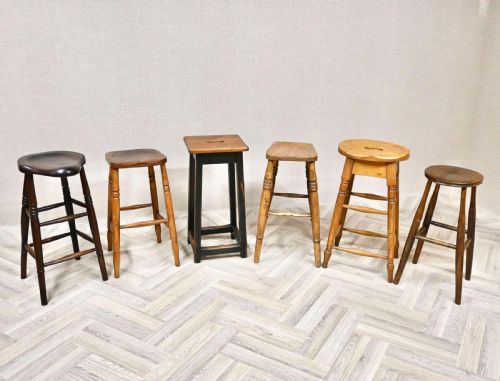
Low stools were the everyday seat of the British and European farmhouse and workshop long before chairs were common. They were made from whatever timber was to hand, which is why the listings name elm, ash, oak, fruitwood, sycamore, beech, yew and pine. Elm and oak sit exactly level at 46 titles each, with ash on 26.
The form you'll meet most often is a plain turned- or splayed-leg stool of the 19th century, titled with little more than the wood and a date. "C19th Country Stool" and "Country Stool", with nothing else said, recur dozens of times across the sample. Dating is broad rather than precise: 151 listings say simply "19th Century", and only 63 pin themselves to a clean year, the field running 1700 to 1930.
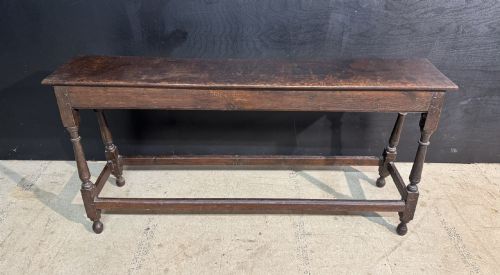
Alongside the plain run come the named working stools, roughly a fifth of the category: milking, hearth, dairy, alehouse and tavern, plus a cobbler's, a cutler's, a clerk's, a jeweller's, a mill worker's and a nursery stool, mostly one apiece. Joint stools, framed and pegged by a joiner rather than shaped from planks, form a smaller and older branch, some dated to the 17th century.
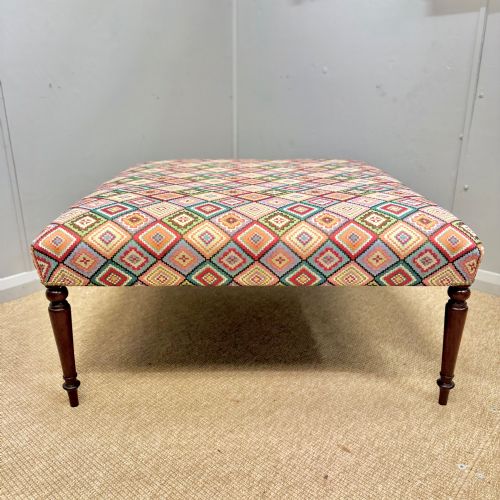
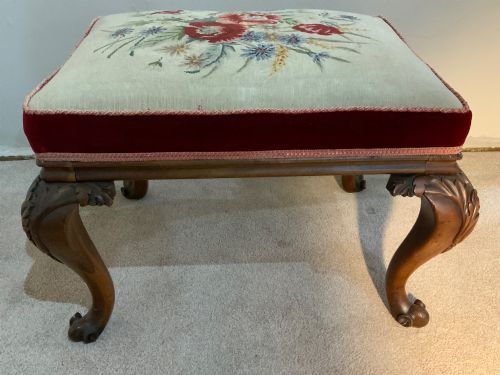
Two further groups turn up throughout. Country house stools, footstools and window seats bring upholstery, tapestry, buttoned leather and needlework in mahogany and walnut, around a tenth of the whole. Continental examples make a small steady minority: French and Swedish painted work, Eastern European milking stools, and single sightings of Chinese hardwood, Anglo-Indian and Dutch marquetry.
Where The Range Splits
Timber does most of the work. Yew, burr yew, burr elm and walnut sit high in the sampled range, while a plain stool with no timber named at all clusters at the bottom. Surface counts for as much: paint appears in only 8 titles, whether original, in traces, or on Swedish and Eastern European examples, and those sit well above their plain equivalents.
Construction separates the older stools from the rest. Joint and joyned stools dated to the 17th century and around 1700, along with pegged frames and five-plank builds, hold the upper end. The rougher primitive stools are a different pleasure, hand-shaped rather than joined, and priced as such.
Scale and number push in the same direction. Large appears in 20 titles and small in 15, and the biggest things filed under the heading are barely stools: long benches, five-foot long stools, window seats and centre ottomans. Pairs turn up in 21 titles, with sets of four, six and ten in the sample, and multiples sit above singles. Upholstered country house work is concentrated at the top.
Retail Price Guide 2026
Typical UK retail prices for country stools, calculated from the Sellingantiques database of over a million retail prices indexed since 2003. This retail price guide relies exclusively on Sellingantiques data; no external sources or auction records are used, so the figures do not describe the wider market.
About thirty-three country stools are listed on Sellingantiques each year, and ninety-eight dealers have listed one - close to a stool apiece.

The Antique Country Stools Glossary
- C19th / 19thc
- Dealer shorthand for nineteenth century, and the single commonest term in these titles. Treat it as a bracket rather than a date.
- Country / country-made
- Made by a local craftsman in local timber rather than to a metropolitan design. Vernacular says the same thing, and turns up in a handful of titles.
- Joint stool
- A stool of framed and pegged construction with four turned legs and stretchers. Spellings run to joined and joyned, and these are the oldest things in the category.
- Primitive
- Deliberately rough, hand-shaped construction, a recurring title word. It describes the making, not the condition.
- Dished or saddle seat
- A seat hollowed out for comfort, as on Windsor-type stools. Three-legged appears in eight titles, the splayed tripod sitting steady on an uneven floor.
- Cracket
- A regional word for a low stool, appearing alongside peg. Milking and hearth stools are the two named working forms you'll see most.
Frequently Asked Questions
How many country stools come up for sale?
Around 33 come to market on Sellingantiques in a year, and 98 different dealers have listed one. That's close to a dealer apiece, so almost nobody carries them in depth.
They arrive singly and scattered rather than in runs from one specialist.
Why do so many listings say so little?
Titles in this category are unusually terse. "Country Stool" or "C19th Country Stool", with nothing else said, recurs dozens of times across the sample.
The overwhelming majority are plain and unattributed, described only by wood, leg count and rough date. Elm, oak and ash between them account for most of what is named at all.
Which woods turn up most often?
Elm and oak are exactly level at 46 titles each, with ash on 26. Sycamore, fruitwood, beech, yew and pine appear singly.
Yew, burr yew, burr elm and walnut sit at the higher end of the range. Plain stools with no timber named cluster at the bottom.
Are country stools always English?
No. French examples appear in 14 titles, and Swedish painted and carved stools form a small steady run alongside them.
Eastern European painted milking stools turn up too. Single sightings include a Chinese hardwood stool, an Anglo-Indian centre stool and a Dutch marquetry example.
What are the oddest forms in this category?
The samples throw up a one-legged milking stool, an oak pig bench, a Gothic boarded stool of trestle form and a stool with a drawer.
The named trade stools are the other pleasure: cobbler's, cutler's, clerk's, jeweller's, mill worker's, artist's, nursery and swivel, mostly one apiece.
Do any carry a maker's name?
No. Nothing in this category carries a named maker, workshop or firm, whether stamped, labelled or attributed.
These were made locally for use, not signed. What identifies them instead is timber, form and construction.