


Antique Leather Stools
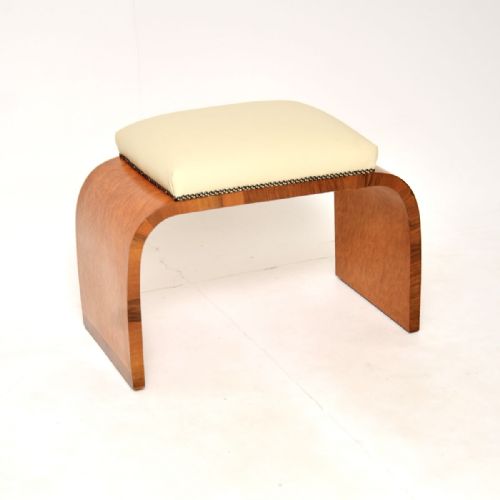
A hardwood frame with a leather top or upholstered leather seat, made to sit on or rest your feet on, from small footstools to country-house stools big enough to double as a coffee table.

What Are Antique Leather Stools?
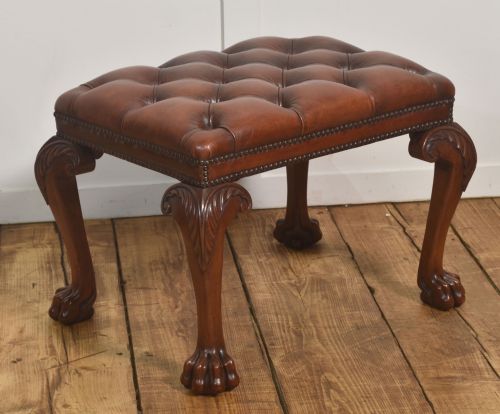
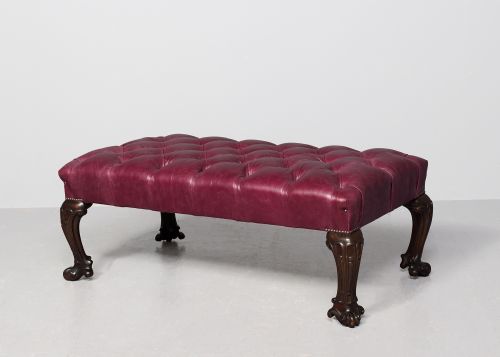
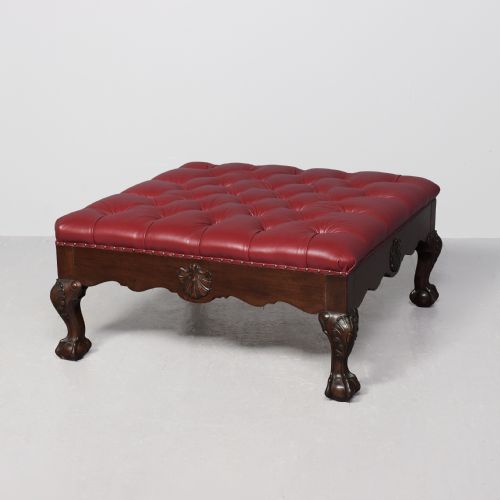
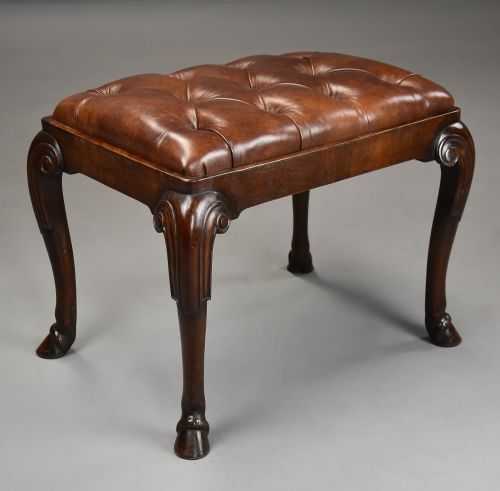
Three woods carry the category. Mahogany appears in the largest share of titles, then walnut, then oak, with rosewood a distinct minority. The leather either covers the seat surface alone, over a frame you can see, or wraps a padded seat with the sides upholstered too. Buttoning turns up throughout, and a smaller group is described as deep buttoned.
The single stool is the form you'll meet most often, but multiples are unusually common for a seat. Twenty-six titles offer a pair, and the archive also holds a trio of Arts and Crafts bar stools, a suite of three Gothic stools and a set of three Moorish stools. Footstools are the commonest named sub-type, with piano stools next.
Leather-topped and leather-seated stools became common in Britain from the 18th century onward as hard-wearing seating and footrests for halls, libraries and dining rooms. Specialised forms followed as rooms did: piano and dressing stools, gout stools, long stools made for a window recess.
Dating is looser than the spread suggests. The dated field runs from 1740 to 1930, but the largest single bucket is simply "19th Century", with Victorian, Edwardian, Georgian and Regency also used in place of years. Where years are given they cluster in the 1920s and 1930s, so read a period word as a dealer's bracket rather than a documented date.

Where The Range Splits
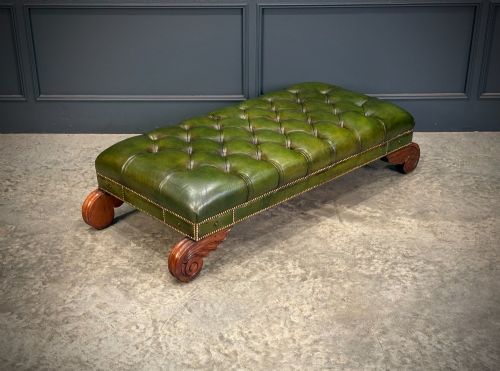
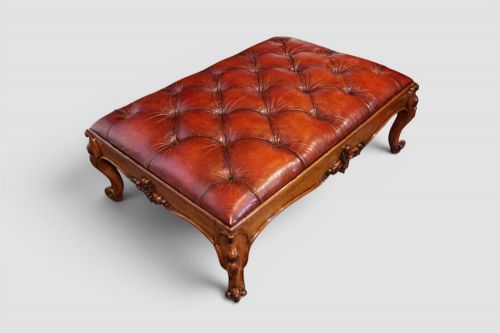
Scale does most of the work. "Large" appears in thirty-five titles and dominates the upper end: big deep-buttoned country-house and library stools, some of them double-described as coffee tables, window seats or benches. Small footstools sit at the other end of the spread.
After size comes the upholstery. Deep buttoning is the feature most associated with the top of the range, and Chesterfield-buttoned library stools recur through the upper half. Plain leather-topped stools with an exposed frame occupy the lower and middle ground. Pairs and sets also lift a stool above its single equivalent.
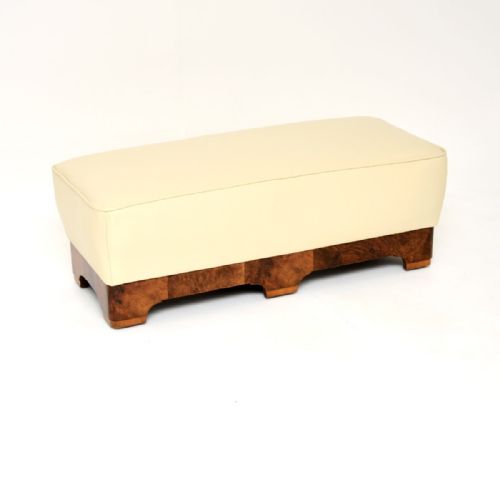
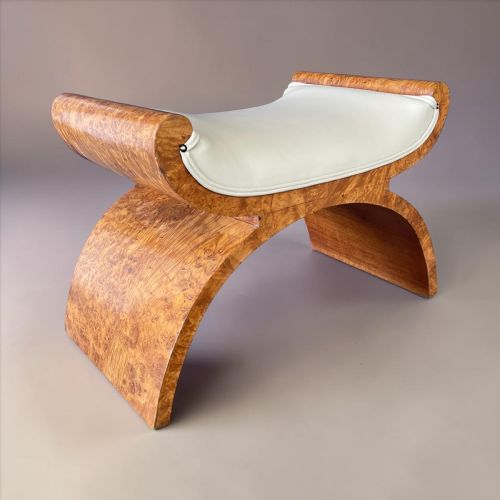
Timber and named form separate the rest. Figured walnut, rosewood, birds eye maple, satin birch and one-off exotics cluster near the top, while plain oak and mahogany hold the middle. Regency and Georgian pieces and the Art Deco burr walnut group sit high; a generic "leather top stool" title sits low.
Retail Price Guide 2026
Typical UK retail prices for leather stools, calculated from the Sellingantiques database of over a million retail prices indexed since 2003. This retail price guide relies exclusively on Sellingantiques data; no external sources or auction records are used, so the figures do not describe the wider market.
Three woods carry the category on Sellingantiques: mahogany turns up in the most titles, then walnut, then oak. Rosewood is a small minority.
The Antique Leather Stools Glossary
- Deep buttoned
- Upholstery pulled down into a grid of dimples by buttons on long stitches. Sixteen titles specify it, and thirty-four say buttoned.
- Leather topped
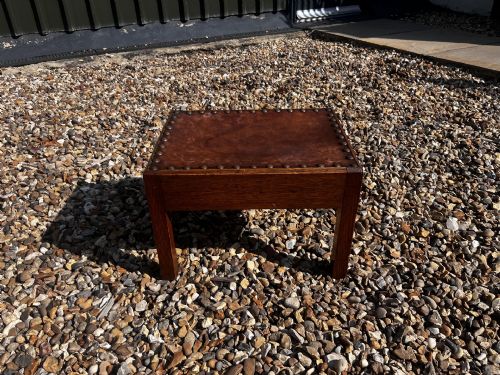
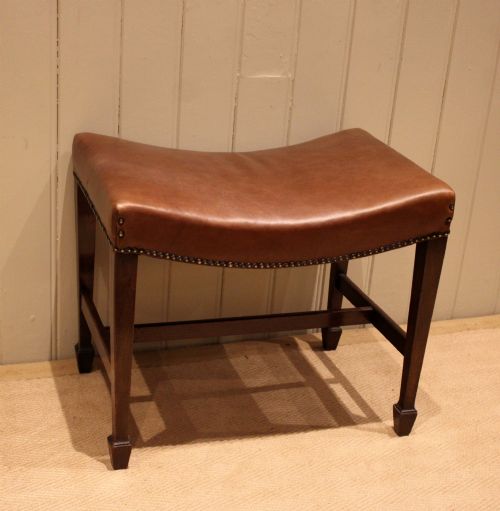
- Leather covering the seat surface only, over a wood frame that stays visible, as against a pad with upholstered sides.
- Piano stool
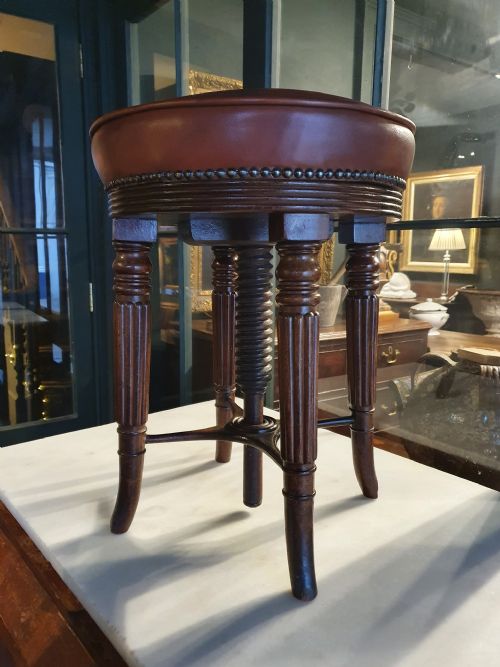
- A seat for a keyboard player, often revolving or height-adjustable. Eighteen titles use the term, and a duet stool is the long version, wide enough for two.
- Gout stool
- An angled foot rest for an inflamed leg. Several appear, one of them described as metamorphic.
- X-frame
- A crossed-leg frame, seen here mostly on Arts and Crafts oak stools and on Regency rosewood.
- Hide
- The dealer's word for the leather itself, used in phrases such as burgundy hide upholstered. Brass studs are the nailed border fixing it to the frame.
Frequently Asked Questions
What wood are they usually made from?
Mahogany leads the titles, with walnut second and oak third. Between them the three account for the bulk of the category.
Rosewood is a smaller group, and it tends to sit in the upper half of the range. Burr walnut, birds eye maple and satin birch appear in ones and twos, mostly among the Art Deco and 1920s pieces.
How big do leather stools get?
Small footstools are the low end, at foot-rest height. From there the category runs up through piano and dressing stools to large deep-buttoned library and country-house stools.
The biggest are large enough that dealers describe them as coffee tables, window seats or benches as well as stools.
Are pairs and sets common?
More common than you'd expect for a seat form. Twenty-six titles offer a pair.
Beyond pairs, the archive holds a trio of Arts and Crafts bar stools, a suite of three Gothic stools and a set of three Moorish stools.
Which periods turn up most?
Victorian is the commonest period word in titles, and "19th Century" is the largest single bucket in the dated field.
Where a firm year is given, the 1920s and 1930s each carry thirty-nine listings, together outnumbering everything filed as 19th Century. Eighteenth-century examples are a handful, the earliest an oak leather-topped stool given as 1740.
Do unusual shapes ever appear?
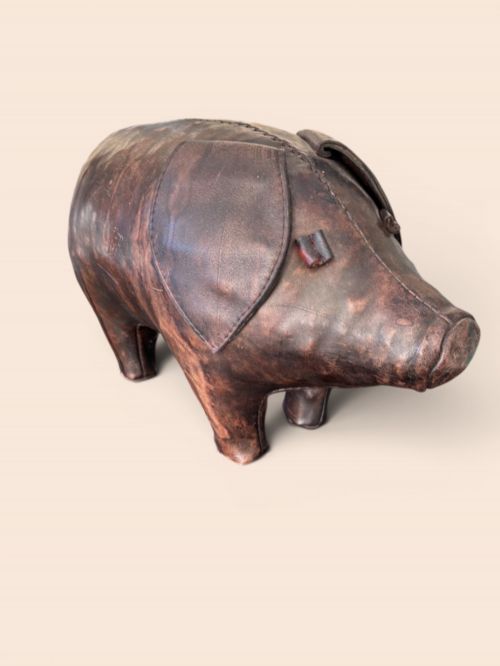
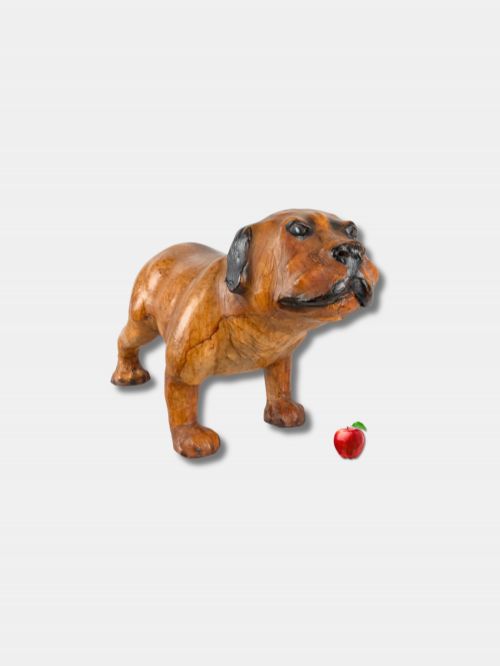
They do, though each surfaces once and not again. A footstool modelled as a pig, another as a dog, a pair topped in elephant hide.
Also a folding campaign stool, a metamorphic gout stool and a pair of bronze ships' bar stools.
How many dealers sell these?
Ninety-five different dealers have listed antique leather stools on Sellingantiques, at a rate of roughly twenty-six a year.
That spreads the category thinly across the trade rather than concentrating it in a few specialist hands.