



Antique Duet Stools
A duet stool is a long, wide-topped seat made for two players side by side at one keyboard, with a hinged or lift-off box seat over a shallow well for sheet music.

Antique Duet Stools
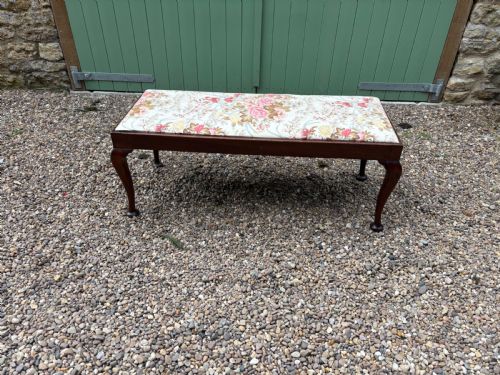
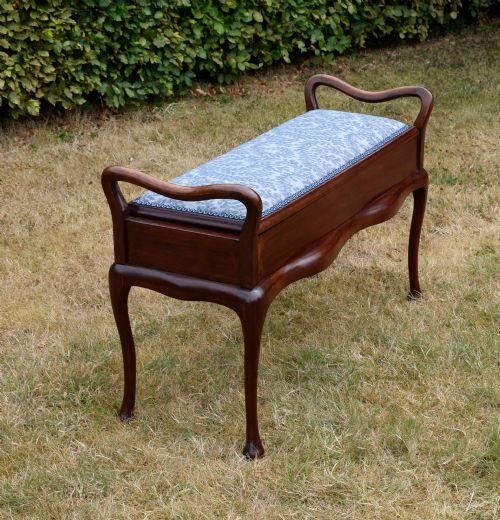
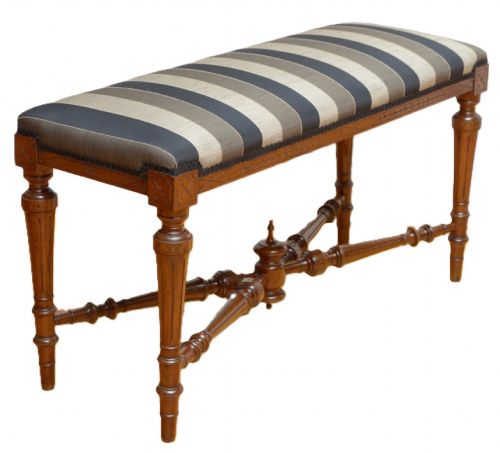
The form is simple: a long upholstered top on four legs, occasionally six, with the seat hinged or lifting off over a shallow compartment. The music well is the point of it. Two players, teacher and pupil or duettists, share one wide seat at a single instrument.
The default stool on Sellingantiques is Edwardian or late Victorian English mahogany, titled as a piano stool. Mahogany is named in nearly half of the titles and piano in the same share; the two words together describe what you will meet most often. Walnut and rosewood make up a good part of the rest, including burr and figured walnut.
Dates run from 1800 to 1930, but the mass sits either side of 1900. Edwardian, the 1900s and the 1890s together account for more than a third of everything recorded, while only four listings fall in the 1860s. Where a title says only "Victorian" or "19th Century", the dealer hasn't committed to a decade, and a style word in a title doesn't always match the year given.
Not every one is sold for the piano. One in seven is listed as a window seat or bench, the same long form offered for a bay window or a hall. Smaller groups run to Art Deco and 1920s-30s stools, painted and japanned finishes, drawered examples and the occasional adjustable seat.
What Sets Them Apart
Timber does most of the work. Plain mahogany and oak sit at the bottom of the range; burr and figured walnut, rosewood and satinwood cluster in the upper half. Decoration follows the same line. Inlay appears in around one in seven titles, and inlaid rosewood and inlaid mahogany stools sit well above their plain equivalents, with marquetry and painted work a further step up.
A named style or movement lifts a stool. Aesthetic Movement, Art Nouveau, Arts and Crafts, Art Deco, Queen Anne and Regency-style attributions turn up in ones and twos, and they land in the upper half of the range. Origin matters at the extremes: French pieces are named in a handful of titles, and the ormolu-mounted French Empire stool sits at the very top.
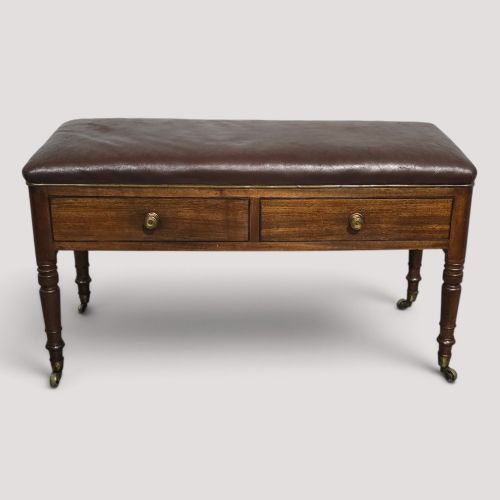
Anything beyond the plain box carries a premium. Adjustable seats are unusual, only two in the sampled range, both above the middle. A six-drawer ebonised stool and examples described as having storage each appear once. Brass feet and applied metal mounts push a stool up rather than down.
Antique Duet Stools Retail Price Guide 2026
Typical UK retail prices for duet stools, calculated from the Sellingantiques database of over a million retail prices indexed since 2003. This retail price guide relies exclusively on Sellingantiques data; no external sources or auction records are used, so the figures do not describe the wider market.
Duet stools have been listed on Sellingantiques since 2010.
The Antique Duet Stools Glossary
- Box seat
- A hinged or lift-off top over a shallow compartment for sheet music, written up as "Box Seat" or "hinged seat".
- Window seat
- The same long form sold for a bay window rather than a piano; it appears in 26 titles.
- Inlaid
- Contrasting wood let into the frame or top rail. Named in 31 titles, and often paired with mahogany or rosewood.
- Adjustable
- A rising or height-adjustable seat mechanism. Only two stools in the sampled range are described this way.
- Burr walnut
- Figured veneer cut from a knotted growth, prized for its swirled pattern and found toward the top of the range.
- Freestanding
- Dealer wording for a stool finished on all sides, rather than made to stand against the piano with one side hidden.
Antique Duet Stools: Frequently Asked Questions
How is a duet stool different from a piano stool?
A duet stool is the long form, wide enough for two players at one keyboard. The single round or square piano stool seats one.
In practice the wording overlaps. Nearly half the titles on Sellingantiques use "piano stool" for the long two-seater, and "piano bench" and "recital bench" turn up as well.
What wood are they usually made from?
Mahogany dominates. It is named in 97 of 199 titles, most often on Edwardian and late Victorian stools.
Walnut accounts for around 30 titles and rosewood 17, with burr and figured walnut among them. Satinwood, oak and ebonised finishes appear in smaller numbers.
When were most duet stools made?
The dated field runs from 1800 to 1930, with 128 of the 199 listings carrying a clean year.
The weight sits either side of 1900. Edwardian, the 1900s and the 1890s together make up more than a third of everything recorded. Only four listings fall in the 1860s, so early Victorian and pre-Victorian examples are scarce.
Do they have storage inside?
Commonly, yes. The standard form has a hinged or lift-off top over a shallow well for sheet music, and "seat" and "upholstered" wording runs through the titles.
Drawered versions are the exception. A six-drawer ebonised stool appears once across the archive samples.
Can a duet stool be used away from the piano?
Often it is. One in seven listings on Sellingantiques is sold as a window seat or bench rather than for a keyboard.
The long upholstered top suits a bay window, a hall or the end of a bed. Dealers have also used "recital bench" and, once, "fireside carriage rest".
Are any duet stools marked with a maker's name?
Not as a pattern. Nothing in this archive points to named workshops, and titles describe timber, period and decoration instead.
What does get named is origin. English appears in 17 titles and French in 11, the French group including a gilt stool and an ormolu-mounted Empire one.