



Antique Gilt Stools
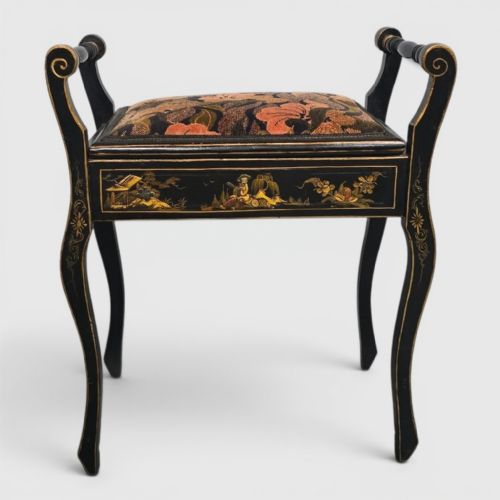
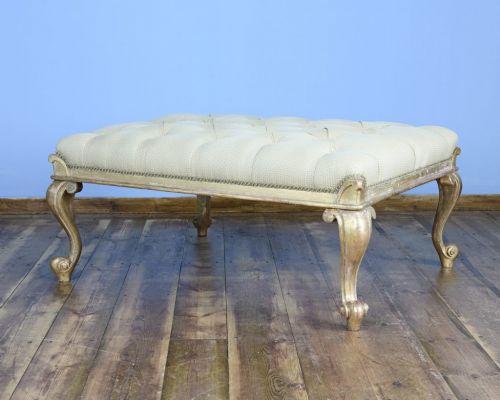
A backless seat with a gilded frame, made for the formal drawing room and salon, and later for ordinary Victorian and Edwardian rooms as footstools, window seats and piano stools.

Antique Gilt Stools
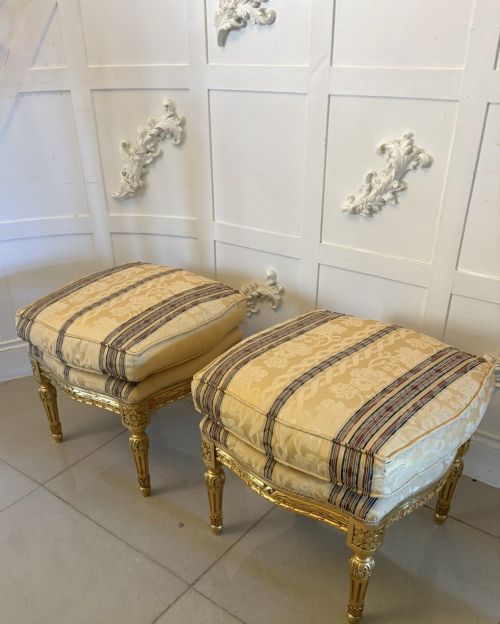
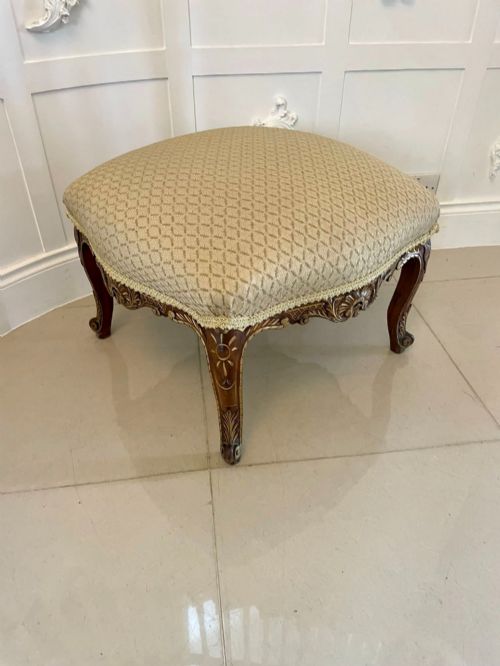
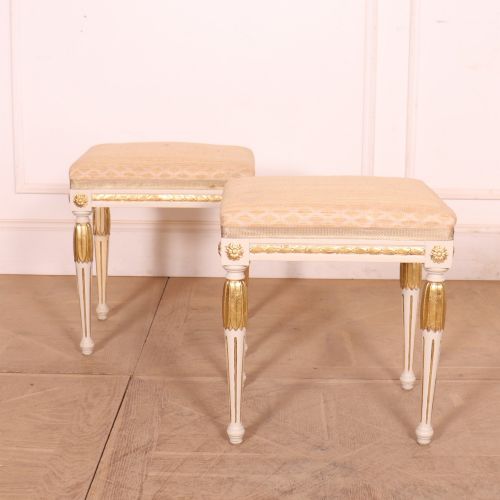
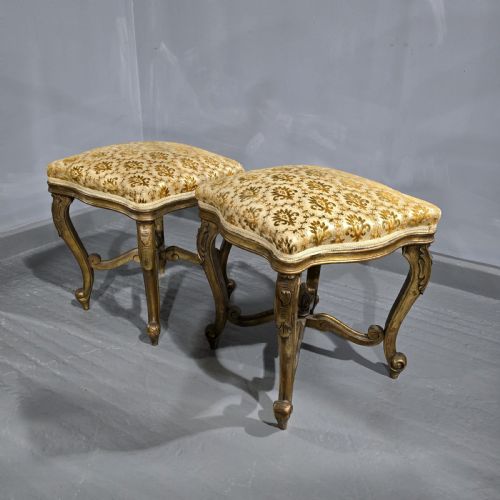
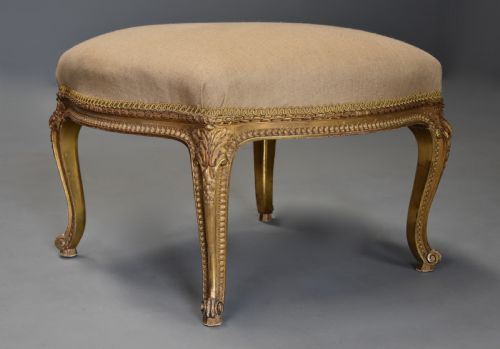
Two finishes sit under the one heading. At one end are fully gilded frames, carved wood or gesso-and-gilt, gold all over. At the other are parcel-gilt pieces, where only the mouldings and carving are gilded and the walnut, mahogany, satinwood, rosewood or ebonised wood is left showing.
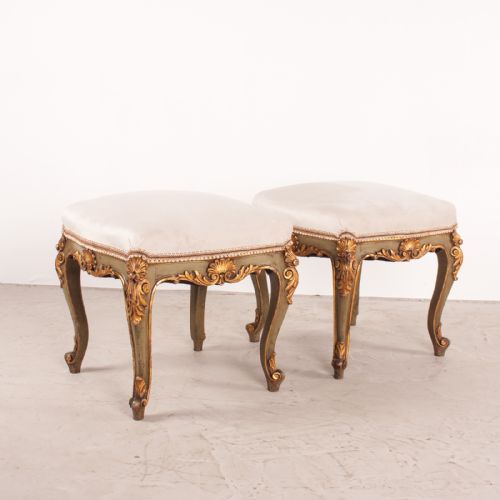
The form you are most likely to meet is a single small upholstered stool of 19th-century French or Victorian type. 'French' appears in around a quarter of titles on Sellingantiques and '19th' in a sixth, with 'parcel', 'victorian', 'carved', 'giltwood' and 'footstool' following behind. Fifteen of 116 titles are pairs, so most come singly.
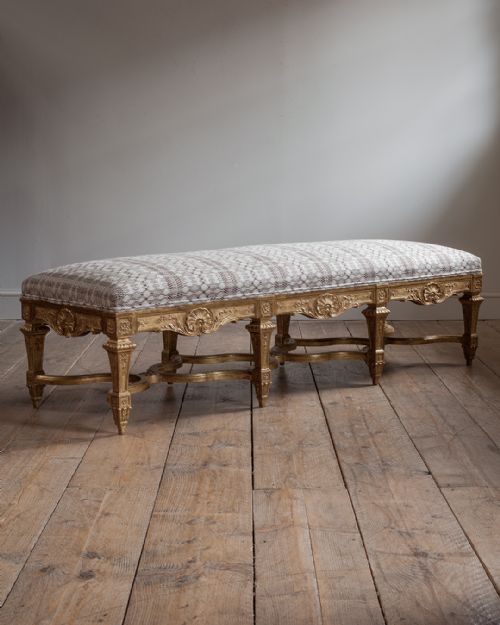
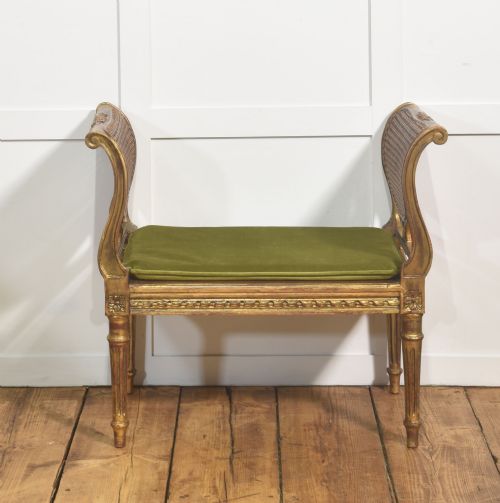
Fully gilded giltwood stools are the largest single group. Parcel-gilt stools on a show-wood frame make up roughly a sixth. Window seats and long stools, often with one or two scrolled ends, account for about a tenth, and painted and gilded stools, including Gustavian-style and Swedish original painted examples, a little under that. X-frame and curule stools form a smaller, steady seam, and piano, music and duet stools a minor one.
Dating runs 1800 to 1930 and no further at either end. A third of the category is given only as '19th Century', so the decade often isn't on record. Where decades are named they gather in the 1880s, then the 1860s and 1920s. Origins in titles run French, Italian, English, Continental and, least often, Swedish.
Where The Range Splits
Carving does most of the work. The upper reaches of the archive are carved giltwood, curule and serpentine six-leg frames; the bottom is small square footstools and painted parcel-gilt ones with little shaping to them. 'Carved' turns up in a good share of titles, and it tends to travel with the higher-priced end.
Number and scale come next. Pairs sit well above single stools of comparable description, and one set of four is the largest multiple in the archive. Titles reaching for 'large', 'long' or 'grand scale' sit high, whether that's a long Italian gilt carved stool or a grand-scale parcel-gilt footstool.
Named form beats generic. Curule, X-frame, Empire, Louis XIV and XVI and Baroque descriptors cluster in the dearer half, while a bare 'gilt stool' sits mid to low. Named secondary materials pull the same way: satinwood, rosewood, mahogany with ormolu mounts, silvered and polychrome decoration all appear in the upper part of the range.
Antique Gilt Stools Retail Price Guide 2026
Typical UK retail prices for gilt stools, calculated from the Sellingantiques database of over a million retail prices indexed since 2003. This retail price guide relies exclusively on Sellingantiques data; no external sources or auction records are used, so the figures do not describe the wider market.
The most expensive gilt stool ever sold on Sellingantiques was an Italian parcel-gilt, polychrome-decorated and silvered 'grotto' stool of about 1875, sold in November 2023.
The Antique Gilt Stools Glossary
- Parcel gilt
- Partly gilded, with gold on the carving and mouldings and the wood left showing. It appears in 18 titles, often alongside walnut.
- Giltwood
- A carved wooden frame gilded overall, named in 10 titles. Gesso, the chalk-and-glue ground laid over the carving before gilding, is named in a couple more.
- Window seat
- A long low stool for a window recess, commonly with one or two scrolled ends. Ten titles use it, and 'long stool' does much the same job in others.
- Footstool
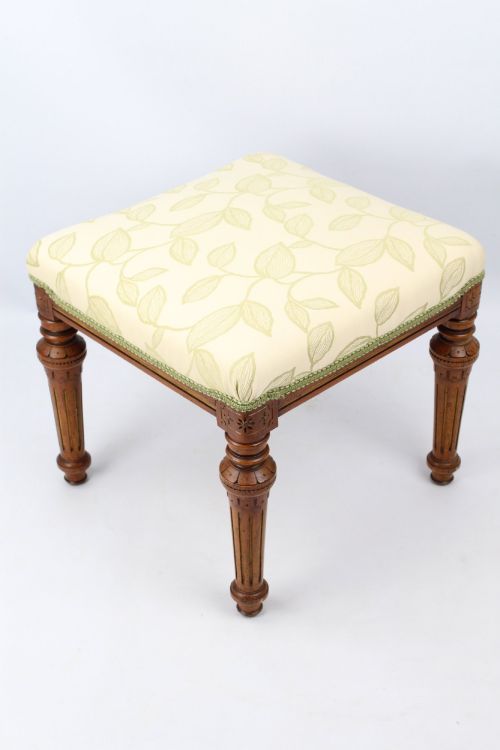
- A small low stool for the feet, in 10 titles and written both as one word and two. Small square ones occupy the bottom of the range.
- X-frame and curule
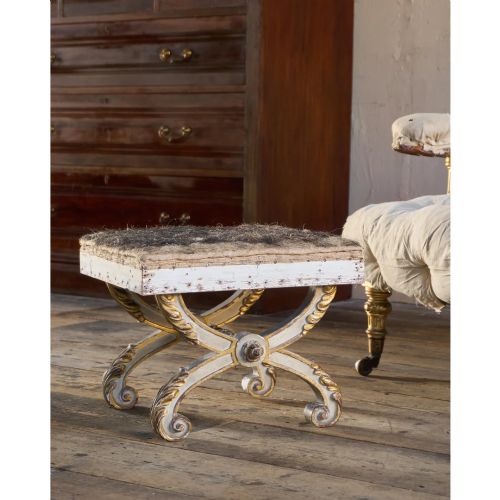
- Supports that cross in an X seen from the side; curule is the classical version, after the Roman seat, and reaches the top of the range.
- Fender stool, gout stool, duet stool
- A long stool for the hearth, an adjustable or rocking footstool for a raised leg, and a wide piano stool for two players.
Antique Gilt Stools: Frequently Asked Questions
How often do gilt stools come up for sale?
Around a dozen come to market a year on Sellingantiques, out of 116 listings recorded in the category.
Sixty-four different dealers have listed one, close to a dealer apiece, so no single seller keeps a standing run of them.
What does parcel gilt mean on a stool?
It means partly gilded. The gold is confined to the carving and mouldings, and the timber underneath is left on show.
Walnut is the wood most often named with it, though satinwood, mahogany, rosewood and ebonised frames all turn up. Around 18 titles use the term.
Are gilt stools usually sold in pairs?
No. Fifteen of the 116 titles are pairs or sets, so most are offered singly.
One set of four gilt stools is the largest multiple in the archive. Pairs sit well above single stools of comparable description.
Which periods do these stools date from?
The dated field runs from 1800 to 1930 and nothing falls outside it. The earliest is a gilt curule stool given as 1800; the latest a pair of Italian gilt wood stools of 1930.
Only 57 of the 116 listings carry a clean year. A third are dated simply as '19th Century', with Victorian, Regency and Edwardian labels making up a further handful.
Do piano stools appear in this category?
They do, as a small recurring seam alongside music and duet stools.
The samples include an adjustable screw-top piano stool, and one with ormolu mounts that sits near the top of the range.
Were any gilt stools made by known firms?
The archive doesn't support a maker for this category. Very few names appear in titles at all, and those that do are one-off attributions from single dealers.
What identifies a stool here is form, origin and finish: curule or X-frame, French or Italian, giltwood or parcel gilt.