
Antique Walnut Stools
A small walnut-framed seat, from a low fireside footstool to a long window seat, made for the corners of the house where a chair was too much.

What Are They?
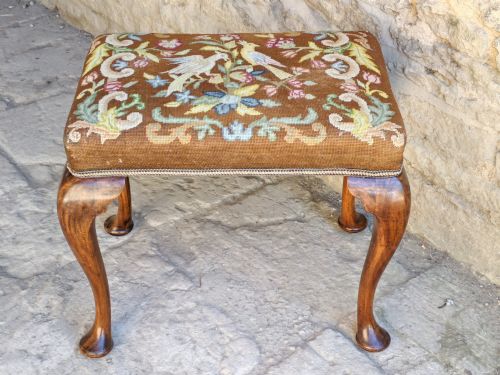
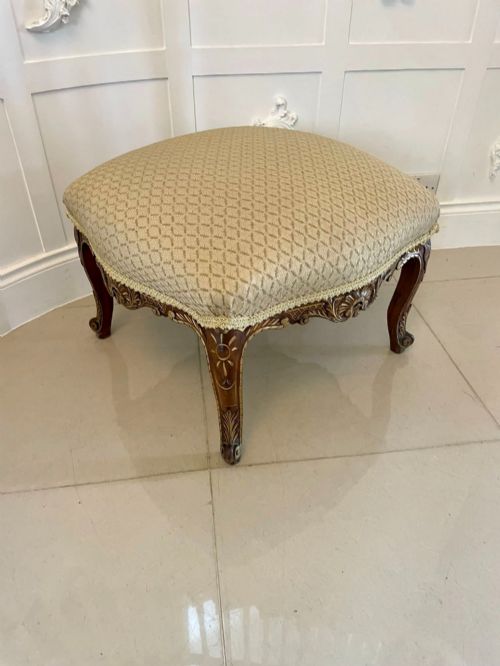
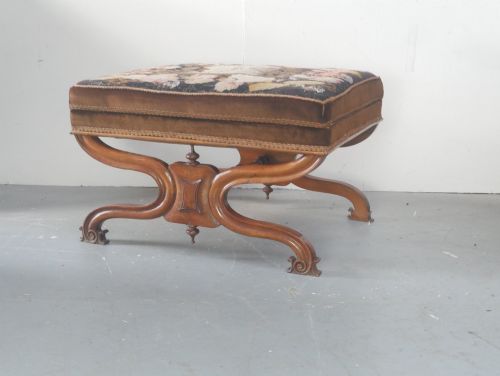
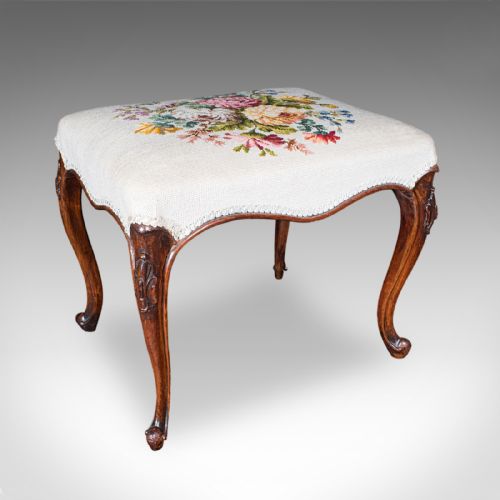
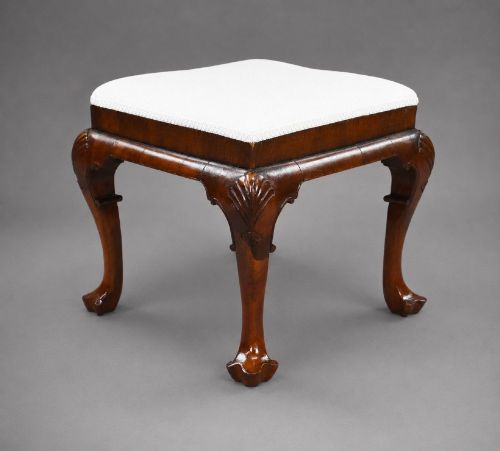
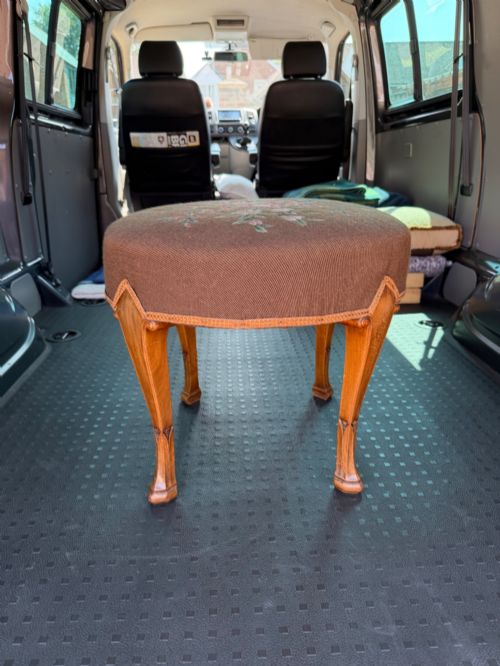
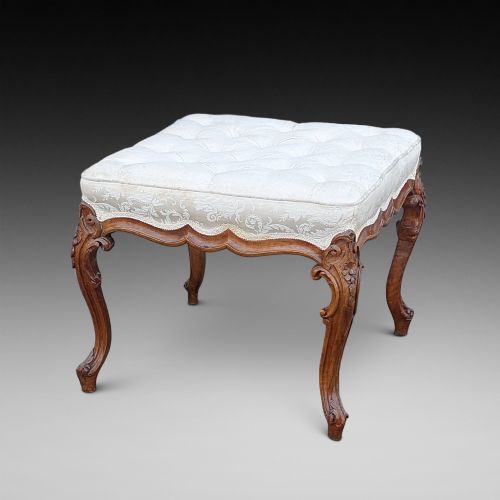
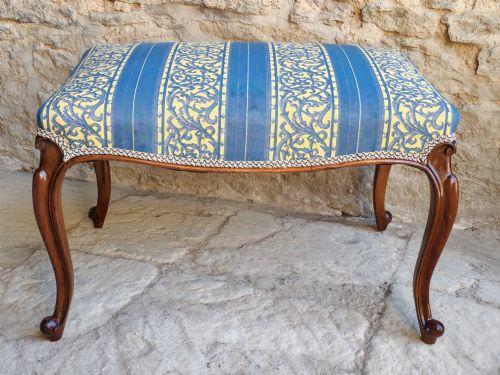
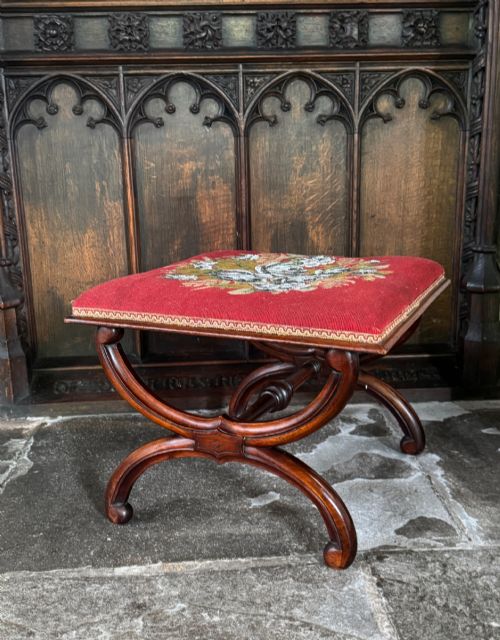
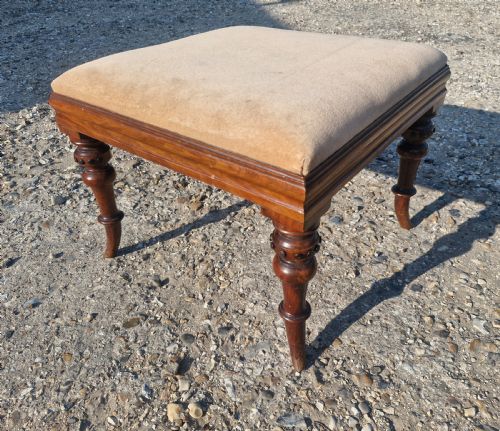
Walnut stools cover a wide spread of small seat furniture on carved or turned walnut frames, with upholstered or caned tops. Titles name the timber, walnut, burr walnut, figured walnut, far more often than any construction detail, and mention the covering where it counts: leather, needlepoint, tapestry, cane, buttoned.
The form you are most likely to meet is a Victorian walnut stool with an upholstered top. Of 894 listings, 277 say Victorian, and 138 more are given only as 19th Century. Carved frames run through 120 titles, cabriole legs through 68, and footstools account for over a hundred between the two spellings.
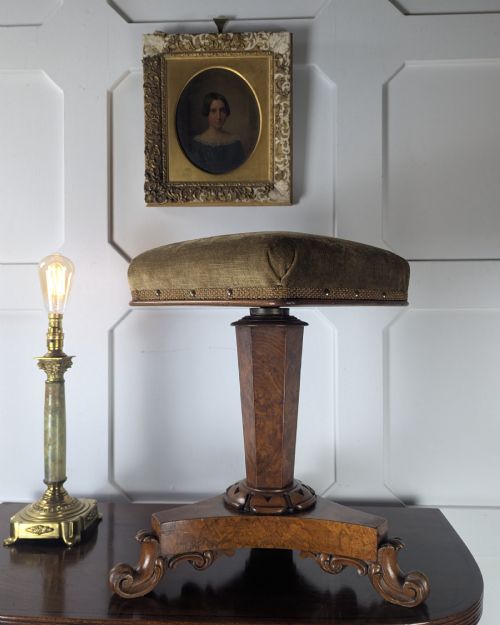
Piano stools are the largest named function, at 101 titles, with the mechanism split between adjustable or rise-and-fall and revolving. Dressing table stools, Queen Anne and Georgian revival cabriole-leg stools, and long window seats and centre stools make up the rest, the last being the big end of the size range: one Scottish stool at 120cm wide, one buttoned stool described as 5ft long.
Dates run 1700 to 1940, but only 506 listings carry a clean year. Where decades are given they cluster in the 1860s to 1890s and again from 1900 to 1930, the 1920s being the single best-represented decade. Revival naming is common, so a title saying Queen Anne or George II may carry a date of 1900 to 1930: the style word and the date are separate claims.
What Separates Them
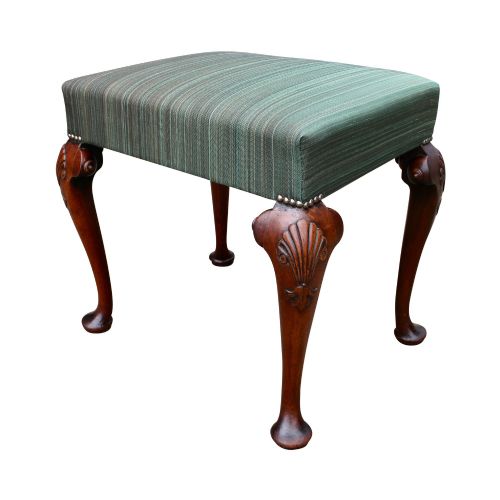
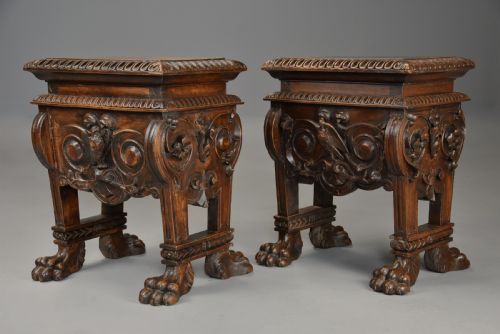
Carving is the clearest divide. The word appears in 120 titles and recurs through the upper half of the range, with shell, gothic, cherub and dog's-head work on knees and rails. Timber figure works the same way: burr and figured walnut are called out as selling points, and solid walnut is set apart from walnut-framed or veneered pieces.
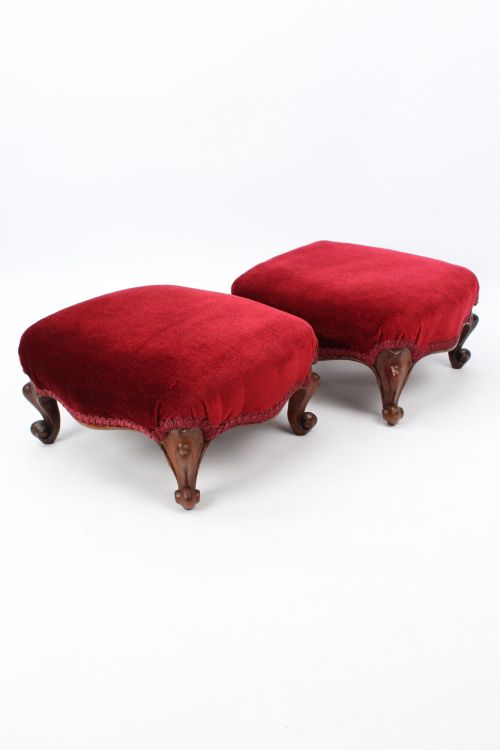
Scale pushes a stool up. Large, long and centre cluster at the top, taking in country-house stools, three-seaters, duet stools and window seats. Pairs do the same job, and 71 titles say pair; matched footstools, window seats and cabriole-leg stools sit well above their single equivalents.
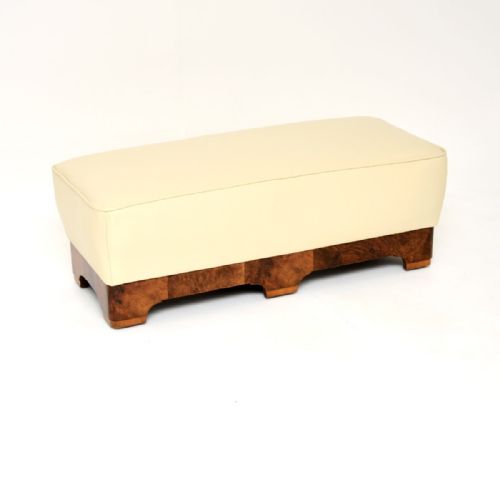
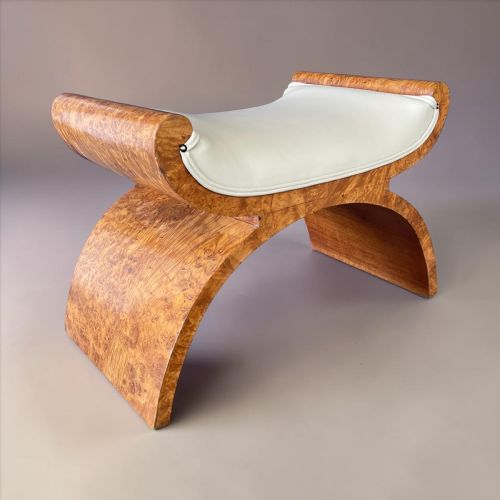
The seat covering can carry a piece on its own. Original needlework, original oilcloth, original fabric, buttoned leather and petit point are all singled out in titles, with leather named in 43. At the very top sit the earliest and oddest things: 17th and early 18th century stools, Italian carved grotto work, and Art Deco pieces given only as attributed.
Retail Price Guide 2026
Typical UK retail prices for walnut stools, calculated from the Sellingantiques database of over a million retail prices indexed since 2003. This retail price guide relies exclusively on Sellingantiques data; no external sources or auction records are used, so the figures do not describe the wider market.
Dates on Sellingantiques run from 1700 to 1940, from William and Mary examples at one end to Art Deco dressing stools at the other.
The Antique Walnut Stools Glossary
- Footstool
- A low stool for resting the feet, often circular or domed and usually upholstered. Both spellings, footstool and foot stool, turn up in titles.
- Adjustable or rise and fall
- A piano or music stool whose seat screws up and down on a central column. Thirty-seven titles use the term.
- Revolving or swivel
- A seat that turns on a threaded column, the usual alternative to a fixed piano stool, named in 29 titles.
- Duet stool
- A long piano stool wide enough for two players, in 28 titles and sitting at the larger end of the size range.
- Cabriole leg
- An S-curved leg, usually carved at the knee. It appears in 68 titles, often alongside Queen Anne or George in the same line.
- Burr walnut
- Figured veneer cut from a burr growth. Twenty-six titles say burr and 11 say figured, both used as selling points.
- Centre stool
- A larger stool meant to stand free in a room rather than against a wall, in 21 titles.
Frequently Asked Questions
How many come up for sale each year?
Around 89 walnut stools come to market on Sellingantiques in a year, drawn from an archive of 894 listings.
A total of 185 different dealers have listed one, so this is a form almost any general furniture dealer will have handled at some point.
What does a Queen Anne style stool actually mean?
It describes the shape, usually a cabriole leg with a carved knee and a drop-in or stuffed seat. Seventy-four titles use the name.
Many of those carry dates of 1900 to 1930, so the style word and the date are separate claims. The revival group is concentrated in the early 20th century rather than the period itself.
Why are so many dated only as Victorian?
Only 506 of the 894 listings carry a clean year. The rest are dated by reign or century.
Victorian alone accounts for 148, with a further 138 given as 19th Century, and others as Regency, Georgian, Edwardian or bare 18th Century. Roughly a third of the archive is dated that way.
Are piano stools common in this category?
They are the single largest named function, at 101 titles out of 894.
The mechanism splits two ways: 37 are described as adjustable or rise-and-fall, screwing up and down on a central column, and 29 as revolving or swivel.
Do walnut stools sell in pairs?
Often. Seventy-one titles say pair, and matched sets are a real part of the trade rather than an occasional thing.
Paired footstools, window seats and cabriole-leg stools all recur, including one pair given as Queen Anne period.
What are the unusual forms that turn up?
Odd shapes appear once and nowhere else: an ecclesiastical prayer stool, a commode stool, a cock-fighting stool, a knotted-rope stool, a triangular stool and a Thebes stool.
Italian carved grotto stools are the rarest recurring origin, appearing a handful of times at the very top of the range alongside 17th-century Italian and early 18th-century English work.