

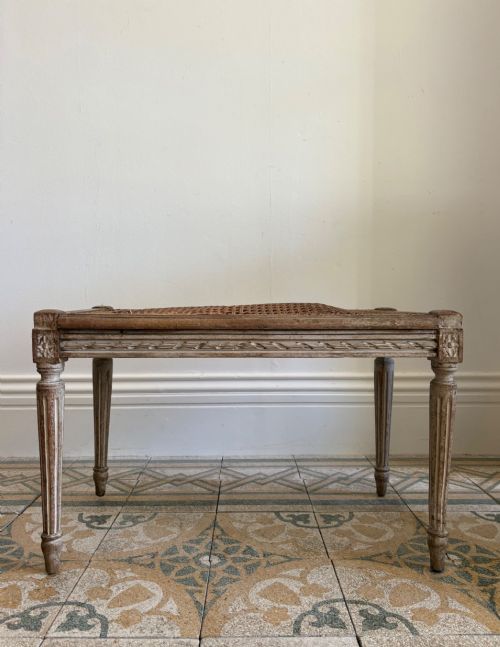
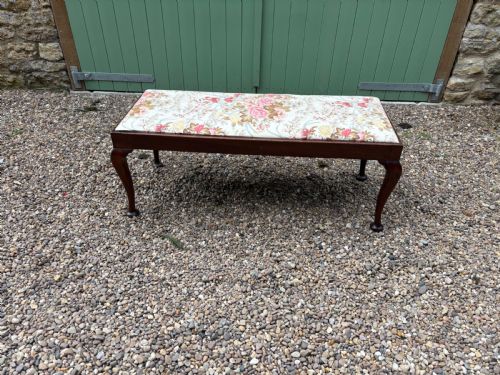
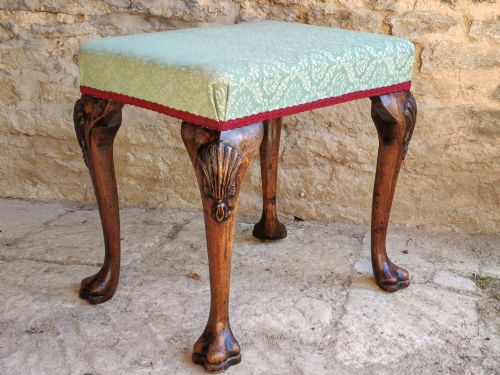
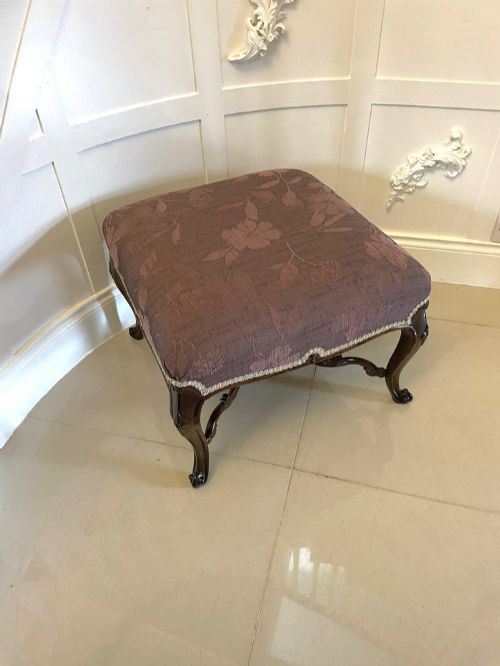
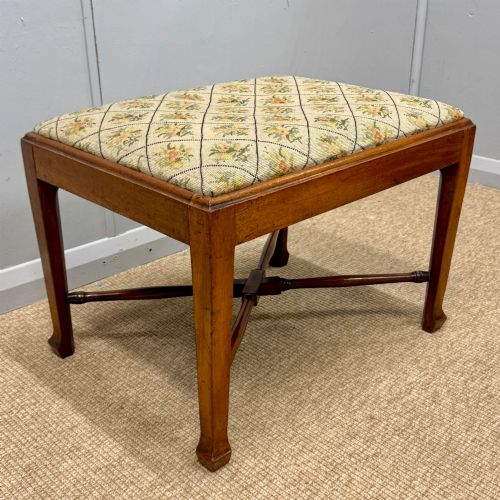
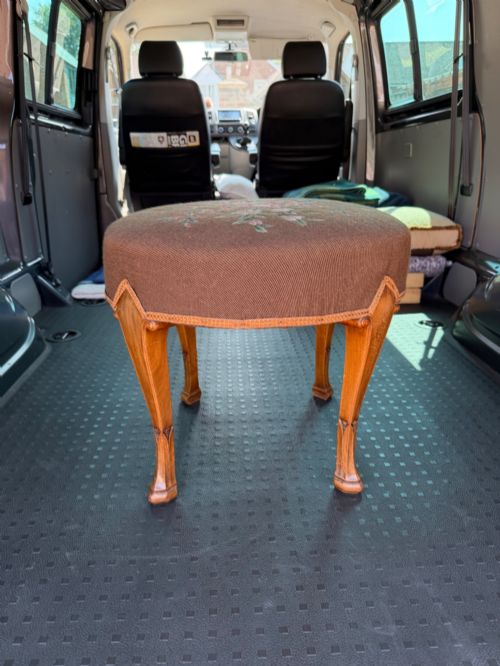
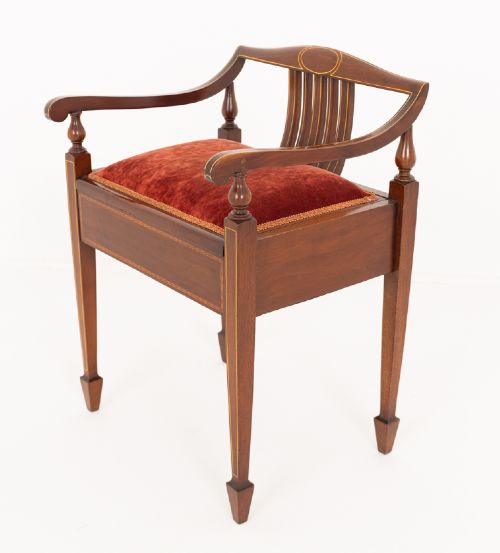
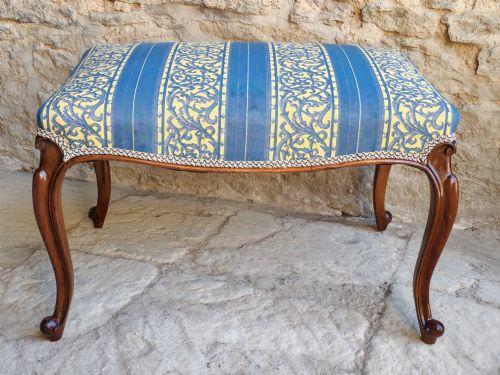
Antique Piano Stools
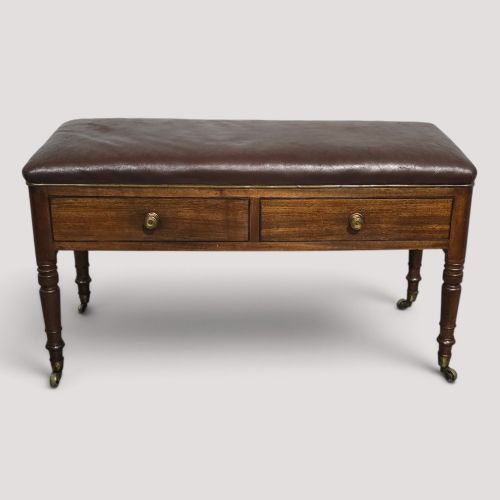
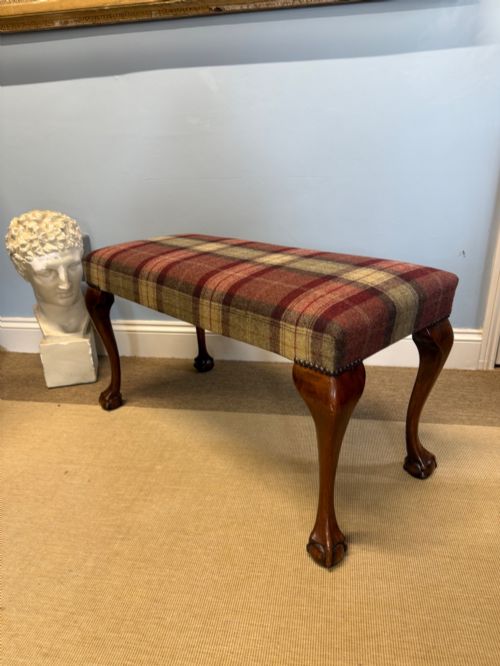
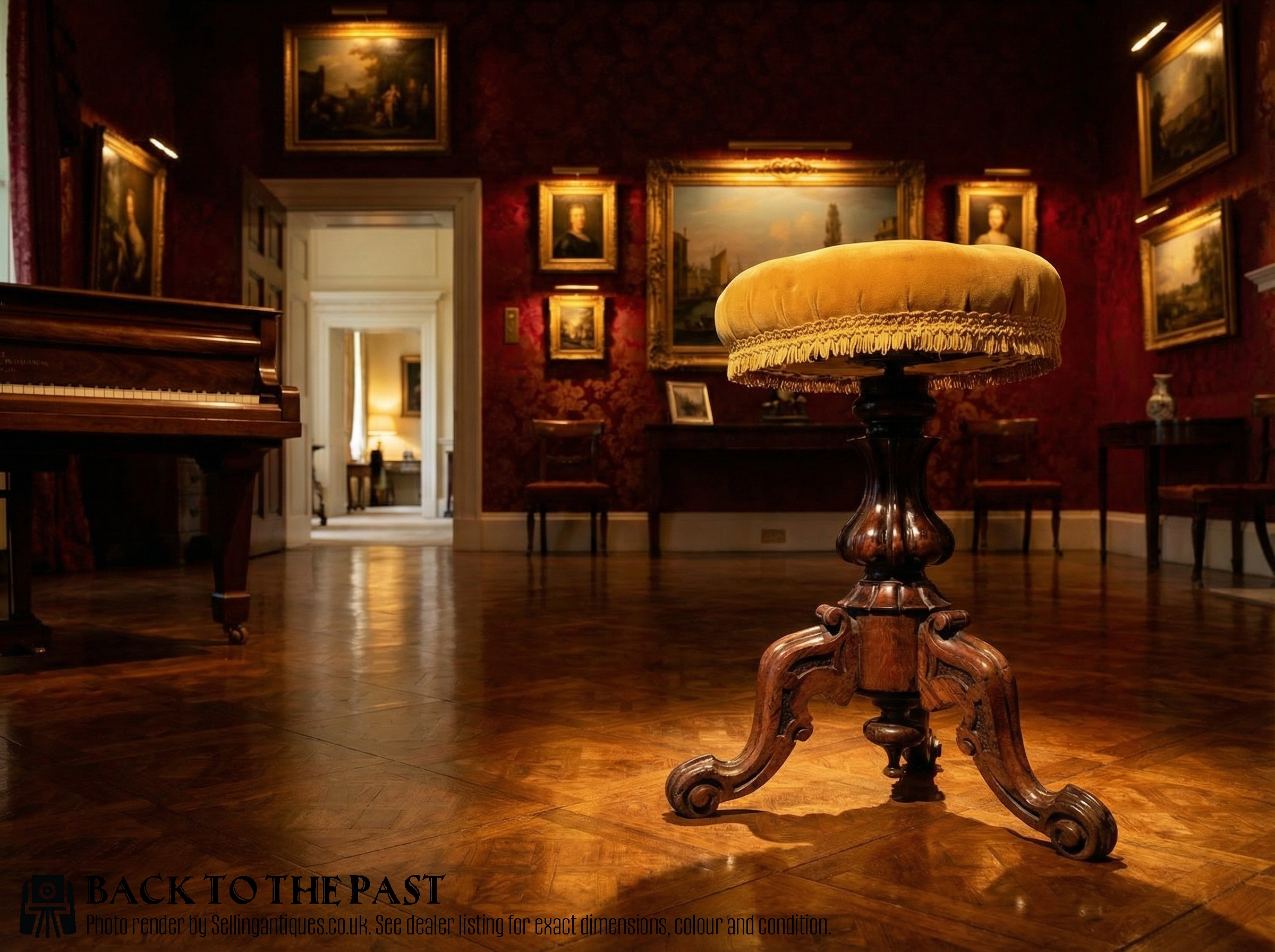
A seat made for a keyboard player, usually in polished mahogany, walnut or rosewood, with either an upholstered top or a hinged lid over a compartment for sheet music.
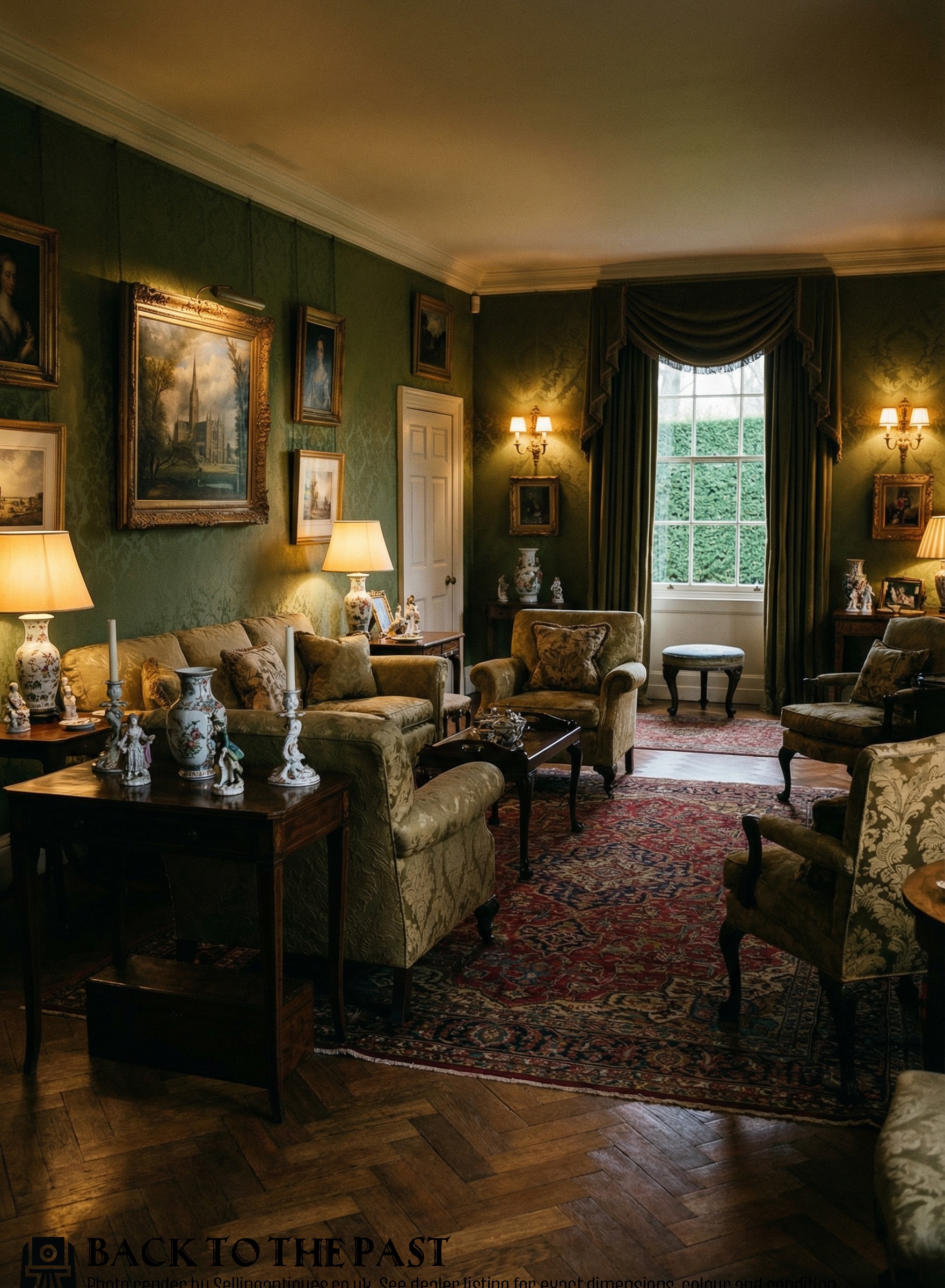
Antique Piano Stools
Purpose-made keyboard seating became a standard domestic article as the piano entered middle-class homes from the late 18th century. The height-adjustable screw stool answered the need to set a player correctly at the keys; box seats and duet forms followed, adding storage for music and room for two.
The form you will meet most often is the single fixed-height stool in mahogany with a lift-up upholstered seat over music storage. Mahogany is named in 266 of 678 titles on Sellingantiques, walnut in 124 and rosewood in 81. Oak turns up in only 16, mostly on Arts and Crafts examples.
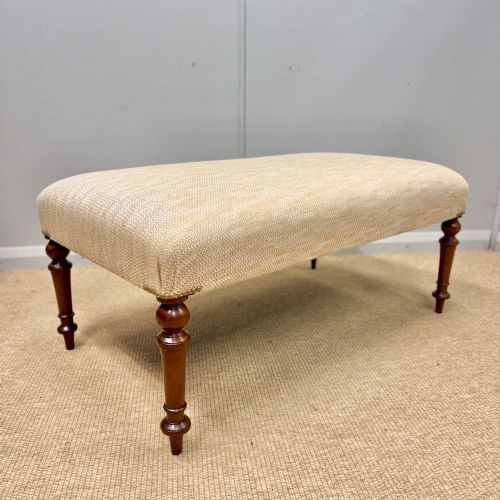
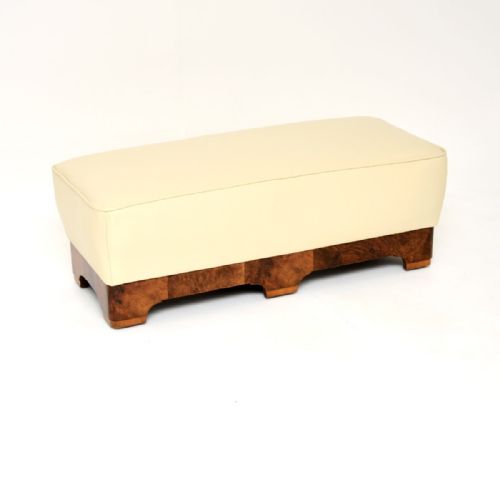
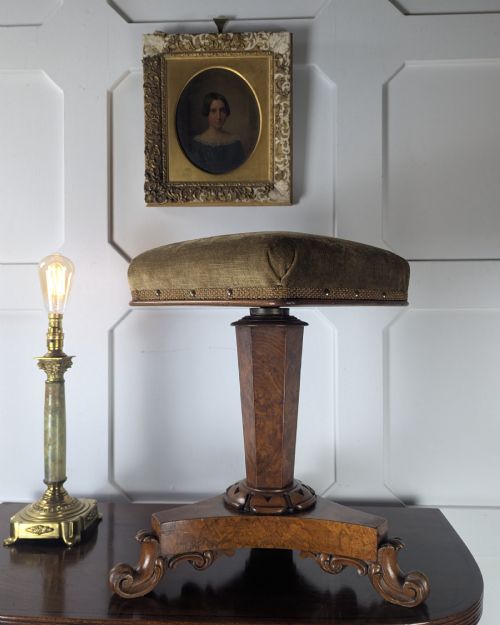
Adjustable stools are the main alternative, described as adjustable, revolving, swivel, screw top or rise and fall, raised on a central thread or turning on a column. Duet stools, the long two-seater for four-hands playing, account for one title in seven and repeatedly double as window seats in the same title.
Victorian and Edwardian pieces make up over half the archive, with a 19th Century bucket carrying no decade, Regency behind them and a small 1930s tail. The heading also carries dressing-table stools, music chairs and general upholstered stools, sometimes named alongside piano stool in one title.
Where The Range Sits
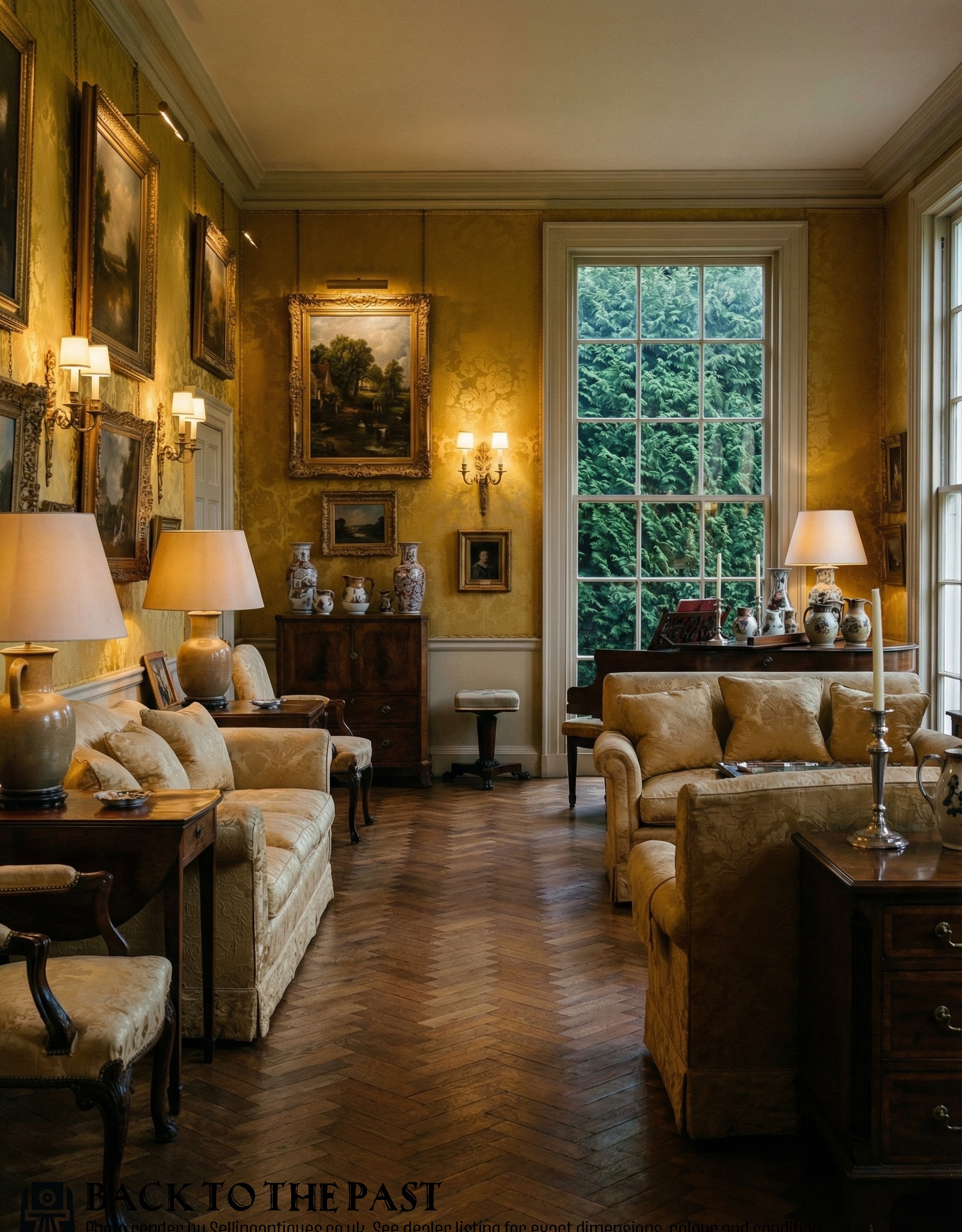
Timber sets the floor and the ceiling. The bottom of the range is occupied almost entirely by plain Edwardian and Victorian mahogany stools whose titles carry no word beyond the wood. Satinwood, burr walnut, figured walnut and birds-eye maple sit at the top, along with Art Deco pieces.
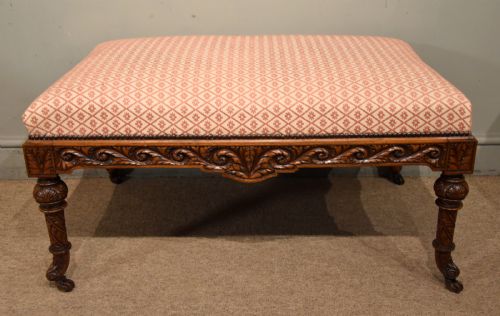
Decoration then does the work. Carving appears in 36 titles and inlay in 64, with marquetry and brass inlay recurring toward the upper end. Chinoiserie and lacquer turn up perhaps three times in the whole archive, ormolu mounts twice, and both sit at the very top.
Width, mechanism and period depth each lift a stool clear of the mass. Duet stools concentrate in the upper half, patent and screw mechanisms above plain four-legged seats, and Regency, William IV and Georgian labels above the Victorian and Edwardian bulk.
Antique Piano Stools Retail Price Guide 2026
Typical UK retail prices for piano stools, calculated from the Sellingantiques database of over a million retail prices indexed since 2003. This retail price guide relies exclusively on Sellingantiques data; no external sources or auction records are used, so the figures do not describe the wider market.
Mahogany is the timber named most often in piano stool titles on Sellingantiques, with walnut second and rosewood third. Oak turns up rarely.
The Antique Piano Stools Glossary
- Duet stool
- The long, two-person seat for four-hands playing, named in 100 titles and often offered as a window seat in the same breath.
- Rise and fall
- Seat raised or lowered on a central screw thread. The two words usually appear together in a title.
- Box seat
- A hinged top over a compartment beneath, which is why storage and music recur through the titles. Also written as lift-up seat.
- Music locker
- The dealer term for that enclosed compartment under the seat, holding sheet music.
- Inlaid
- Decorative stringing or veneer patterning, in 64 titles and heavily weighted toward Edwardian stools.
- Ebonised
- Wood stained black in imitation of ebony, in nine titles, mostly on Aesthetic Movement examples.
Antique Piano Stools: Frequently Asked Questions
What wood are they usually made from?
Mahogany is the default, named in 266 of 678 titles on Sellingantiques, and it pairs constantly with Victorian and Edwardian in the same line.
Walnut follows in 124 titles and rosewood in 81. Oak is scarce at 16, and where it appears it tends to sit on Arts and Crafts examples, plainer in outline.
How does an adjustable stool work?
The seat is raised and lowered on a central screw thread, or turns on a column. Titles describe this as adjustable, revolving, swivel, screw top or rise and fall.
Adjustable appears in 109 titles and revolving in 63, often on circular seats. The listings name the mechanism rather than describing how it was built.
Why are dressing stools listed under piano stools?
The two forms overlap in practice. Dressing appears in 39 titles, and plain descriptions such as Victorian Mahogany Stool or X-Frame Dressing Stool sit under the same heading.
Window seats do the same thing from the other direction, with several titles reading Duet Piano Stool or Window Seat. That group has grown in current stock.
What period do most of them come from?
The dealer-entered dates run from 1800 to 1930. Victorian and Edwardian dominate, and decade tags cluster through the 1860s to the 1910s.
Regency accounts for a smaller group, and the 1930s a distinct tail in walnut, birds-eye maple and leather. Treat 19th Century, Victorian and Edwardian as ranges rather than dates, since a fair number of titles use c.1880 or circa 1900 wording.
Are there well-known makers in this category?
No. Names surface only occasionally in the archive, and none recurs across enough dealers to make this a maker-led field.
Where a name does appear it comes stamped, on a label, or as an attribution. About 69 stools are listed a year on Sellingantiques and 150 different dealers have handled them, which is a category general furniture dealers touch rather than a specialism.
Do unusual examples ever appear?
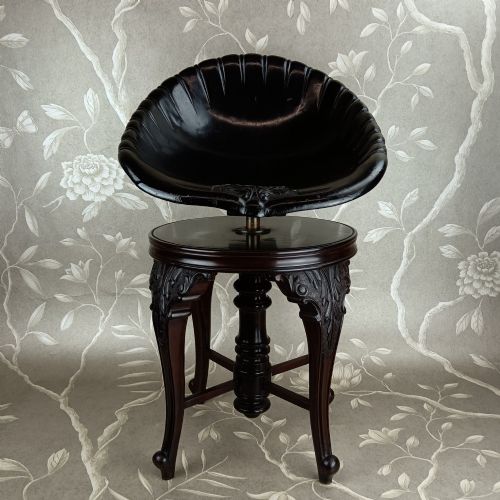
They do, as single entries rather than a recognisable group. The archive holds a papier mache and mahogany revolving harpist's stool, a carved mahogany revolving grotto stool and a six-drawer ebonised duet stool.
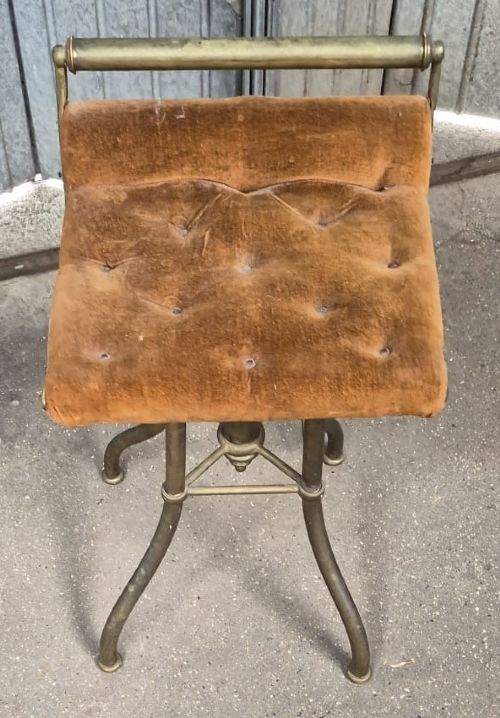
Also recorded: a brass and steel music stool and a chapel organist's stool. Non-English origins are close to absent, with single Venetian, Swedish, Canadian and American pieces against 41 titles that simply say English.