

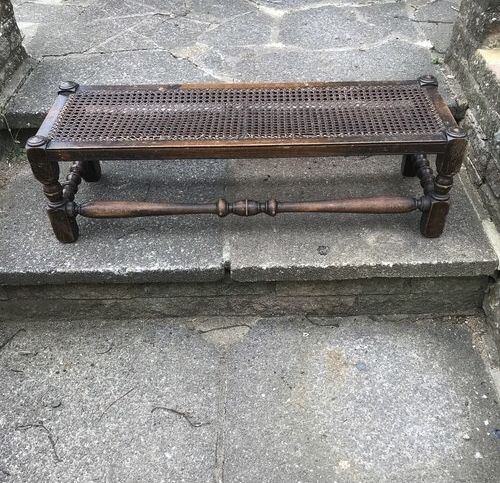

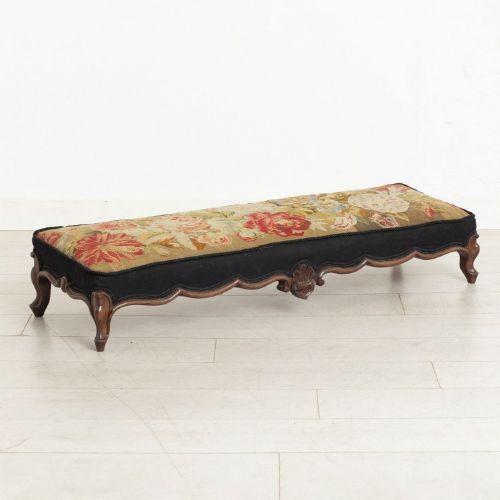

Antique Long Stools
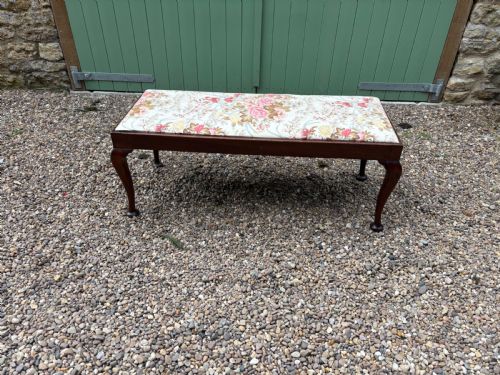
A long stool is an elongated bench-form seat on four or more legs, low enough to work as a footstool, a fender stool or a window seat.
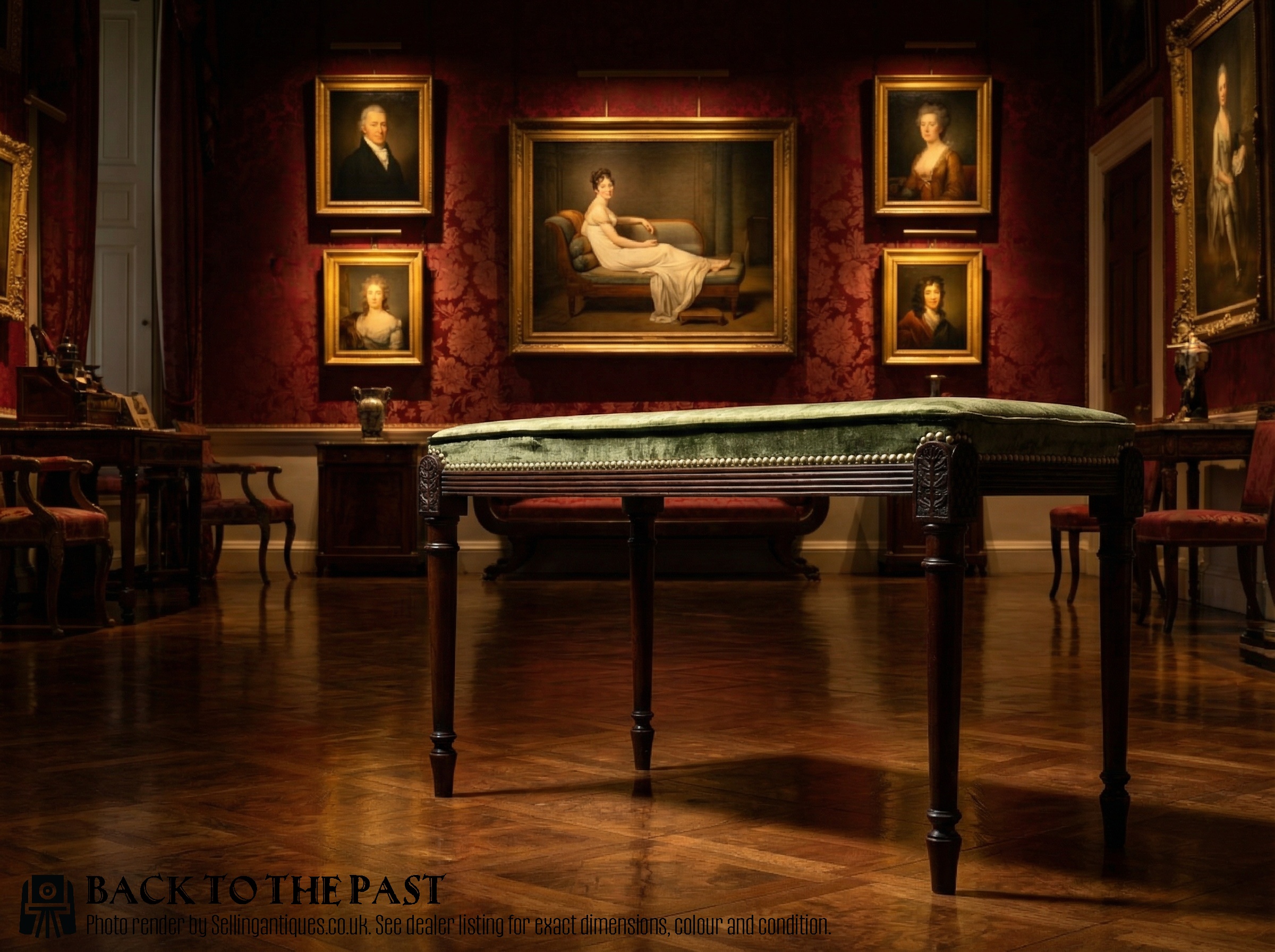
Antique Long Stools
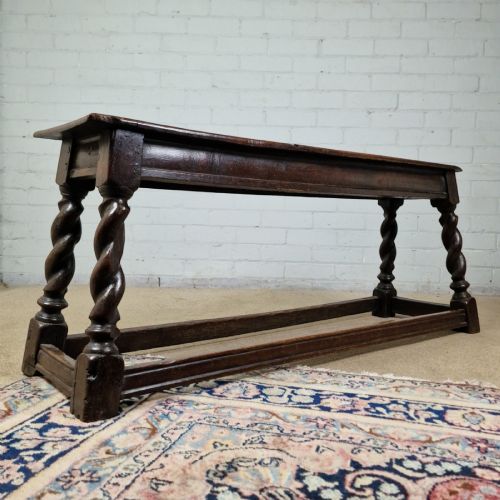
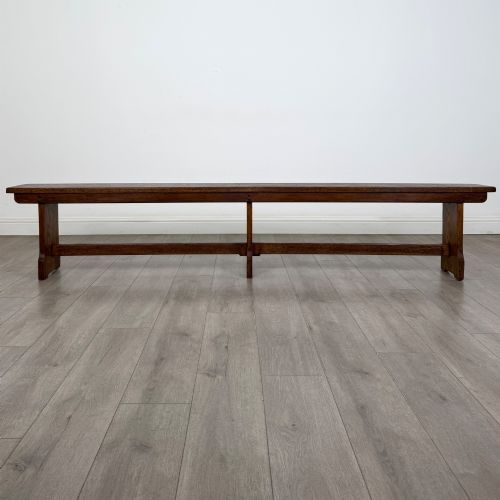
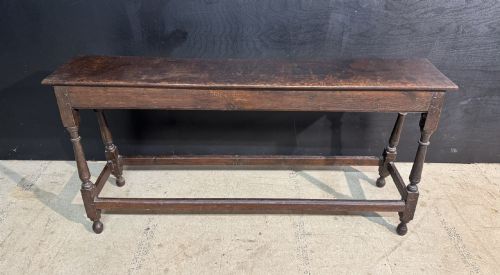
The form grew out of the joined benches of early domestic interiors, made as spare seating that could be pushed under a table or against a wall. From the later 18th century the same elongated shape was made with a stuffed top, sitting low in front of a fire or in a window recess.
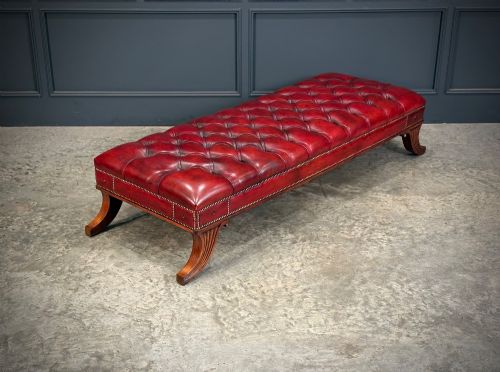
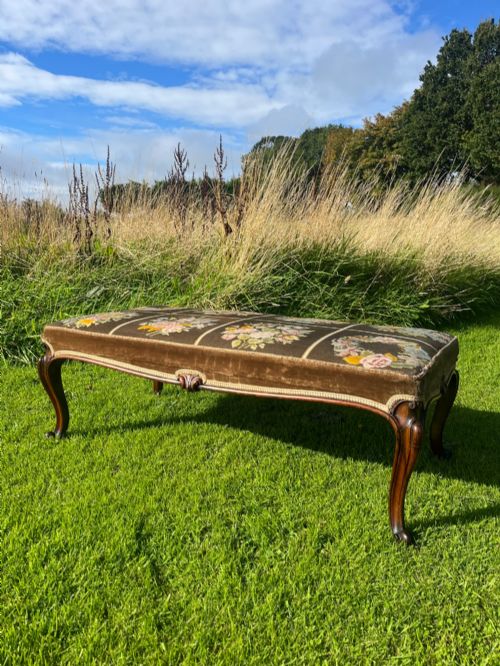
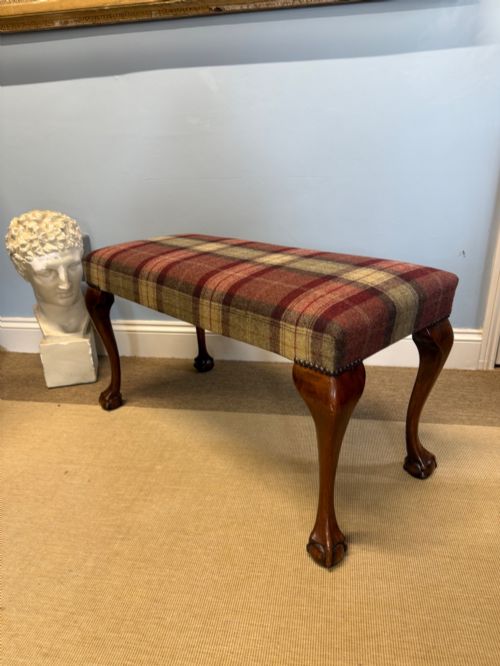
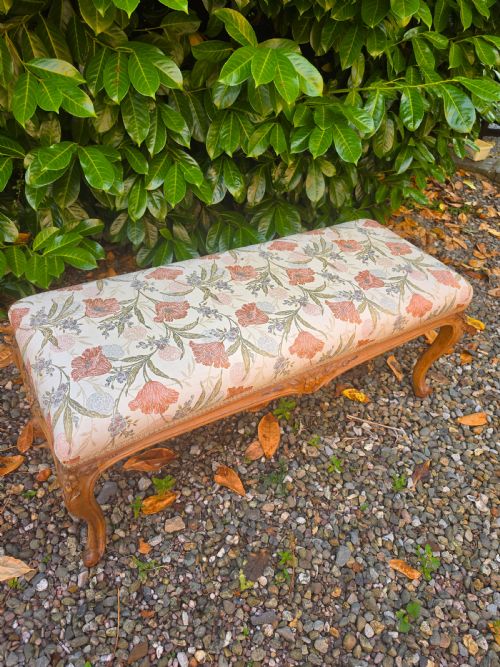
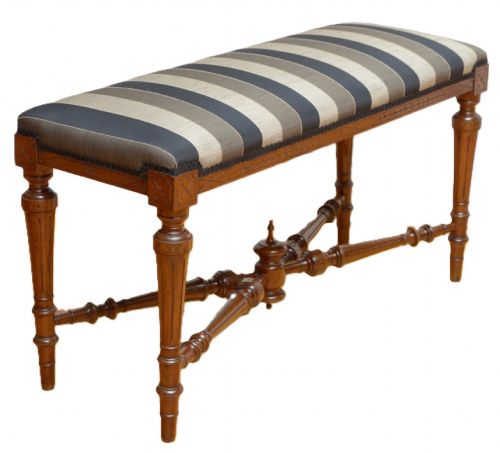
What you'll meet most often is a 19th-century upholstered stool on a walnut or mahogany frame. Walnut appears in around a fifth of titles, mahogany in about a sixth, and 'Victorian' in a fifth. Buttoned tops are common, and buttoned ticking is the single most-named cover in the archive.
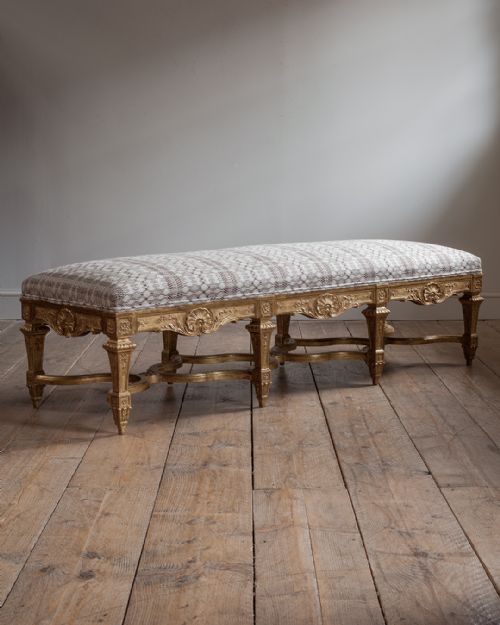
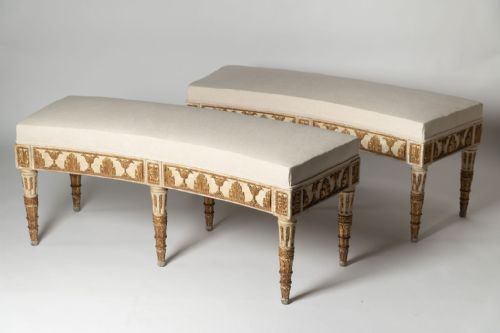
Beyond that, the category splits into a few recognisable branches. Footstools, fender, hearth and fireside stools account for about one in six. Window seats are under a tenth of everything sold but a sixth of what's listed now. Timber-top joined and country stools in oak, ash, elm and pine make up roughly one in ten, and French, Italian and other Continental stools, some carved or gilded, another tenth.
Dating is loose by nature. The dealers' own date field runs 1800 to 1930, and only sixty-one of a hundred and seventy-five listings carry a clean year; '19th Century' is the largest single entry, with Victorian, Regency, Georgian and Edwardian labels behind it. A handful of titles claim 16th, 17th or 18th-century joined oak, but those are isolated.
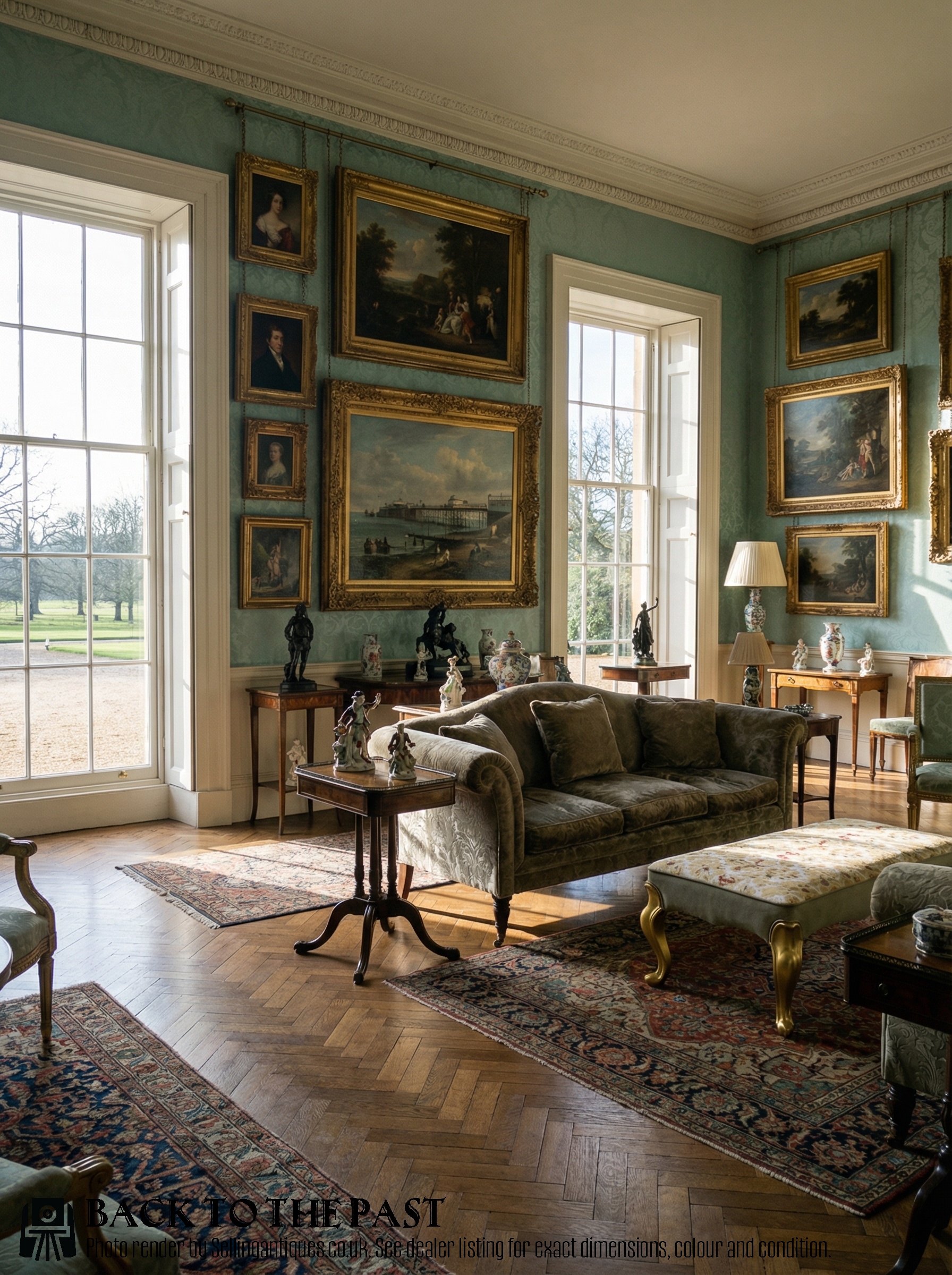
What Sets Them Apart
Timber does most of the work. Rosewood, burr walnut, giltwood and gilt-carved frames sit in the upper half of the range, while plain oak, beech, ash, elm and pine stools sit at the bottom. Surface follows timber: a figured walnut frame reads differently from a scrubbed country top, and the listings price them accordingly.
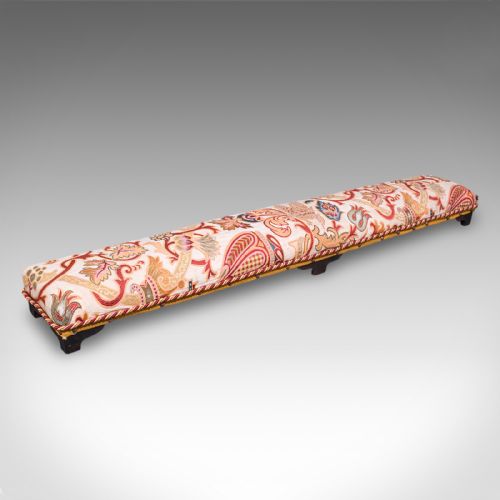
Legs are the next divide. Carved, fluted, cabriole and ball-and-claw legs push a stool upward; plain turned legs keep it low. Scale counts too, and titles that quote a length, 5ft, 6ft, 152cm or 183cm, or call the piece large, sit above the unmeasured majority.
Two things lift a stool clear of the ordinary band. Pairs are uncommon, eight titles in all, and every pair sits well above the single-stool level. French, Italian and Swedish examples, and titles invoking a named 18th-century style or a Louis reign, cluster at the top of the range.
Antique Long Stools Retail Price Guide 2026
Typical UK retail prices for long stools, calculated from the Sellingantiques database of over a million retail prices indexed since 2003. This retail price guide relies exclusively on Sellingantiques data; no external sources or auction records are used, so the figures do not describe the wider market.
One object, at least eight names in the archive: long stool, footstool, fender stool, hearth stool, fireside stool, window seat, bench and centre stool.
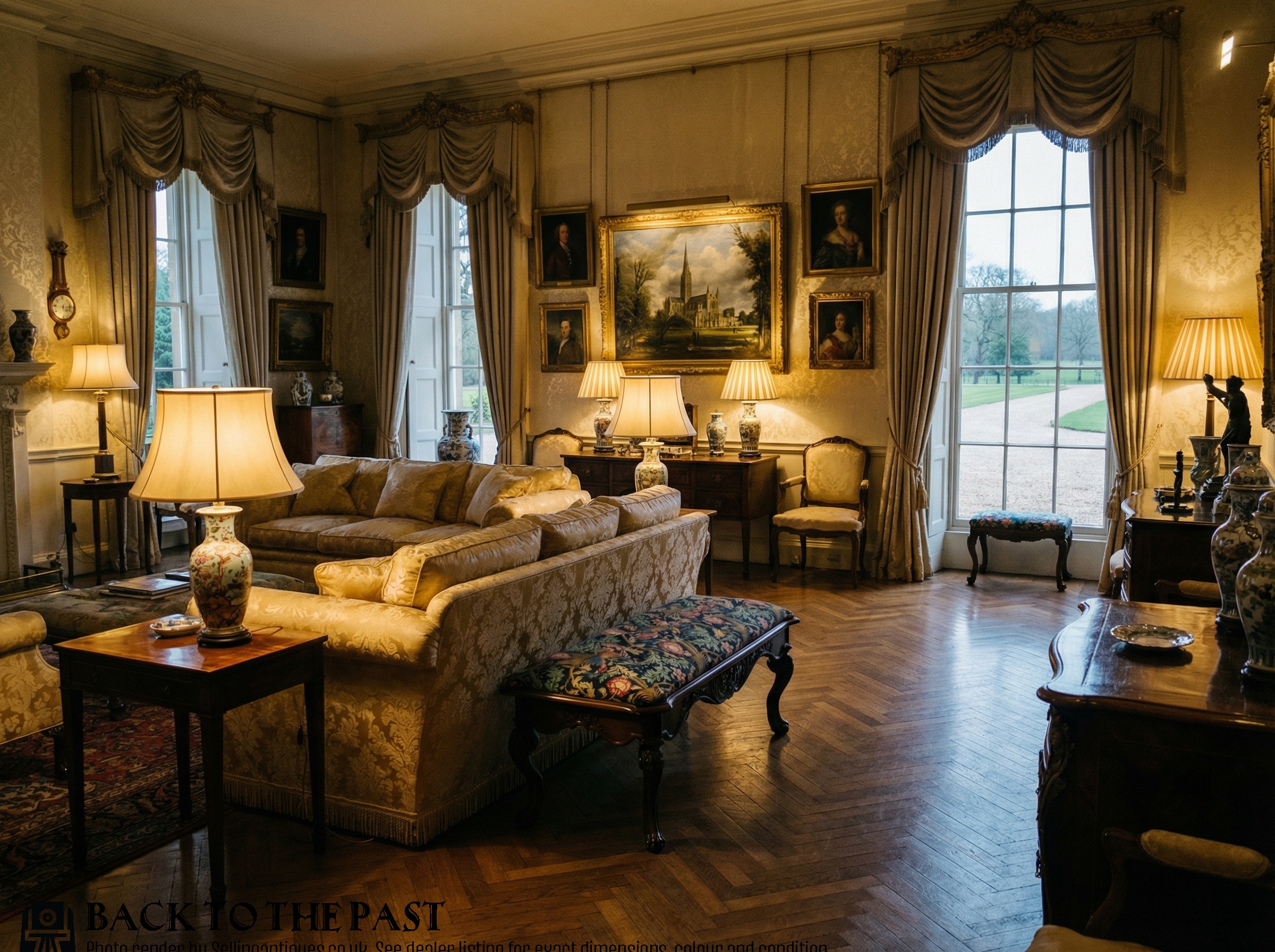
The Antique Long Stools Glossary
- Long stool
- An elongated stool or bench-form seat, longer than it is deep, raised on four or more legs.
- Buttoned
- Upholstery drawn down at intervals with covered buttons, giving a dimpled top. It appears in twenty-four titles.
- Ticking
- A striped woven cover, usually cotton or linen, and the most-named fabric across these listings.
- Window seat
- A long stool meant for a window recess. Plenty of titles use it and 'long stool' interchangeably in the same line.
- Joint stool
- A stool of joined, mortise-and-tenon construction with a solid timber top rather than a stuffed one.
- Slab top
- A single thick board forming the seat, the usual alternative to upholstery in country examples.
Antique Long Stools: Frequently Asked Questions
What's the difference between a long stool and a window seat?
Often nothing. Several titles give both names to the same object, sometimes in the same line, and window seats account for under a tenth of the archive but a sixth of current stock.
The same piece also turns up as a footstool, fender stool, hearth stool, fireside stool, bench or centre stool. At least eight names are in use across these titles.
Why is buttoned ticking mentioned so often?
It's the signature cover of the sold record. Twenty titles name ticking and seventeen of those pair it with buttoning.
Many of those stools are described as newly upholstered, and several quote a 5ft or 6ft length. The look is a striped cotton or linen top drawn down with covered buttons.
How long are these stools?
Where titles state a length, they run from about 5ft or 152cm up to 6ft or 183cm.
Most titles state no length at all, so the measured pieces are a minority rather than a standard.
Are there early oak examples?
A few titles claim joined oak of the 16th and 17th centuries, including one given as c.1580 and a Charles I stool of c.1640. They're isolated.
The dealers' structured date field begins at 1800 and runs to 1930, so the bulk of the category sits in the 19th century and the early 20th.
Which woods turn up most?
Walnut leads, in around a fifth of titles, then mahogany in about a sixth and oak in roughly a tenth.
Country examples bring in ash, elm and pine. Rosewood, burr walnut and giltwood appear less often and sit higher in the range.
How many come up for sale in a year?
Around sixteen long stools come to market on Sellingantiques annually.
Seventy-seven different dealers have listed one, so almost nobody carries them as a speciality. They arrive one at a time, from all over.