
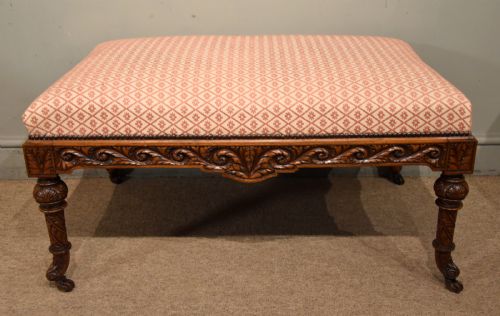
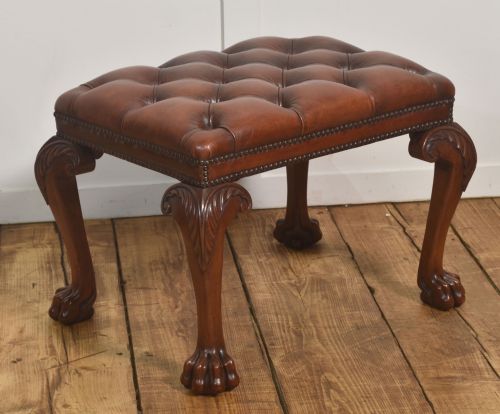
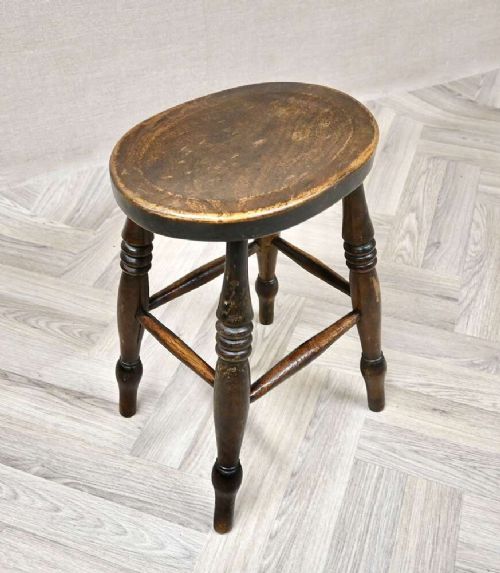
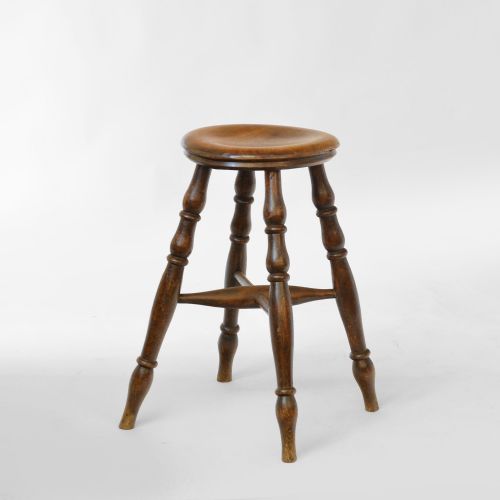
Antique Carved Stools
A small carved-frame seat, from the pegged oak joint stool to the Victorian walnut footstool and the screw-top piano stool, made for resting feet, sitting at a keyboard or filling a window recess.
What Are Carved Stools?
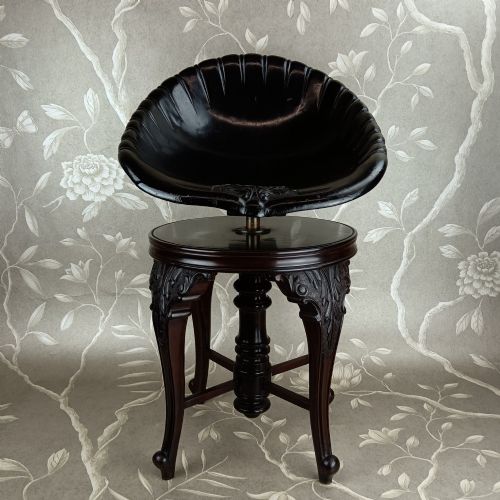
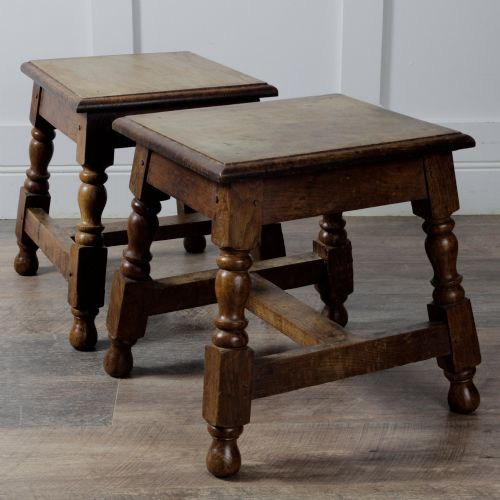
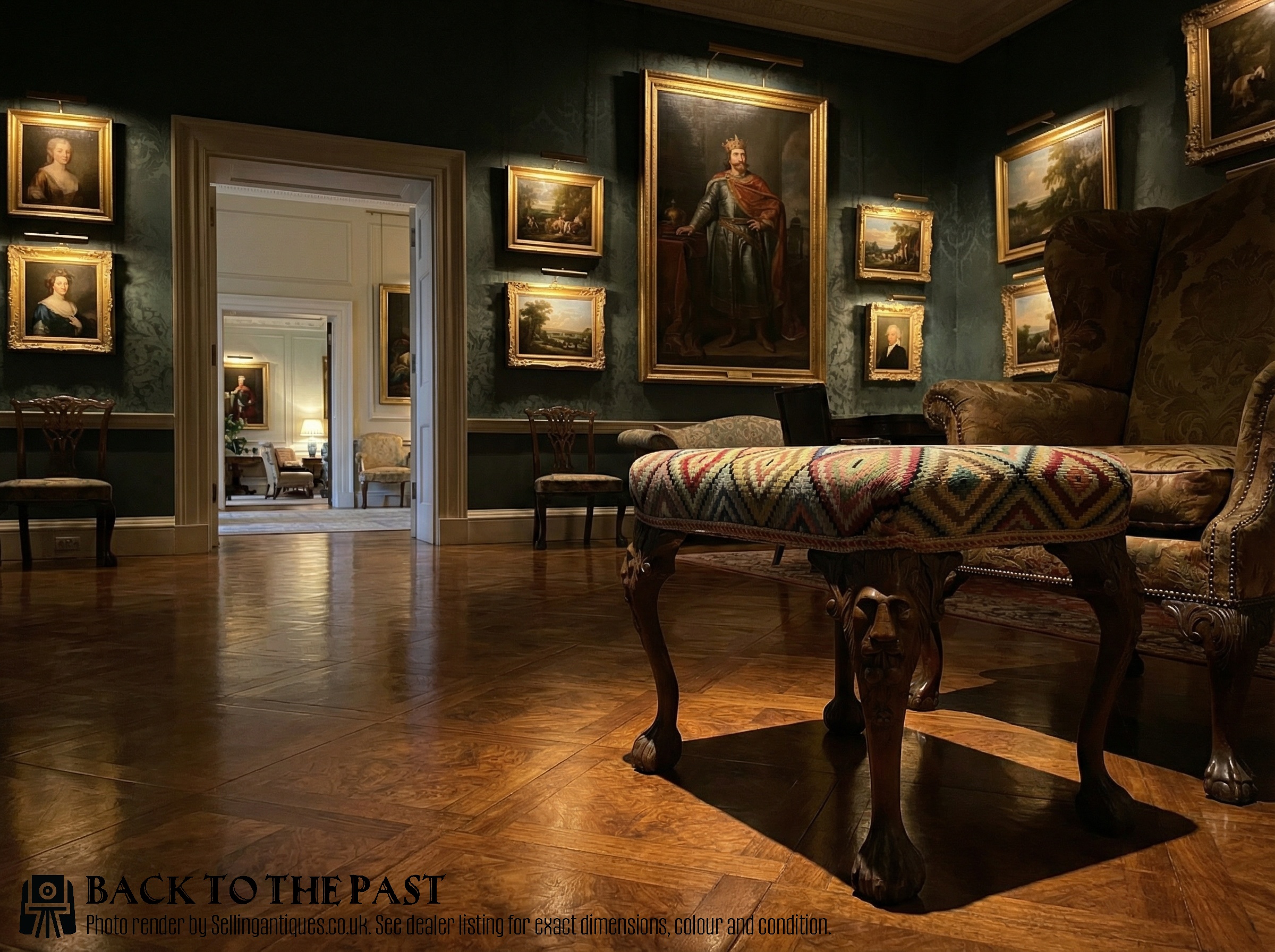
The stool is one of the oldest forms of seat furniture. By the 17th century the English joint stool, a pegged oak frame with turned legs and stretchers, was standard domestic seating. From the 18th century on it survived as a specialised thing: the footstool, the fireside and window seat, and the adjustable stool made for playing keyboard instruments.
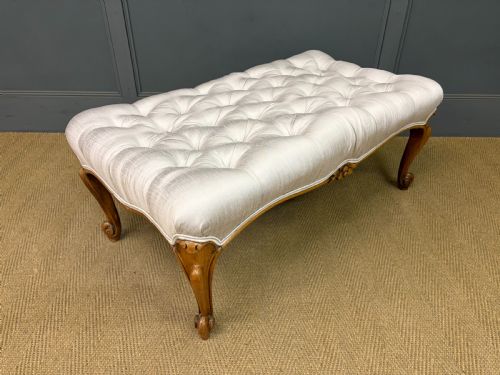
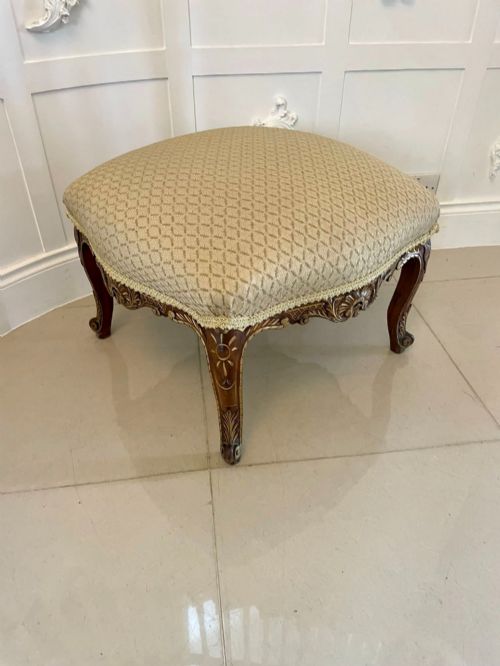
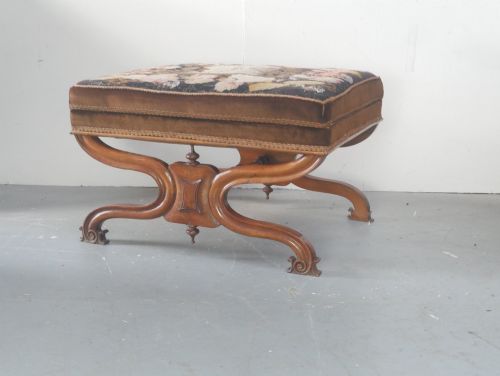
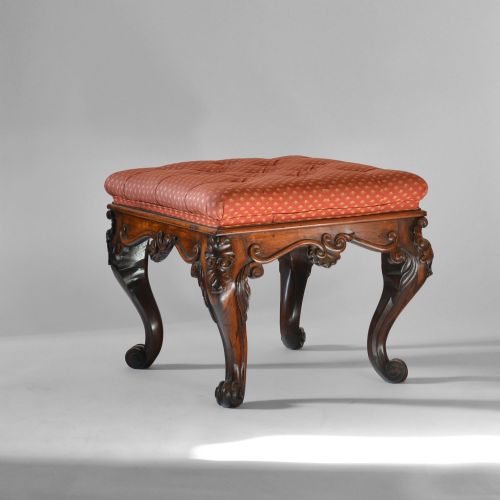
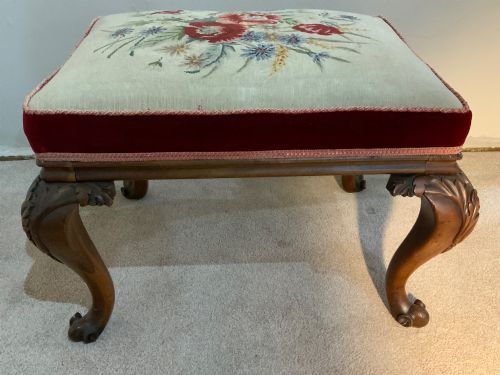
The body of this category is 19th-century English cabinetmade work. Walnut leads the timbers at a quarter of titles, then mahogany, oak and rosewood, and most of it is upholstered on carved cabriole, X-frame or turned legs. The word 'carved' usually describes the frame or the legs rather than the whole object.
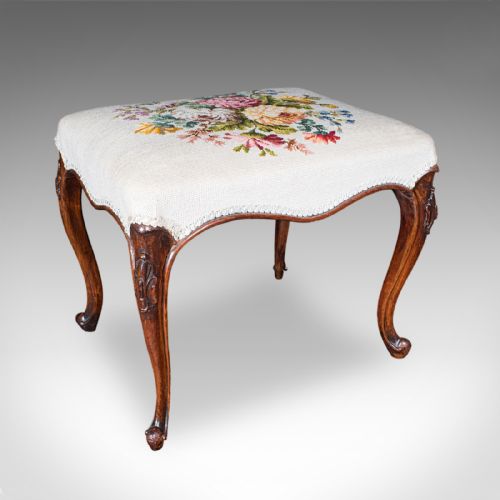
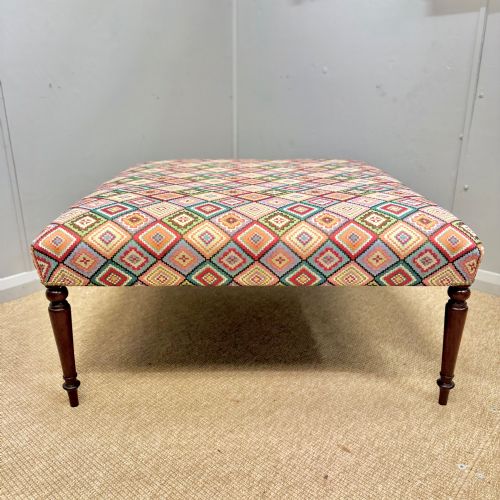
The version you're most likely to meet is a Victorian upholstered stool on a carved hardwood frame, at knee height, in walnut, mahogany or rosewood. Piano stools are the next commonest named type, including revolving and adjustable ones. Around these sit oak joint, box and country stools, window seats and long stools, and a smaller imported strand: French above all, then Italian, Anglo-Indian, Chinese and African.
Dates run from 1750 to 1950, though nearly a third of the dated field is a period label rather than a year. Where decades are given they bunch in the last third of Victoria's reign, the 1880s fullest, with a substantial tail into the 1900s and 1920s. Seventeenth-century oak turns up more than you'd expect for seat furniture, with joint and boarded stools dated to the 1640s through the 1680s.
Where The Range Sits
Timber and the amount of carving do most of the work. Walnut and rosewood concentrate in the upper half of the range; unnamed 'wood' or 'hardwood' sits low, and the cheapest examples are plain oak and pine. Titles at the top say intricately, profusely or ornately carved. At the bottom they say 'with carved detail', or name only the legs.
Number and size push the same way. Pairs appear in one title in ten, and sets of three, four and five occur; paired stools sit consistently above comparable singles. Large is stated far more often than small, and the long stools, window seats and centre stools reach near the top, among them a 58-inch mahogany window seat and an Anglo-Indian stool at 95 by 75 centimetres.
Then there's mechanism and joinery. Revolving, adjustable, rise-and-fall and screw-top seats lift a piano stool; on the country side it's pegged, five-plank and 17th-century joint construction that counts. Grotto stools carved in the Venetian manner appear only a few times and reach well up, and the highest-priced entry in the archive is a set of four Venetian carved giltwood stools with a country-house provenance.
Retail Price Guide 2026
Typical UK retail prices for carved stools, calculated from the Sellingantiques database of over a million retail prices indexed since 2003. This retail price guide relies exclusively on Sellingantiques data; no external sources or auction records are used, so the figures do not describe the wider market.
Stool comes from the Old English stol, which meant any seat at all, thrones included. It shrank to the backless sort much later.
The Antique Carved Stools Glossary
- Joint stool
- Pegged and jointed oak stool with turned legs and stretchers; oak and joint appear together in 26 titles.
- Cabriole leg
- S-curved leg, usually carved at the knee, named in 41 titles and the commonest leg form described here.
- Window seat
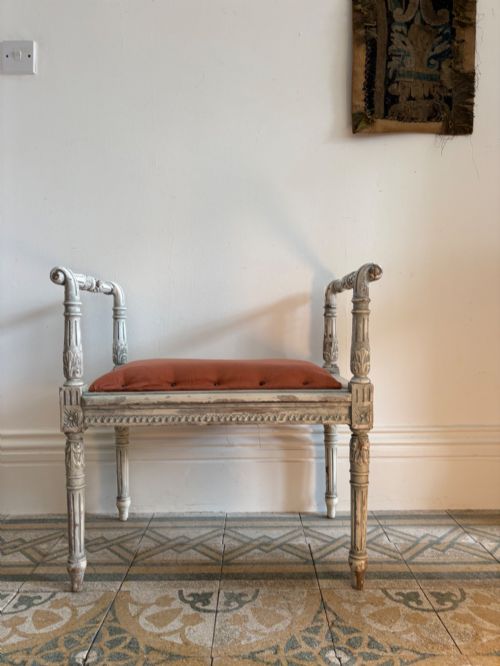
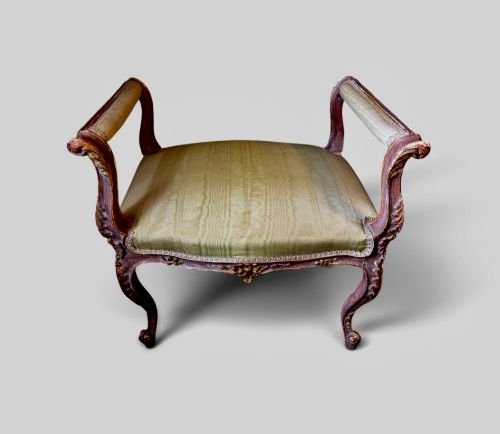
- Long low stool with one or two scrolled ends, made to sit in a window recess; 34 titles.
- Revolving piano stool
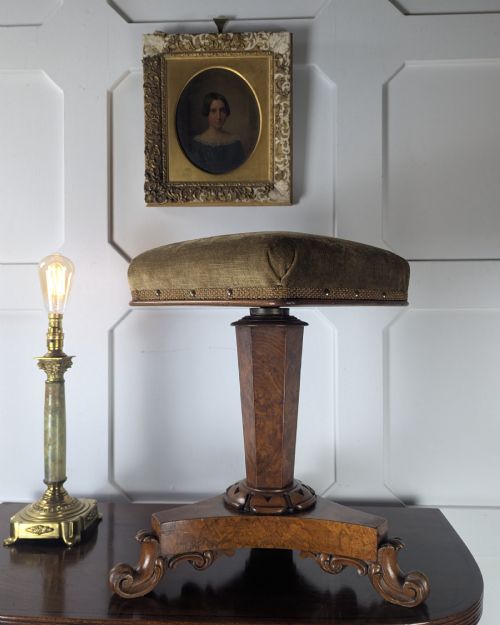
- Seat that screws up and down on a central pillar. Revolving appears 27 times, adjustable 13.
- Duet stool
- Wide piano stool for two players, often with a hinged storage seat over a well.
- Huali
- Chinese rosewood-family hardwood, named on Qing dynasty stools in this archive.
Frequently Asked Questions
What wood are carved stools usually made from?
Walnut is the defining timber, named in about a quarter of titles, with mahogany, oak and rosewood behind it.
Beyond those four, pine, elm, yew, beech, teak, padouk, ebony, satinwood, burr maple, goncalo alves and Chinese huali each surface once or twice.
How old are most carved stools on the market?
Victorian appears in 177 titles and 19th century in 81 more, so the weight is squarely 19th-century. Dealer-entered dates span 1750 to 1950.
Georgian, Regency and 17th-century labels all appear in smaller numbers, and several 17th- and 18th-century dates are attached to pieces the title itself calls style or revival.
Are carved stools sold in pairs?
Often enough to be a habit of the category. Pair appears in 74 titles, and sets of three, four and five stools occur.
Paired examples sit consistently above comparable singles in the sampled range.
What is a piano stool?
A stool made for playing a keyboard instrument, and the second commonest named type after the footstool, with 55 titles.
Many are revolving, the seat screwing up and down on a central pillar. Duet stools are wider, for two players, and often have a hinged seat over storage. Dressing and music stools sit in the same group.
Which stools were made outside Britain?
French is the largest imported strand at 60 titles, followed by Italian at 14. Anglo-Indian, Burmese, Chinese and Swedish or Gustavian pieces recur in the samples.
Africa is the rarest origin, a handful of Ashanti, Ethiopian and Kuba stools, some carved as elephants from a single block. Single Syrian, Batavian, Swiss and Moorish entries also appear.
Do stools carry a maker's name?
Rarely. No maker or retailer stands out across this category, and names in titles are the exception rather than the rule.
About 73 carved stools are listed a year on Sellingantiques, and 206 different dealers have handled one, so almost every dealer who carries them carries only a piece or two.