
Antique Ottoman Stools
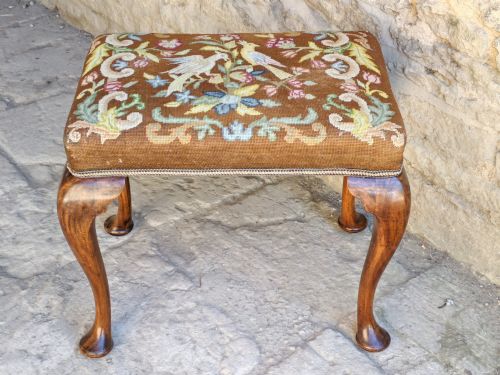
A padded stool on a polished timber frame, made to rest the feet, seat a sitter or hide sewing and linen under a lifting top.

What Are Ottoman Stools?
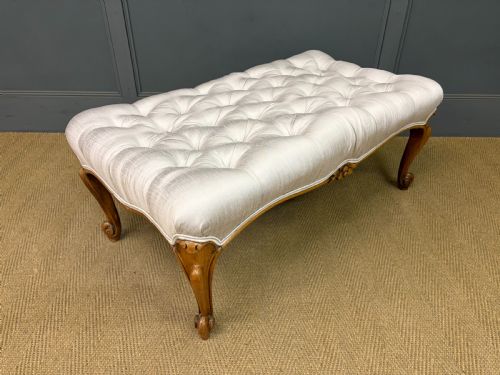
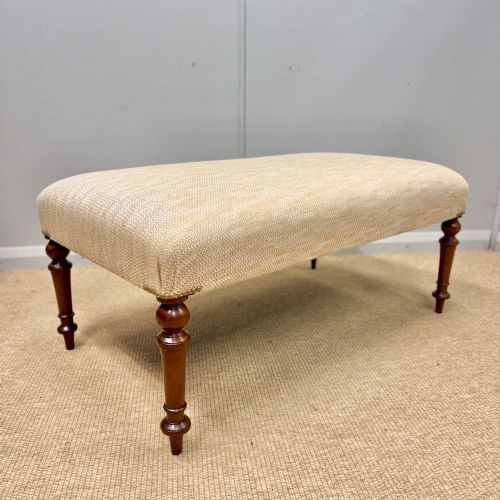
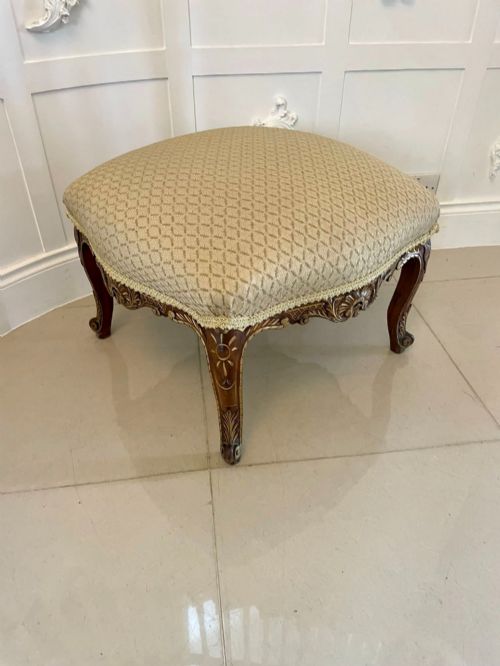
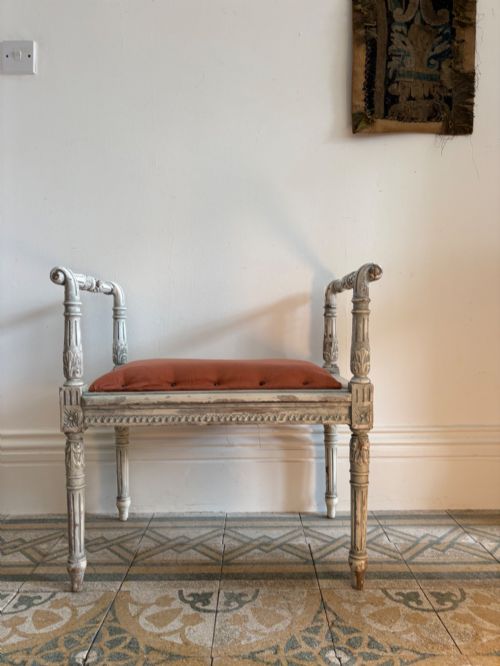
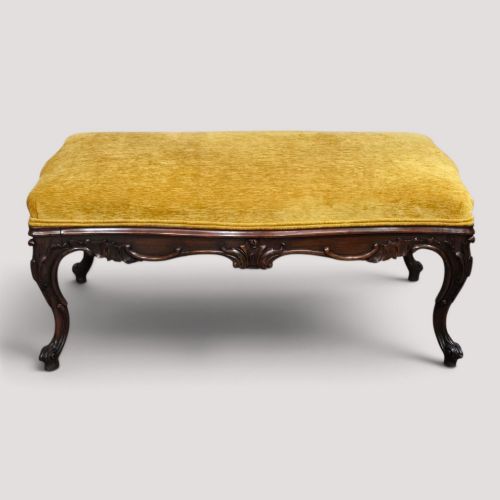
Under this heading sits a broad population of antique upholstered stools. Low footstools dominate, but the same listings carry larger centre stools and window seats, and box-seat ottomans whose padded top lifts or unscrews over a storage well. The word ottoman describes the deep-upholstered lidded form taken into Western interiors from Turkish precedent, not the country of making.
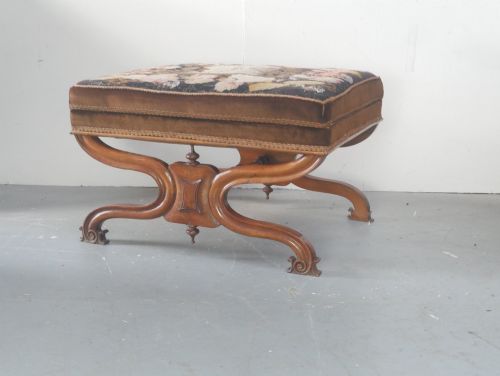
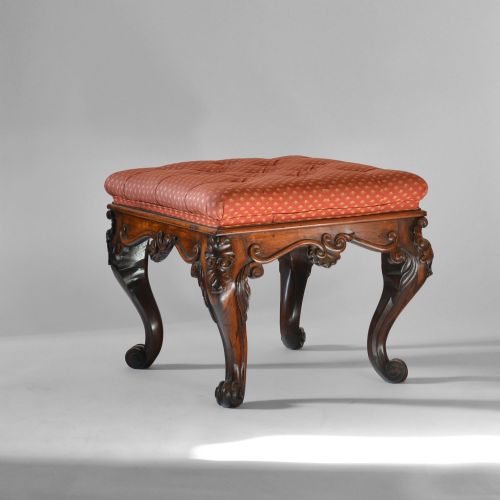
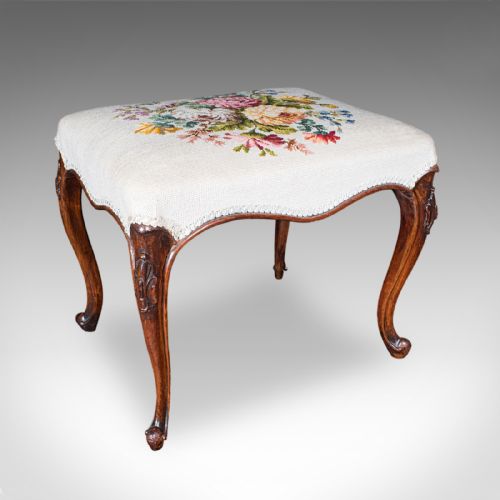
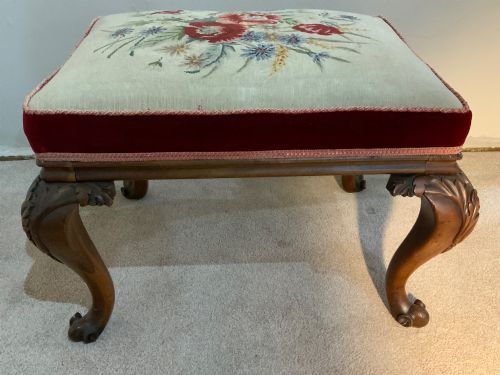
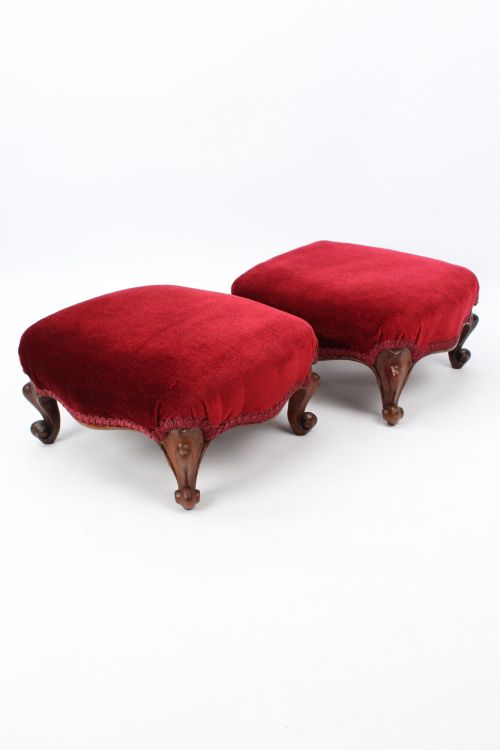
The version you are most likely to meet is a Victorian footstool on a carved hardwood frame. Victorian appears in 103 titles and upholstered in 64. Walnut leads the timbers on 72 titles, mahogany follows on 69 and rosewood on 37, with oak a long way behind. Carved appears in 46 titles and cabriole in 18, so a shaped leg is the norm.
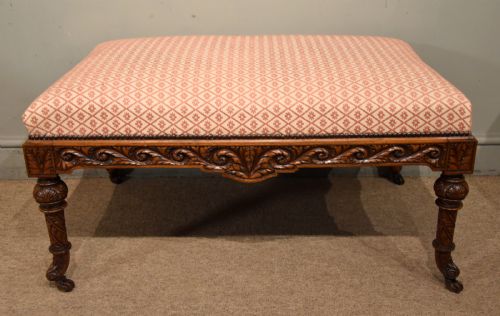
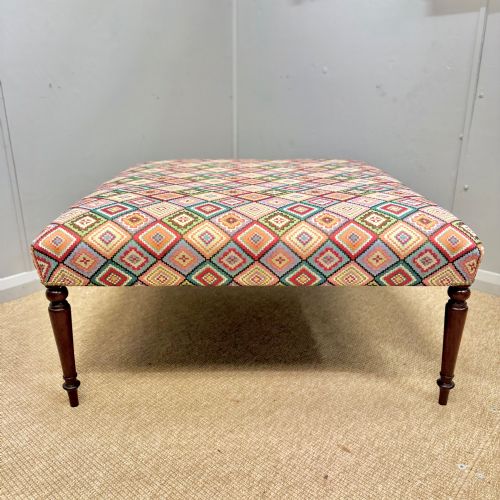
Small footstools make up roughly a third of the category. Large centre stools and window seats account for around a fifth, running to five feet and more. Box-seat ottomans, often titled as dressing, sewing or work boxes, are a substantial minority. Continental and French decorative stools are roughly a tenth, French leading on 34 titles ahead of Swedish, with scattered Italian, Syrian and Anglo-Indian pieces.
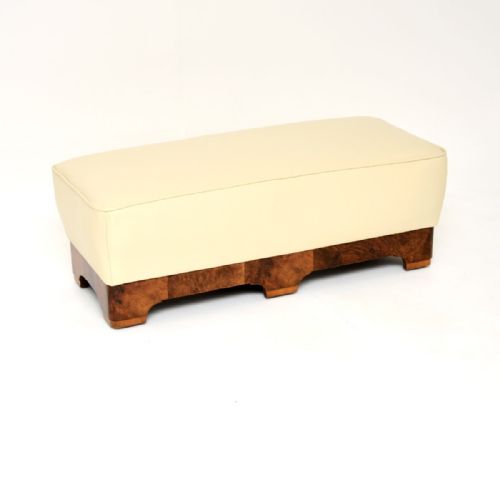
Dealer dates run from 1750 to 1930, and 146 listings carry a clean year. Much of the dating is loose: 19th Century is the single largest label on 134 listings. Where decades are given they cluster in the 1860s to 1890s, with a real 20th-century tail of 1920s and 1930s stools, including Art Deco dressing stools with storage. Titles often say style or in the manner of an earlier period, so a period word alone is not a date.

Where The Range Splits
Size does most of the work. Large appears in 49 titles and long in 10, and the biggest pieces are the ones given by dimension rather than by adjective: 148 by 64cm, 95 by 75cm, a five-foot buttoned long stool. Those sit at the top of the sampled range. Footstools described only as small sit at the bottom.
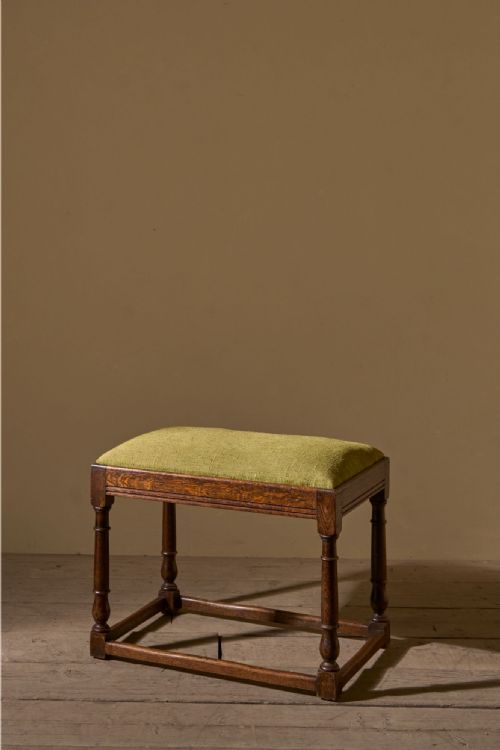
After scale comes the frame and the timber. A freestanding carved walnut stool finished on all sides, or an X-frame, reaches higher than a plain Victorian stool with turned legs. Burr walnut, satinwood, birds-eye maple, gonçalo alves, giltwood and parcel gilt all appear among the upper-range pieces; oak and beech sit lower down.
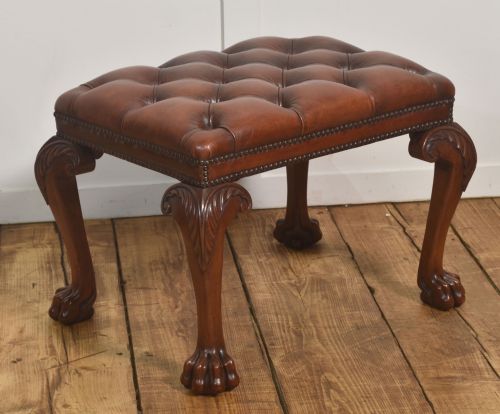
Covering and count finish the picture. Buttoned hide and original needlepoint push a stool up, and leather appears in 33 titles with buttoned in 17. Roughly one in eleven listings is a pair, and paired stools recur through the upper half of the range. The few titles naming or attributing a workshop, or a stamped frame, sit up there too.
Retail Price Guide 2026
Typical UK retail prices for ottoman stools, calculated from the Sellingantiques database of over a million retail prices indexed since 2003. This retail price guide relies exclusively on Sellingantiques data; no external sources or auction records are used, so the figures do not describe the wider market.
Dealer dates on Sellingantiques run from 1750 to 1930, from a mid-18th-century carved foot stool to English Art Deco dressing stools.
The Antique Ottoman Stools Glossary
- Ottoman stool
- A deep-upholstered stool, frequently with a lifting or removable padded top over a storage box.
- Footstool
- The small low form, for the feet rather than for sitting. The commonest word in these titles after the period.
- Window seat
- A long low stool made to sit in a window recess, usually open-ended. Centre stool describes the free-standing version, finished on all sides.
- Buttoned
- Upholstery pulled down at intervals with covered buttons, giving the dimpled surface. Deep buttoned where the pull is pronounced.
- Show frame
- The polished timber left visible around the upholstery, as in a walnut framed stool.
- Gout stool
- An adjustable or rocking footstool made to raise and support an inflamed foot. Rocking and metamorphic versions turn up in beech, mahogany and walnut.
Frequently Asked Questions
Are these stools actually Turkish?
No. Ottoman here is a furniture term for the deep-upholstered, often lidded stool that Western makers took up from Turkish precedent.
The origins named in titles are English above all, then French on 34 listings and Swedish on 8, with single Italian, Syrian and Anglo-Indian pieces scattered through the archive.
What timber are they usually made from?
Walnut leads on 72 titles, mahogany follows on 69 and rosewood on 37. Oak is a distant fourth on 14.
Higher-range listings name figured and decorative surfaces instead: burr walnut, satinwood, birds-eye maple, gonçalo alves, giltwood and parcel gilt.
Do ottoman stools open for storage?
Some do. A substantial minority of the category is the box-seat form, with a padded top that lifts or unscrews over a well, and titles that read dressing box, sewing box or work box.
The rest are solid-topped: small footstools, long window seats and centre stools with no storage at all.
How big do they get?
Scale swings further than any other feature. The samples include a five-foot buttoned long stool, an 80cm square footstool, and pieces given as 148 by 64cm and 95 by 75cm.
At the other end are footstools described only as small, low enough to be meant for the feet.
How common are pairs?
Roughly one in eleven listings is a pair, so 38 titles in all.
Above two, the archive holds only a suite of three Gothic stools and a set of two library footstools.
Can the upholstery be original?
Titles are explicit either way. Newly upholstered means a recovered top; for upholstery or ready for upholstery means the opposite, and sprung-top frames turn up sold that way.
Needlepoint and tapestry covers appear on 8 titles or so, sometimes described as original to the stool, sometimes as a later fitting. Leather, tweed, ticking stripe, silk, damask and kilim all appear among the named coverings.